Close
![Popup Image]()
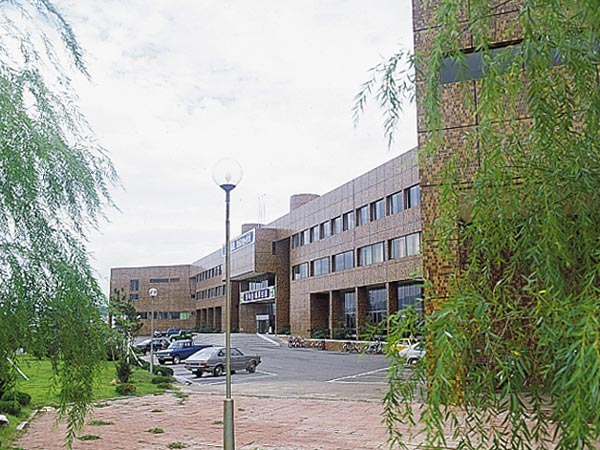
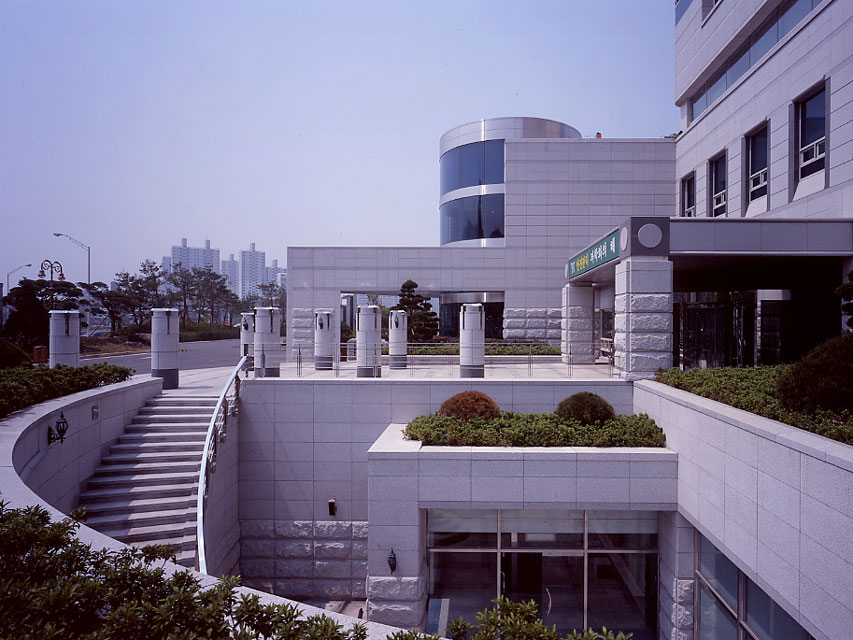
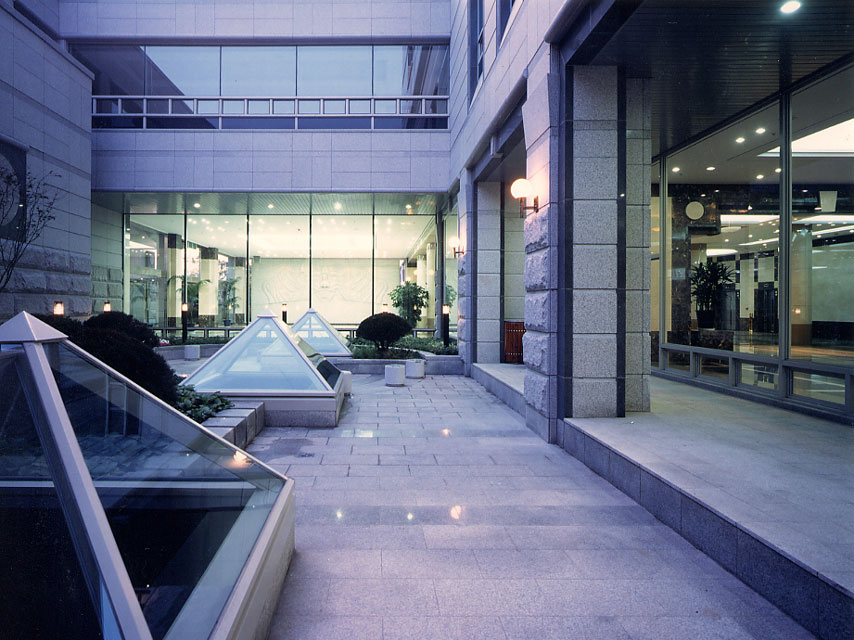
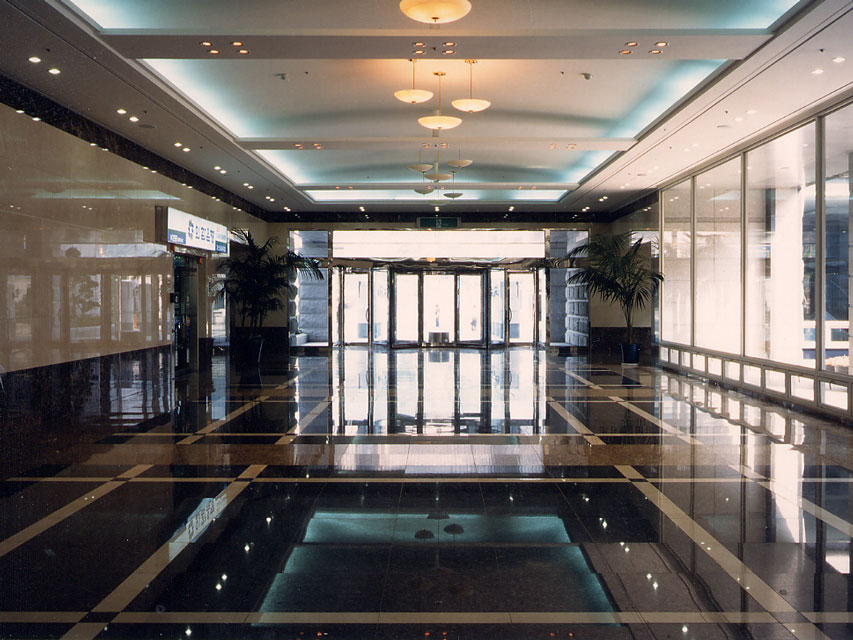
Korea Gas Corporation (KOGAS), planning relocation to Daegu Innovation City to promote balanced national development through the relocation of public enterprises to provincial regions, constructed its new headquarters via a design competition. Junglim Architecture aimed to create comfortable workspaces aligned with KOGAS’s goal of “enhancing the convenience and welfare of the public through the supply of clean energy and natural gas.” The design envisioned an environmentally friendly space where nature thrives, a communicative space connected with the local community, and a vibrant cultural space. The massing divides into three parts: the lower levels providing stability and approachability as public space; the middle levels reflecting modernity and rationality for offices; and the upper levels serving as both an information-communication tower and symbolic landmark for the building. The façade employs a grid pattern to promote energy efficiency.

-
Status
Completed
-
Awards
- 1997 Korean Architecture Award_ Finalist
-
Order
Korea Gas Corporation
-
Purpose
Public, Office
-
Design Year
1992
-
Completion Year
1997
-
Location
Seongnam-si, Gyeonggi-do
-
Site area
13,738.30m2
-
Gross Floor Area
34,997.00m2
-
Building Area
4,332.91m2
-
Scale
B3, 8F
Korea Gas Corporation (KOGAS), planning relocation to Daegu Innovation City to promote balanced national development through the relocation of public enterprises to provincial regions, constructed its new headquarters via a design competition. Junglim Architecture aimed to create comfortable workspaces aligned with KOGAS’s goal of “enhancing the convenience and welfare of the public through the supply of clean energy and natural gas.” The design envisioned an environmentally friendly space where nature thrives, a communicative space connected with the local community, and a vibrant cultural space. The massing divides into three parts: the lower levels providing stability and approachability as public space; the middle levels reflecting modernity and rationality for offices; and the upper levels serving as both an information-communication tower and symbolic landmark for the building. The façade employs a grid pattern to promote energy efficiency.