Close
![Popup Image]()
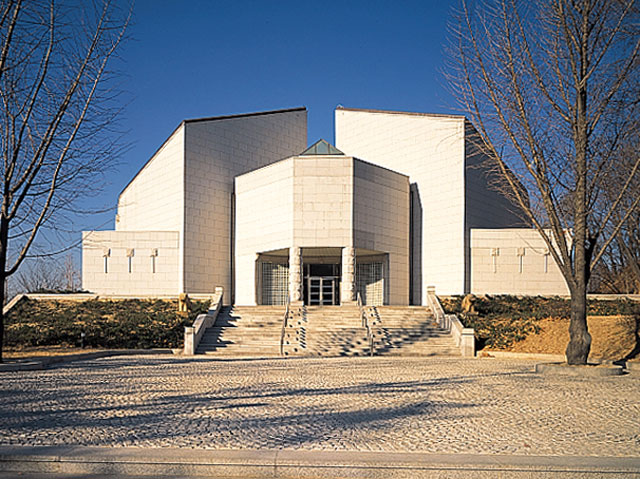
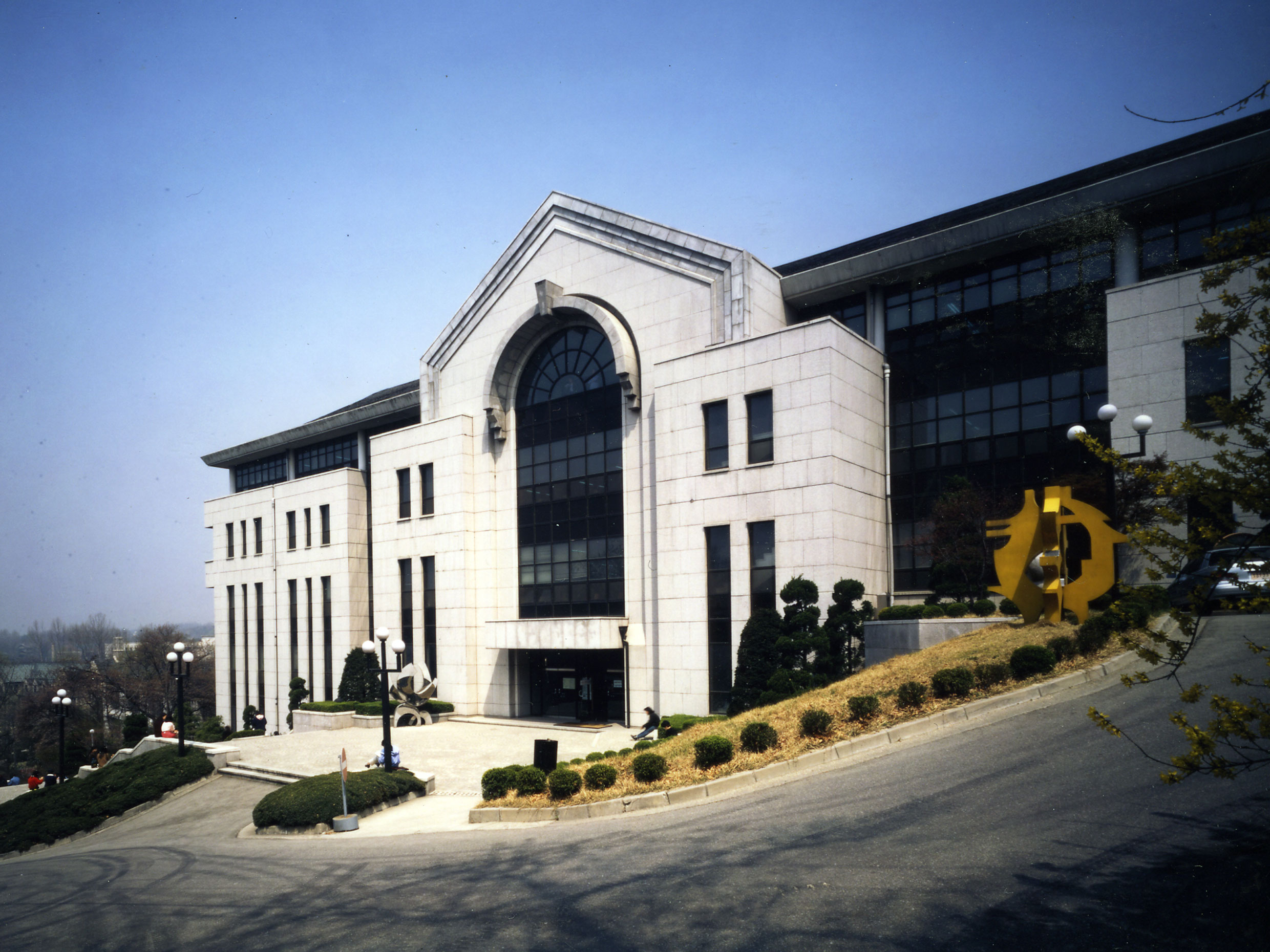
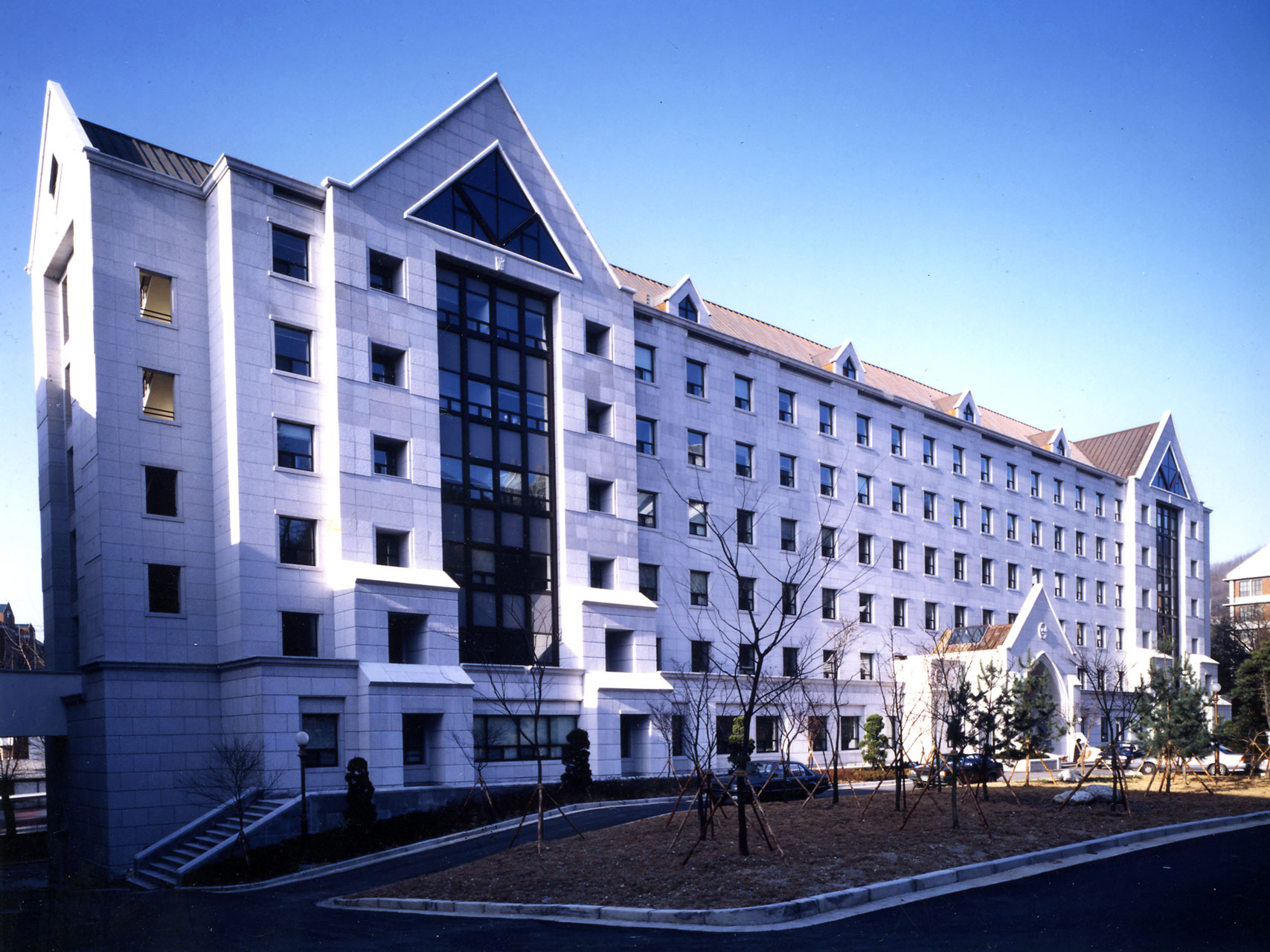
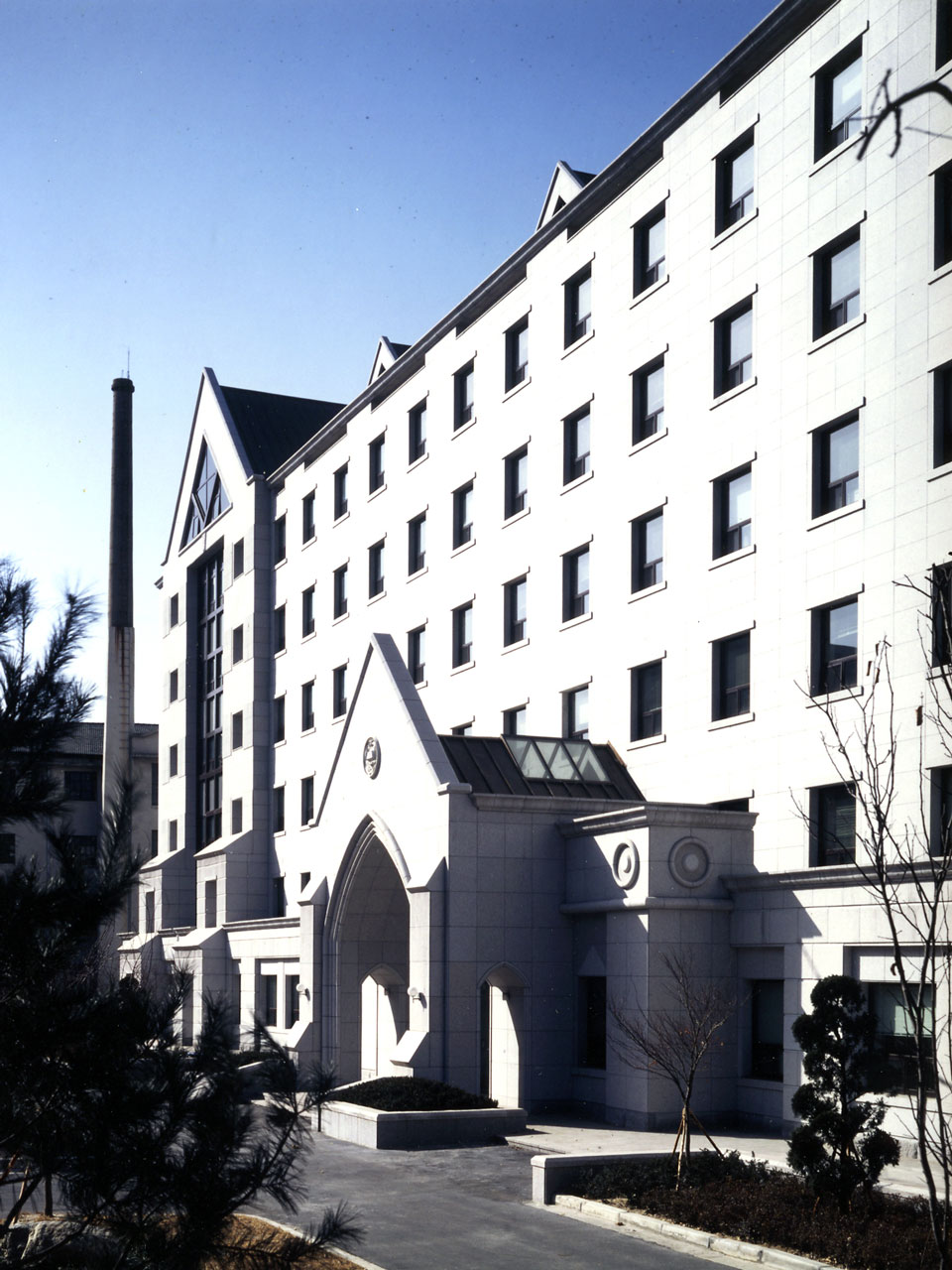
Built to improve research conditions, the Humanities Building holds two distinct meanings compared to previously designed building proposals at Ewha Womans University. First, it reestablishes the architectural context demonstrated in the Museum, and second, it resolves environmental issues arising from site conditions. Located along Seongsan-daero Thoroughfare, the site experiences sound pressure levels consistently at 75 dB and reaching up to 90 dB, which had been disrupting lectures and research activities in the existing College of Liberal Arts building due to noise problems. Addressing this issue became the top priority for the new Humanities Building.
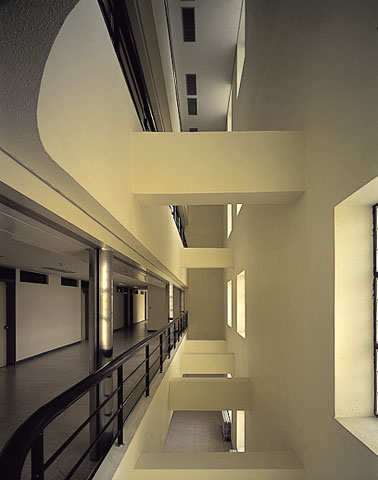
The overall layout and massing were configured so the building itself would function as a massive sound barrier, with corridors and stairwells positioned along the road-facing side to serve as acoustic buffer zones. All windows employed fixed glazing for daylighting only and glass blocks to thoroughly block noise. Since these buffer measures could create ventilation issues, the solution involved penetrating floors 3 through 6 on the corridor side and installing ventilation fans in the roof. Currently, floors 1-2 house seminar rooms for the Graduate School and the Special Graduate School, while floors 3-7 accommodate faculty research offices.

-
Status
Completed
-
Order
Ewha Womans University
-
Purpose
Education
-
Design Year
1989
-
Completion Year
1992
-
Location
Seodaemun-gu, Seoul
-
Site area
488,221.70m2
-
Gross Floor Area
11,322.00m2
-
Scale
B2, 7F
Built to improve research conditions, the Humanities Building holds two distinct meanings compared to previously designed building proposals at Ewha Womans University. First, it reestablishes the architectural context demonstrated in the Museum, and second, it resolves environmental issues arising from site conditions. Located along Seongsan-daero Thoroughfare, the site experiences sound pressure levels consistently at 75 dB and reaching up to 90 dB, which had been disrupting lectures and research activities in the existing College of Liberal Arts building due to noise problems. Addressing this issue became the top priority for the new Humanities Building.
The overall layout and massing were configured so the building itself would function as a massive sound barrier, with corridors and stairwells positioned along the road-facing side to serve as acoustic buffer zones. All windows employed fixed glazing for daylighting only and glass blocks to thoroughly block noise. Since these buffer measures could create ventilation issues, the solution involved penetrating floors 3 through 6 on the corridor side and installing ventilation fans in the roof. Currently, floors 1-2 house seminar rooms for the Graduate School and the Special Graduate School, while floors 3-7 accommodate faculty research offices.