Close
![Popup Image]()
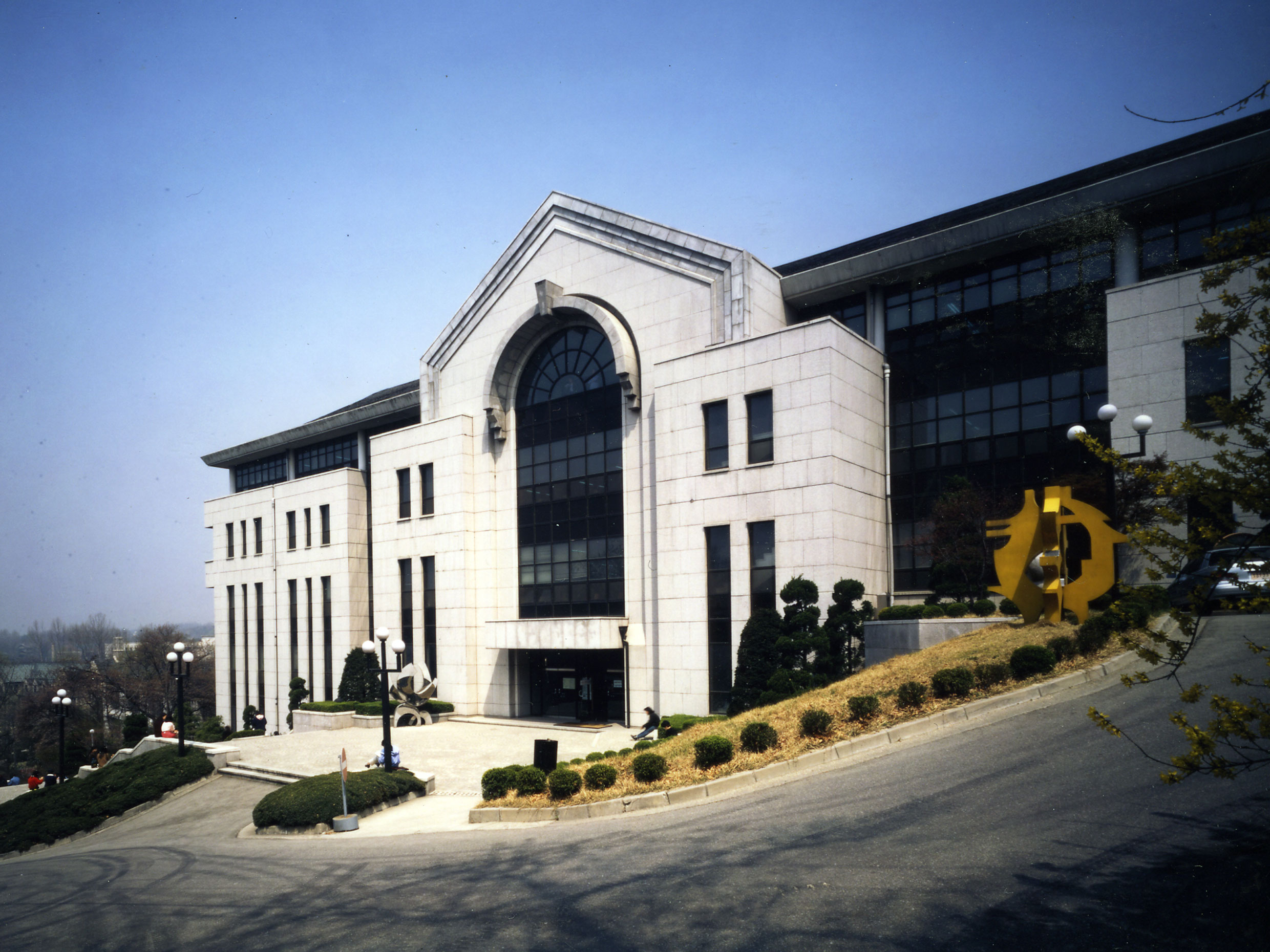
The museum, promoted as part of Ewha Womans University’s centennial commemorative project, was intended as a symbolic embodiment capturing the university’s century-long history and the spirit flowing within it. It serves as a self-contained entity marking the closure of the last century and the starting point for a new century.
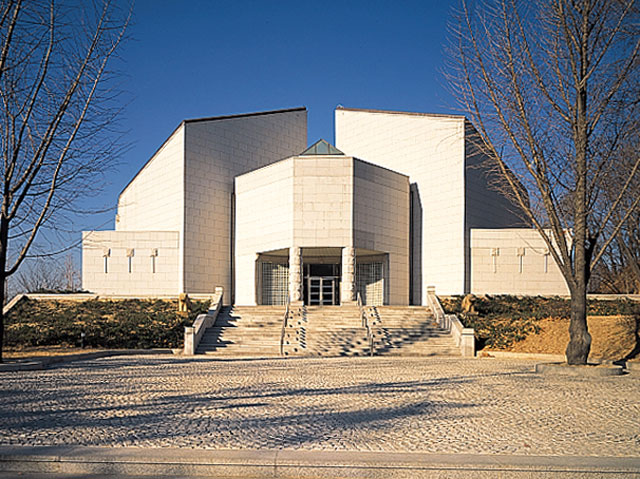
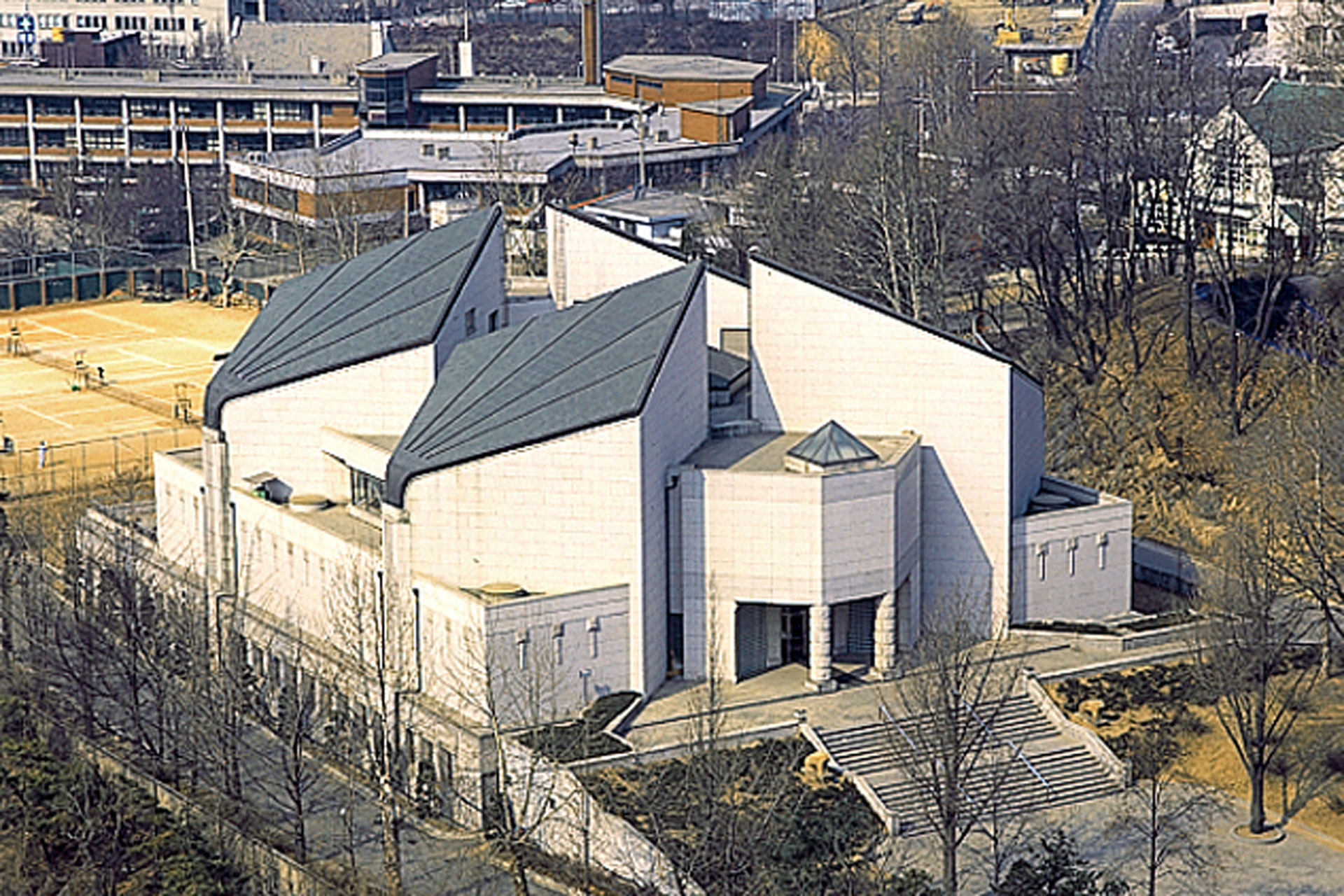
Situated closest to the university’s main gate, the museum’s significance lies more in its location than its scale, capable of defining Ewha’s first impression. It adopts a stone finish that shares the broader context of and can be homogeneous with the existing campus order and environment, while its spatial composition follows the basic form of a stone building divided into three parts: the base, the body, and the top. The five segmented diamond-shaped forms and their sloped roofs symbolize the blooming of a pear blossom bud, Ewha’s emblem.
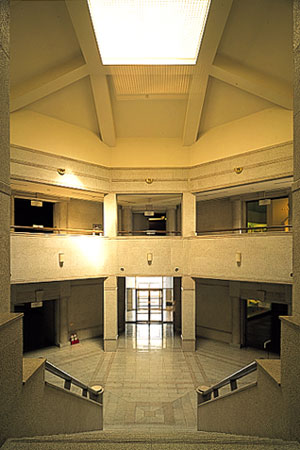
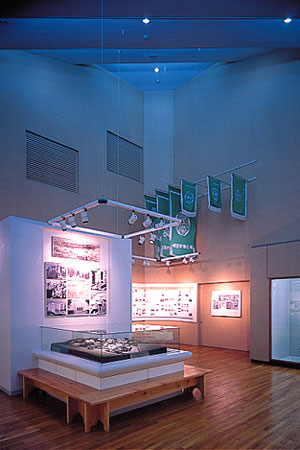
The interior space is arranged in a hall form, with a central commemorative exhibition hall surrounded by individual exhibition rooms. The central hall’s upper part features exposed lattice beams with a skylight at the apex, enhancing a sense of centripetal force through the effect of light. The permanent exhibition on the second floor, the planned exhibition on the third floor, and the central hall’s exhibition are all set at different heights to accommodate various exhibition types. The first floor houses storage, a library, offices, an artifact conservation room, and a mechanical room, with the storage area beneath designed as a PIT floor about 1.5 meters thick with double slabs, planned to facilitate temperature and humidity control as well as ventilation.
In the Press
Archive

-
Status
Completed
-
Awards
- 1992 Korean Institute of Architects Award_Eum Deok Moon Architecture Awar
- 1991 Korean Institute of Architects Award
- 1991 Seoul Architecture Award_Bronze Award
-
Order
Ewha Womans University
-
Purpose
Cultural, Education
-
Design Year
1986
-
Completion Year
1990
-
Location
Seodaemun-gu, Seoul
-
Site area
550,488.70m2
-
Gross Floor Area
4,399.56m2
-
Building Area
2,033.09m2
-
Scale
3F
The museum, promoted as part of Ewha Womans University’s centennial commemorative project, was intended as a symbolic embodiment capturing the university’s century-long history and the spirit flowing within it. It serves as a self-contained entity marking the closure of the last century and the starting point for a new century.
Situated closest to the university’s main gate, the museum’s significance lies more in its location than its scale, capable of defining Ewha’s first impression. It adopts a stone finish that shares the broader context of and can be homogeneous with the existing campus order and environment, while its spatial composition follows the basic form of a stone building divided into three parts: the base, the body, and the top. The five segmented diamond-shaped forms and their sloped roofs symbolize the blooming of a pear blossom bud, Ewha’s emblem.
The interior space is arranged in a hall form, with a central commemorative exhibition hall surrounded by individual exhibition rooms. The central hall’s upper part features exposed lattice beams with a skylight at the apex, enhancing a sense of centripetal force through the effect of light. The permanent exhibition on the second floor, the planned exhibition on the third floor, and the central hall’s exhibition are all set at different heights to accommodate various exhibition types. The first floor houses storage, a library, offices, an artifact conservation room, and a mechanical room, with the storage area beneath designed as a PIT floor about 1.5 meters thick with double slabs, planned to facilitate temperature and humidity control as well as ventilation.
In the Press
Archive