Close
![Popup Image]()
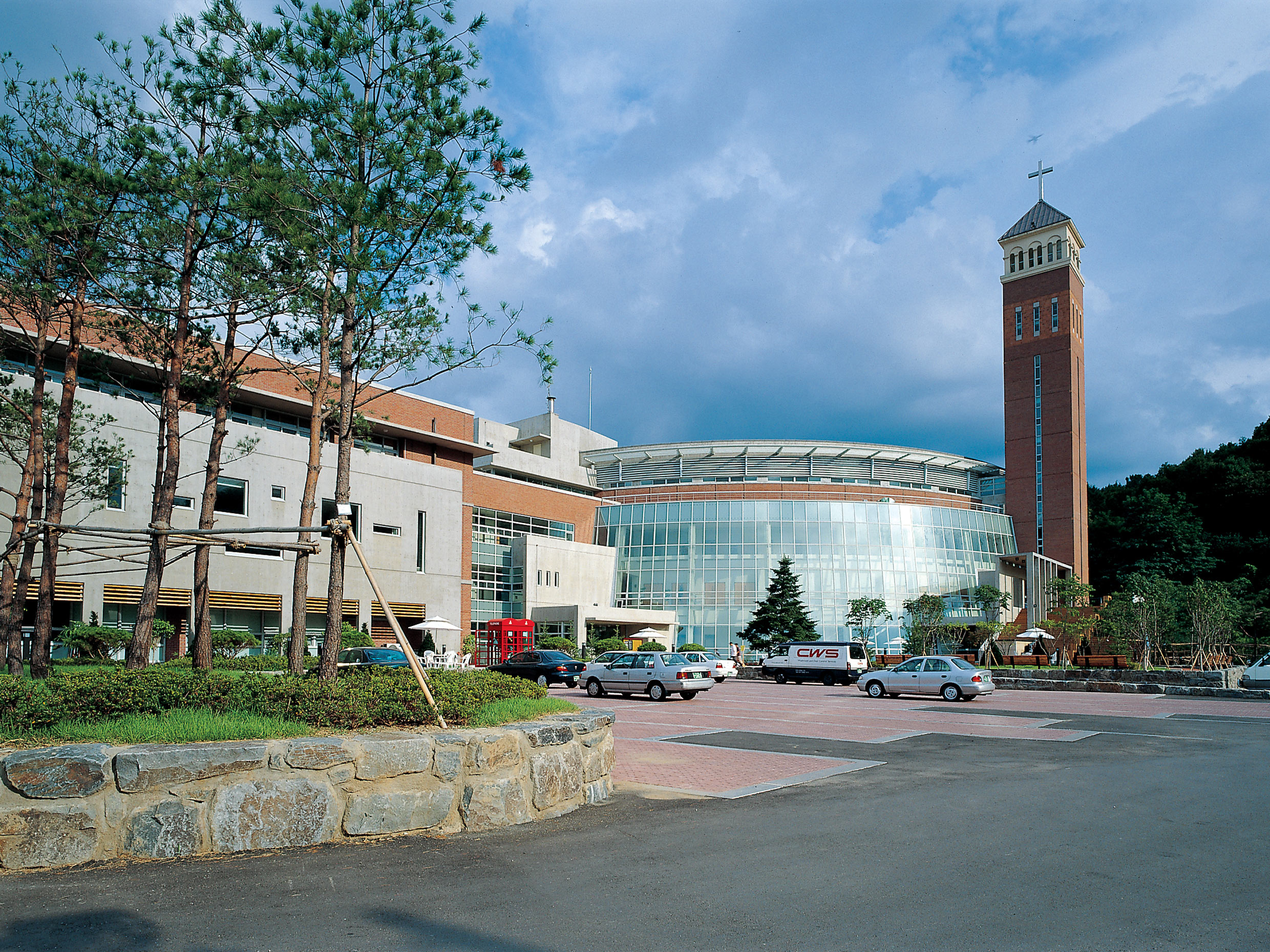
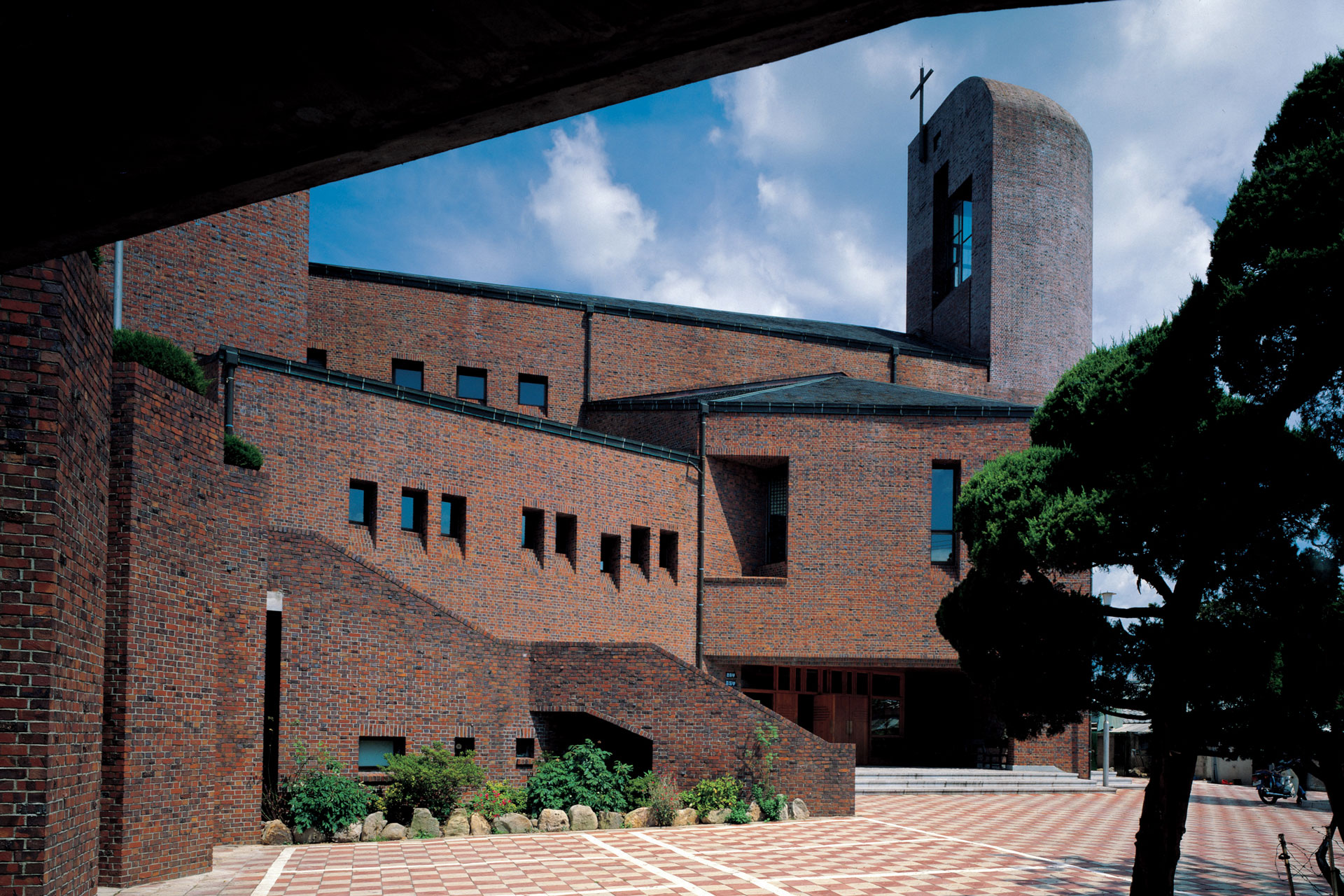
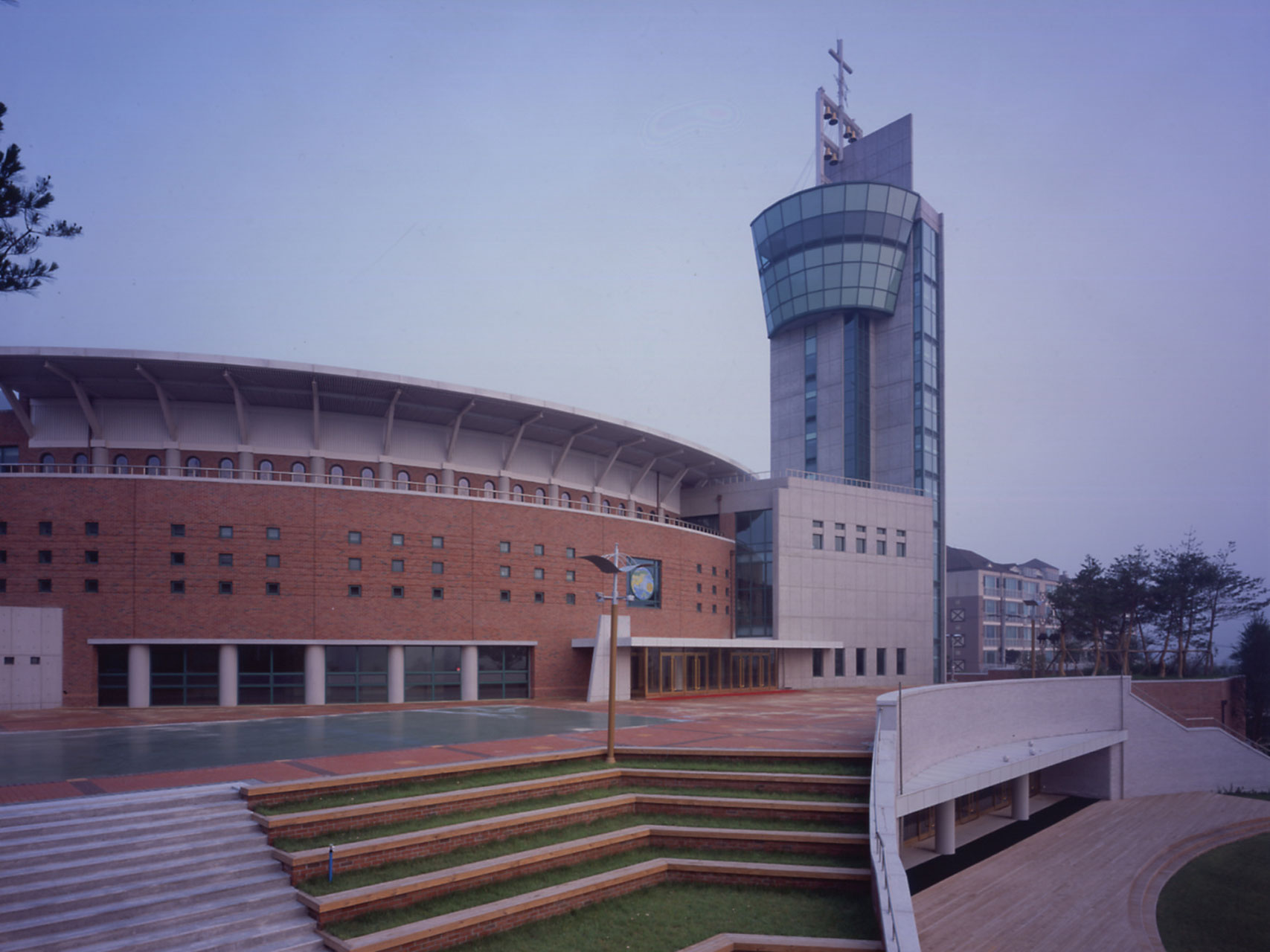
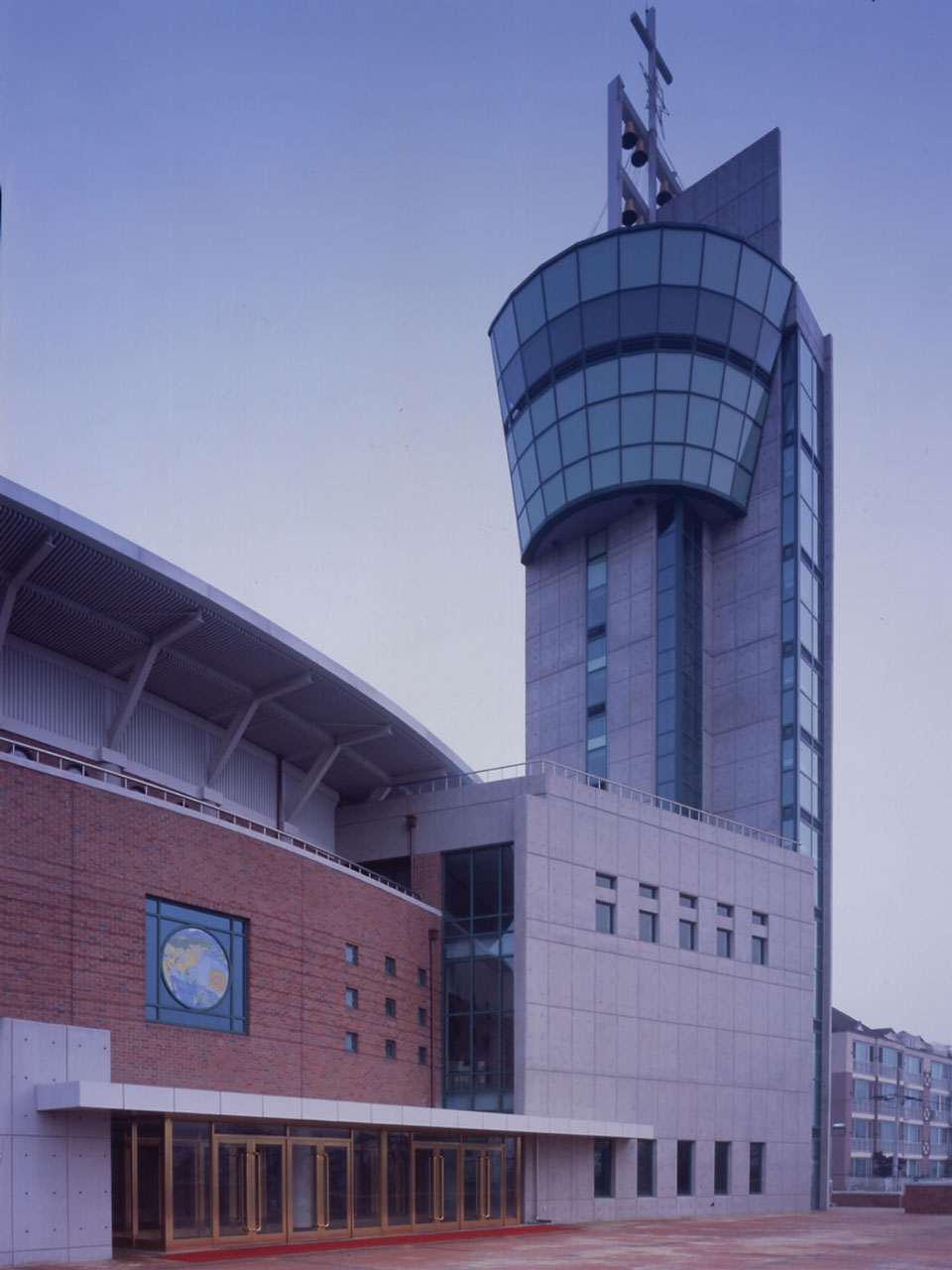
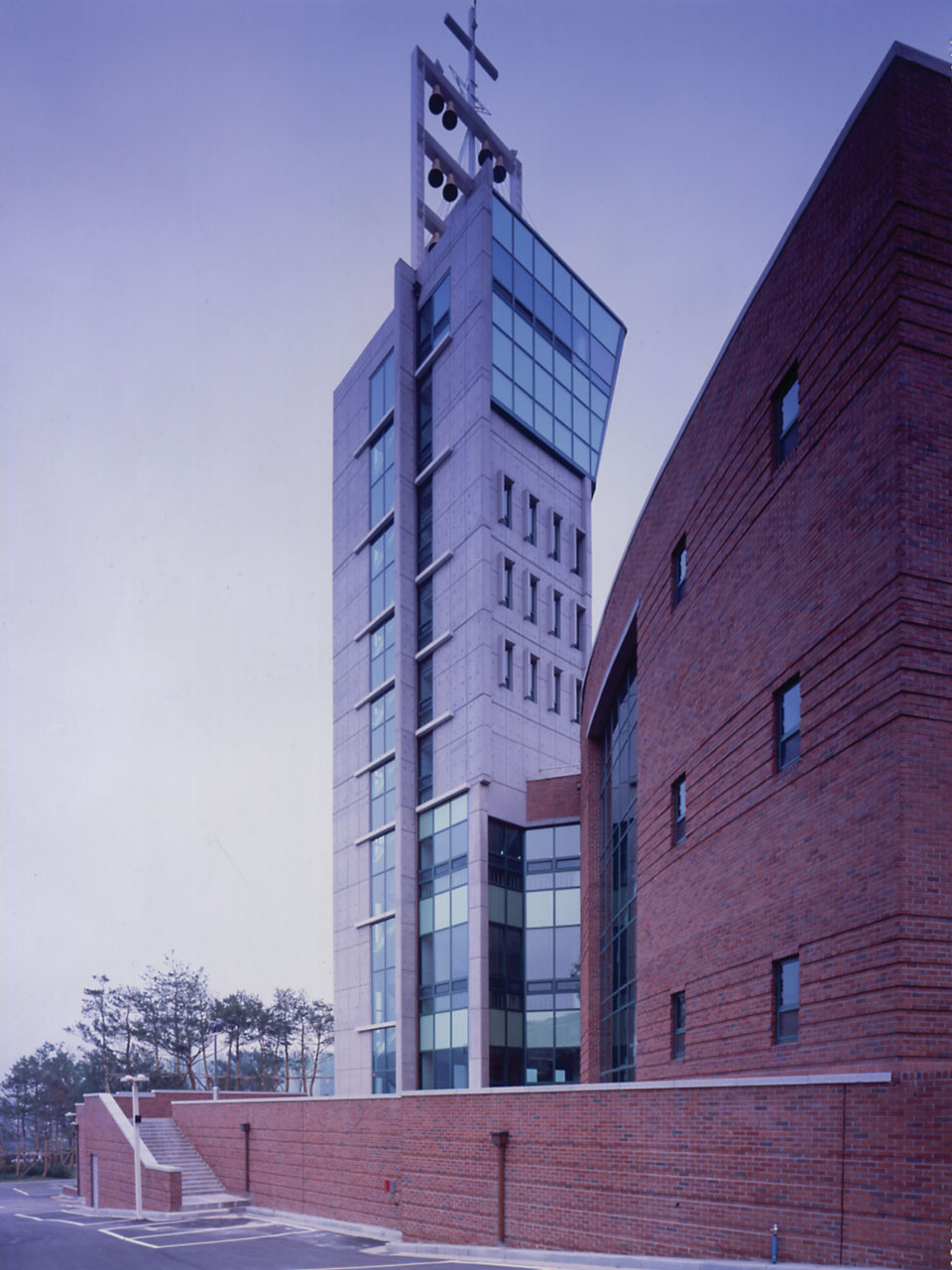
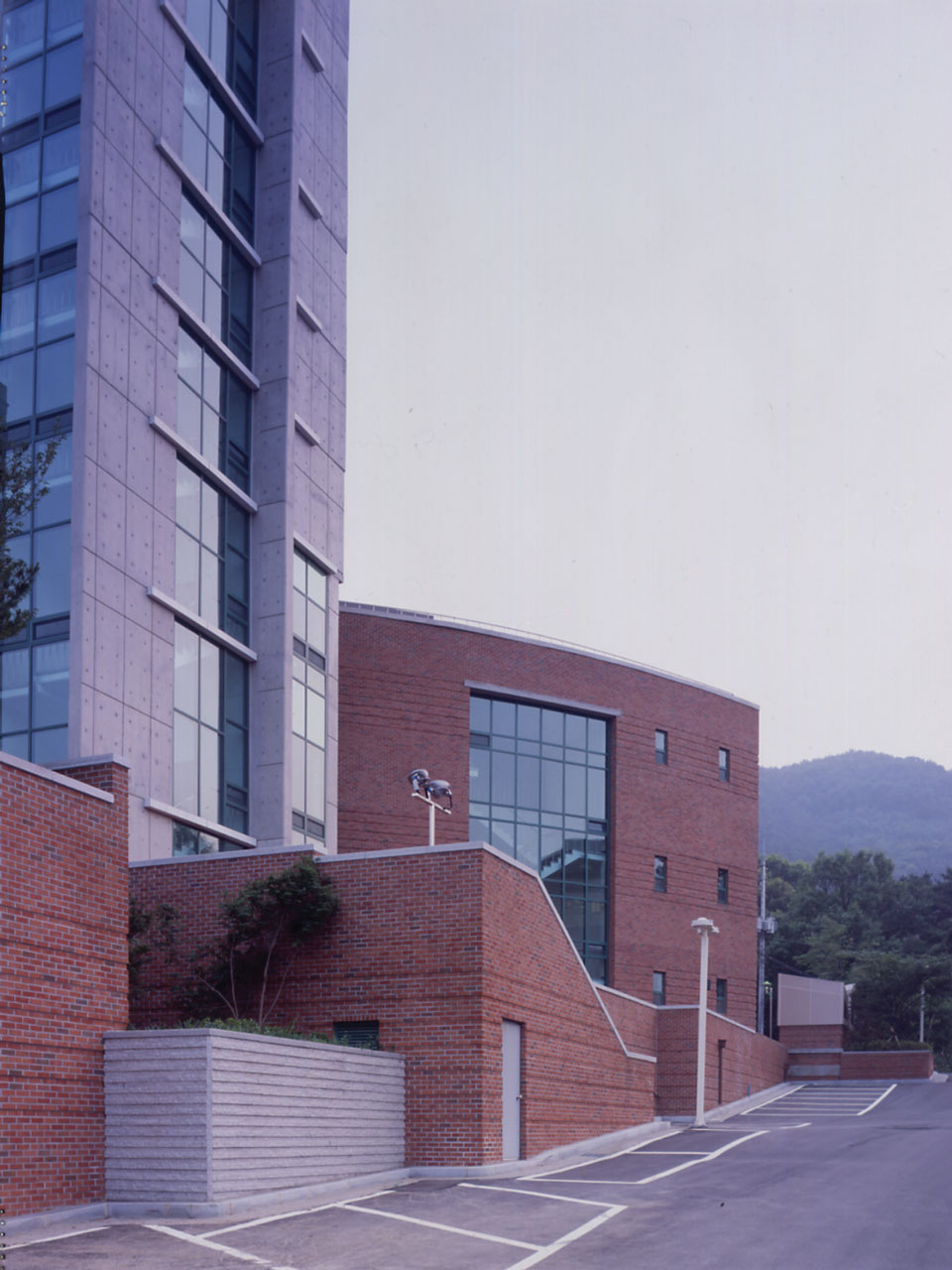
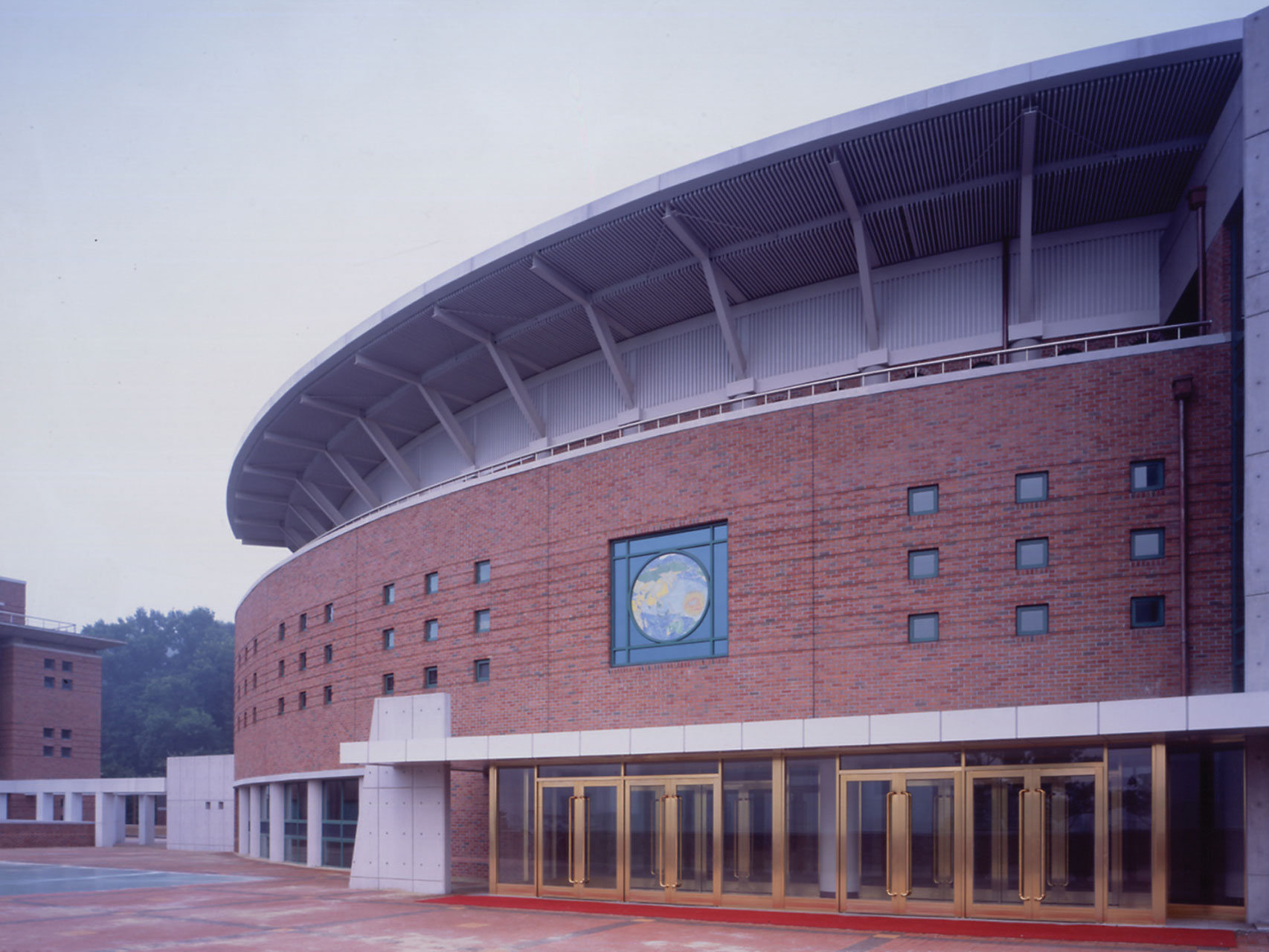
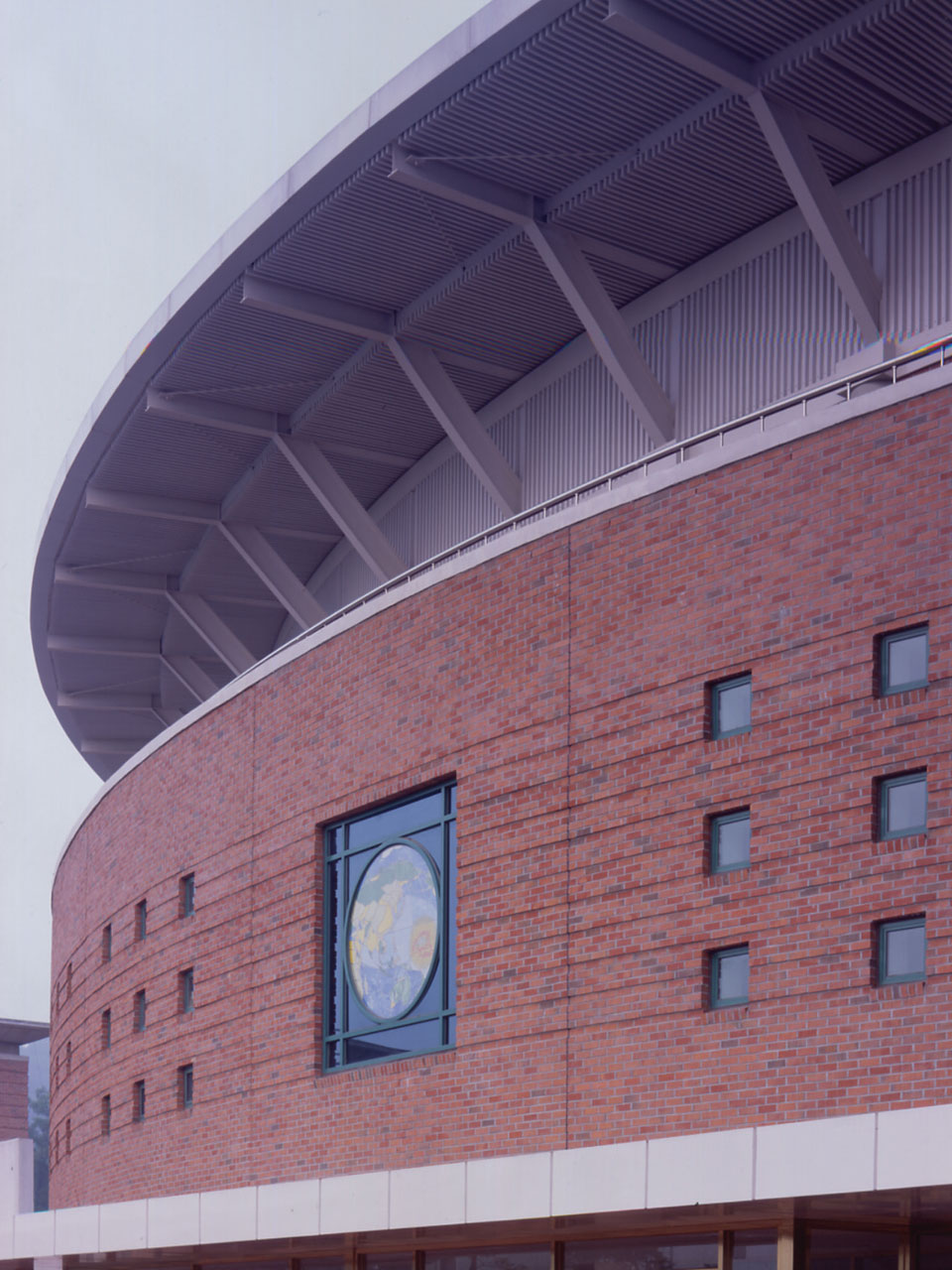
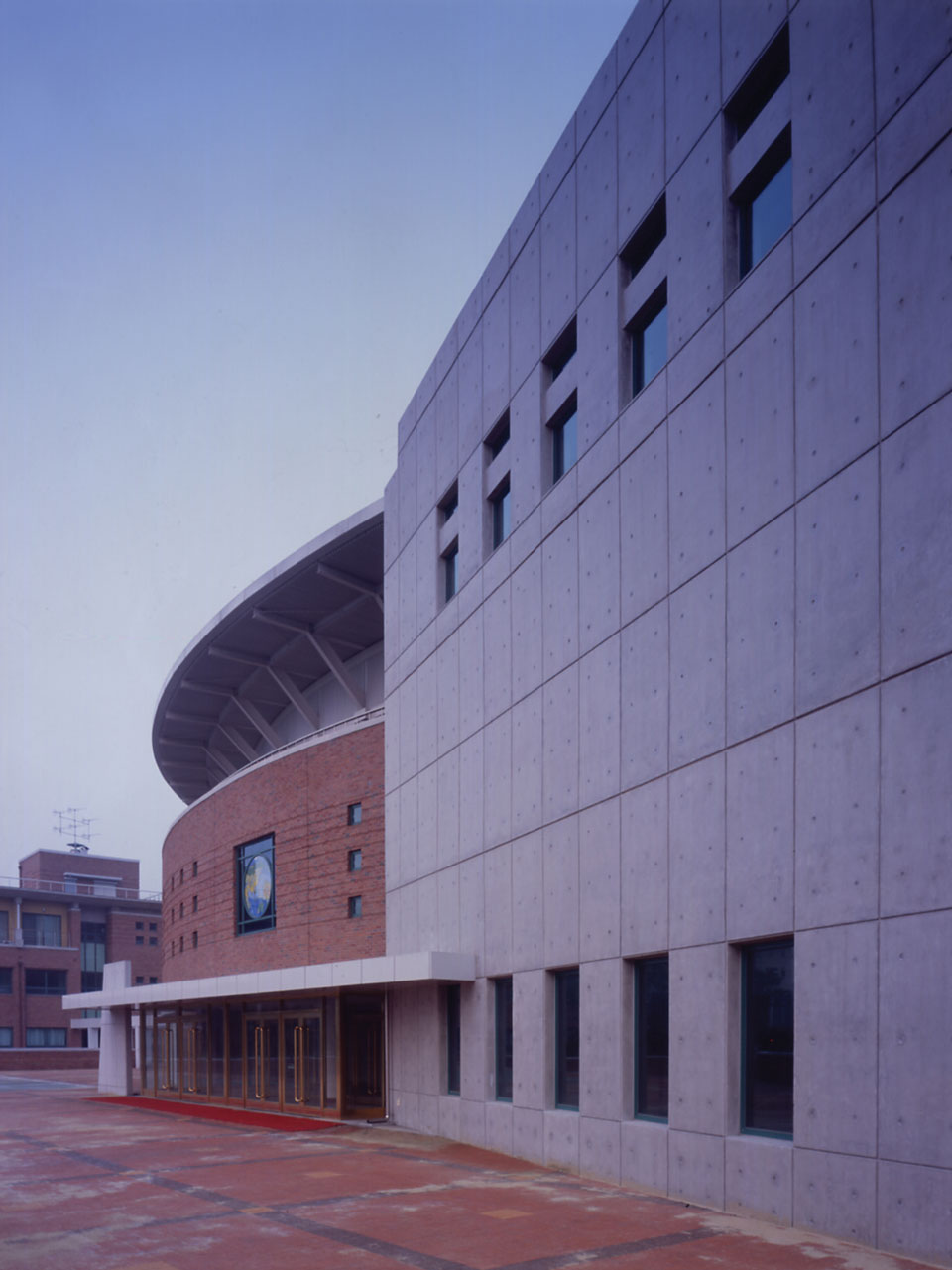
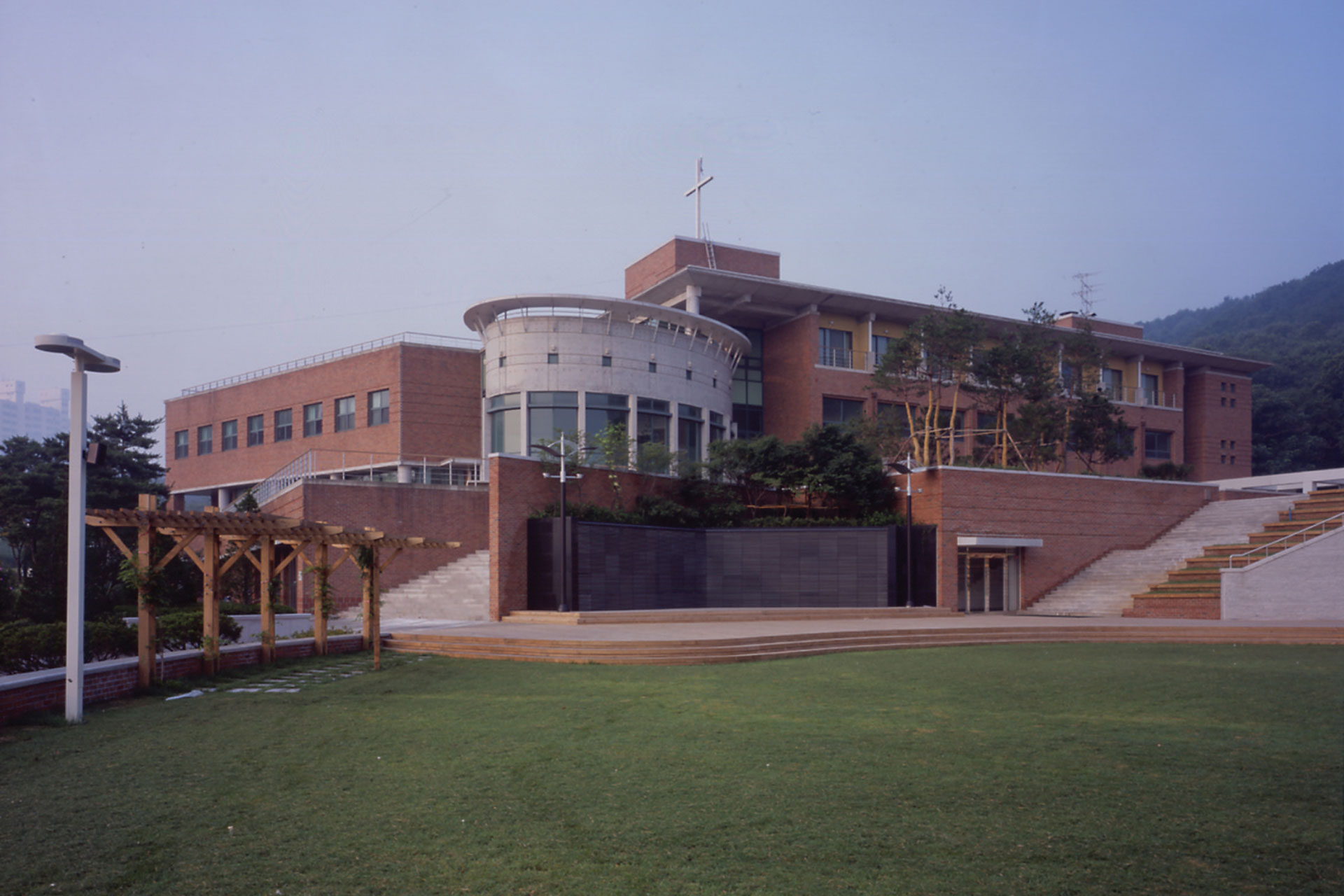
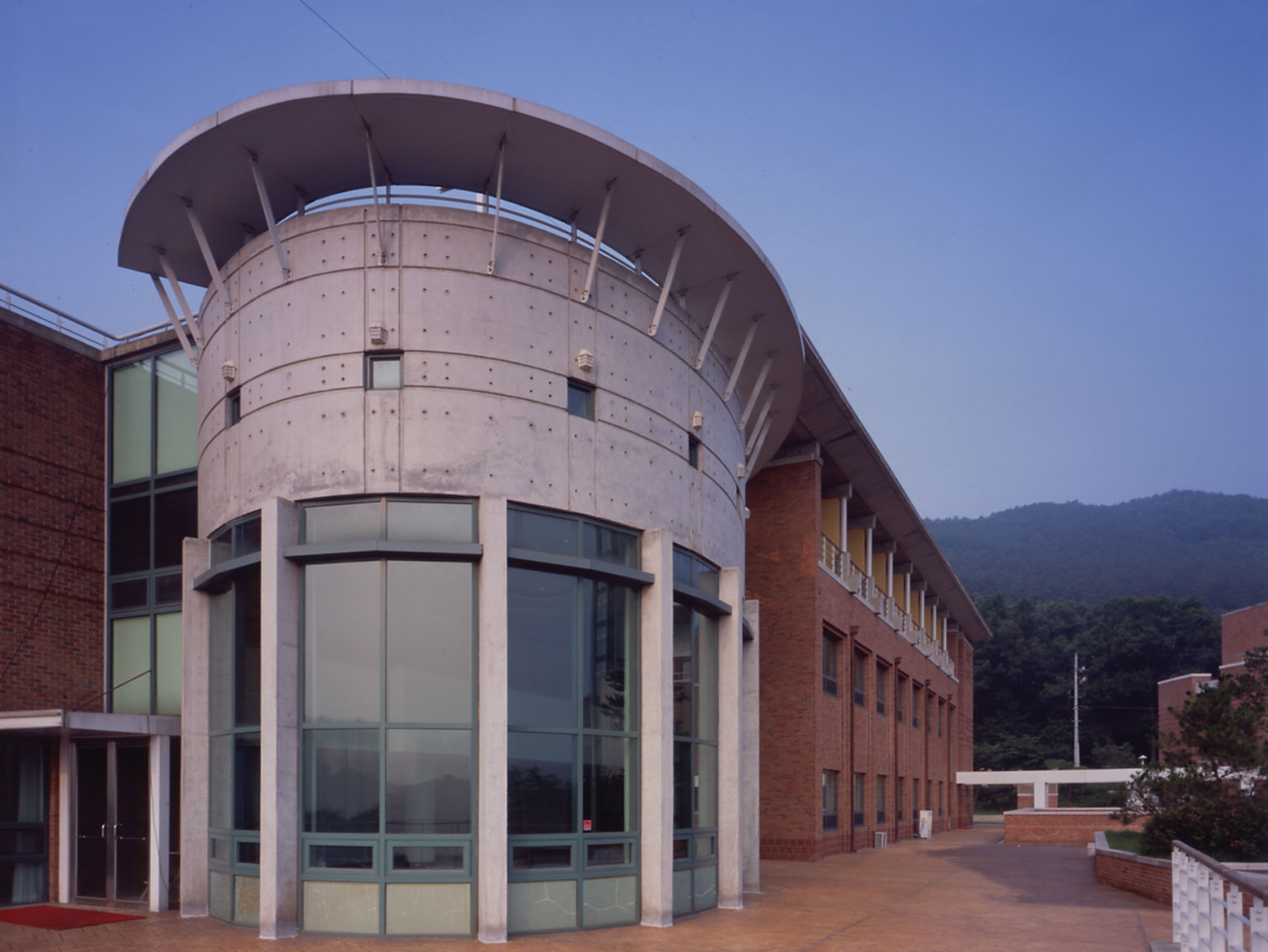
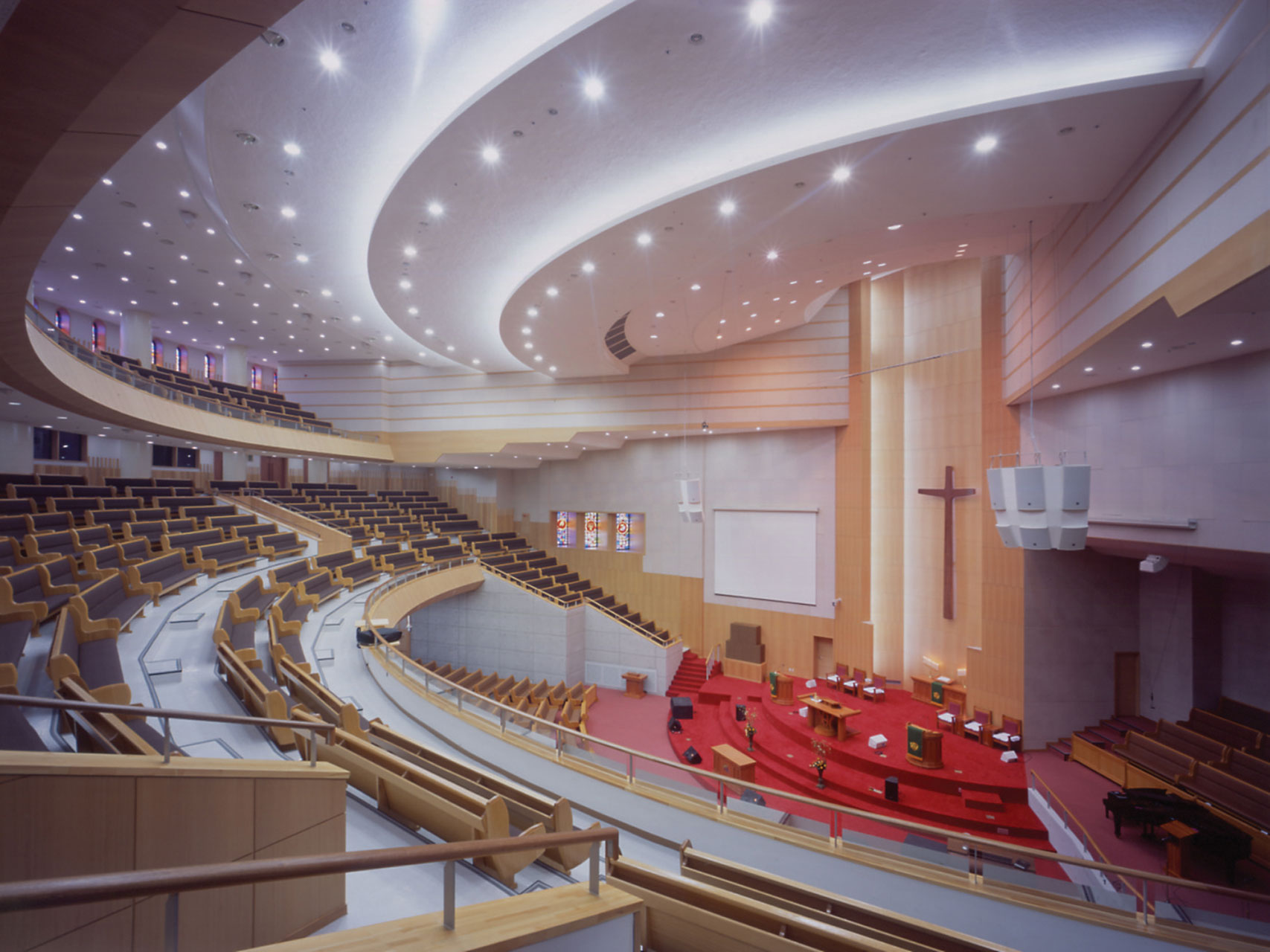
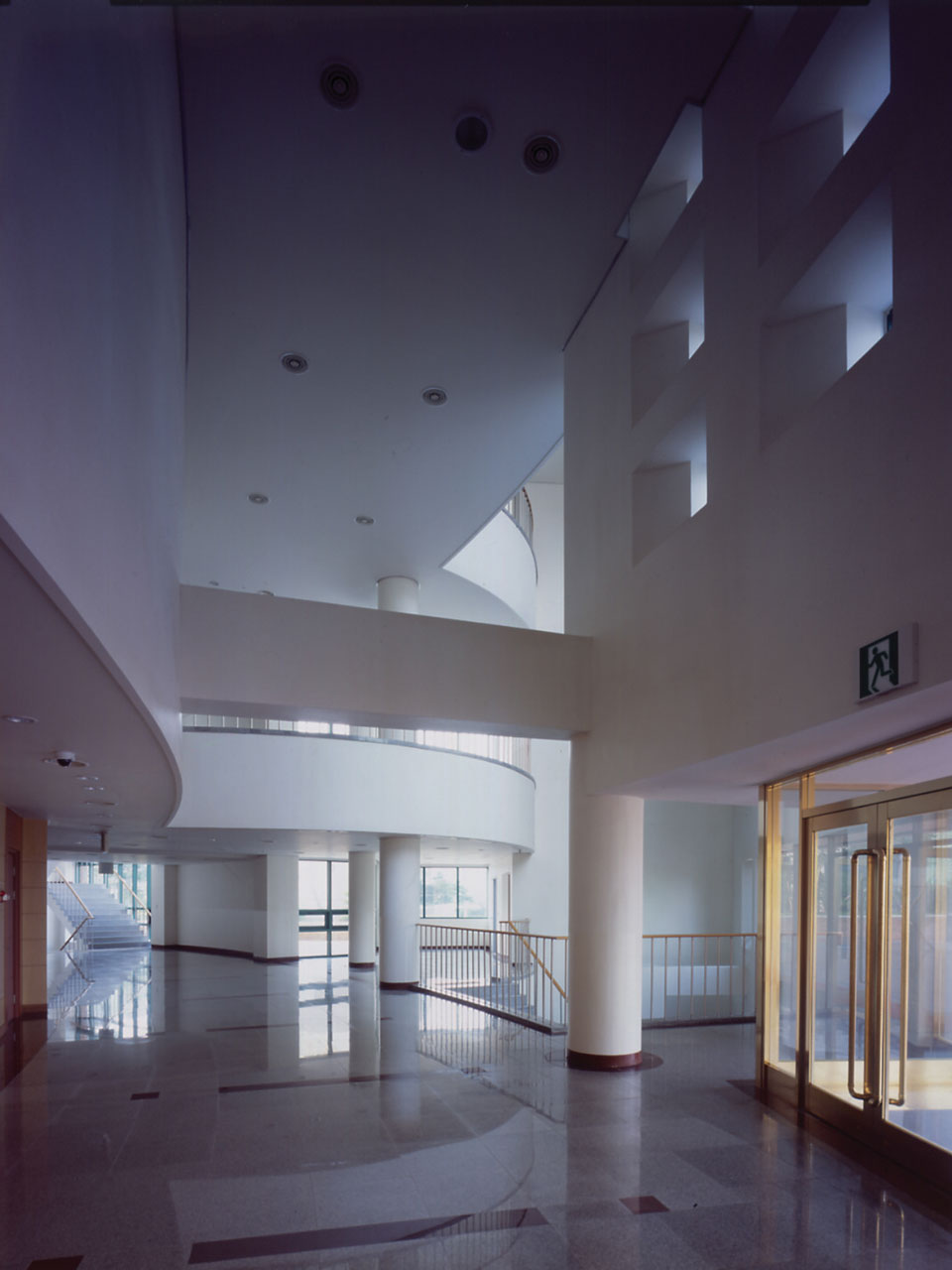
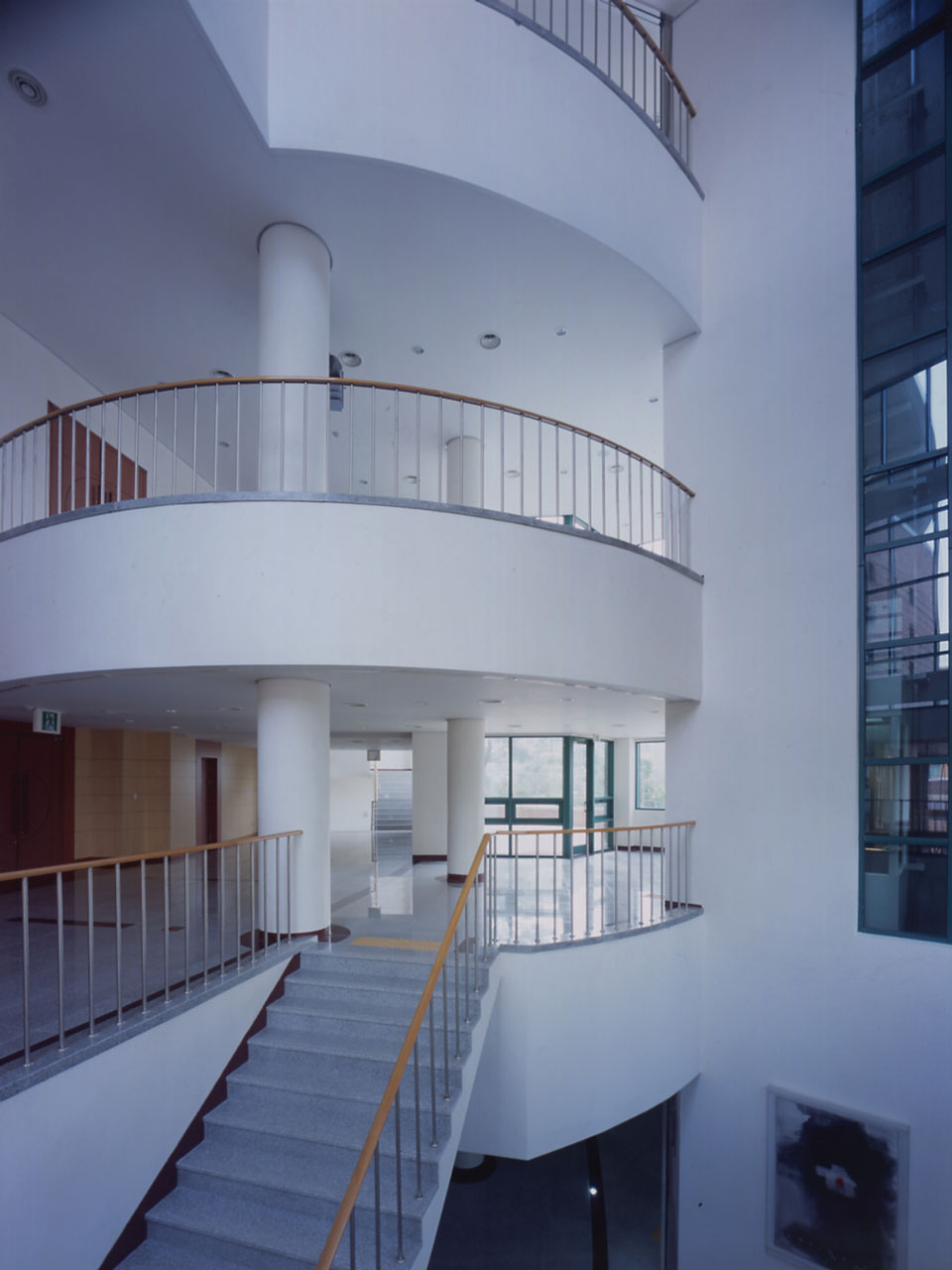
The church site is located on a gently sloping southeast-facing hill with an approximately 8.0m elevation difference across the lot, forming a typical mountain-backed, stream-facing (baesanimsu) configuration — offering unobstructed frontal views toward Dongmak Stream and backed by Gwanggyo Mountain. Amid this natural setting away from the city center, the primary design challenge was positioning the plaza at the apex of the church layout to organize the sanctuary and education wing. The site was reinterpreted first by establishing landscape and building axes: the landscape axis follows the change of elevation seen on the sloped terrain, with multiple “layers” defined to delineate zones, while the church functions are articulated into layered masses rather than a single monolithic form to minimize any sense of oppression. The aim was a modest, comforting sculptural expression that balances economy with a distinctly Korean essence.
At the intersection of the landscape and building axes lies the elliptical plaza, serving as the “nucleus” of the layout — both a processional space leading to the chapel, a functional core, and a symbolic heart of faith. The path to the chapel employs metaphorical indirection rather than directness. This planning anticipates the church’s growth and leaves room for its future expansion into a trinitarian configuration. By incorporating traditional construction principles, adapting to the slope, and using a scattered-unit layout (chae-nanum) to create diverse outdoor spaces, the design proposes a new archetype for modern Korean rural churches.

-
Status
Completed
-
Awards
- 2006 Gyeonggi Architecture Culture Award_ Finalist
-
Order
Mokyang Methodist Church
-
Purpose
Religious
-
Design Year
1996
-
Completion Year
2005
-
Location
Yongin-si, Gyeonggi-do
-
Site area
16,891m2
-
Gross Floor Area
12,068m2
-
Building Area
2,955m2
-
Scale
B1, 3F, R6
-
Participation
The church site is located on a gently sloping southeast-facing hill with an approximately 8.0m elevation difference across the lot, forming a typical mountain-backed, stream-facing (baesanimsu) configuration — offering unobstructed frontal views toward Dongmak Stream and backed by Gwanggyo Mountain. Amid this natural setting away from the city center, the primary design challenge was positioning the plaza at the apex of the church layout to organize the sanctuary and education wing. The site was reinterpreted first by establishing landscape and building axes: the landscape axis follows the change of elevation seen on the sloped terrain, with multiple “layers” defined to delineate zones, while the church functions are articulated into layered masses rather than a single monolithic form to minimize any sense of oppression. The aim was a modest, comforting sculptural expression that balances economy with a distinctly Korean essence.
At the intersection of the landscape and building axes lies the elliptical plaza, serving as the “nucleus” of the layout — both a processional space leading to the chapel, a functional core, and a symbolic heart of faith. The path to the chapel employs metaphorical indirection rather than directness. This planning anticipates the church’s growth and leaves room for its future expansion into a trinitarian configuration. By incorporating traditional construction principles, adapting to the slope, and using a scattered-unit layout (chae-nanum) to create diverse outdoor spaces, the design proposes a new archetype for modern Korean rural churches.