Close
![Popup Image]()
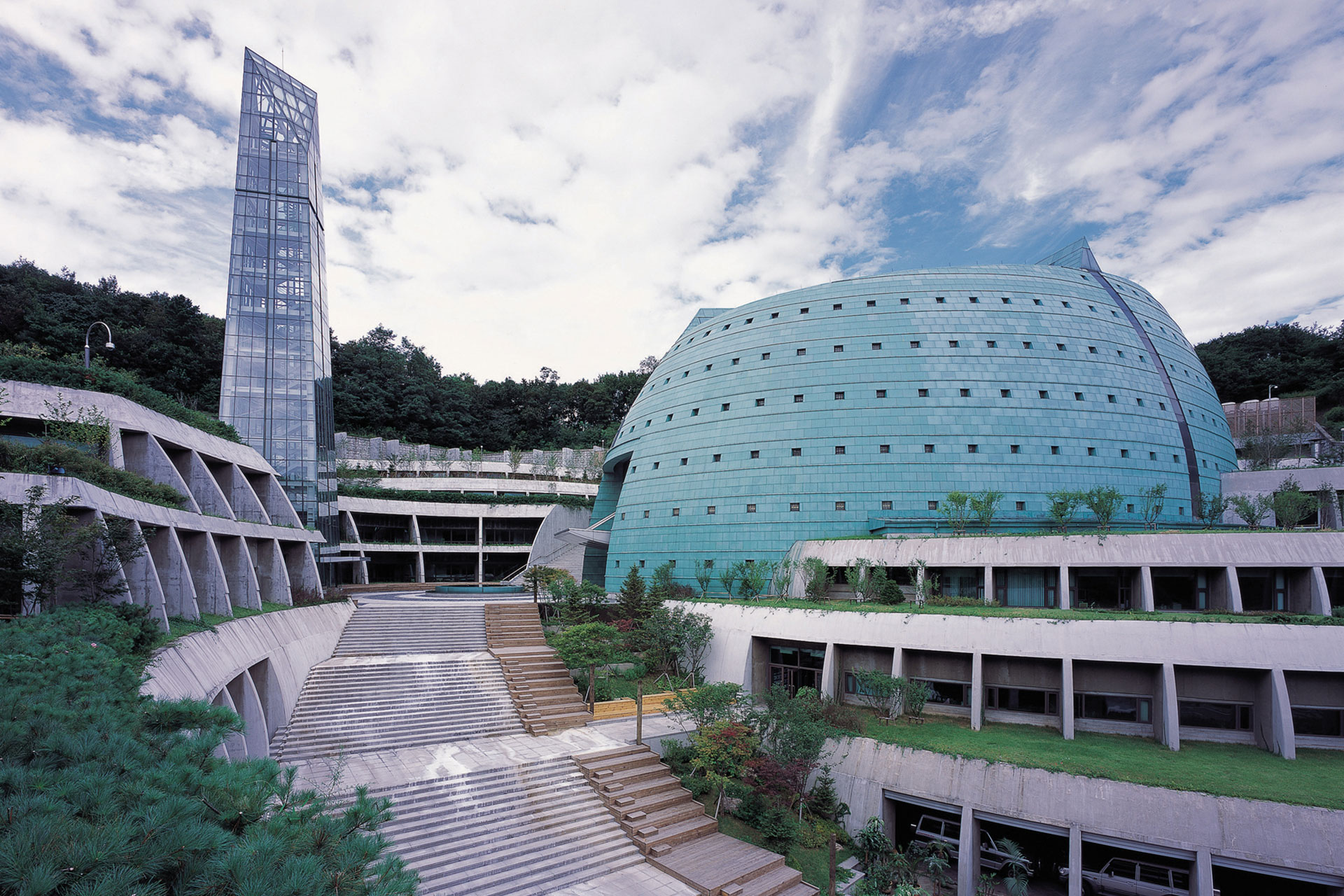
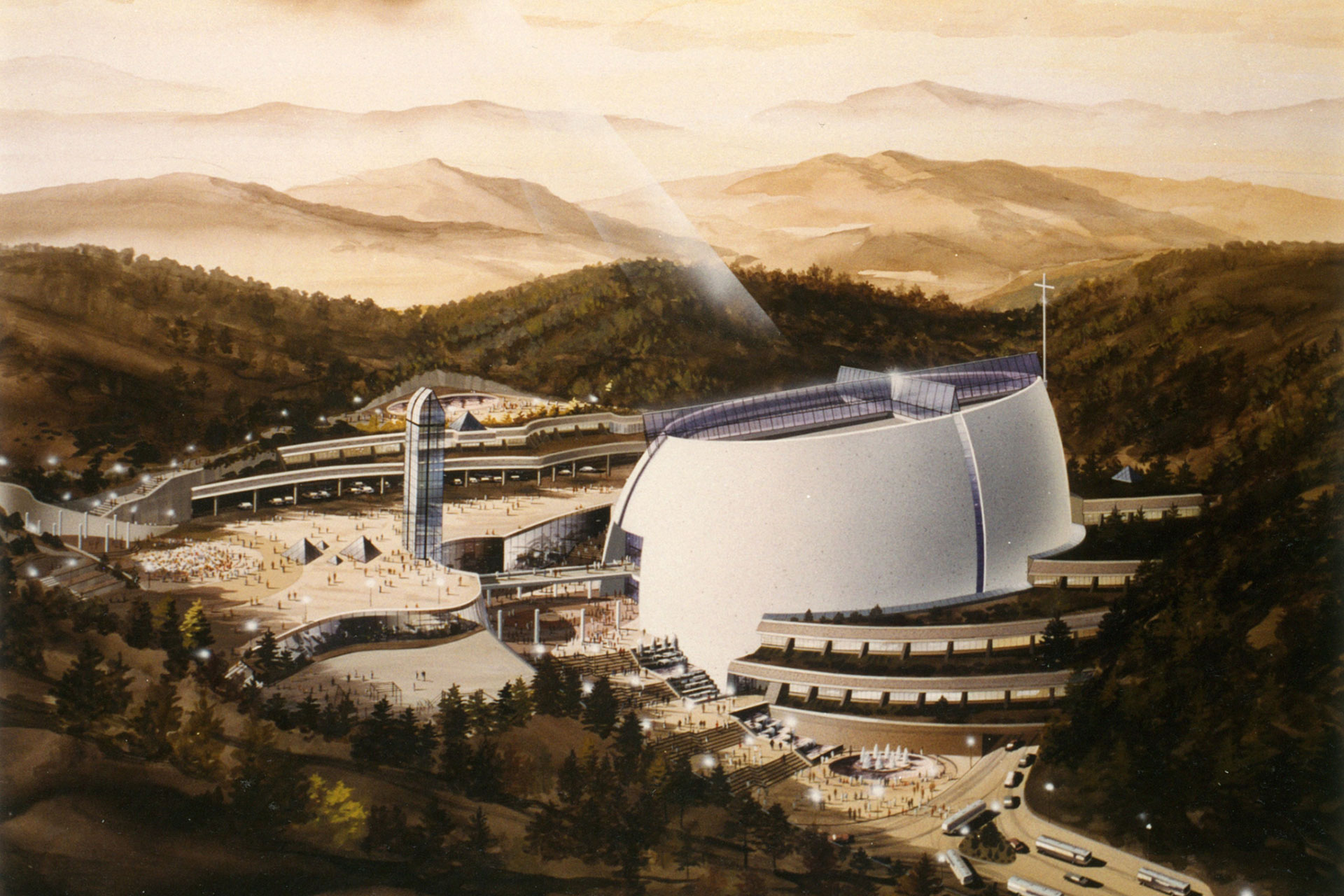
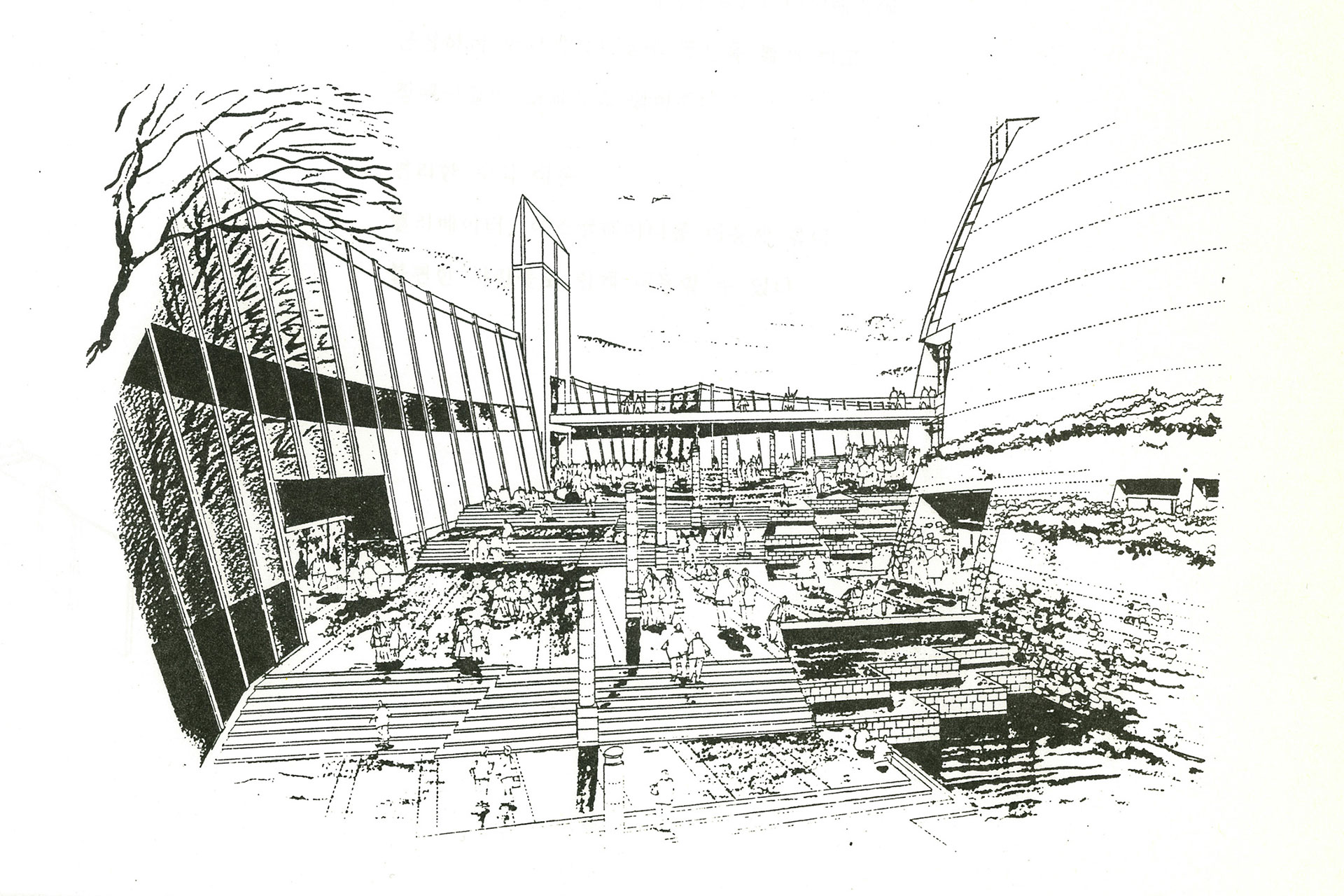
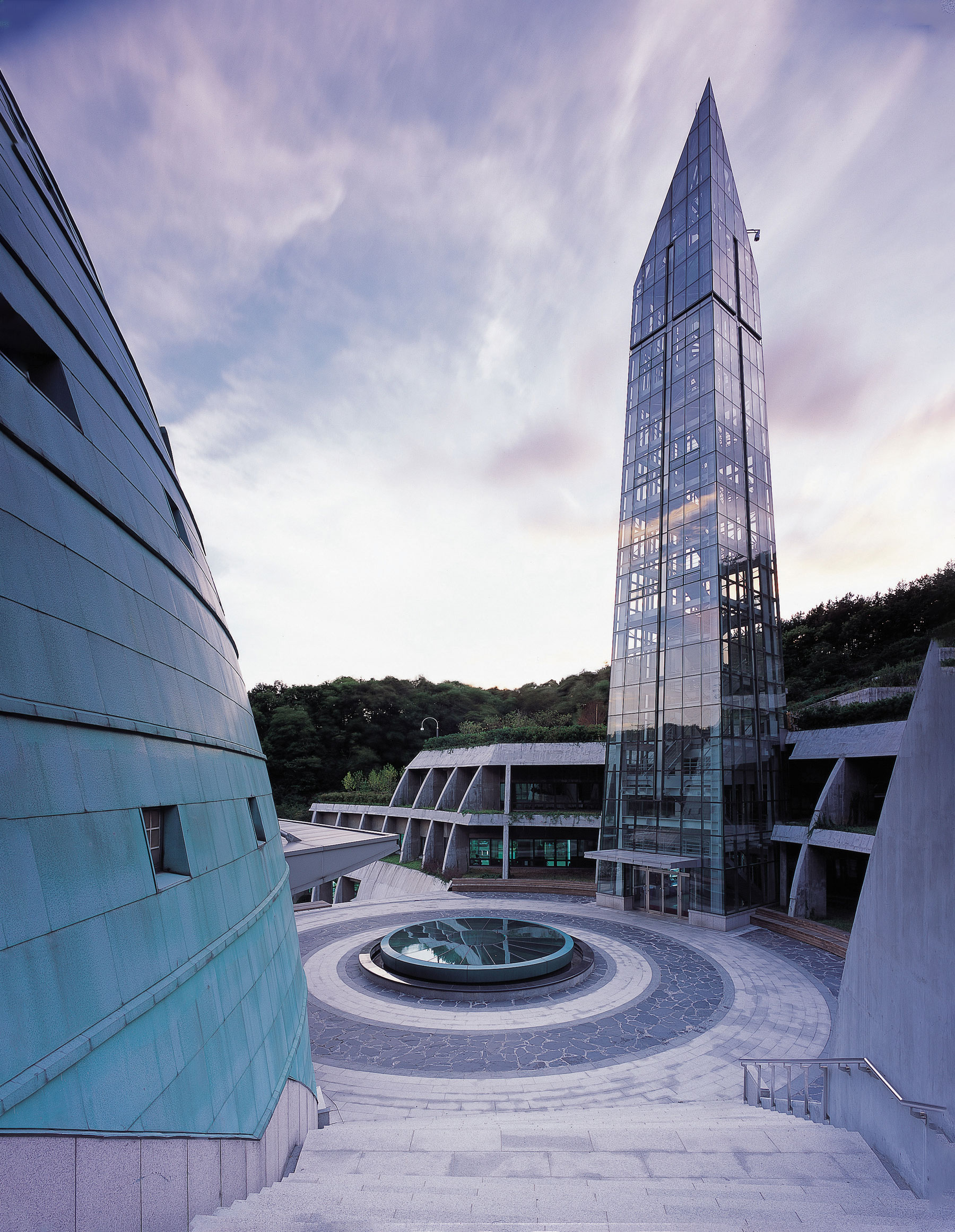
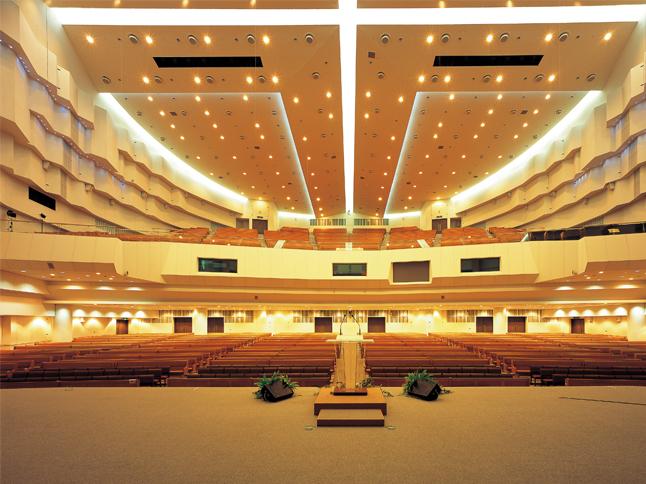
Hallelujah Church is a project aimed at addressing the new challenge of accommodating 10,000 people simultaneously. Following the modernization of Korea in the 20th century, the gradually increasing church population triggered the demand for complex religious facilities beyond traditional worship and ancillary spaces. In this context, Junglim Architecture proposed a new model of a contemporary church with multifaceted functions as a missionary, cultural, youth, and family center. This reflects Junglim’s open attitude to architectural design, responding agilely to changing society rather than adhering to formalism.
Hallelujah Church was developed around three categories conceptualizing the 21st-century church. It aimed to express the image of a 21st-century Korean church through traditional elements such as the entrance, bell tower, main sanctuary, and light. It represents both 21st-century technology and nature, securing daylight in the underground space and reducing the building’s massiveness via curved surfaces and materials at the entrance. This connects nature, the building, and visitors, pursuing “architecture as nature” harmonizing with the surroundings. Lastly, it provides a special understanding and interpretation of a large-scale complex facility accommodating 10,000 people simultaneously.
In the Press
Archive

-
Status
Completed
-
Awards
- 2006 Gyeonggi Architecture Culture Award_Grand Prize
-
Order
Hallelujah Church
-
Purpose
Religious
-
Design Year
1993 - 1994 / 1996
-
Completion Year
1997
-
Location
Seongnam-si, Gyeonggi-do
-
Site area
12,686.00m2
-
Gross Floor Area
59,824.83m2
-
Building Area
2,506.00m2
-
Scale
B9, 4F
Hallelujah Church is a project aimed at addressing the new challenge of accommodating 10,000 people simultaneously. Following the modernization of Korea in the 20th century, the gradually increasing church population triggered the demand for complex religious facilities beyond traditional worship and ancillary spaces. In this context, Junglim Architecture proposed a new model of a contemporary church with multifaceted functions as a missionary, cultural, youth, and family center. This reflects Junglim’s open attitude to architectural design, responding agilely to changing society rather than adhering to formalism.
Hallelujah Church was developed around three categories conceptualizing the 21st-century church. It aimed to express the image of a 21st-century Korean church through traditional elements such as the entrance, bell tower, main sanctuary, and light. It represents both 21st-century technology and nature, securing daylight in the underground space and reducing the building’s massiveness via curved surfaces and materials at the entrance. This connects nature, the building, and visitors, pursuing “architecture as nature” harmonizing with the surroundings. Lastly, it provides a special understanding and interpretation of a large-scale complex facility accommodating 10,000 people simultaneously.
In the Press
Archive