Close
![Popup Image]()
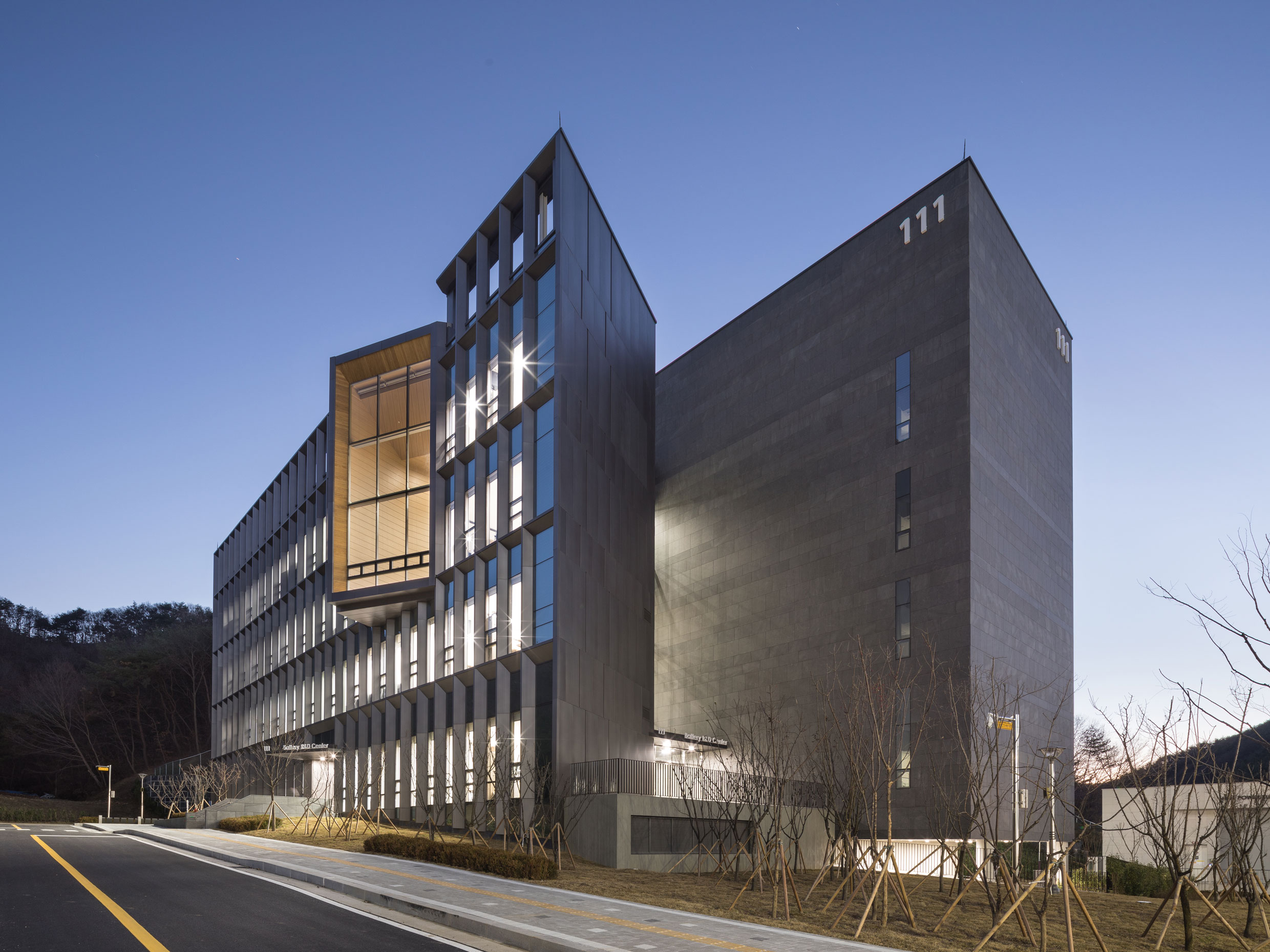
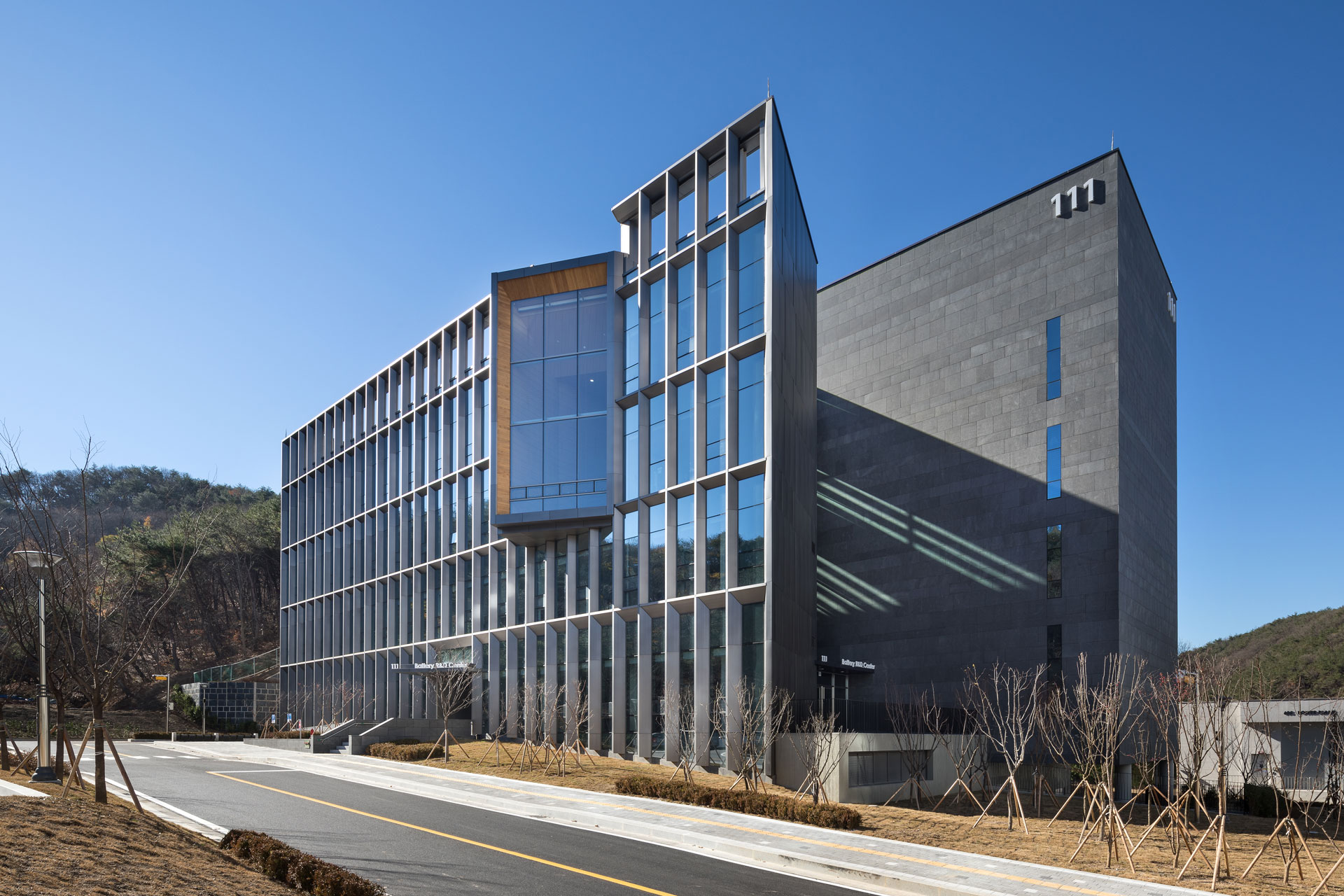
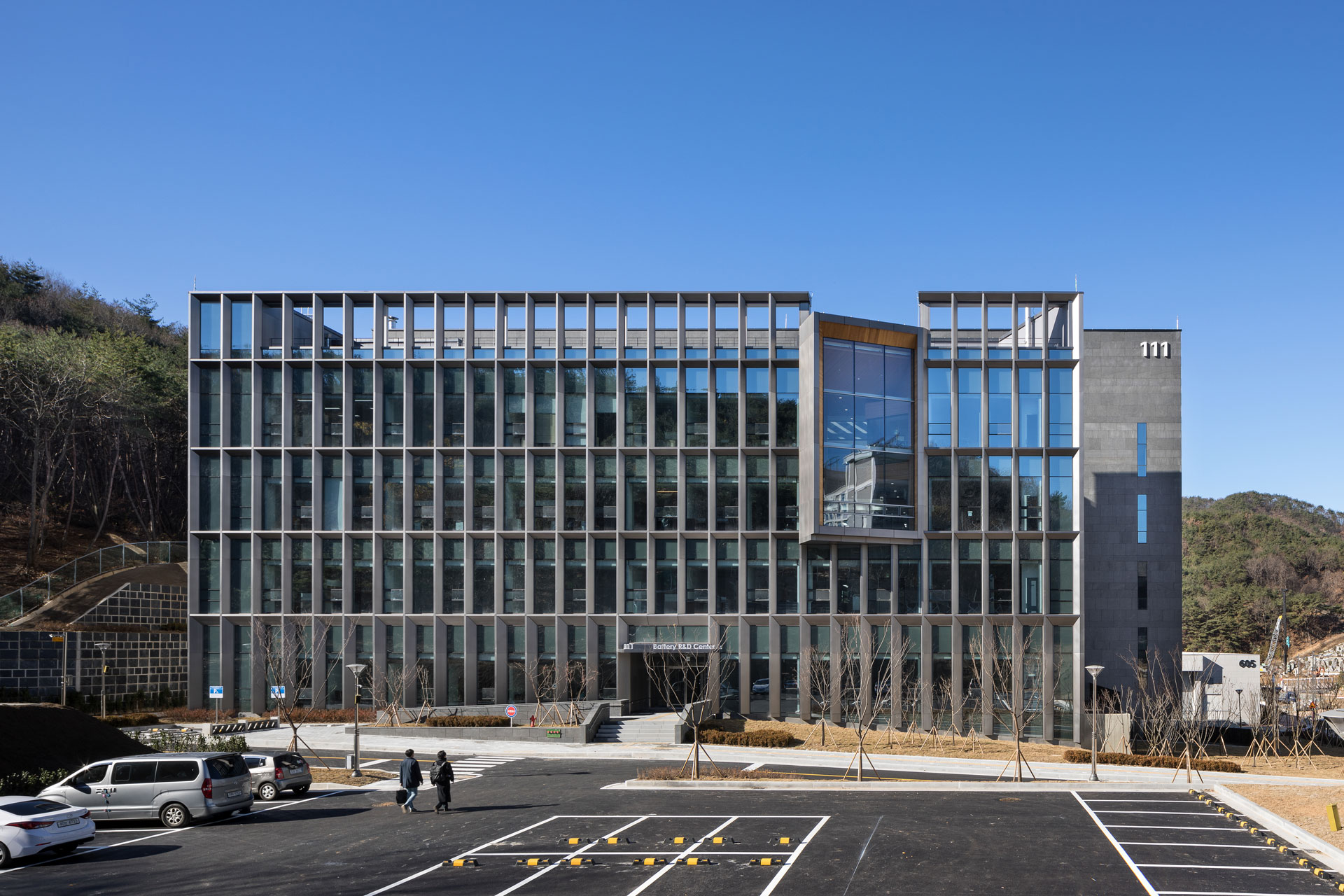
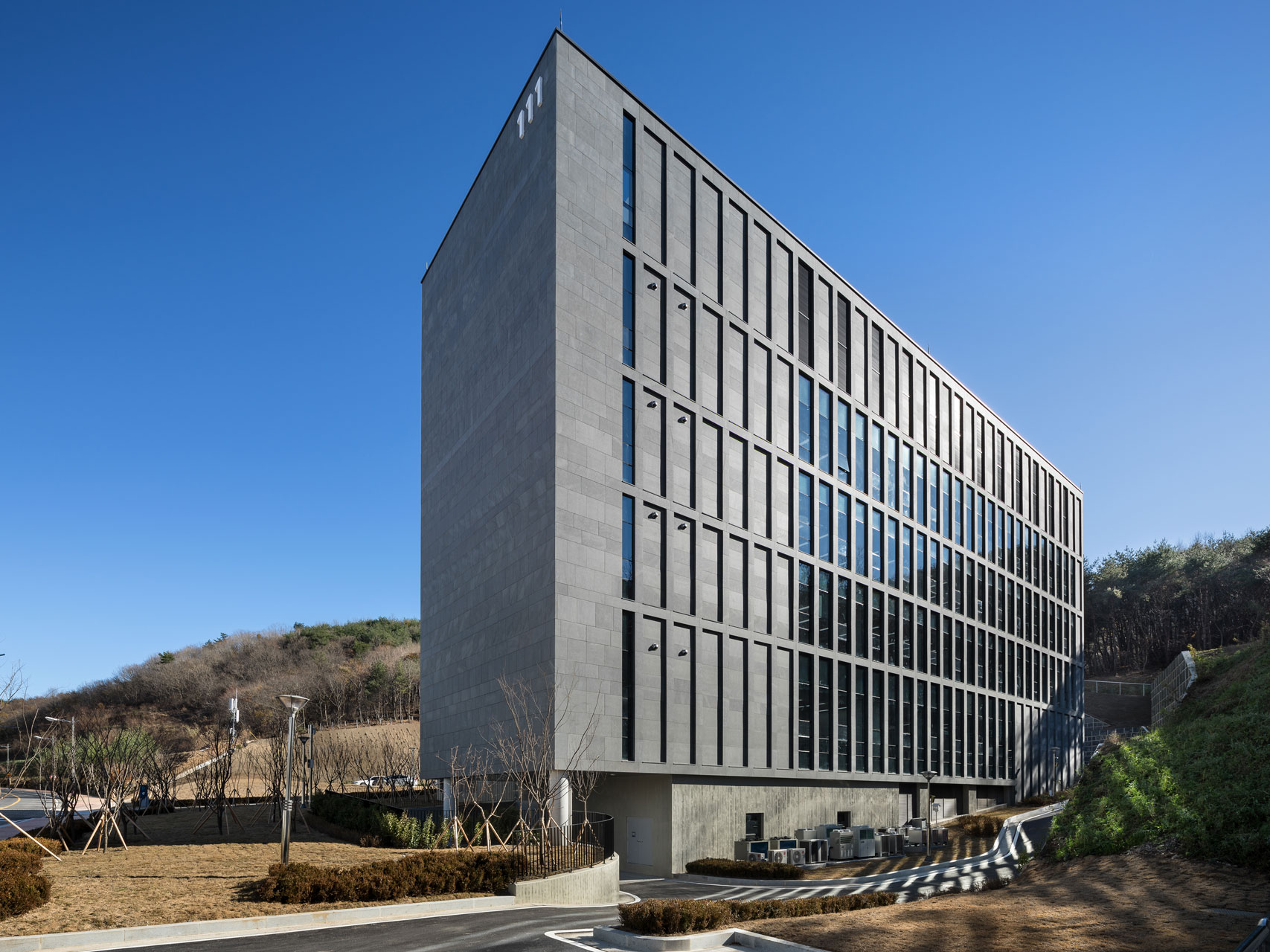
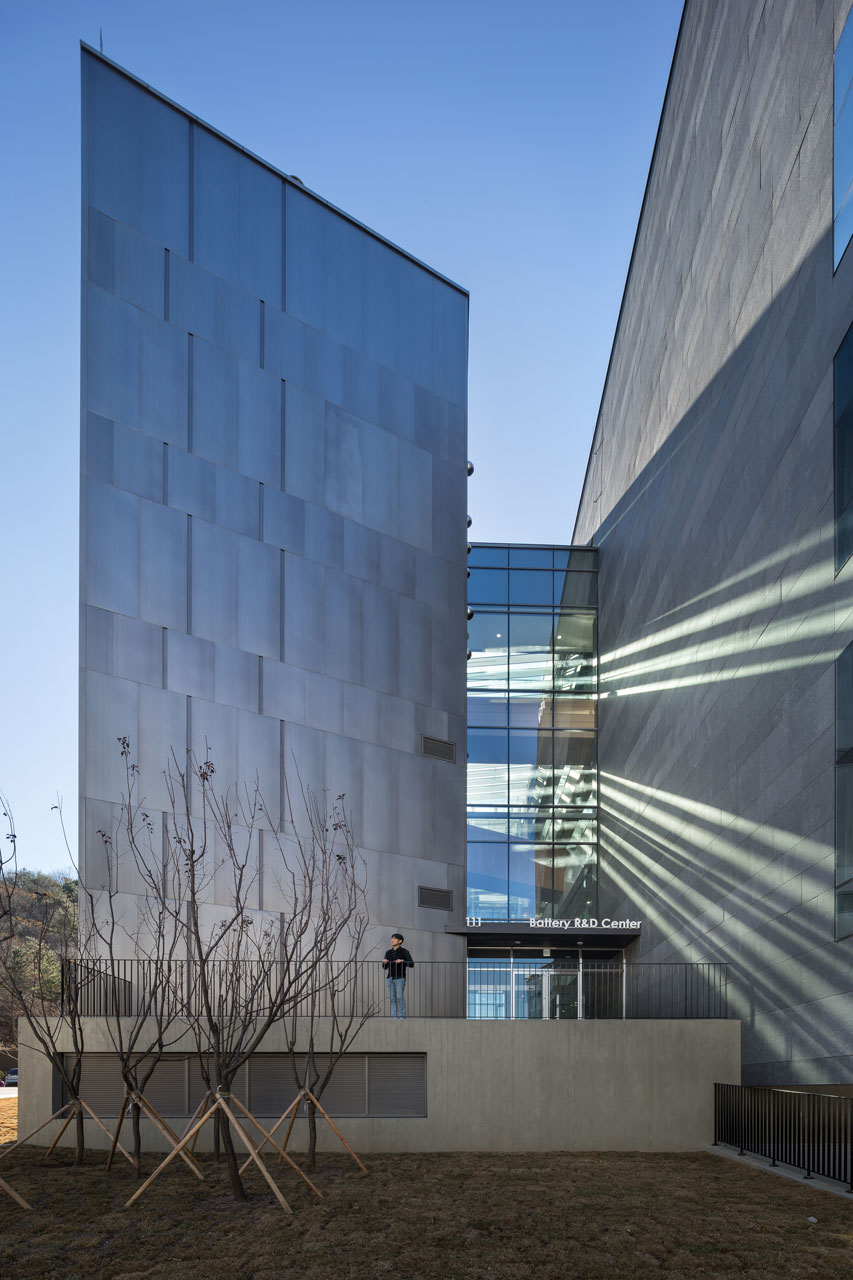
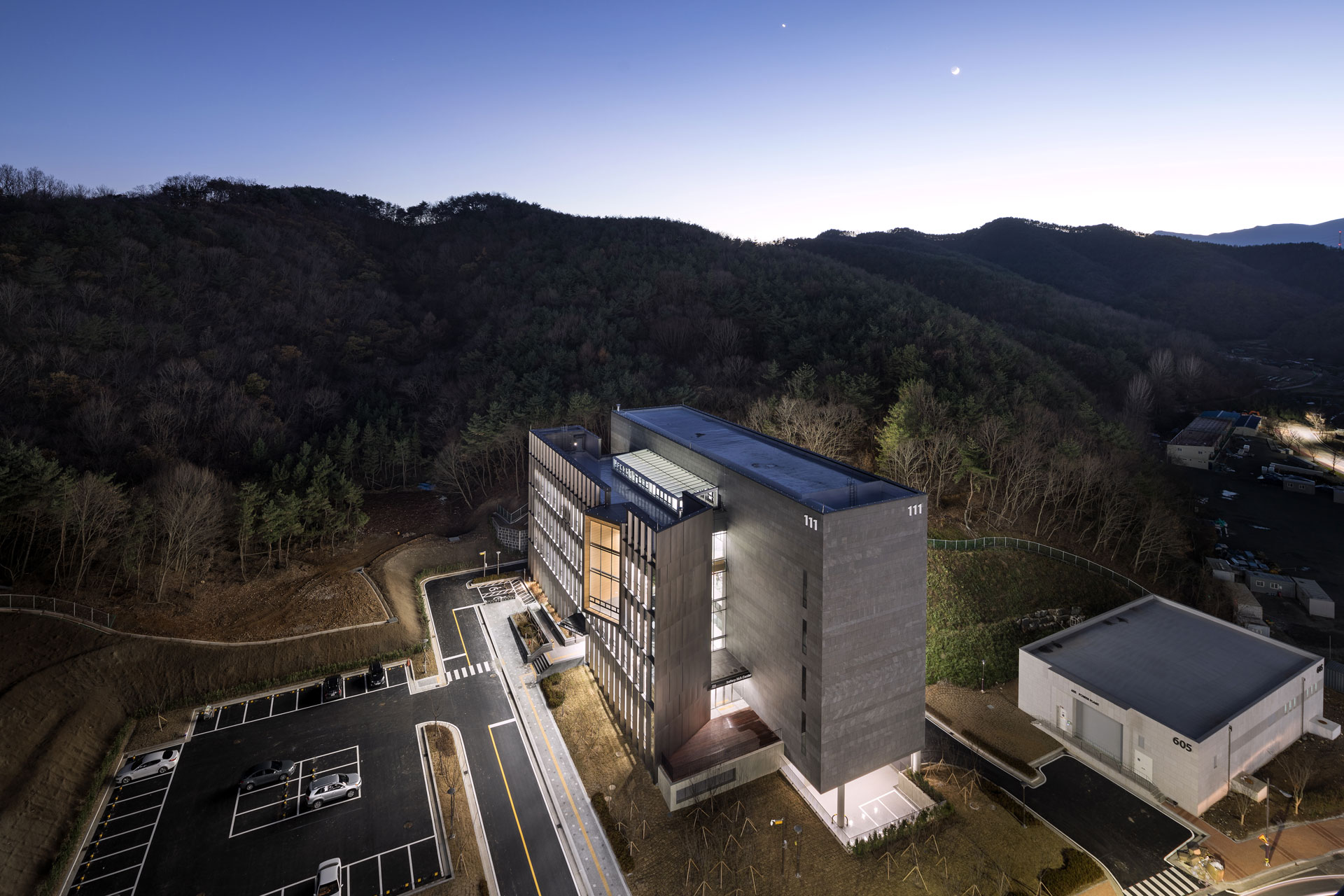
Located at the southernmost part of the campus, the Ulsan National Institute of Science and Technology (UNIST) Battery R&D Center prioritized harmonizing the existing circular arrangement of research buildings with the north-facing sloped site condition. The massing was split into two segments, offset north-south with a wind corridor and waterway between them. The sloped terrain was used to plan outdoor spaces and experimental equipment circulation routes. This approach maintained natural flows while aligning with the campus master plan and future phase two expansion.
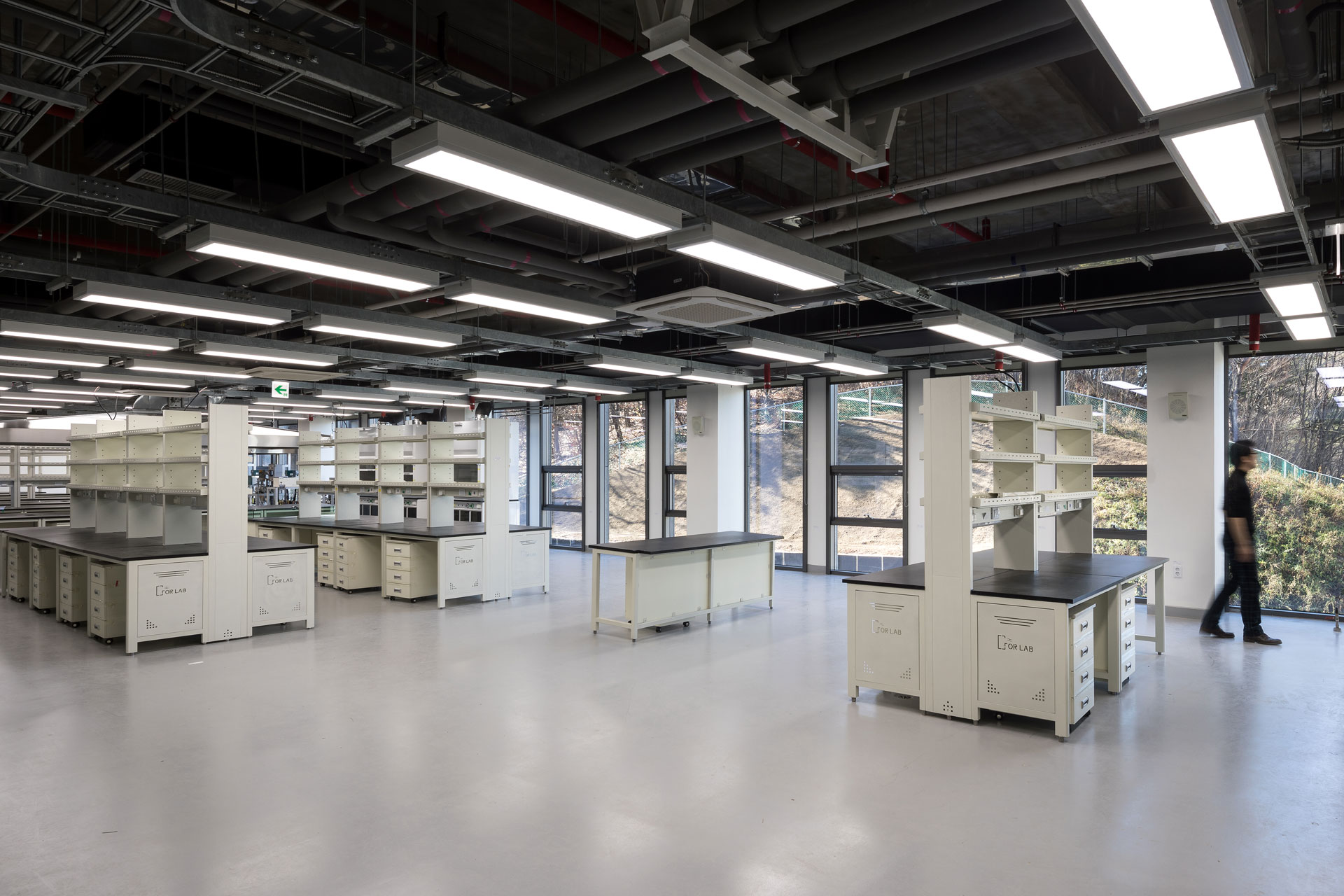
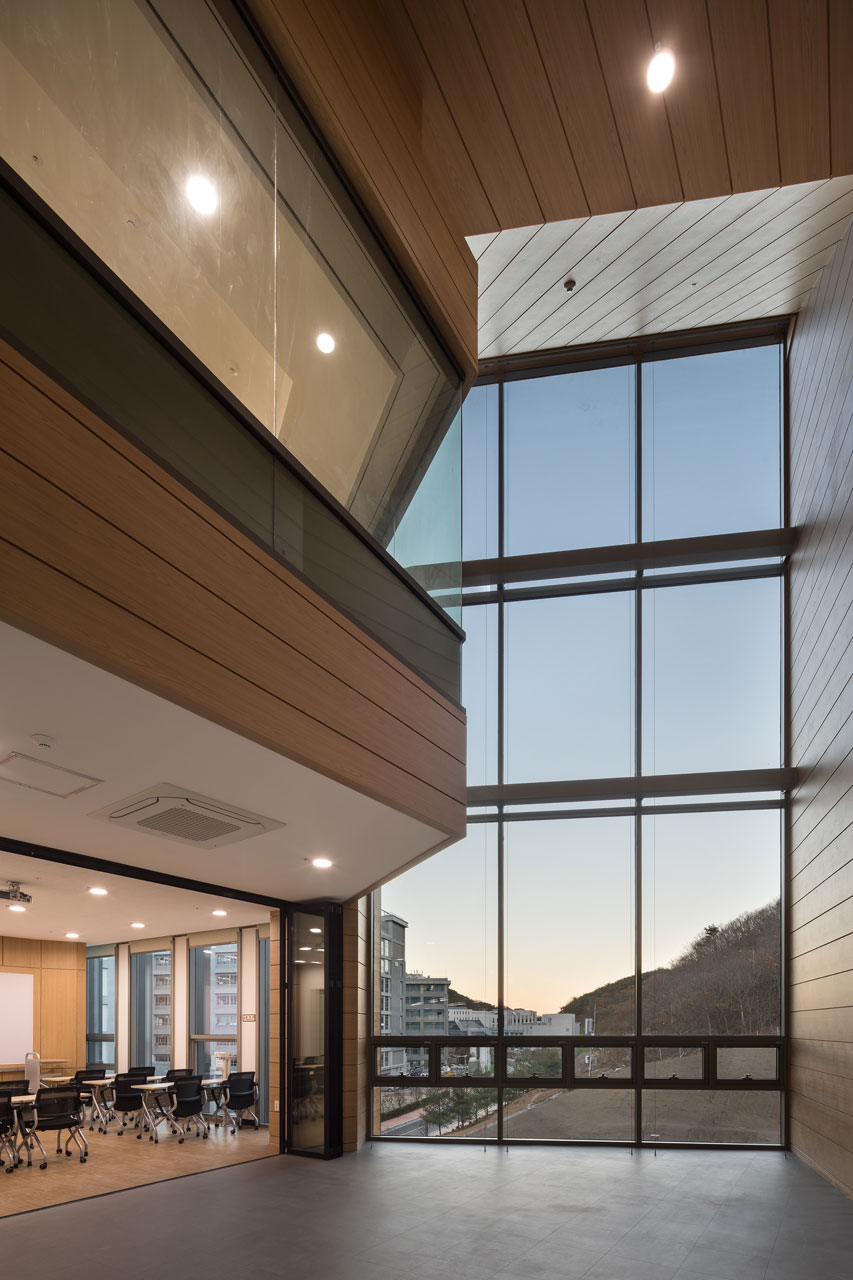
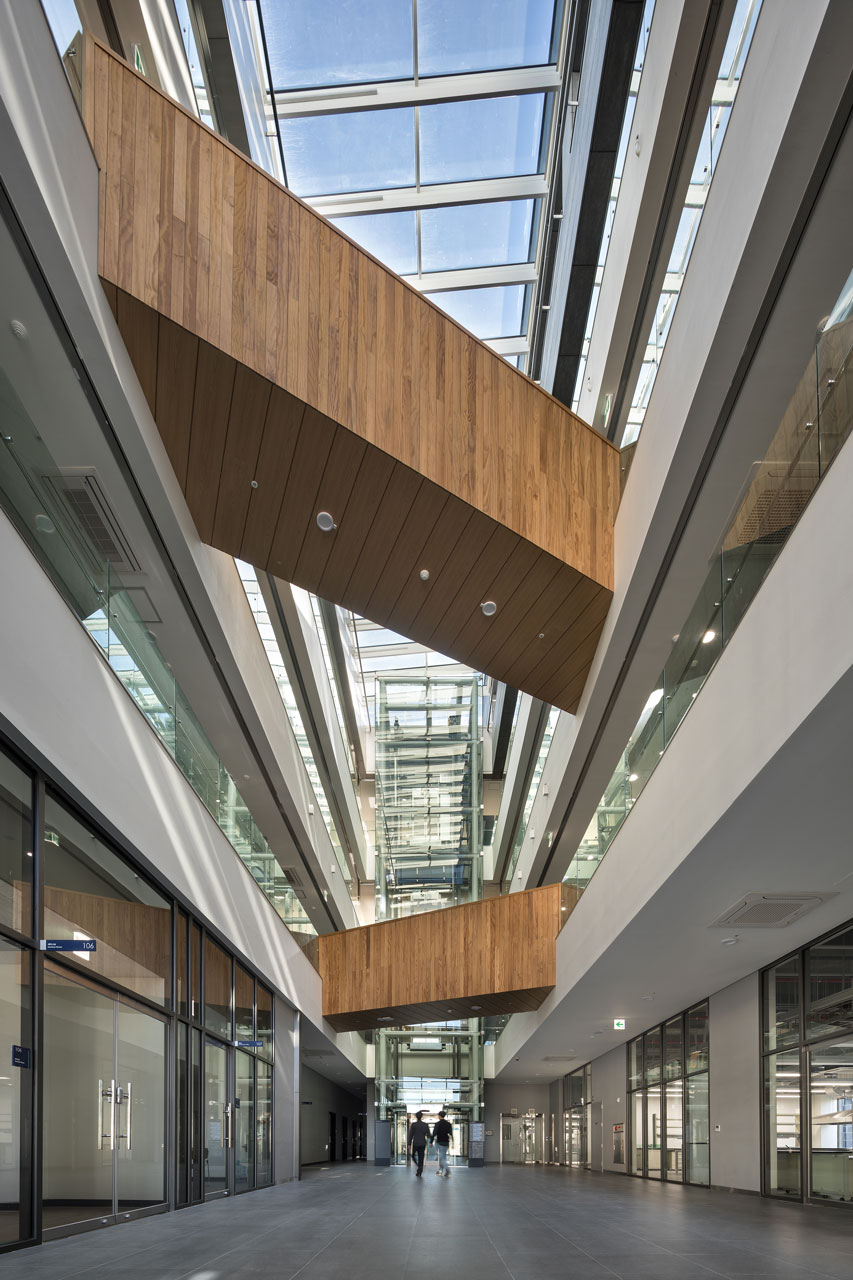
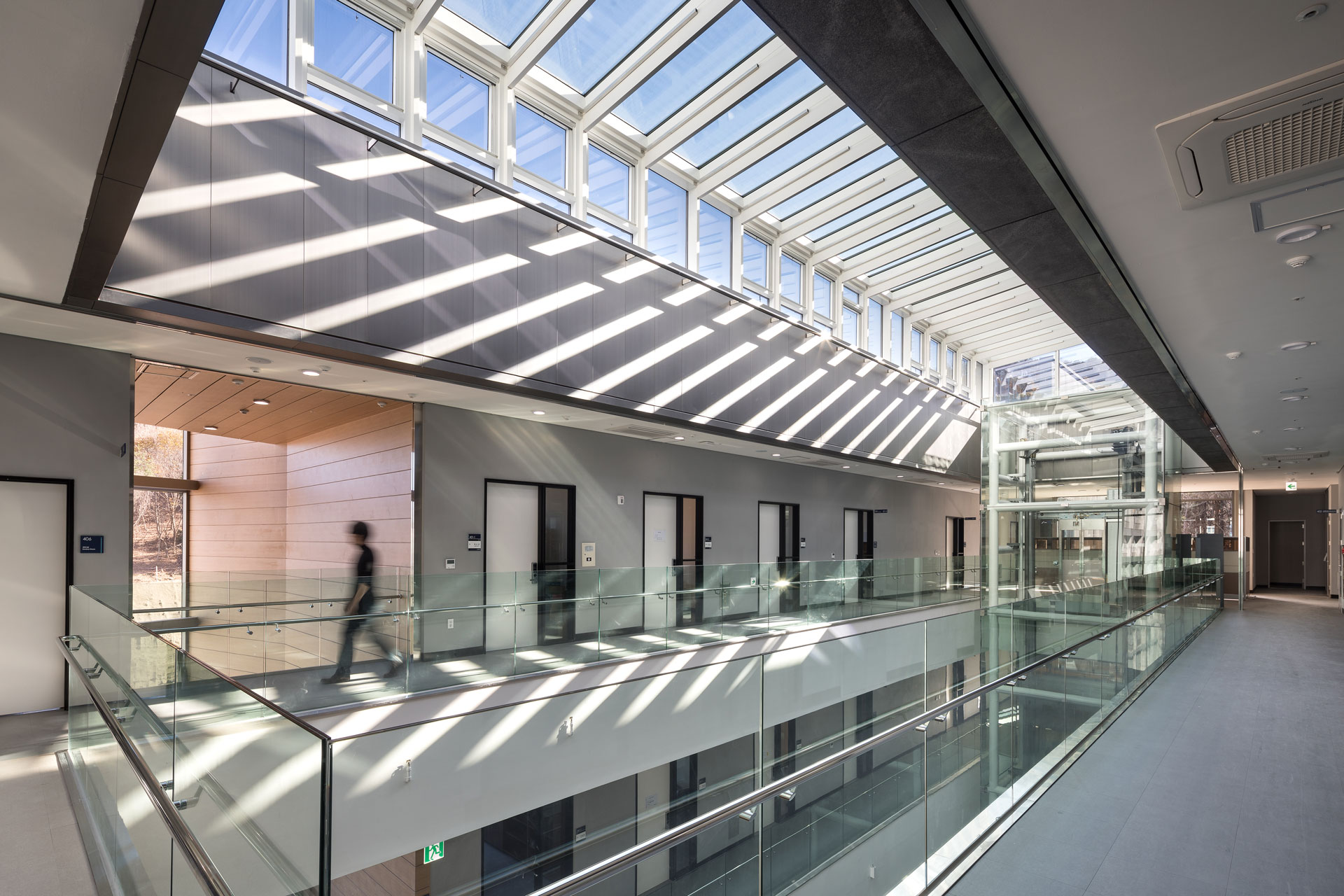
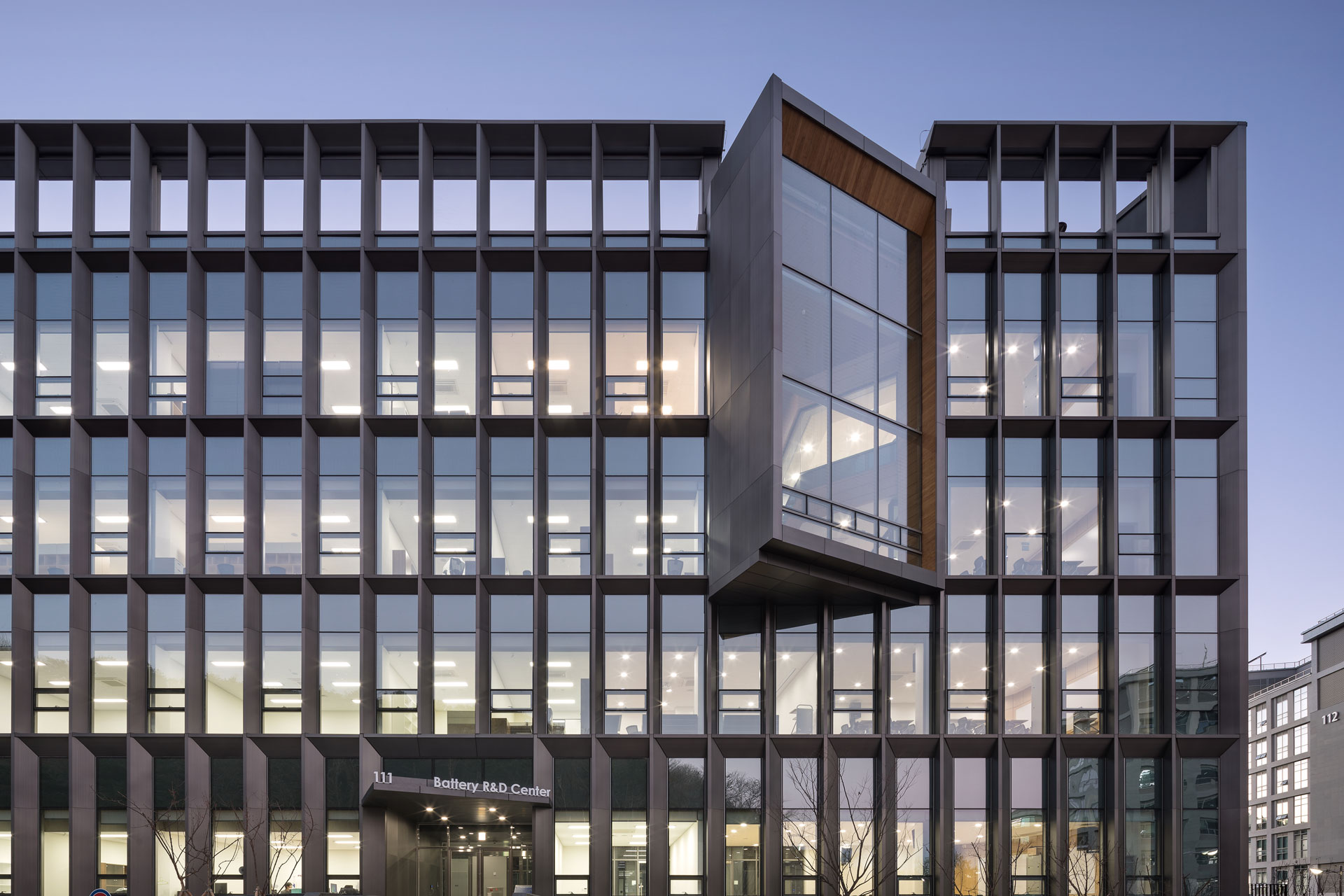
The facades of the two masses, contrasting metal and stone materials, reflect the common vocabulary of neutral repetition responding to internal programs, orientation, and material properties. A protruding lounge mass acts as an accent on the calm facade. The segmented massing centers around an atrium separating research and experimental buildings. Reflecting the characteristics of facilities addressing academic-industrial communication and environmental expertise, it follows the design of three concept spaces: “Interactive Lab” optimized for communication, “Green Lab” maximizing environmental performance, and “TIC Lab” for adaptable research by experimental behavior. The atrium and courtyard ensure essential daylight and indoor ventilation, enhancing comfort and energy efficiency.
Article

-
Status
Completed
-
Awards
- 2023 Ulsan Metropolitan City Architecture Award Excellence Prize
- 2017 12th Korea Ecological Environment Architecture Awards Merit Award
-
Client
UNIST(Ulsan National Institute of Science and Technology)
-
Program
Education, R&D
-
Design Year
2014
-
Completion Year
2016
-
Location
Ulju-gun, Ulsan
-
Site area
8,836.51m2
-
Gross Floor Area
6,363.88m2
-
Building Area
1,403.34m2
-
Number of Levels
B1, 5F
-
Design
-
Participants
Located at the southernmost part of the campus, the Ulsan National Institute of Science and Technology (UNIST) Battery R&D Center prioritized harmonizing the existing circular arrangement of research buildings with the north-facing sloped site condition. The massing was split into two segments, offset north-south with a wind corridor and waterway between them. The sloped terrain was used to plan outdoor spaces and experimental equipment circulation routes. This approach maintained natural flows while aligning with the campus master plan and future phase two expansion.
The facades of the two masses, contrasting metal and stone materials, reflect the common vocabulary of neutral repetition responding to internal programs, orientation, and material properties. A protruding lounge mass acts as an accent on the calm facade. The segmented massing centers around an atrium separating research and experimental buildings. Reflecting the characteristics of facilities addressing academic-industrial communication and environmental expertise, it follows the design of three concept spaces: “Interactive Lab” optimized for communication, “Green Lab” maximizing environmental performance, and “TIC Lab” for adaptable research by experimental behavior. The atrium and courtyard ensure essential daylight and indoor ventilation, enhancing comfort and energy efficiency.
Article