Close
![Popup Image]()
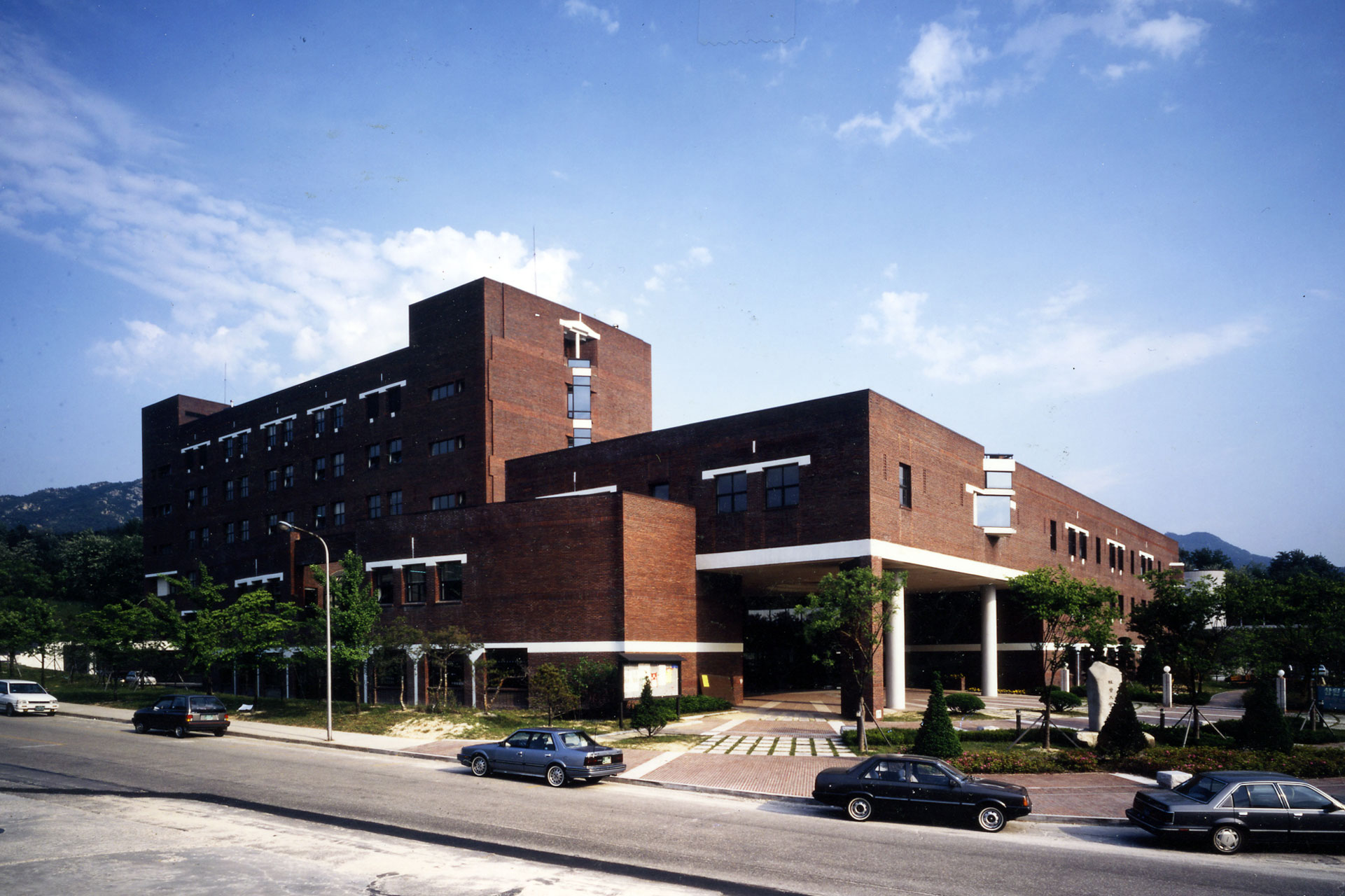
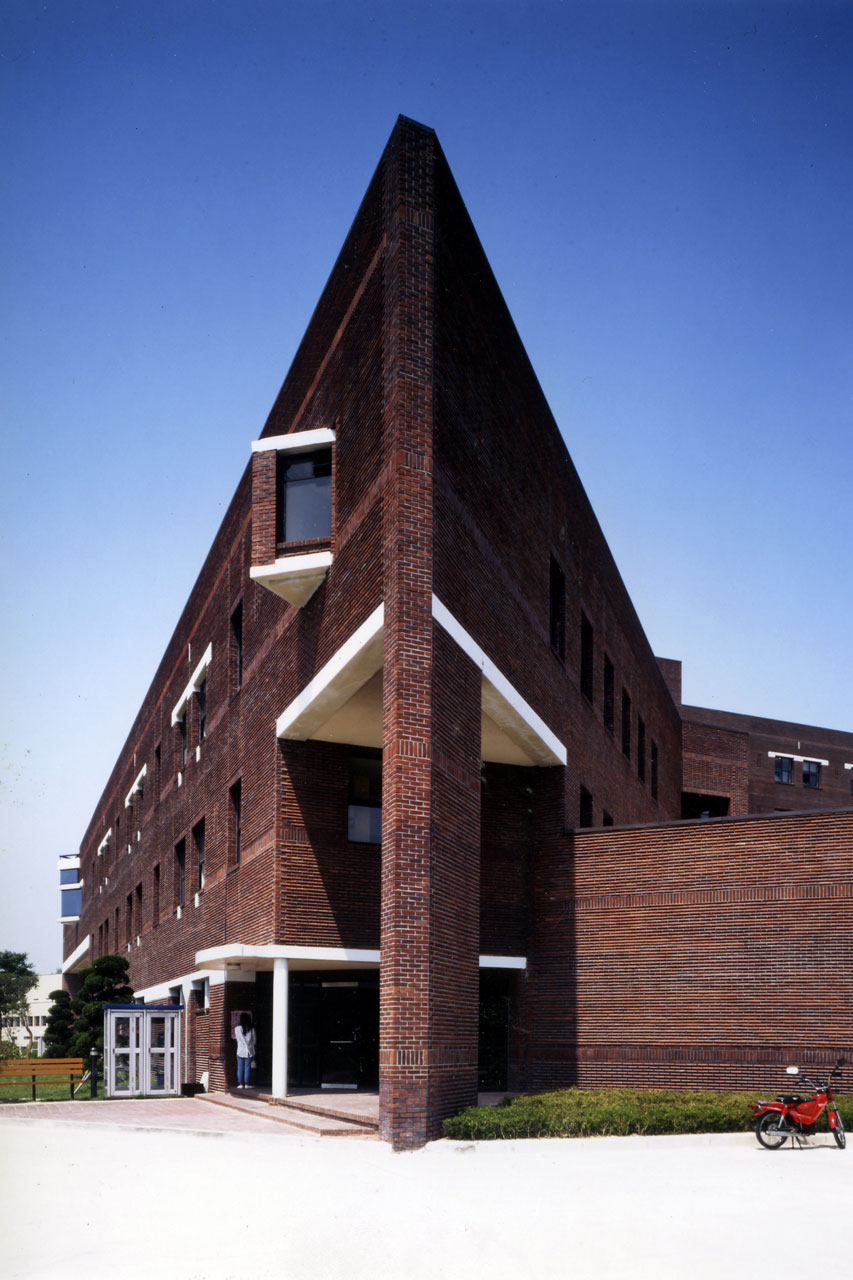
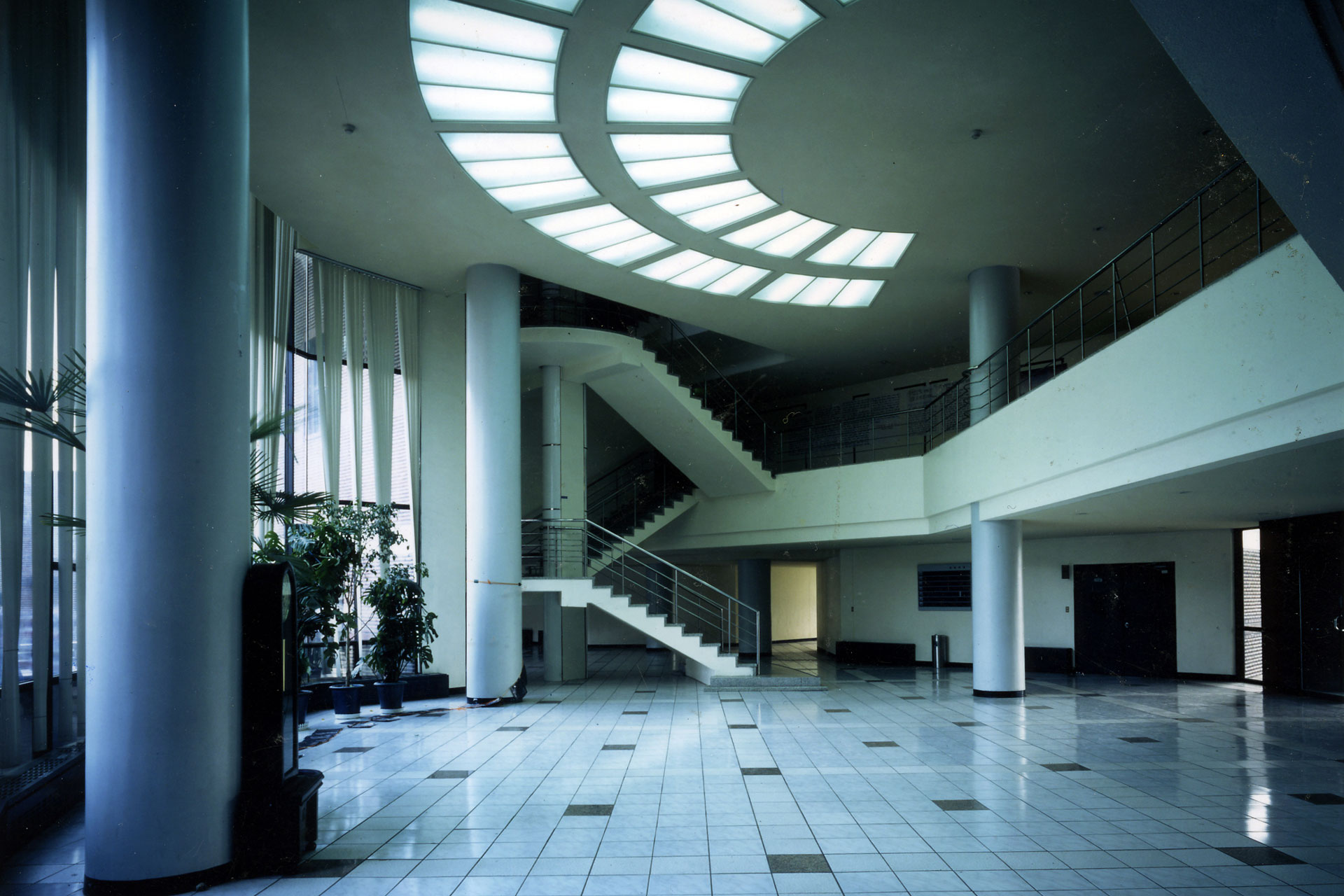
As you walk up to the left from the main gate of Seoul National University, you come upon a building formed where two large masses meet. This is the Sunkyong Business Hall, whose dominant use of brick — a material now deeply embedded in everyday life — gives it a familiar, almost routine feel rather than an alien or unfamiliar one. Set against the skyline of Gwanak Mountain, the building’s sharp right‑angled corners and tall, vertically elongated triangular windows strongly define its image. At the main entrance, where the two masses intersect and a flattened semicircular mass appears to support the structure, a circular skylight pierces through the third-floor glass, slightly relieving the darkness of the deeply recessed entrance. Standing in front of the entrance, one can see through the glass across the lobby to the dense forest of Gwanak Mountain, establishing a natural visual connection between interior and exterior spaces. Near the triangular bay window at the end of a corridor, an informal rest space has naturally emerged, helping to enliven the interior atmosphere.
In the Press

-
Status
Completed
-
Order
Seoul National University
-
Purpose
Education
-
Design Year
1988
-
Completion Year
1990
-
Location
Gwanak-gu, Seoul
-
Site area
10,578m2
-
Building Area
3,093m2
-
Scale
B1, 6F
As you walk up to the left from the main gate of Seoul National University, you come upon a building formed where two large masses meet. This is the Sunkyong Business Hall, whose dominant use of brick — a material now deeply embedded in everyday life — gives it a familiar, almost routine feel rather than an alien or unfamiliar one. Set against the skyline of Gwanak Mountain, the building’s sharp right‑angled corners and tall, vertically elongated triangular windows strongly define its image. At the main entrance, where the two masses intersect and a flattened semicircular mass appears to support the structure, a circular skylight pierces through the third-floor glass, slightly relieving the darkness of the deeply recessed entrance. Standing in front of the entrance, one can see through the glass across the lobby to the dense forest of Gwanak Mountain, establishing a natural visual connection between interior and exterior spaces. Near the triangular bay window at the end of a corridor, an informal rest space has naturally emerged, helping to enliven the interior atmosphere.
In the Press