Close
![Popup Image]()
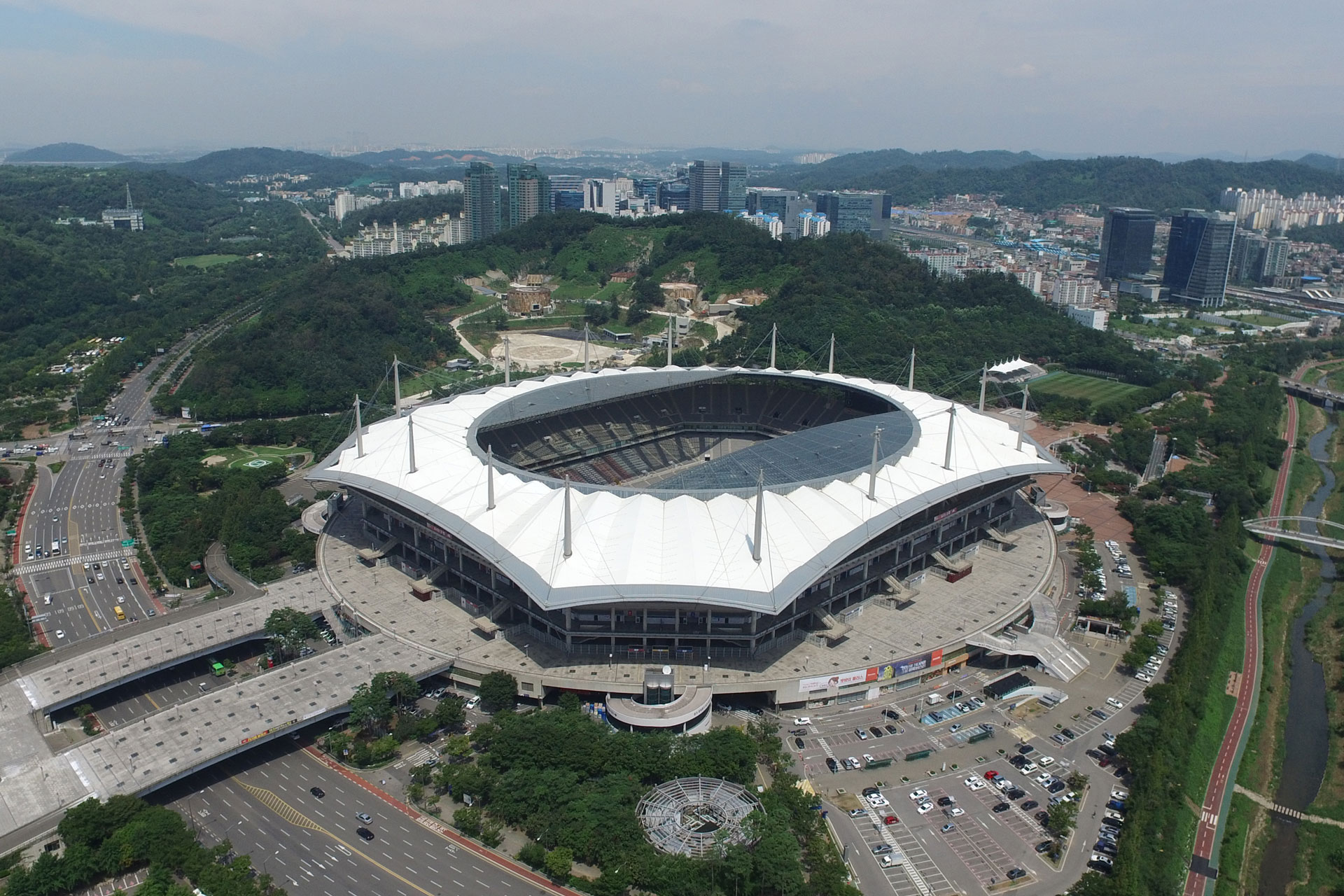
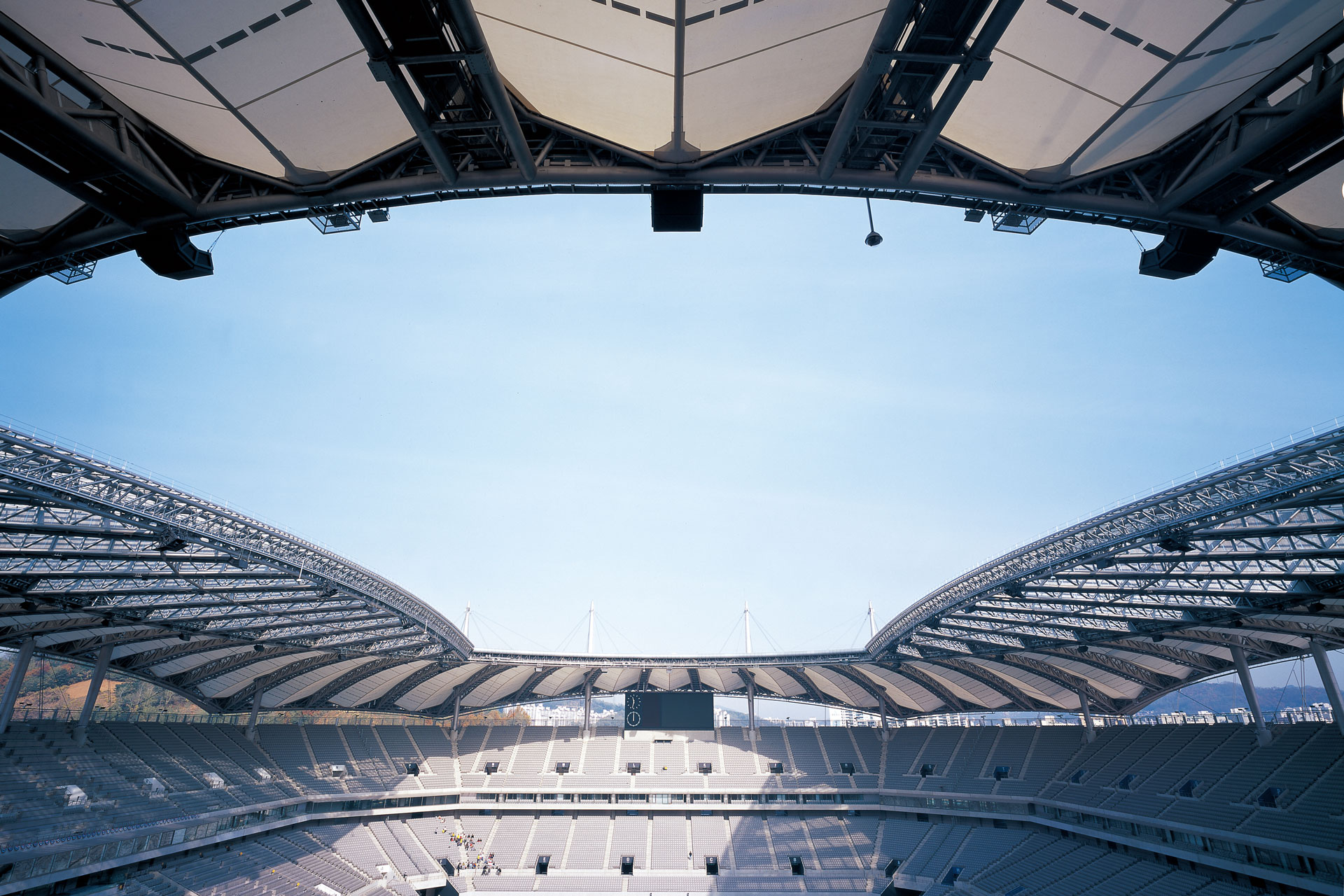
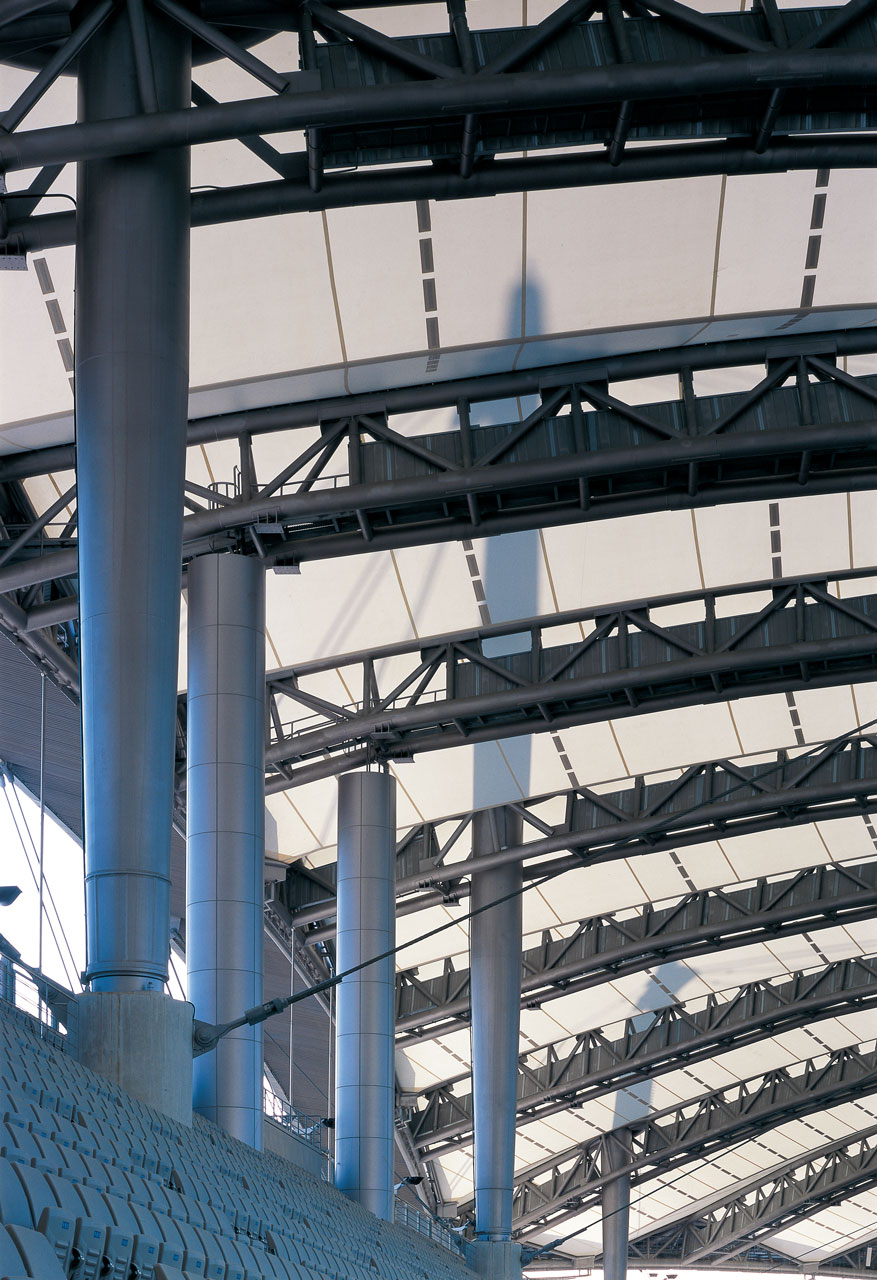
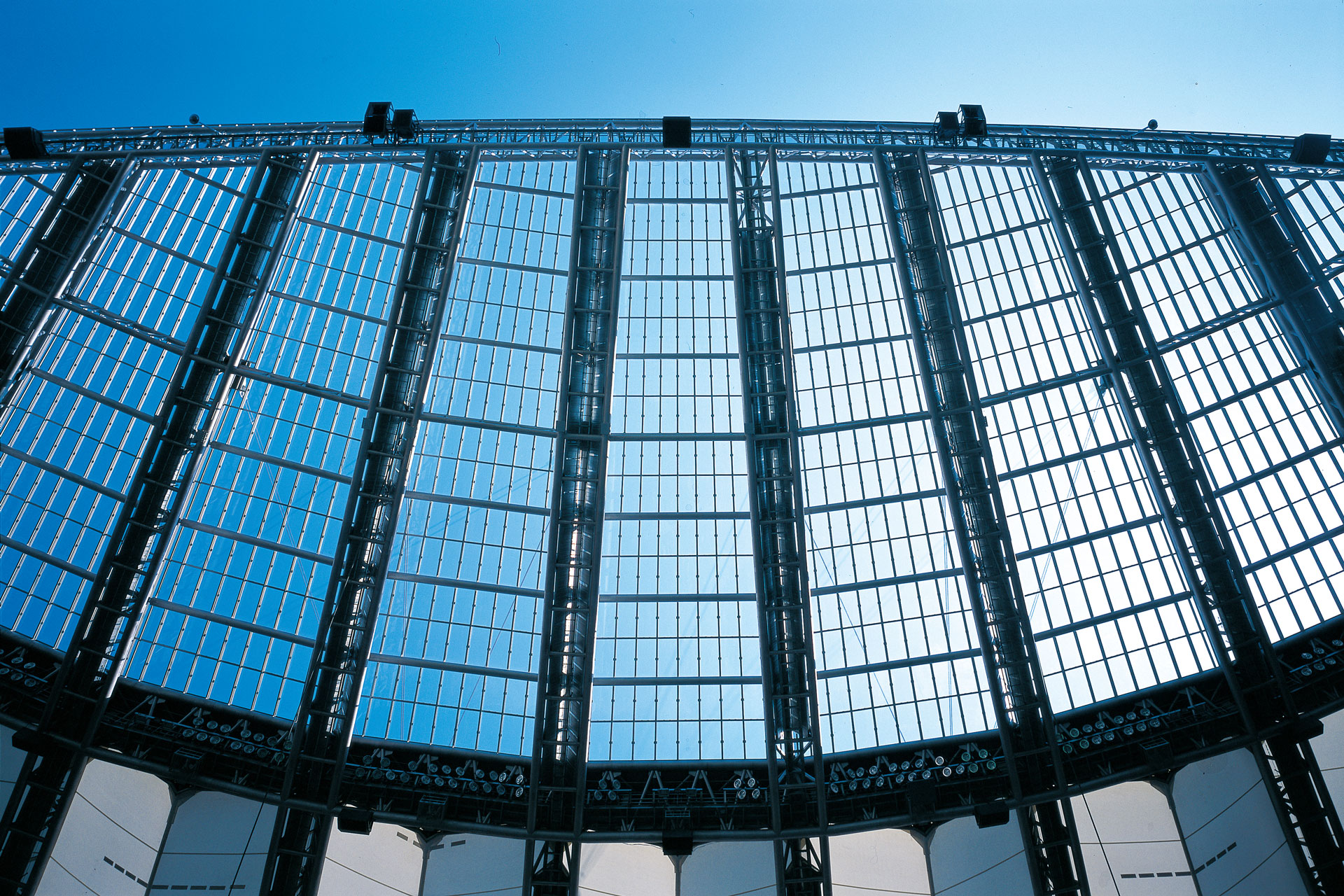
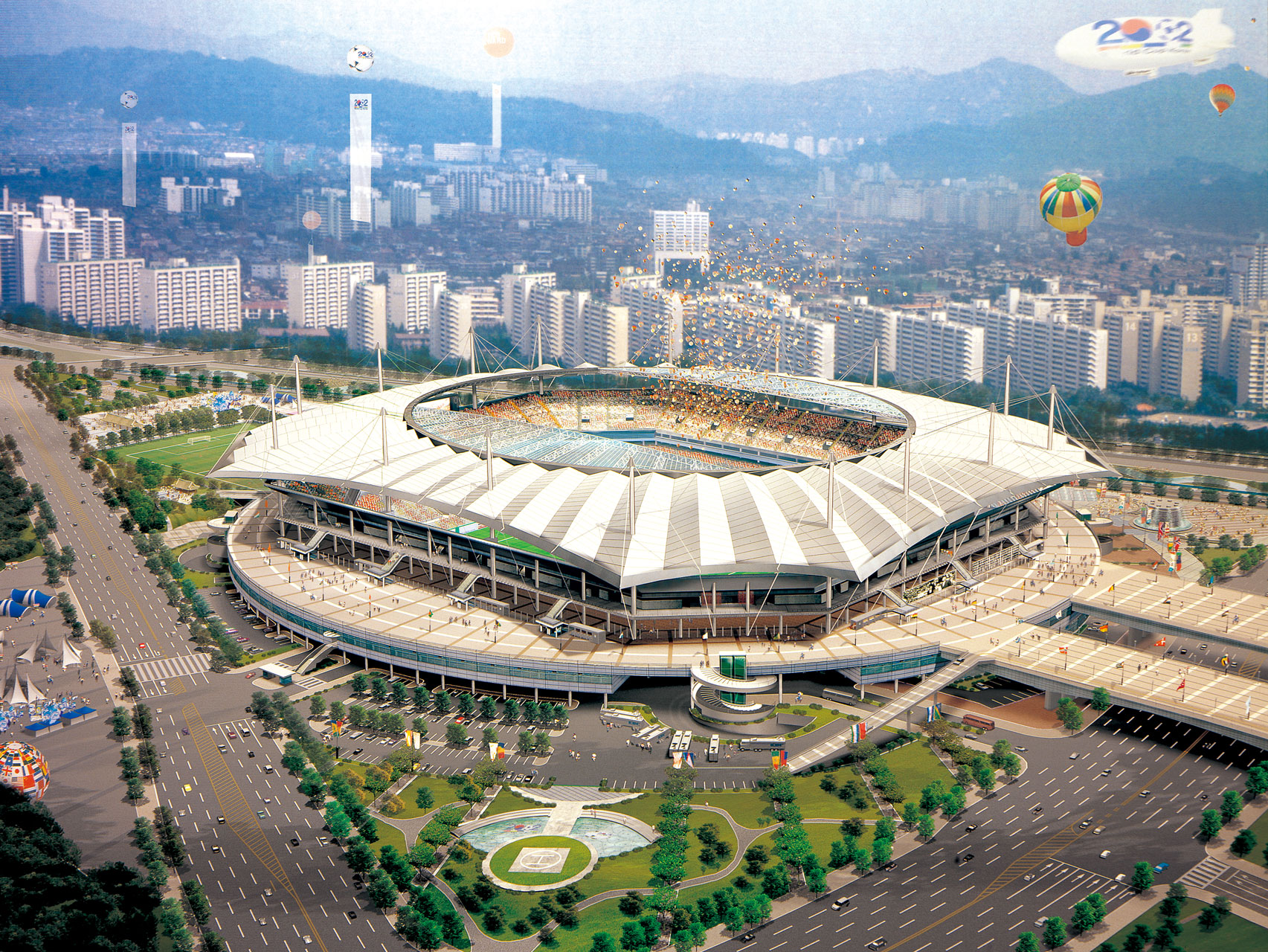
The Seoul World Cup Stadium, with a total seating capacity of 62,000, exemplifies Junglim Architecture’s long-standing commitment to blending tradition with modernity, synergized with its extensive experience in mixed-use commercial facilities. Designed through a competition in 1998 and completed in 2001, the stadium was built as a festive venue for the 2002 Korea-Japan World Cup and became a symbolic site realizing the national aspiration of reaching the World Cup semifinals.
If the stadium, featuring the shield kite (bangpaeyeon) and octagonal tray (palgakmoban) motifs symbolizing Korean traditional culture, serves as a premier facility for international events, long-term planning aimed to ensure the stadium’s role as a vibrant complex in the urban fabric even after major events. In this context, Junglim Architecture developed a master plan between 2002 and 2003, including mixed-use commercial facilities such as a large shopping mall, cinema, banquet hall, restaurant, sauna, indoor swimming pool, and fitness center in the stadium’s lower floors — creating a public space beyond just sports viewing. Connecting to the ecological park planned along the Han River also plays a notable role in the overall site strategy.
In the Press
Archive

-
Status
Completed
-
Awards
- 2002 Seoul Architecture Award_Gold Award
-
Order
Seoul Metropolitan Government
-
Purpose
Sports, Public, Retail
-
Design Year
2002
-
Completion Year
2003
-
Location
Mapo-gu, Seoul
-
Site area
216,712.00m2
-
Gross Floor Area
155,774.61m2
-
Building Area
60,353.04m2
-
Scale
B1, 6F
-
Consortium
Beyond Space Group, WONYANG ARCHITECTS
-
Participation
The Seoul World Cup Stadium, with a total seating capacity of 62,000, exemplifies Junglim Architecture’s long-standing commitment to blending tradition with modernity, synergized with its extensive experience in mixed-use commercial facilities. Designed through a competition in 1998 and completed in 2001, the stadium was built as a festive venue for the 2002 Korea-Japan World Cup and became a symbolic site realizing the national aspiration of reaching the World Cup semifinals.
If the stadium, featuring the shield kite (bangpaeyeon) and octagonal tray (palgakmoban) motifs symbolizing Korean traditional culture, serves as a premier facility for international events, long-term planning aimed to ensure the stadium’s role as a vibrant complex in the urban fabric even after major events. In this context, Junglim Architecture developed a master plan between 2002 and 2003, including mixed-use commercial facilities such as a large shopping mall, cinema, banquet hall, restaurant, sauna, indoor swimming pool, and fitness center in the stadium’s lower floors — creating a public space beyond just sports viewing. Connecting to the ecological park planned along the Han River also plays a notable role in the overall site strategy.
In the Press
Archive