Close
![Popup Image]()
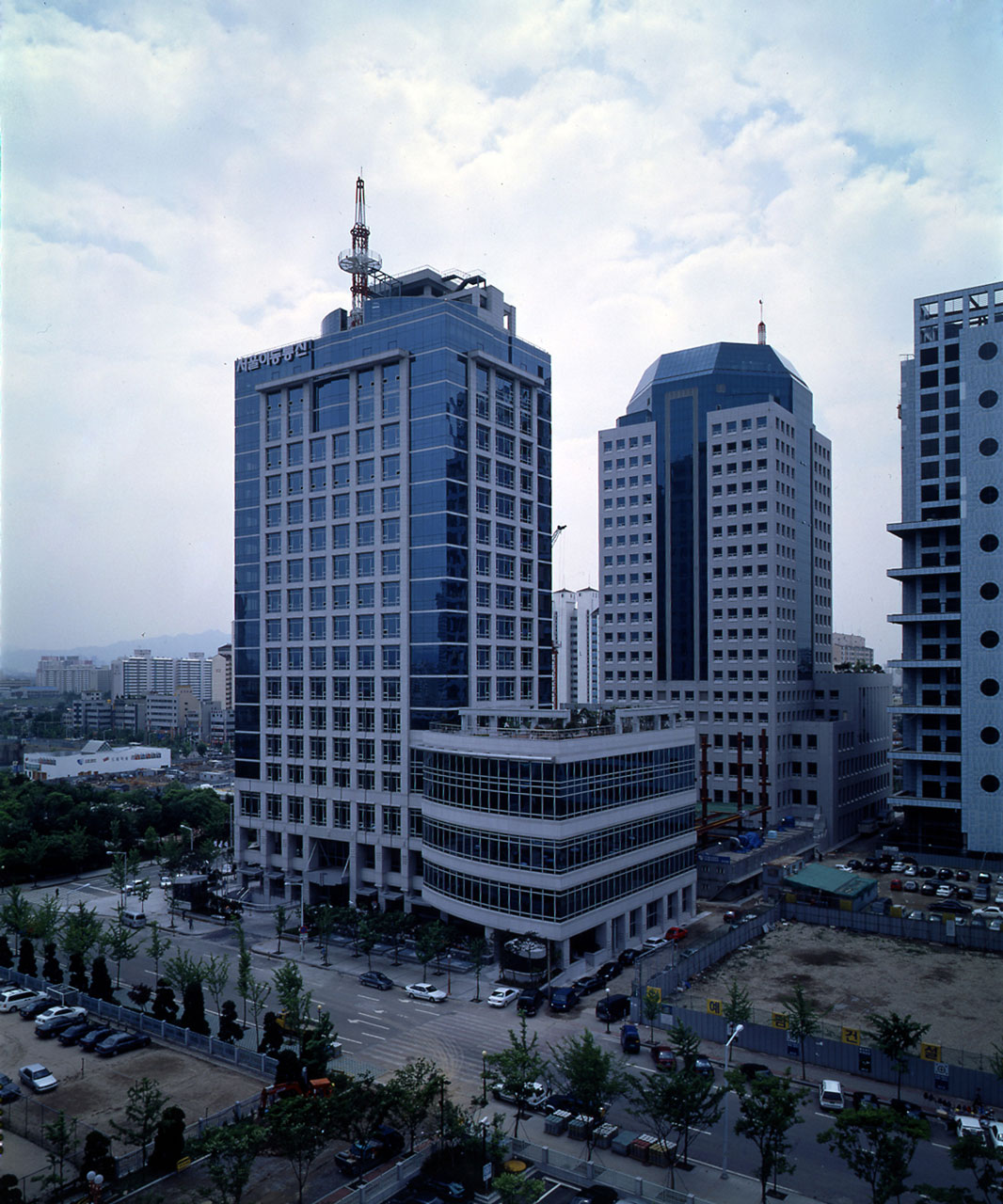
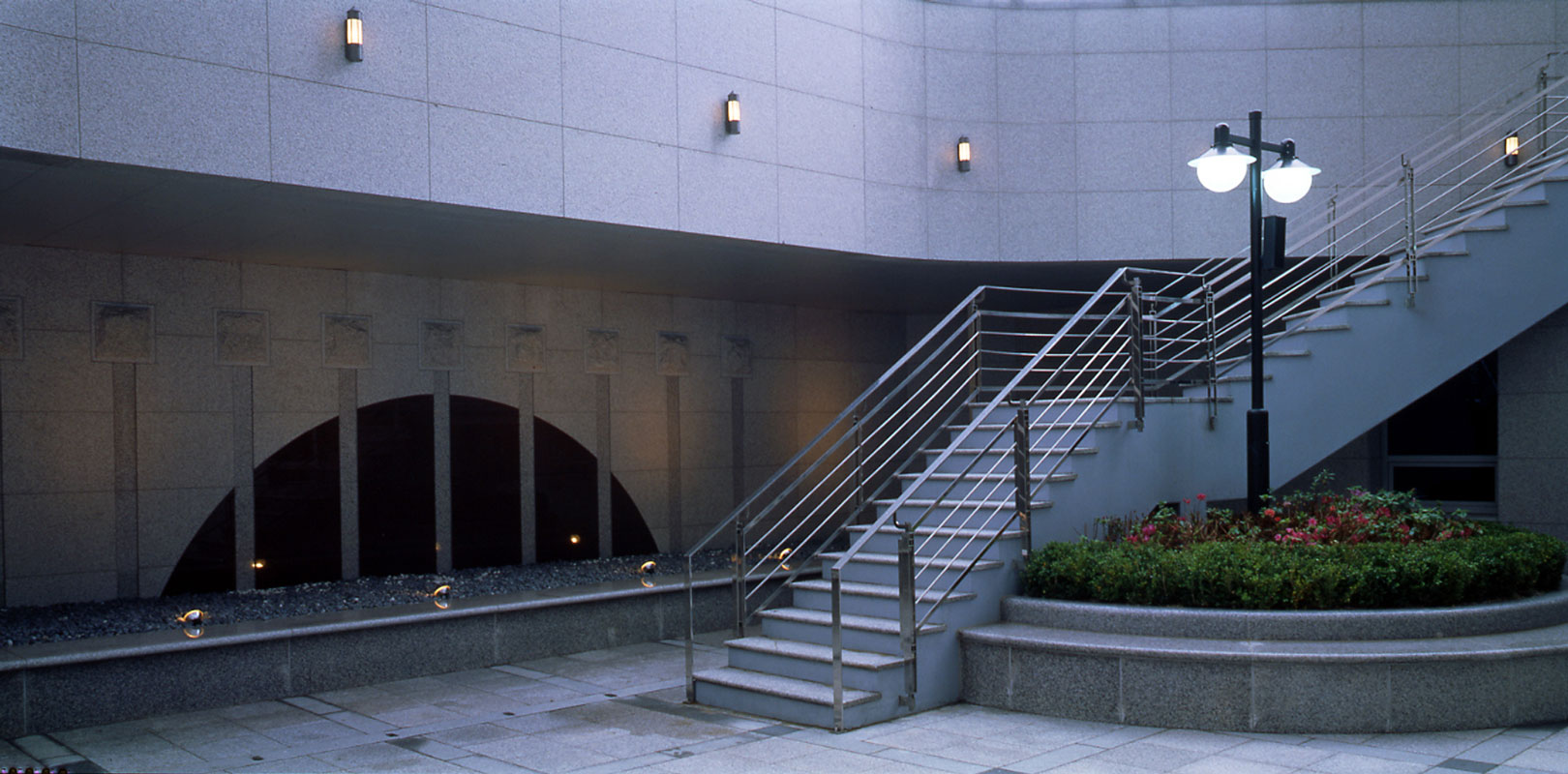
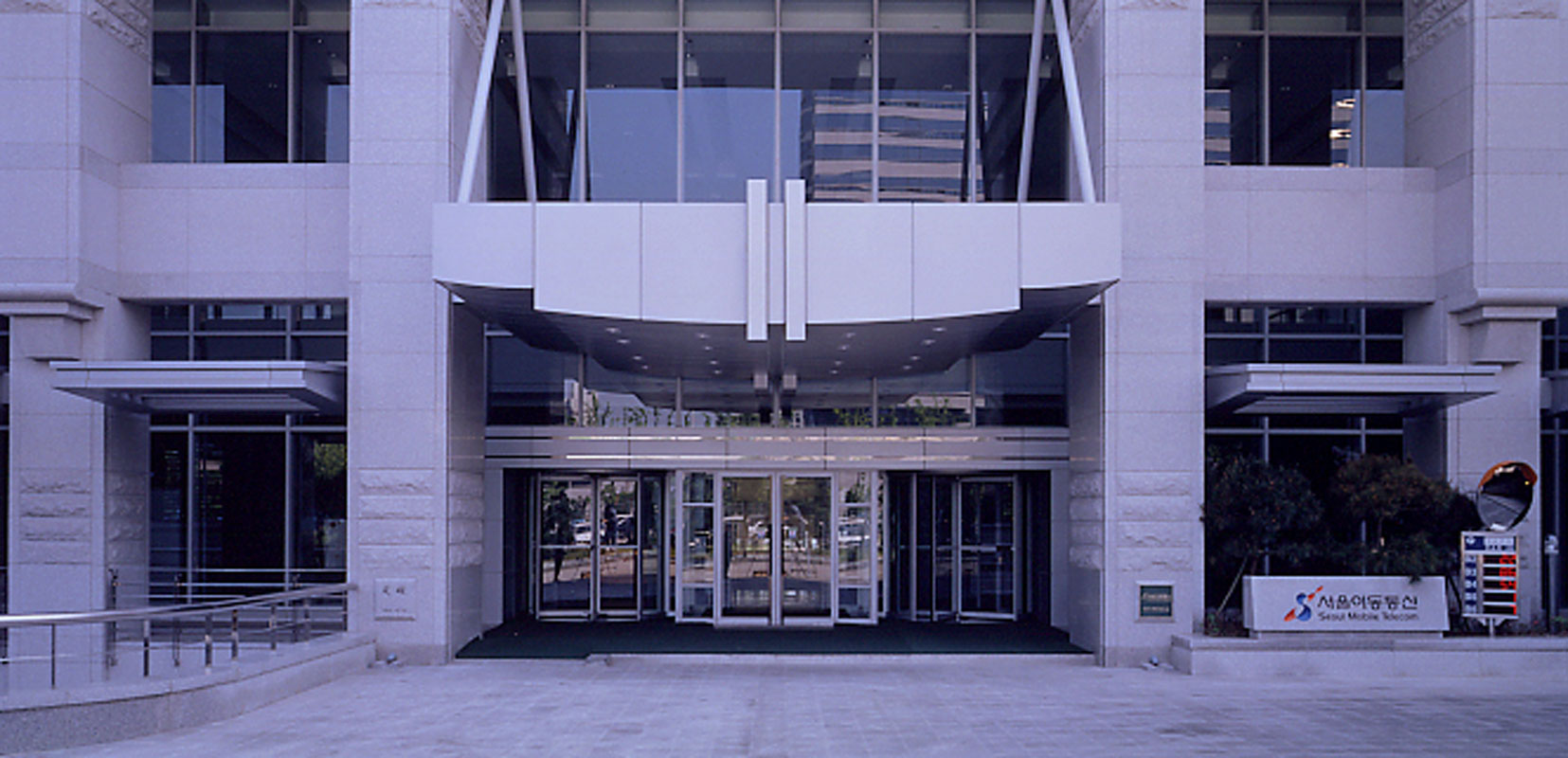
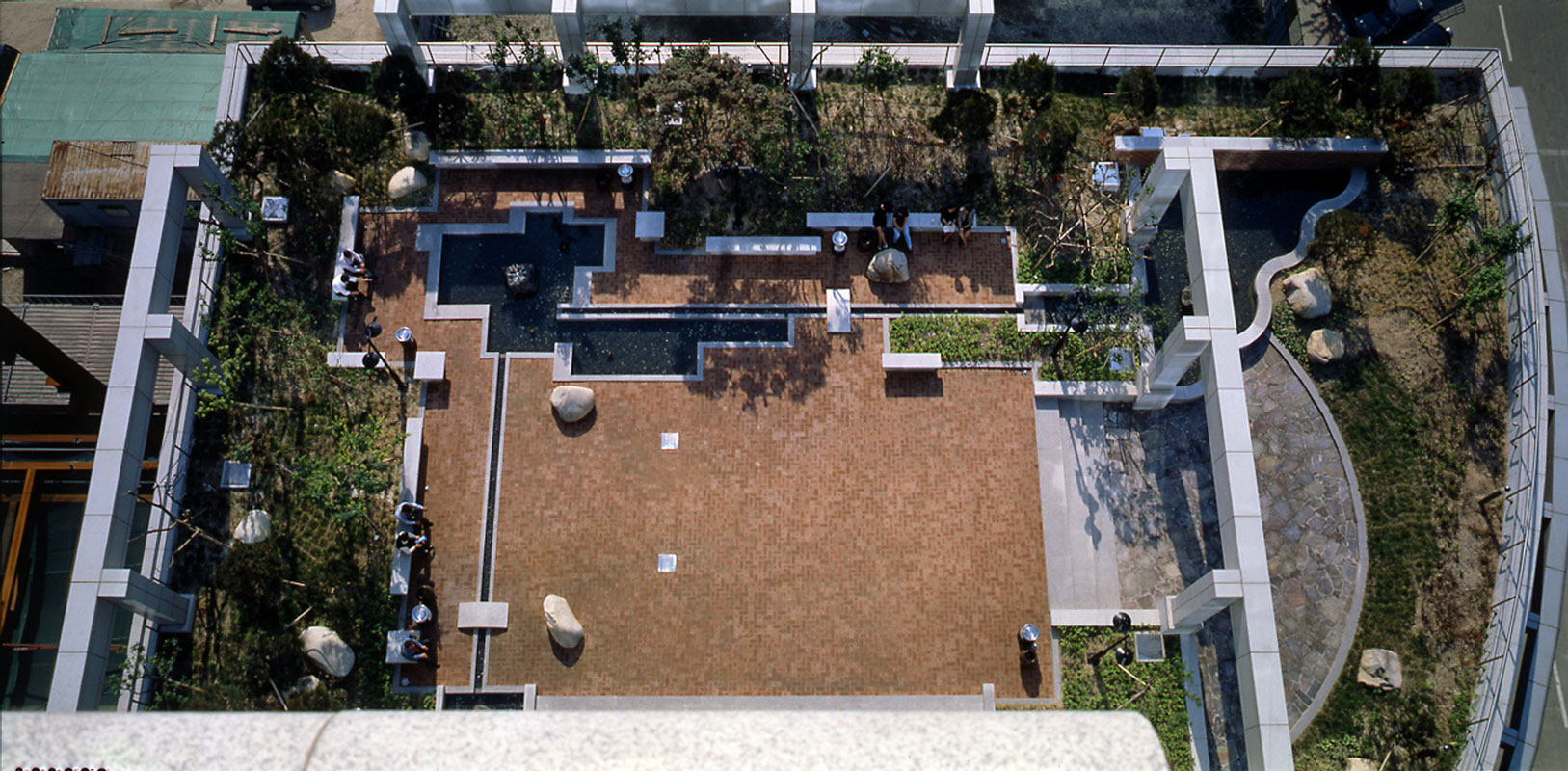
The former Seoul Mobile Telecom Mokdong Headquarters (now Samsung Fire & Marine Insurance Service Building) sought to highlight the dynamic and forward-thinking corporate image of Seoul Mobile Telecom Inc., a leader in advanced telecommunications, through strong formal language in the low-rise section. The façade derives an analytical and logical modular pattern from the lattice of traditional Korean windows. By reinterpreting classical formal language in a modern way, the design dramatically emphasizes the articulation and integration of forms according to the principle of juxtaposition. Reflecting an appropriate sense of scale in the urban context, it serves as the central axis for other buildings constructed in the future.
The high-rise outer walls feature the curtain walls divided by 30cm-wide horizontal granite bands, along with the repetitive expression of independent windows via a central grid-pattern granite skin; vertical granite grids connect to the low-rise granite columns and metal canopy, creating a strong image at the base. Vertical stainless steel moldings dividing the aluminum windows serve as key façade elements linking the low-rise and high-rise sections, while the protruding granite on the high-rise, along with the rooftop designed as an antenna, embodies the mobile telecom company’s identity.
Archive

-
Status
Completed
-
Awards
- 1999 Korean Architecture Award_Finalist
-
Order
Seoul Mobile Telecommunication Corp
-
Purpose
Office
-
Design Year
1995
-
Completion Year
1999
-
Location
Yangcheon-gu, Seoul
-
Site area
3,091.10m2
-
Gross Floor Area
36,773.49m2
-
Building Area
1,812.35m2
-
Scale
B7, 18F
The former Seoul Mobile Telecom Mokdong Headquarters (now Samsung Fire & Marine Insurance Service Building) sought to highlight the dynamic and forward-thinking corporate image of Seoul Mobile Telecom Inc., a leader in advanced telecommunications, through strong formal language in the low-rise section. The façade derives an analytical and logical modular pattern from the lattice of traditional Korean windows. By reinterpreting classical formal language in a modern way, the design dramatically emphasizes the articulation and integration of forms according to the principle of juxtaposition. Reflecting an appropriate sense of scale in the urban context, it serves as the central axis for other buildings constructed in the future.
The high-rise outer walls feature the curtain walls divided by 30cm-wide horizontal granite bands, along with the repetitive expression of independent windows via a central grid-pattern granite skin; vertical granite grids connect to the low-rise granite columns and metal canopy, creating a strong image at the base. Vertical stainless steel moldings dividing the aluminum windows serve as key façade elements linking the low-rise and high-rise sections, while the protruding granite on the high-rise, along with the rooftop designed as an antenna, embodies the mobile telecom company’s identity.
Archive