Close
![Popup Image]()
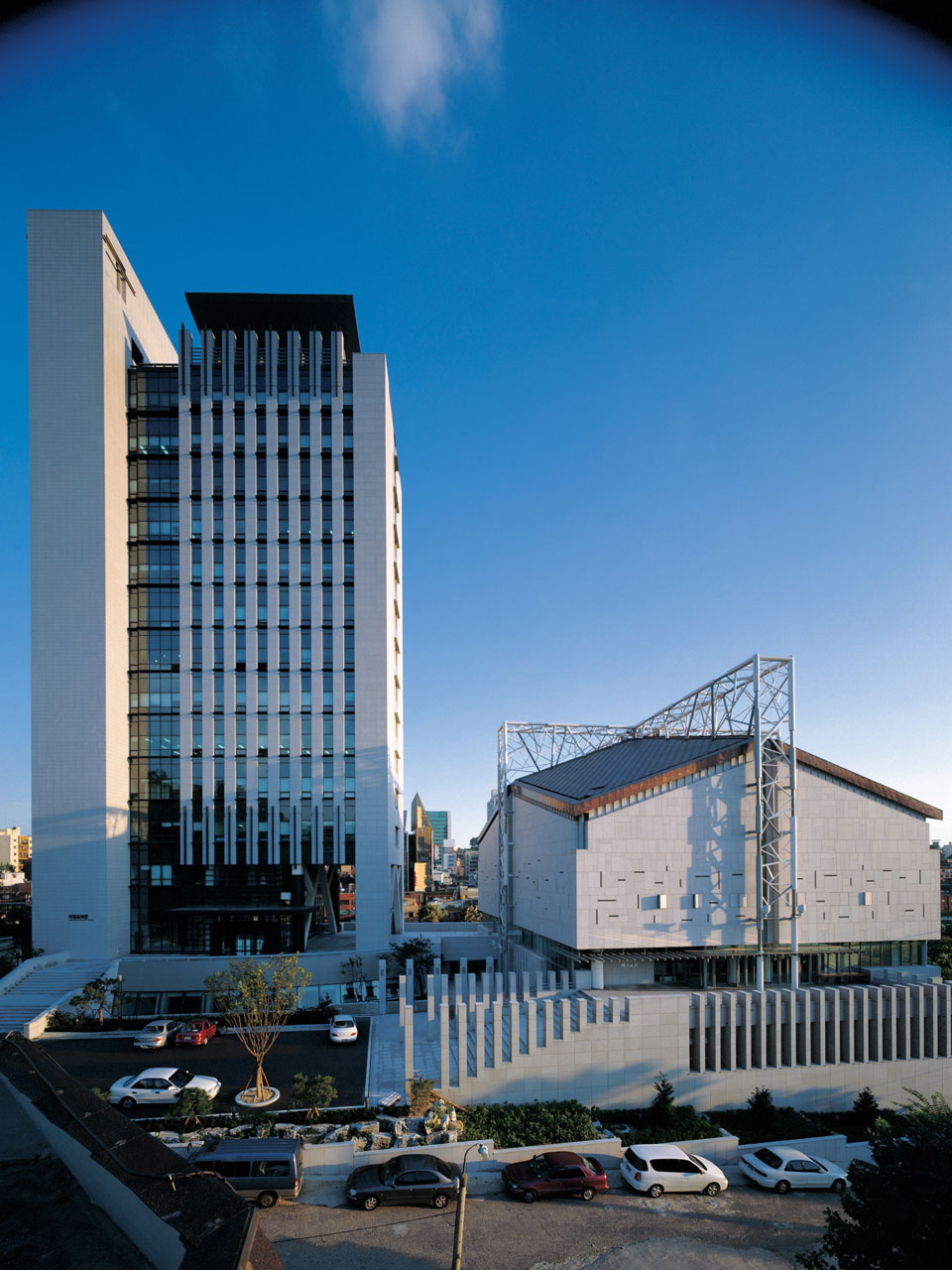
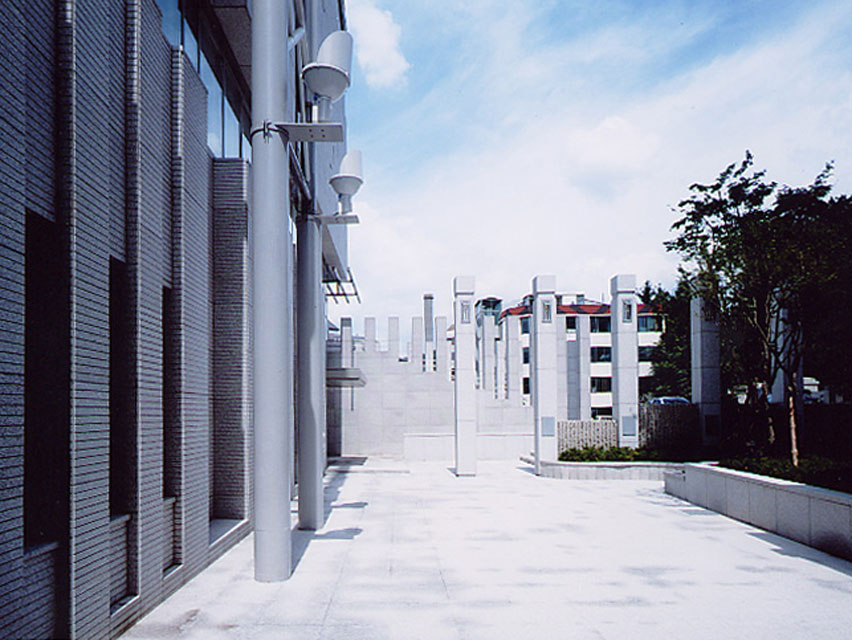
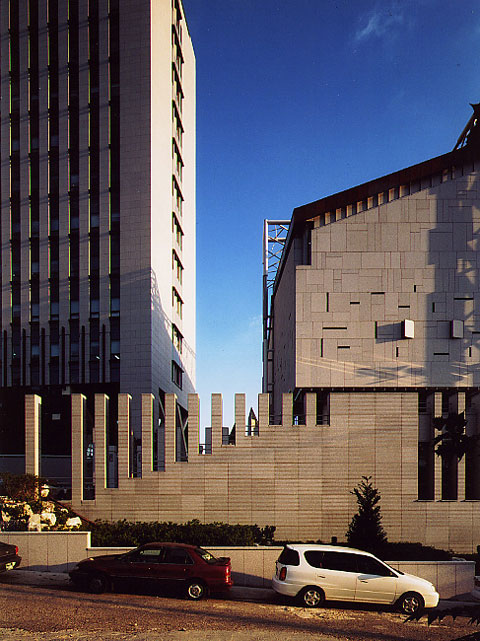
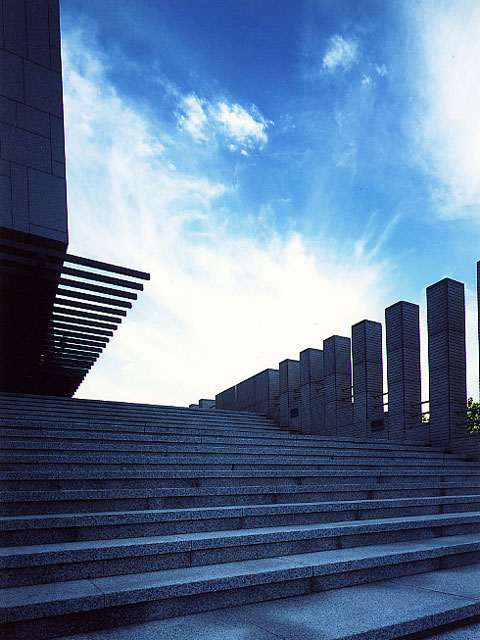
The university campus, dense with buildings, presents multiple determining factors arising from interactions with existing structures. Key influences include various axes shaped by topography and roads, relationships with surrounding external areas, and newly formed spaces from new construction. The International Education Building and Church project was novel in that, despite differing heights and scales, their lower bases are bound by a deck while mutually defining each other’s space. This raised questions about the desirable form and façade for high-rise buildings on campus, the appropriate church form within a university — particularly Ewha Womans University — and how to harmonize high-rise construction and a church on a constrained site within the surrounding context, deliberations that continued over a long period.
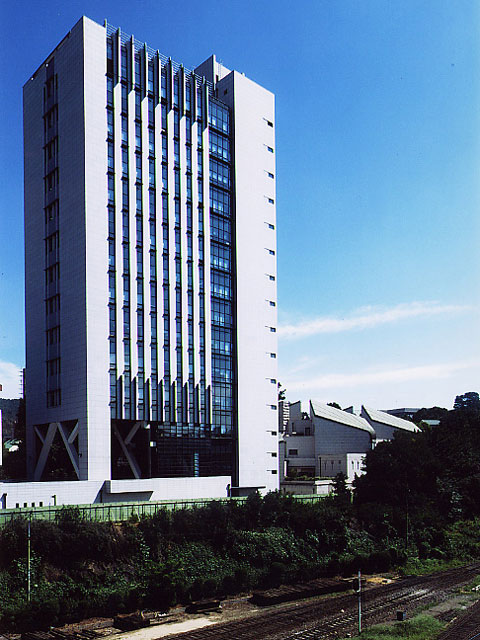
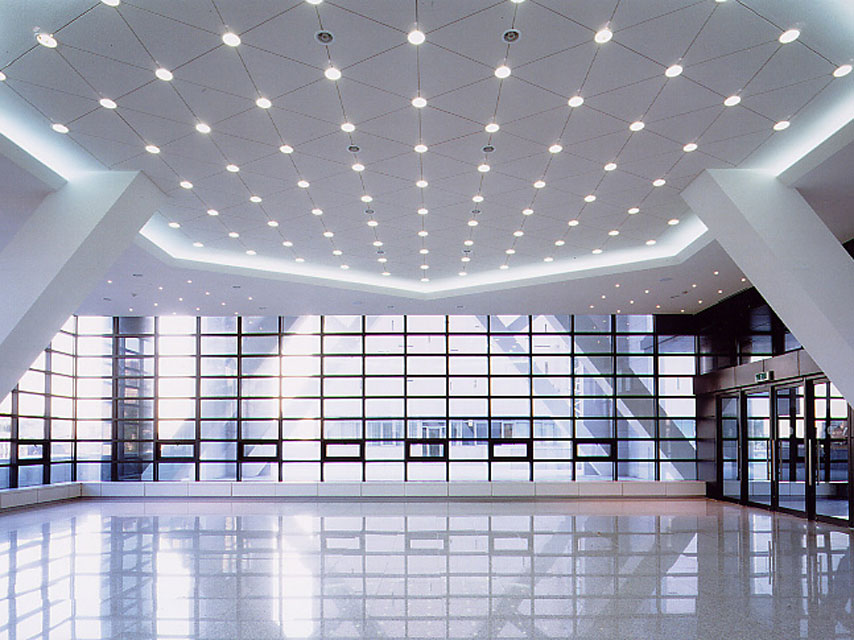
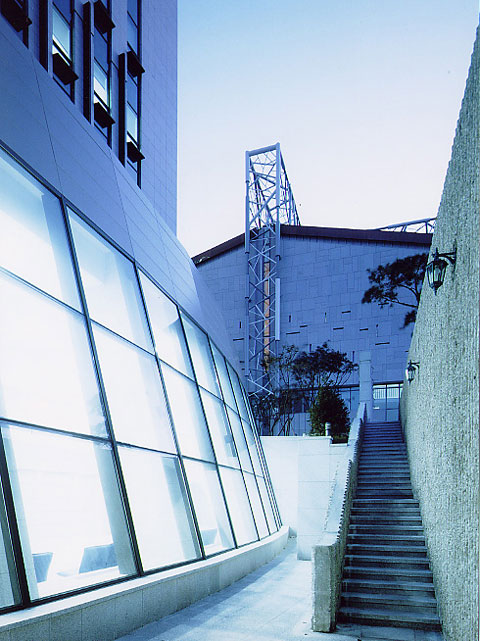
The International Education Building is a 14-story structure built with government support to establish a graduate school fostering international women professionals through the informatization and globalization of women’s education. Promoting international exchanges with simultaneous interpretation training, it houses a convention hall for holding international academic conferences, plus classrooms, audiovisual rooms, study rooms and resource centers, research offices, seminar rooms, and more. Entry occurs via a front bridge, designed to facilitate access and daylighting to the B2-level international convention hall. A sunken court introduces ample light to the underground hall, with a circular staircase aiding primary entry, while the bridge’s wooden decking above provides a rest space for students. This connects to the shared church deck, while implying spatial division between both facilities.
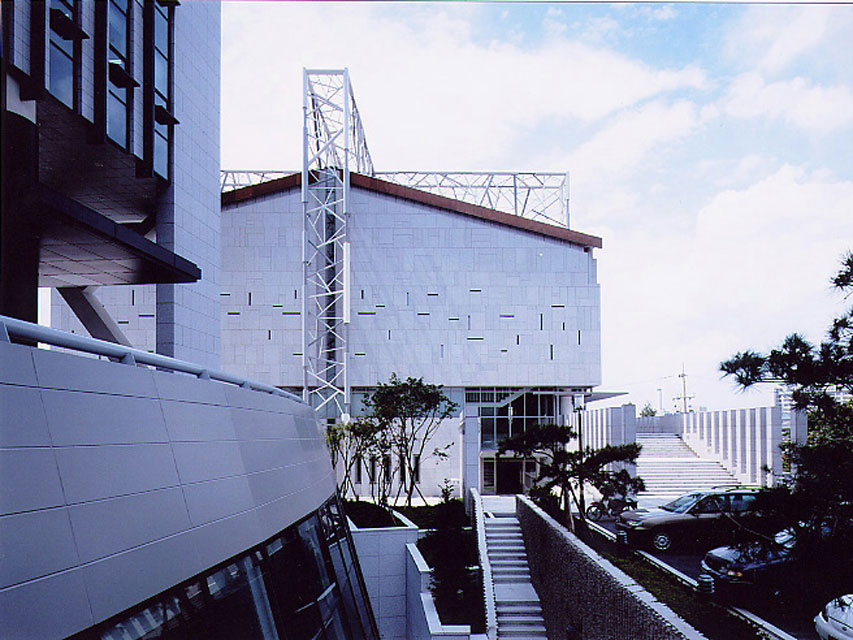
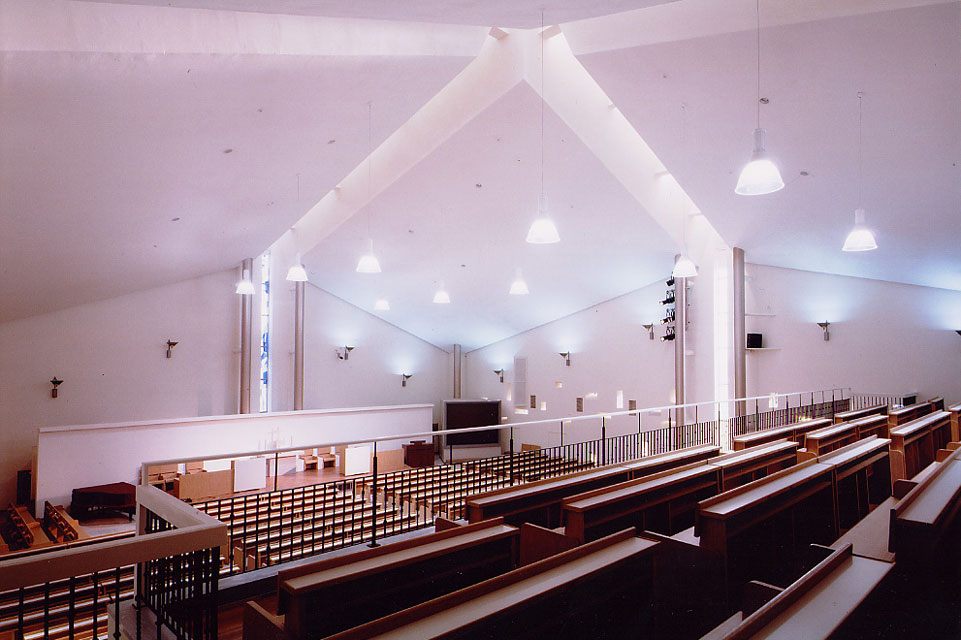
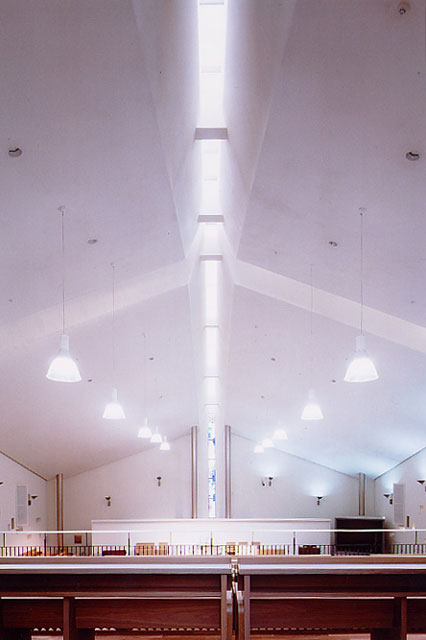
The church’s gable roof form was derived considering the adjacent museum mass as well. The initial concept drew from the existing museum roof motif, forming four sloped roofs supported by a cross structure. This evolved into a primary mass concept contrasting a worldly lower base with a worship hall floating above, distanced from secular concerns. Religious symbolism is expressed through strong symmetrical massing and minimized fenestration. The base underwent extensive studies to harmonize with trusses, while the wall’s free-form windows adapt Le Corbusier’s Ronchamp Chapel façade design.
Archive

-
Status
Completed
-
Awards
- 2000 Korean Architecture Award_Finalist
-
Client
Ewha Womans University
-
Program
Education, Religious
-
Design Year
1995
-
Completion Year
2000
-
Location
Seodaemun-gu, Seoul
-
Site area
538,093.60m2
-
Gross Floor Area
10,400.94(International Education Center), 3,951.88(Church)m2
-
Building Area
2,100.93m2
-
Number of Levels
B2, 14F(International Education Center) / B2, 4F(Church)
The university campus, dense with buildings, presents multiple determining factors arising from interactions with existing structures. Key influences include various axes shaped by topography and roads, relationships with surrounding external areas, and newly formed spaces from new construction. The International Education Building and Church project was novel in that, despite differing heights and scales, their lower bases are bound by a deck while mutually defining each other’s space. This raised questions about the desirable form and façade for high-rise buildings on campus, the appropriate church form within a university — particularly Ewha Womans University — and how to harmonize high-rise construction and a church on a constrained site within the surrounding context, deliberations that continued over a long period.
The International Education Building is a 14-story structure built with government support to establish a graduate school fostering international women professionals through the informatization and globalization of women’s education. Promoting international exchanges with simultaneous interpretation training, it houses a convention hall for holding international academic conferences, plus classrooms, audiovisual rooms, study rooms and resource centers, research offices, seminar rooms, and more. Entry occurs via a front bridge, designed to facilitate access and daylighting to the B2-level international convention hall. A sunken court introduces ample light to the underground hall, with a circular staircase aiding primary entry, while the bridge’s wooden decking above provides a rest space for students. This connects to the shared church deck, while implying spatial division between both facilities.
The church’s gable roof form was derived considering the adjacent museum mass as well. The initial concept drew from the existing museum roof motif, forming four sloped roofs supported by a cross structure. This evolved into a primary mass concept contrasting a worldly lower base with a worship hall floating above, distanced from secular concerns. Religious symbolism is expressed through strong symmetrical massing and minimized fenestration. The base underwent extensive studies to harmonize with trusses, while the wall’s free-form windows adapt Le Corbusier’s Ronchamp Chapel façade design.
Archive