

Close
![Popup Image]()
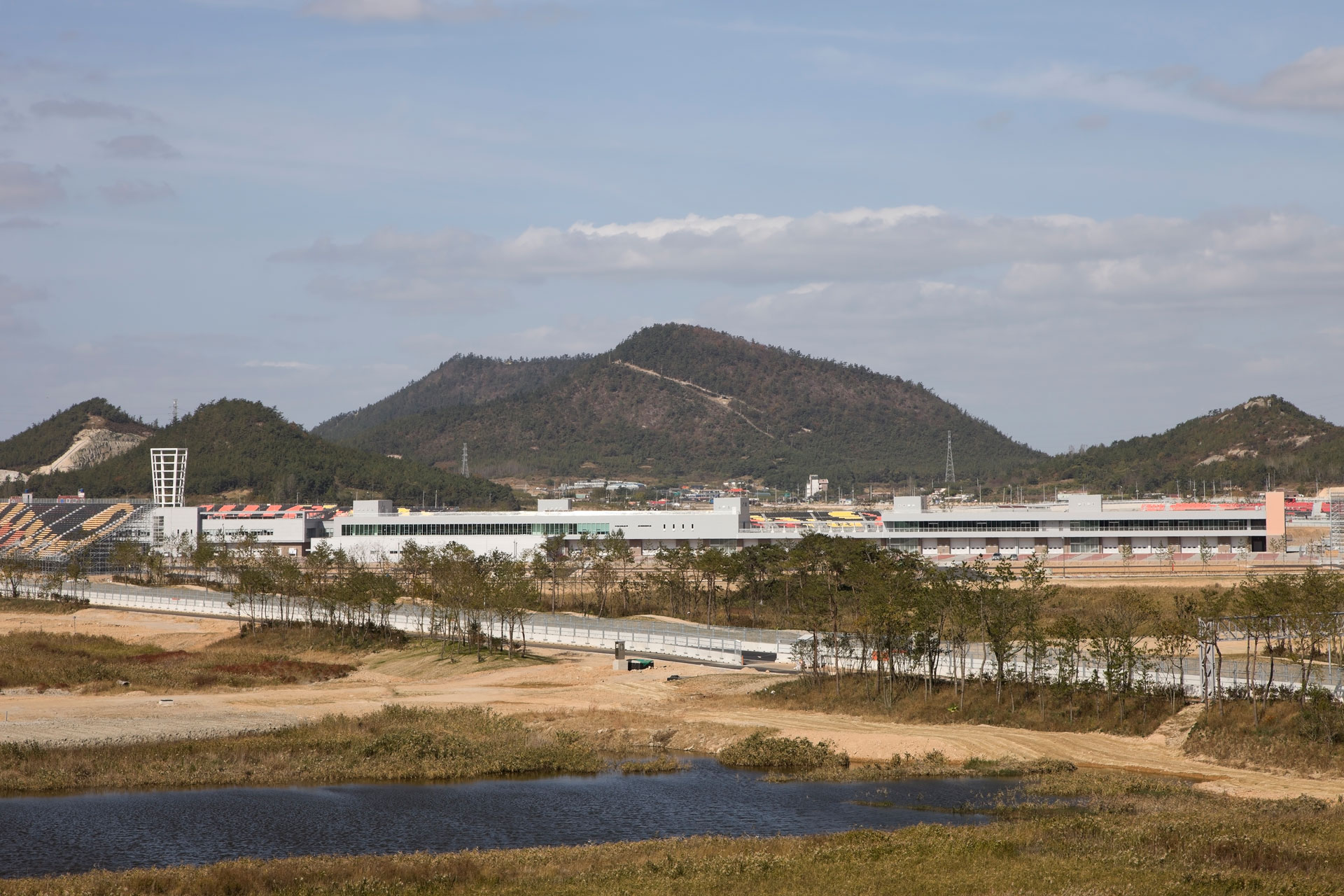
Formula One (F1) is an international motorsport competition where the world’s best racing cars compete for speed, serving as a stage that showcases the pinnacle of automotive technology. The Korea International Circuit (KIC), located in Yeongam, Jeollanam-do, was planned and constructed specifically for the F1 Grand Prix and was completed in 2011. The Grandstand, the main architectural landmark of the circuit, reinterprets symbolic elements of Korean traditional architecture through a distinctive formal vocabulary. This design captures both the identity of a Korean racing circuit and the dynamic energy emanating from F1 racing. Through this, the project sought to present Korea’s long-standing history and rapidly-developing modernity to the global stage.
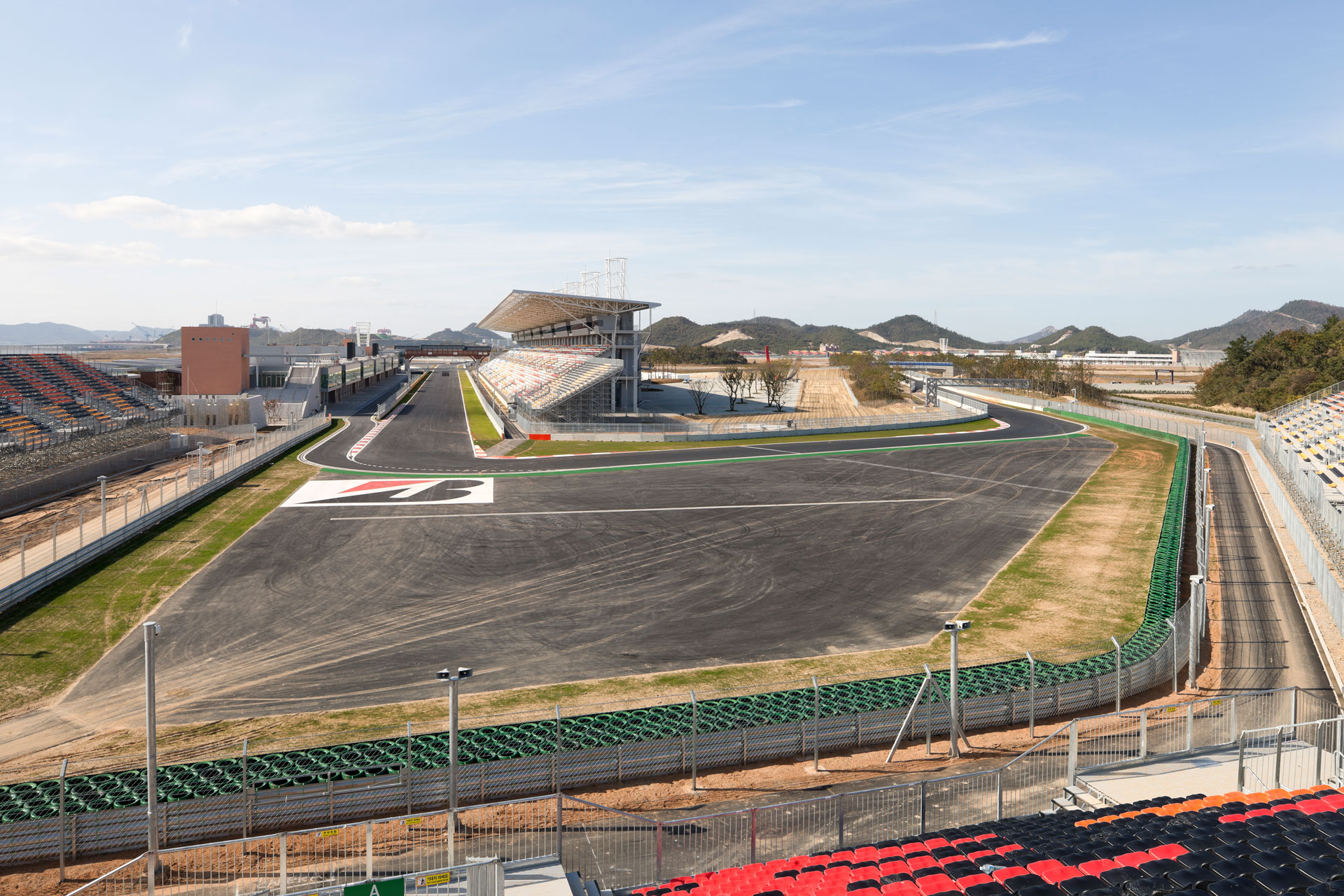
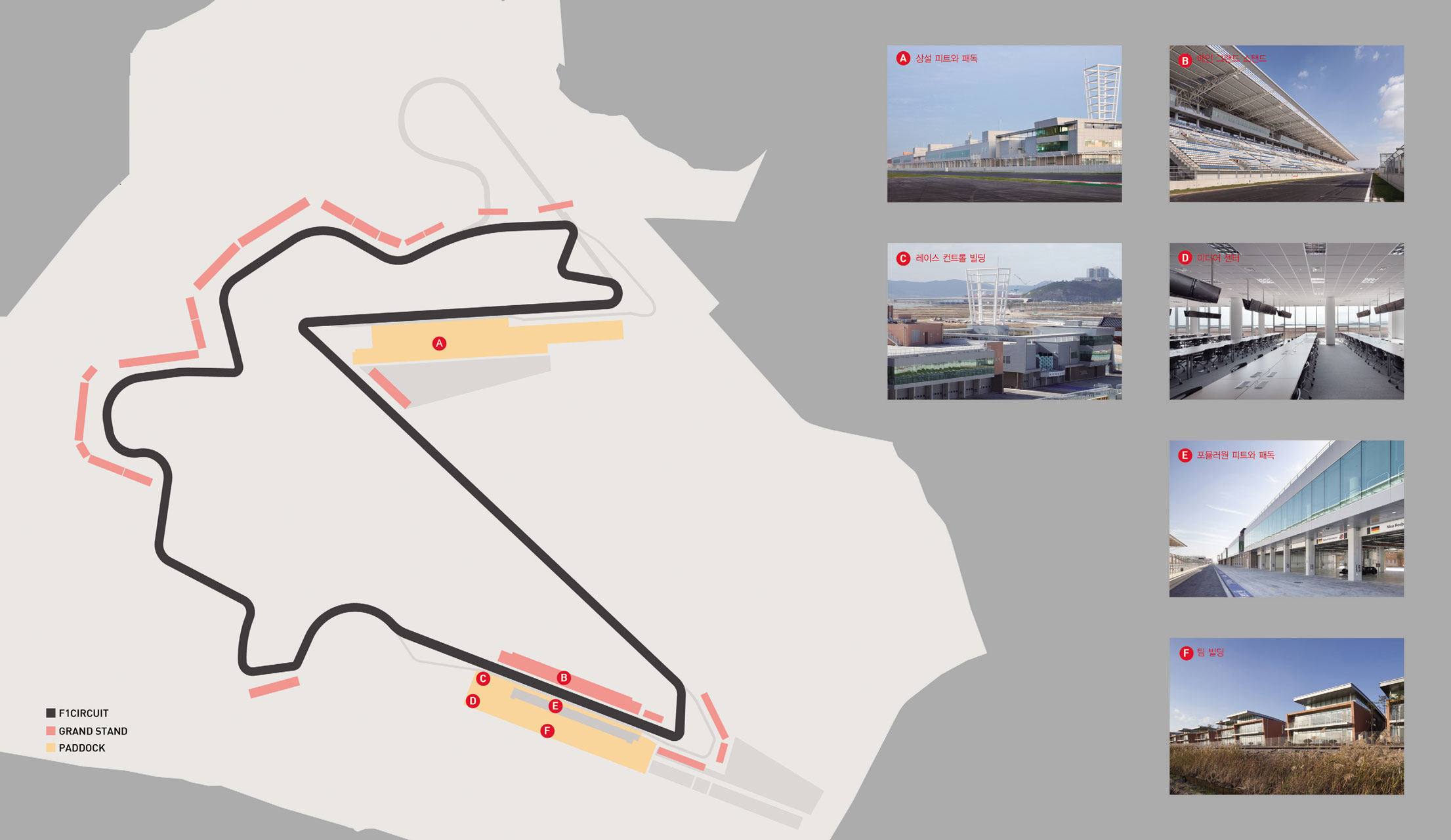
Unlike most circuits that run clockwise, the KIC track operates counterclockwise, which is expected to offer a fresh and unique racing experience. Featuring one of the world’s longest straight sections — approximately 1.2 km, where cars can reach top speeds of 320 km/h — the circuit allows drivers and spectators alike to feel the thrill of maximum velocity. Following this longest straight, a series of curved sections harmonize with the natural topography of Lake Yeongam, enabling a variety of cornering in contrast to high-speed racing. The KIC also features a dual-track system: a permanent circuit for year-round domestic races and an F1-exclusive circuit used for three days annually during the F1 event. When no major races are scheduled, the F1 track can be used as a public road, enhancing operational efficiency while accommodating various types of racing activities.
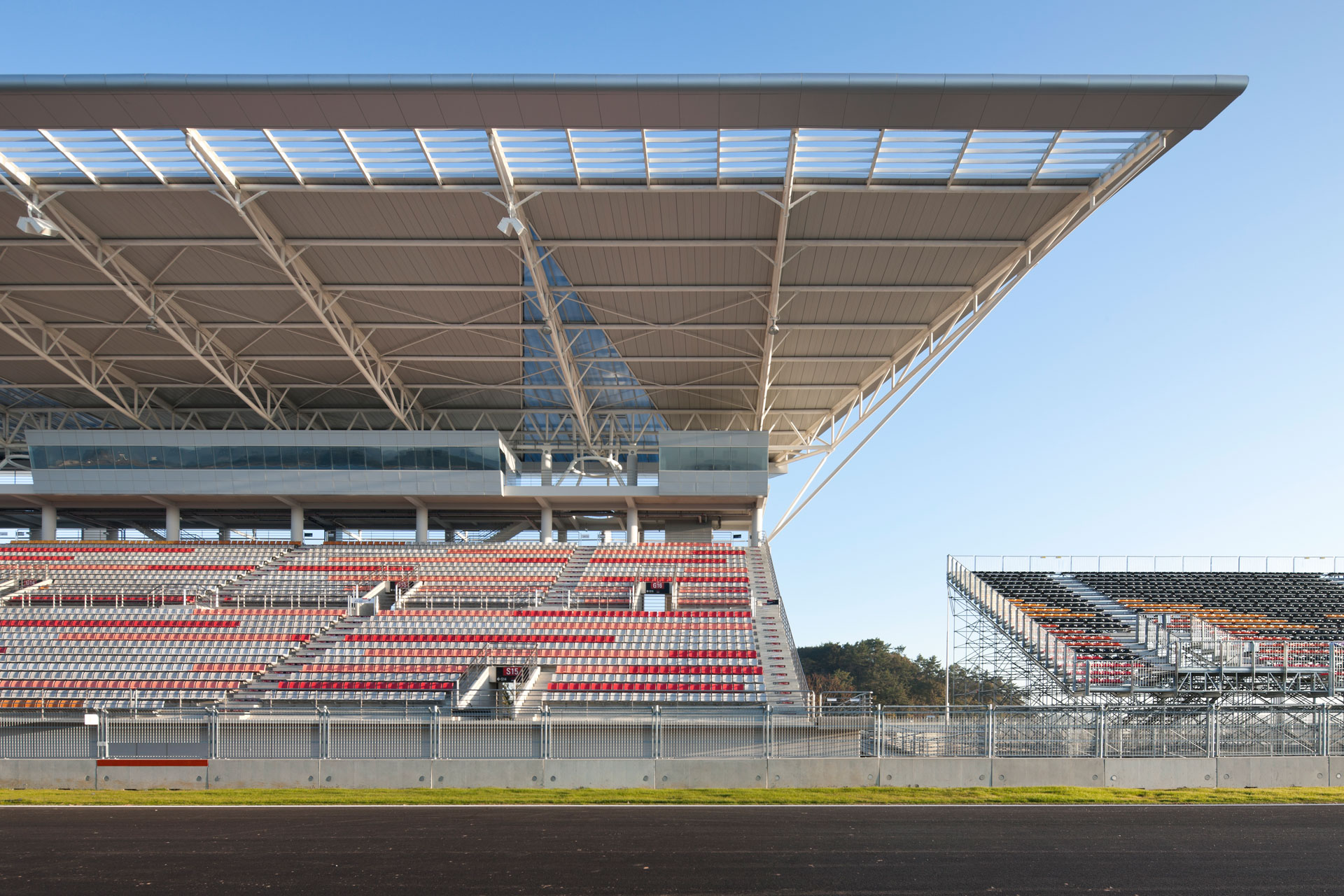
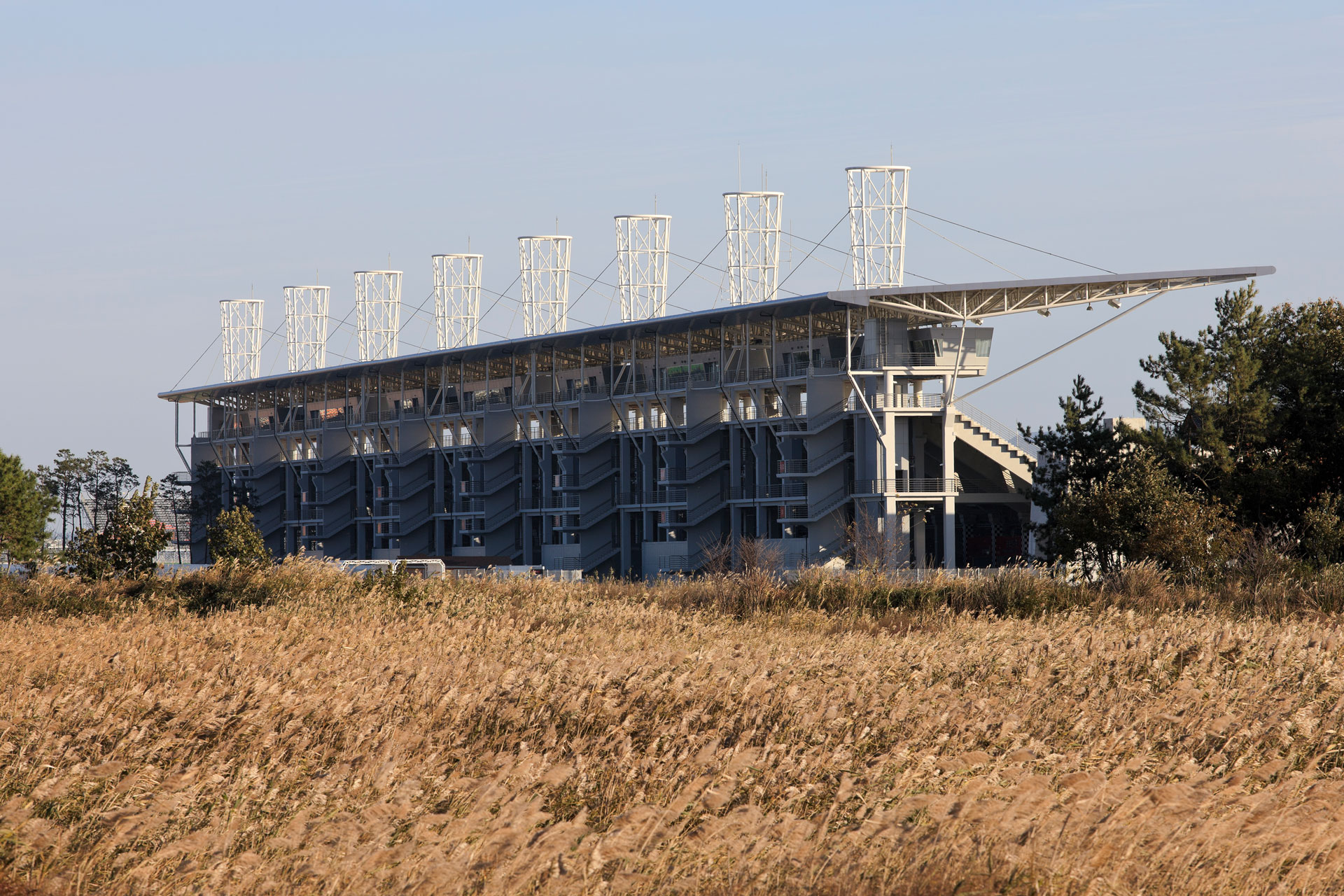
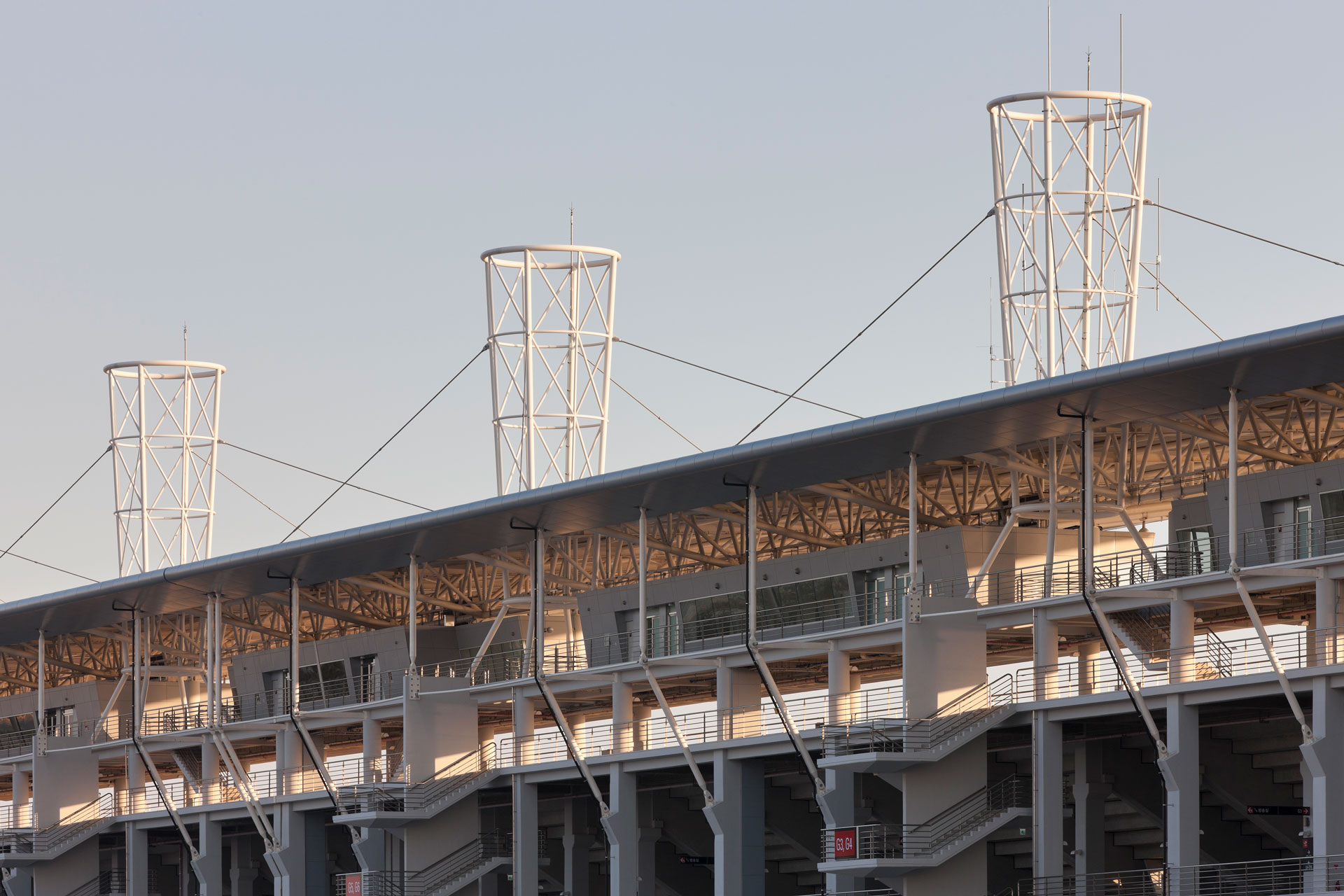
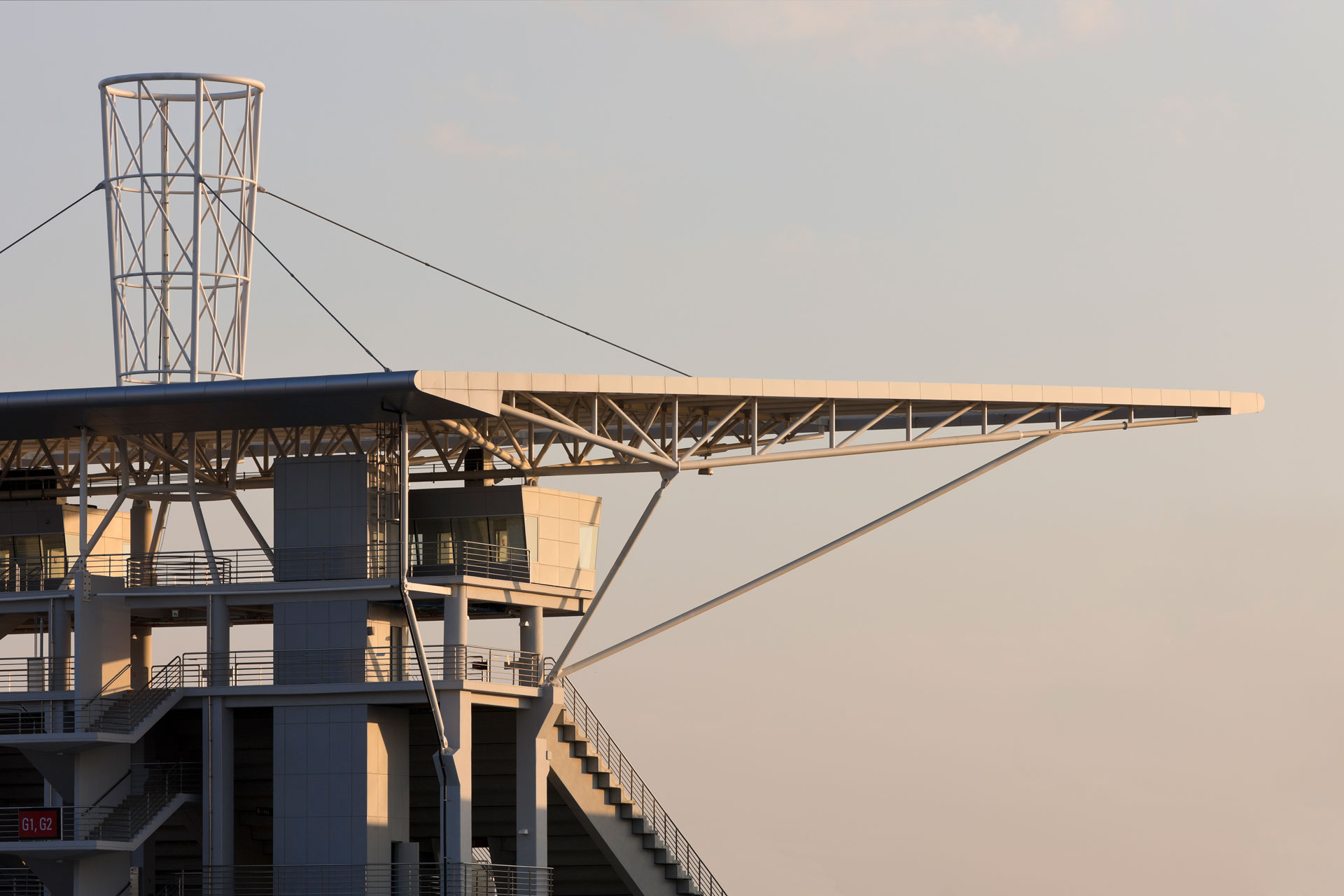
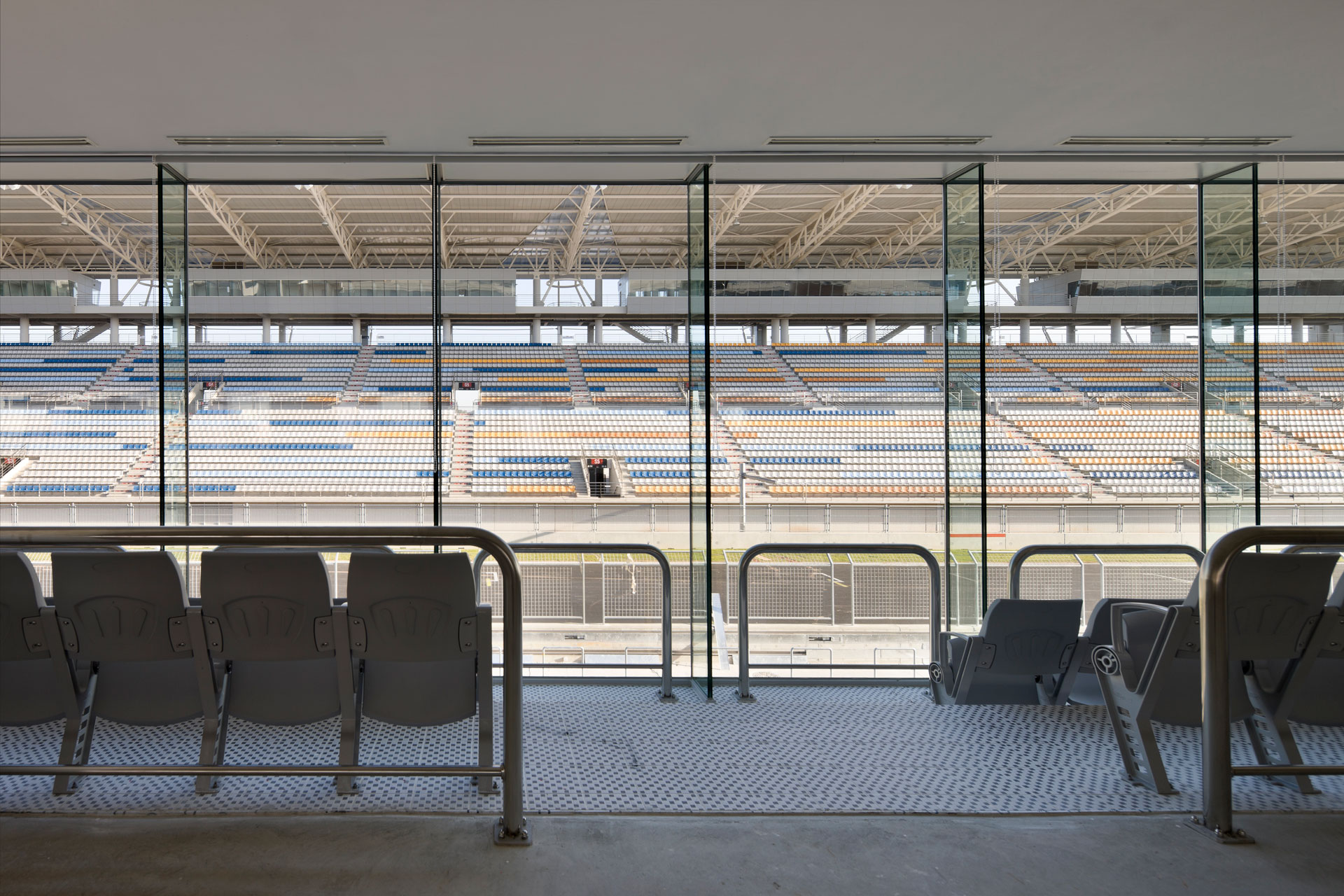
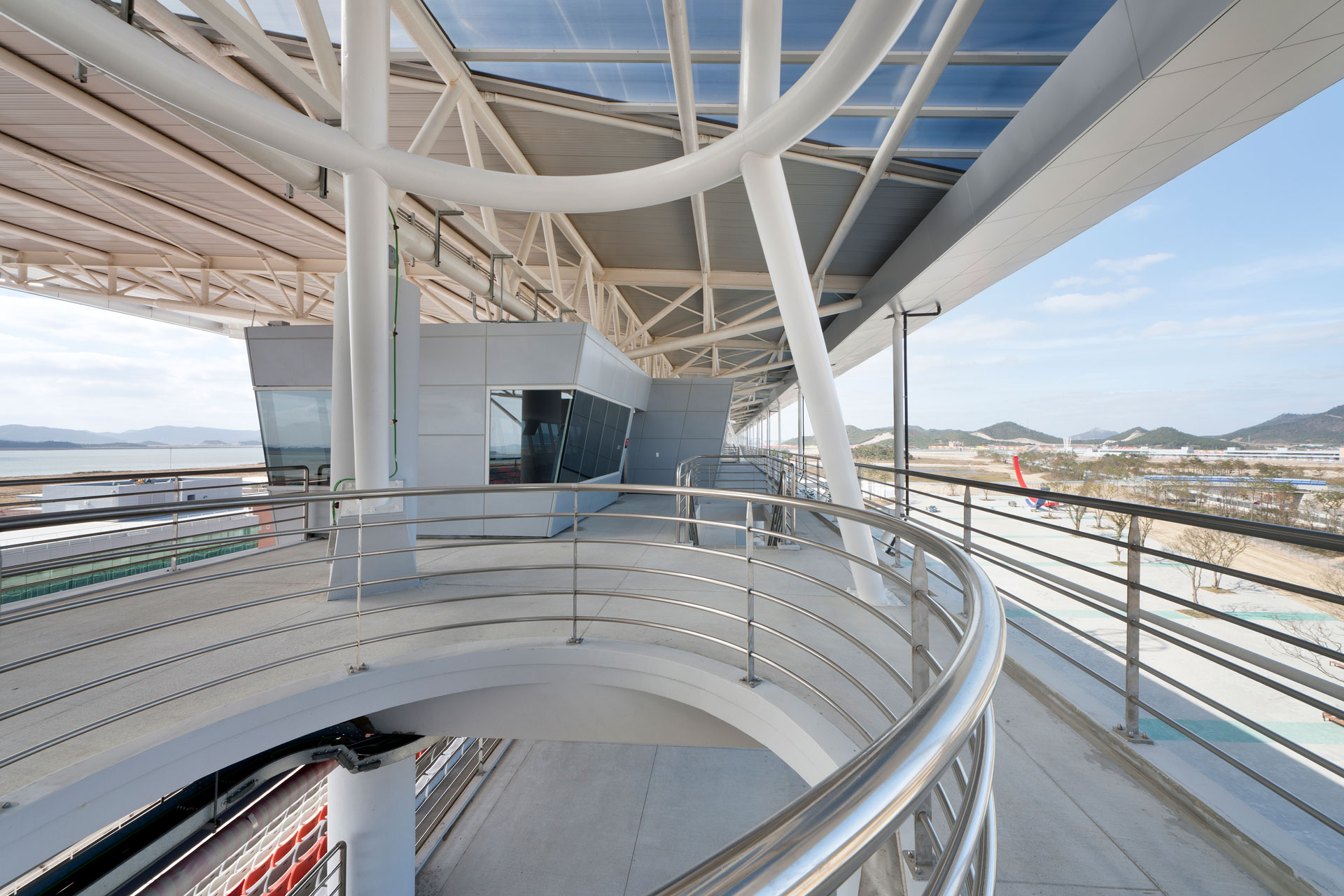
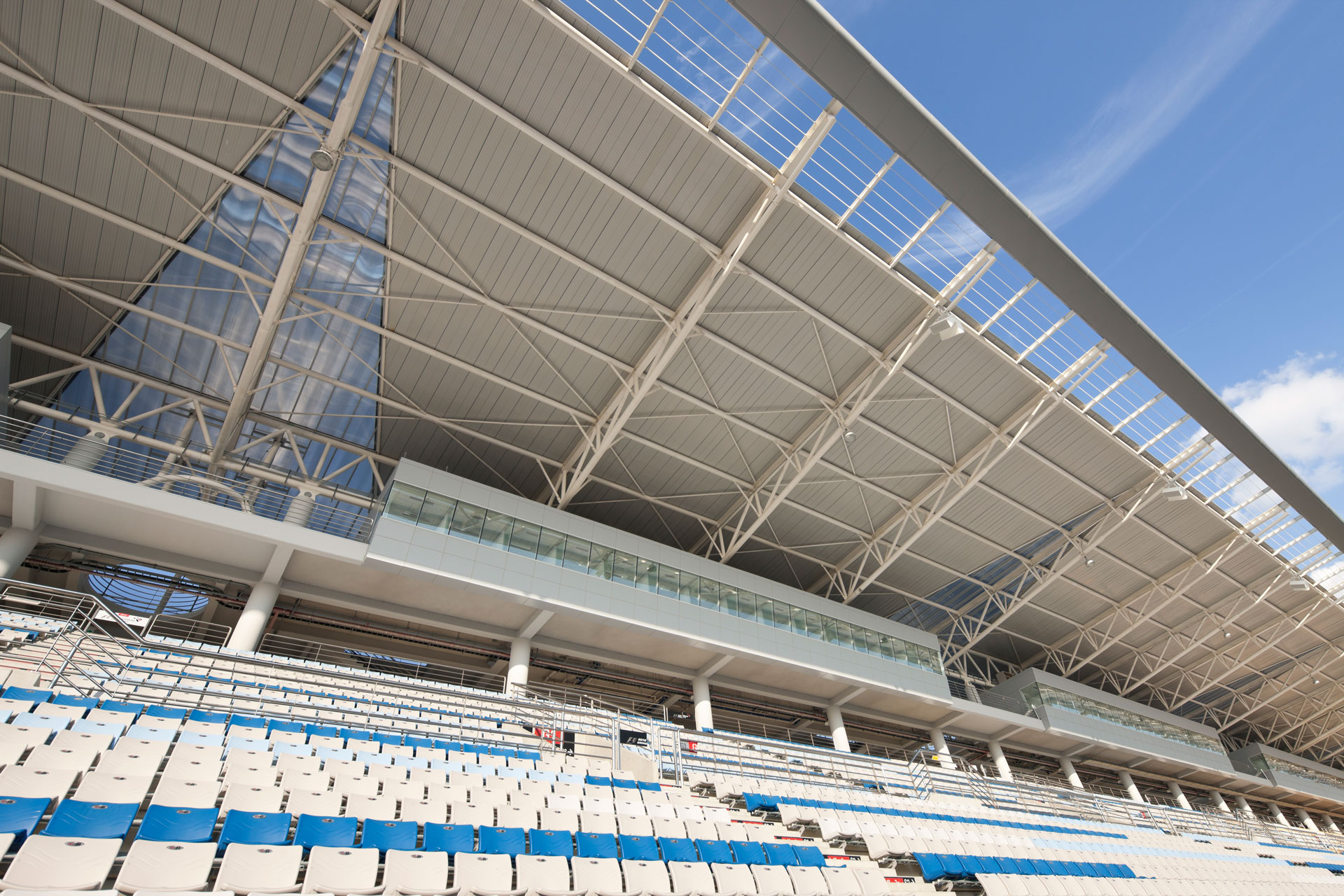
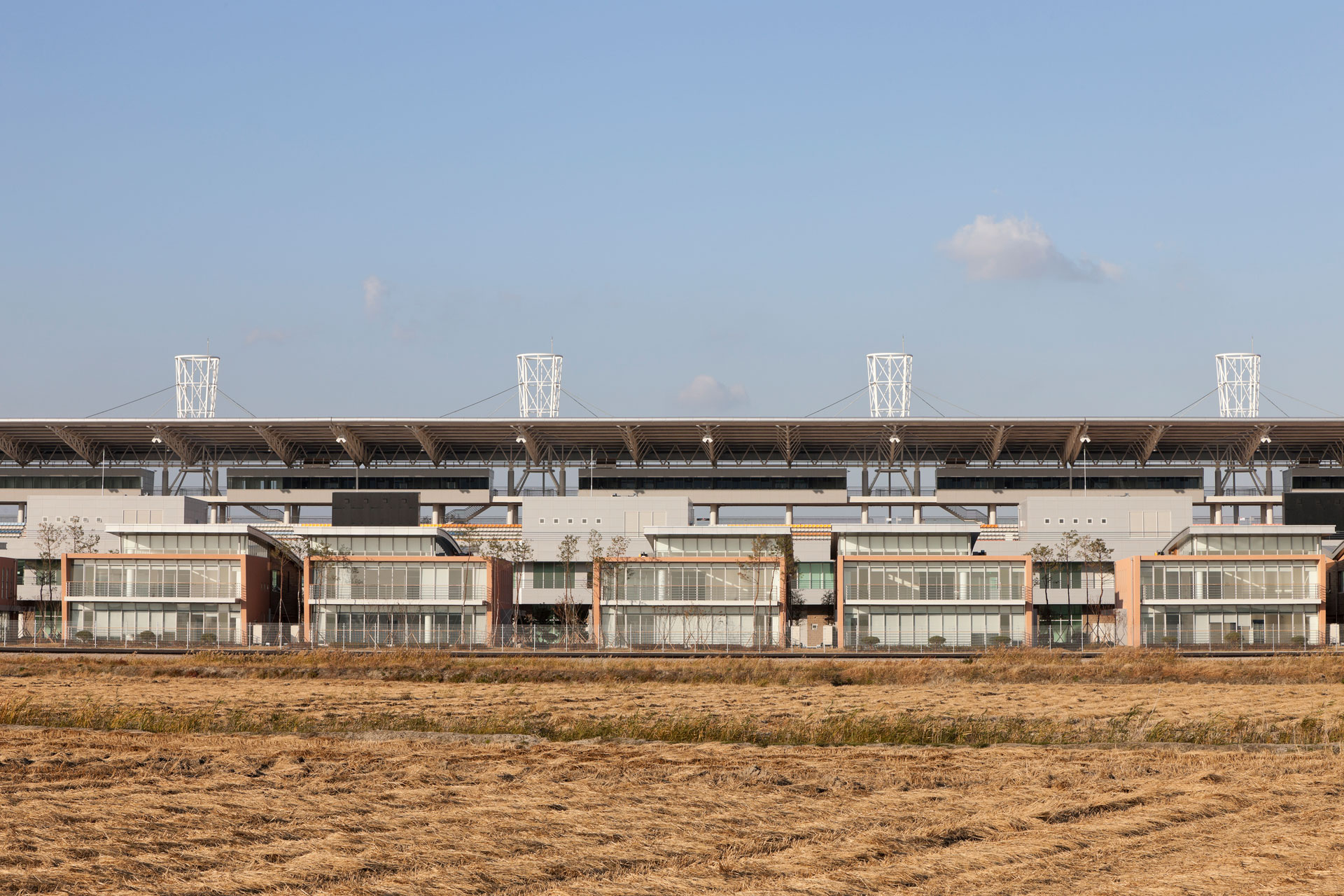
The design of the Grandstand unfolds elements derived from Korean tradition through various formal language. The roof, metaphorically inspired by the eaves of traditional Korean architecture, features a light and dynamic silhouette that becomes thinner toward both ends. The circular vertical structure atop the roof inspired by bongsudae — ancient beacon mounds used for rapid communication since the Three Kingdoms period — serves both as a medium announcing the F1 Korean Grand Prix and as a symbol for the roaring power of F1 engines. To emphasize this sculptural motif, the roof beneath the beacon structure was designed with transparent materials to admit daylight, integrating seamlessly with the staircase volumes below. Positioned just about 9 meters from the track, the Grandstand was meticulously designed to provide optimal sightlines, with the tiers, heights, concourses, and balustrades all configured so that even from the lowest row spectators can see down to the tires of the F1 machines.
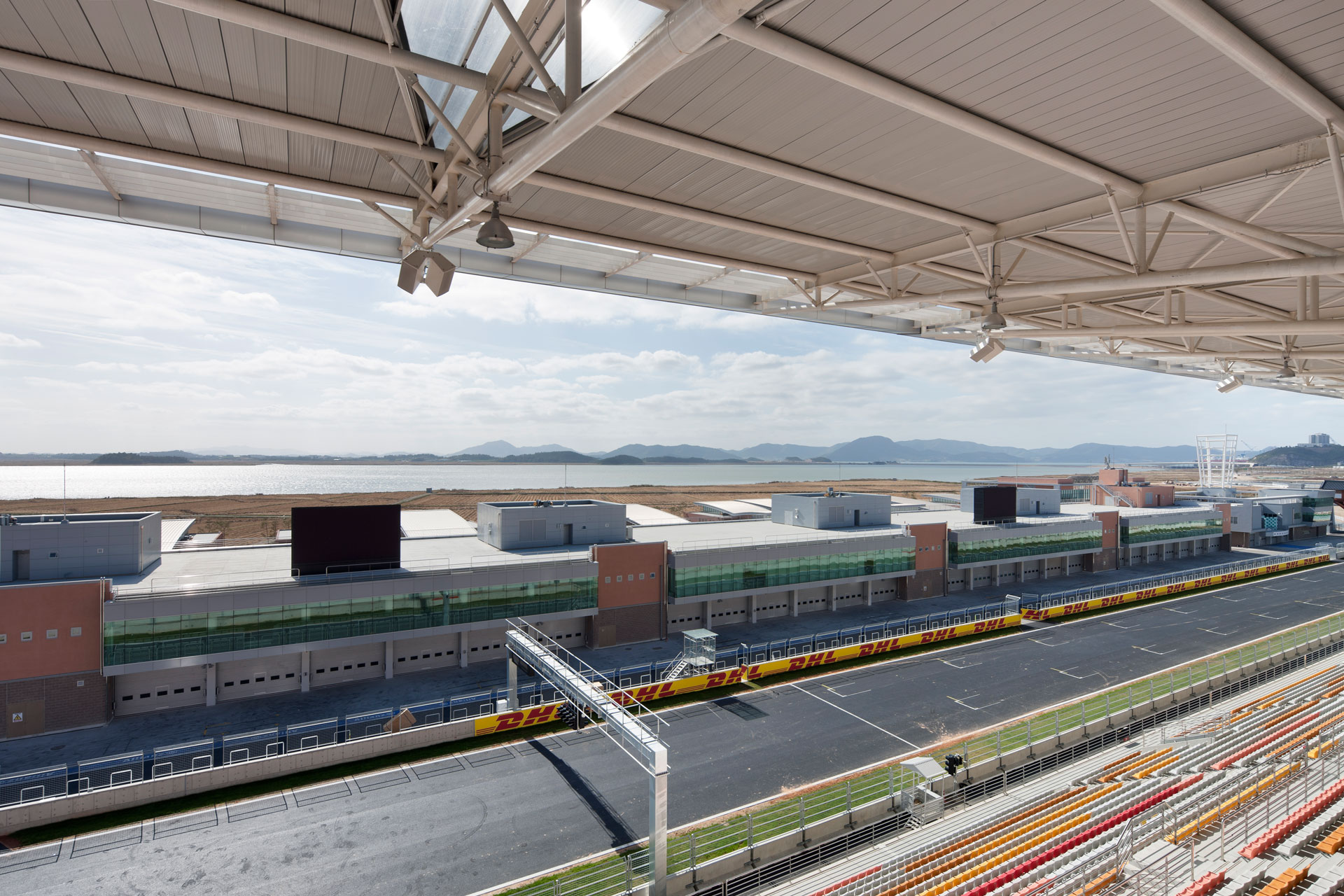
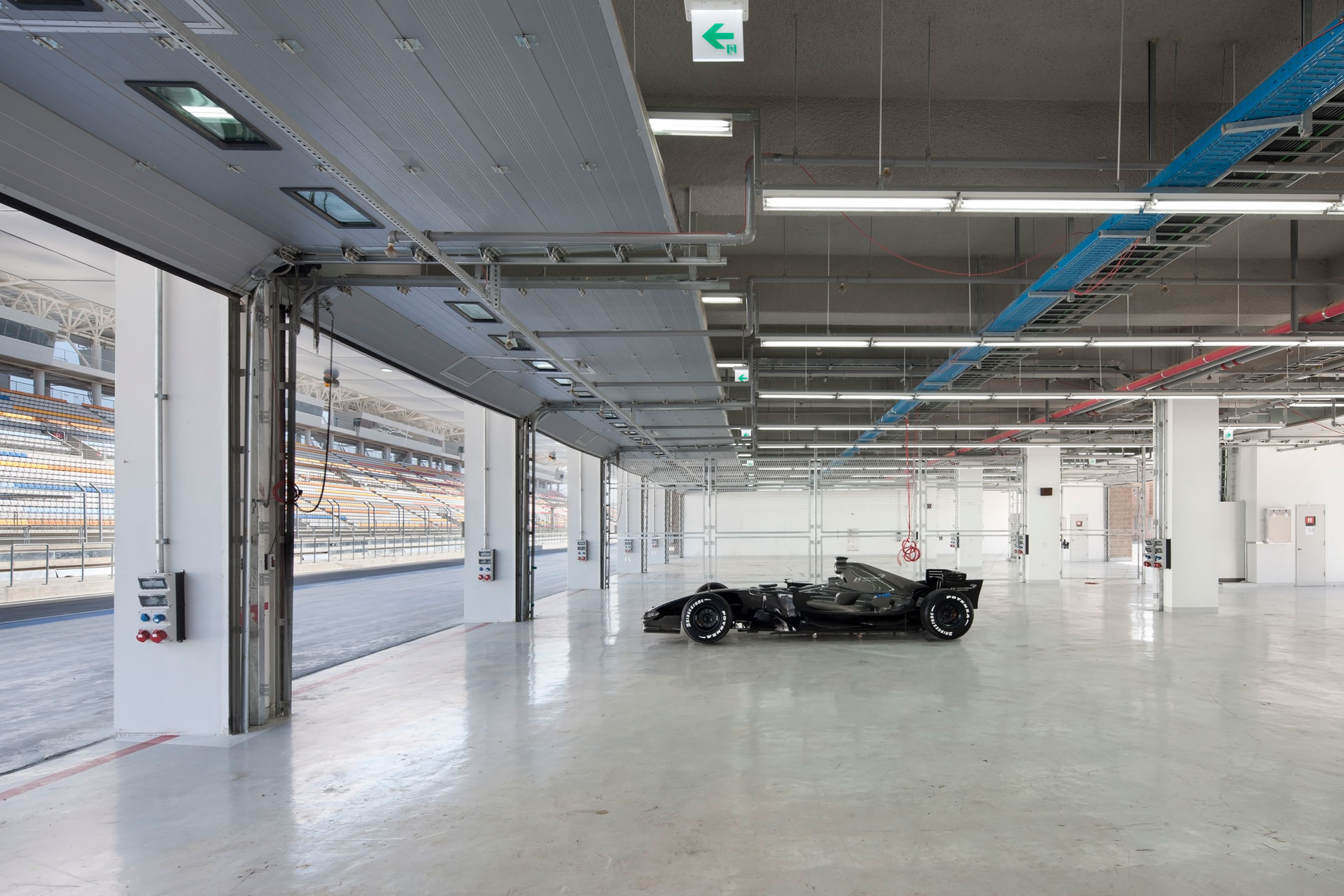
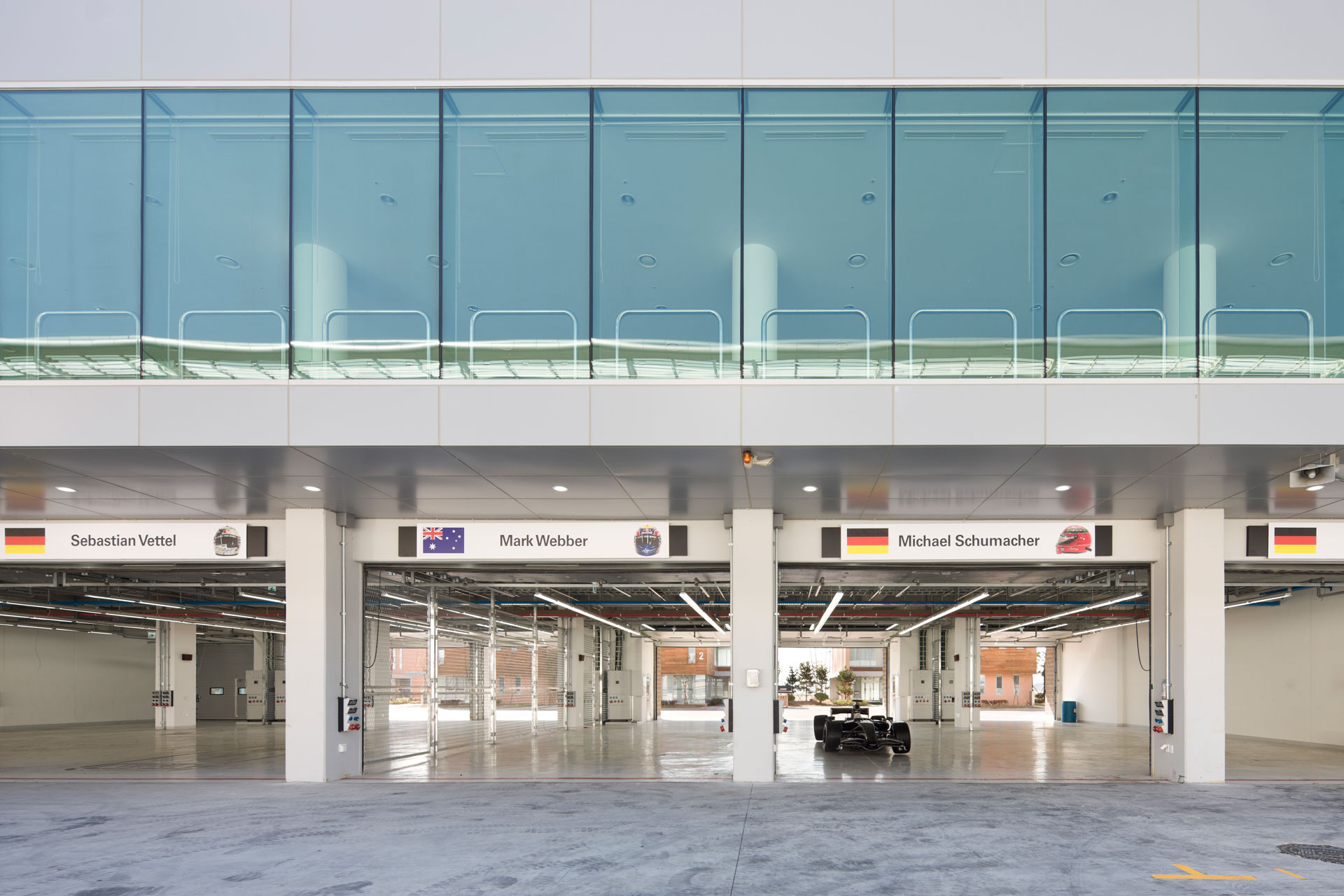
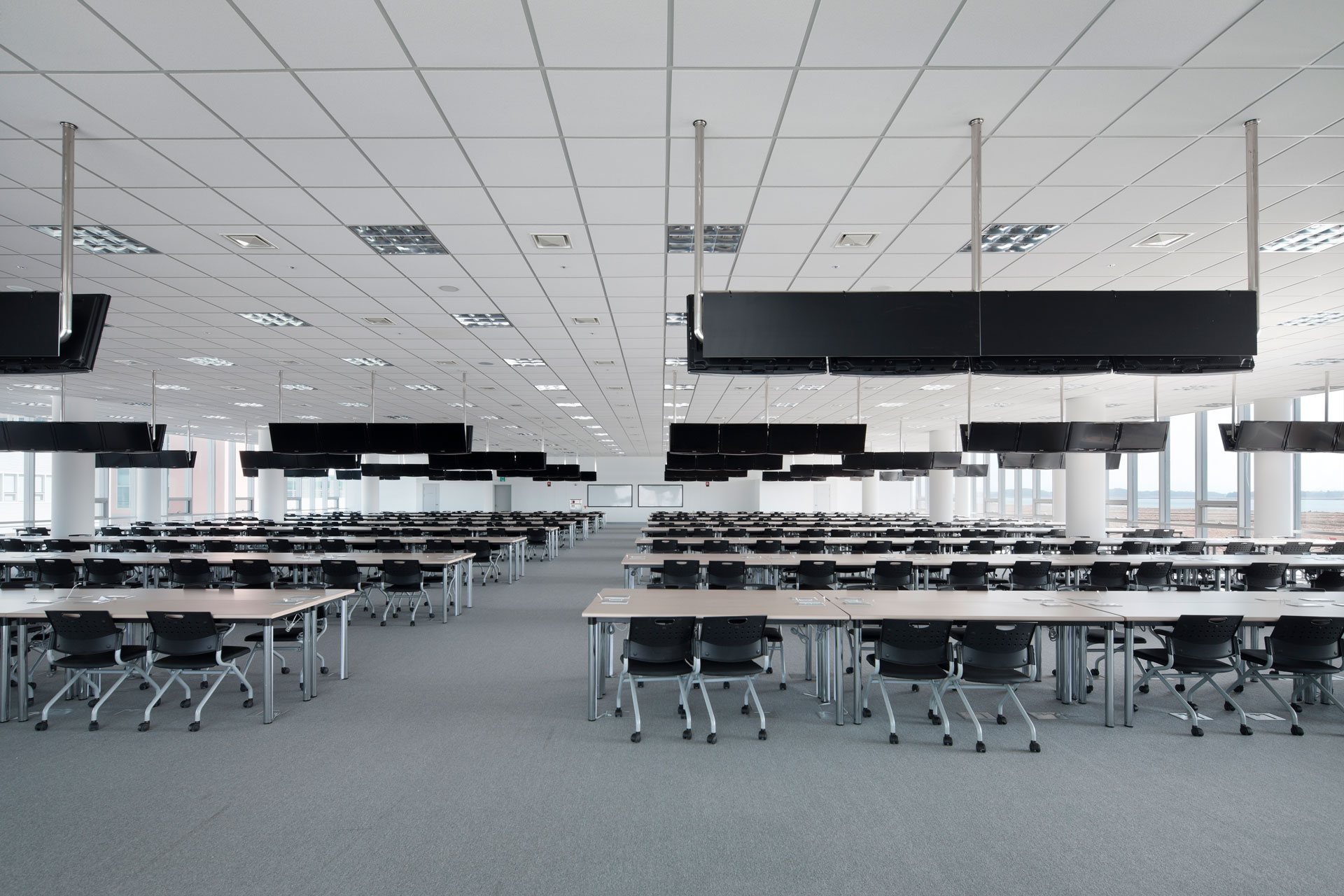
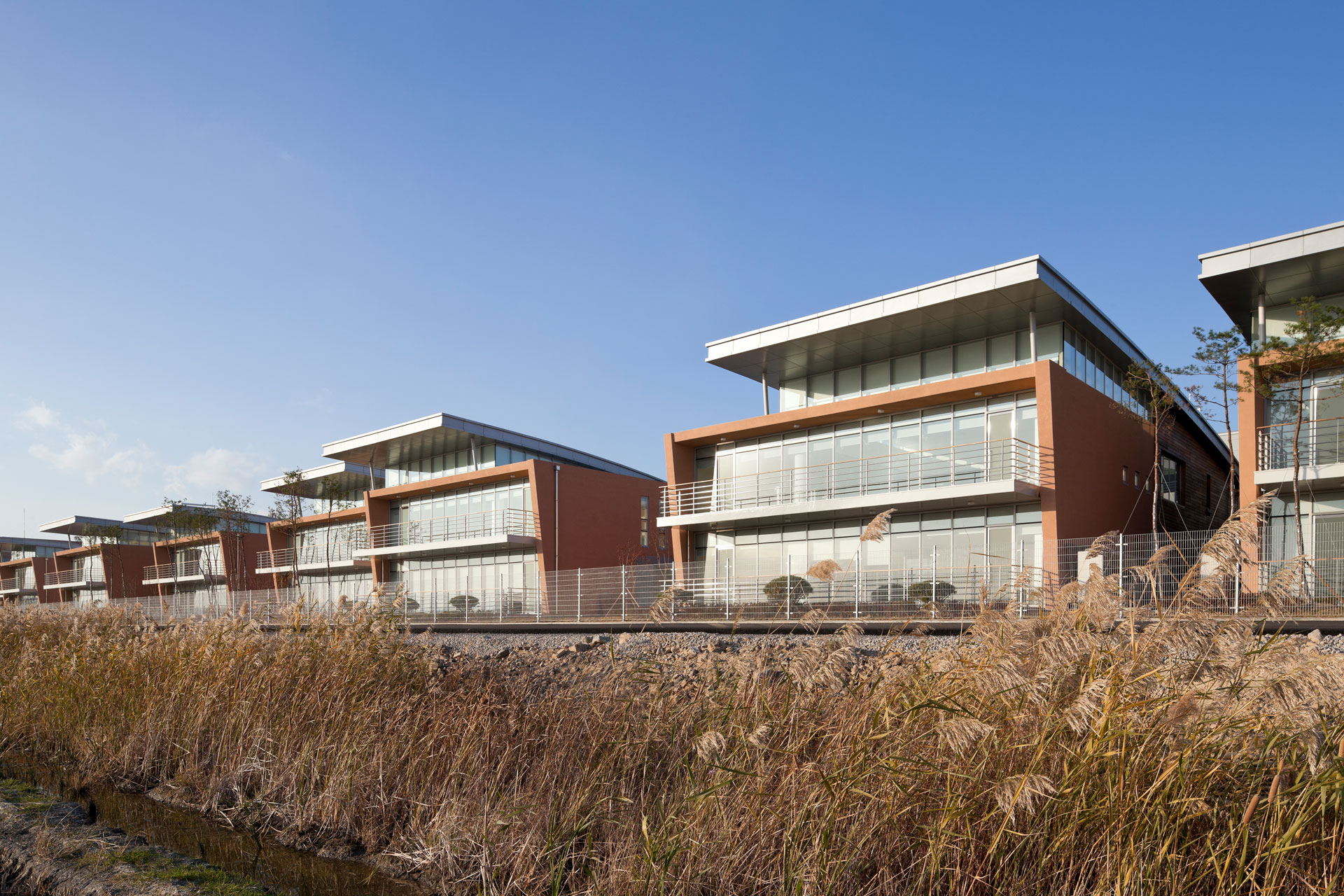
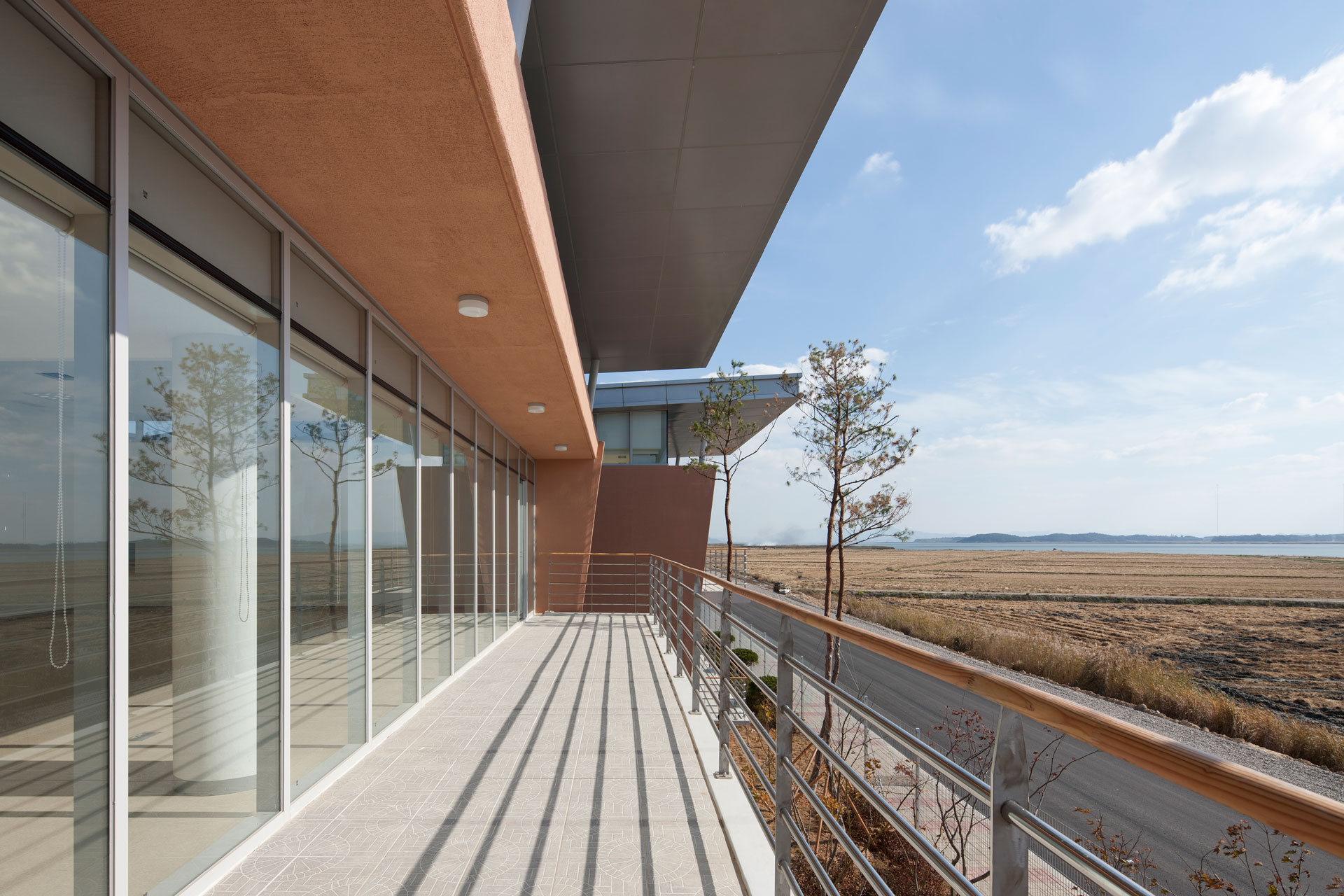
The F1 Paddock, where the core programs of the competition take place, comprises the F1 Pit Building, Race Control Building, Media Center, fourteen Team Buildings, and the Entrance Building. Particularly notable are the Team Buildings’ rooflines, which follow the gentle ripples of Lake Yeongam, visually connecting with the layout of the Grandstand. Careful zoning clearly separates the circulation routes for visitors, VIPs, drivers, staff, and journalists, ensuring functional comfort throughout the paddock.
In the Press

-
Status
Completed
-
Order
Korea Auto Valley Operation (KAVO)
-
Purpose
Sports
-
Design Year
2007
-
Completion Year
2011
-
Location
Yeongam-gun, Jeollanam-do
-
Site area
1,411,000m2
-
Gross Floor Area
69,996.75m2
-
Building Area
77,187.56m2
-
Scale
4F / 1F
-
Consortium
Taeyeon Architecture
Formula One (F1) is an international motorsport competition where the world’s best racing cars compete for speed, serving as a stage that showcases the pinnacle of automotive technology. The Korea International Circuit (KIC), located in Yeongam, Jeollanam-do, was planned and constructed specifically for the F1 Grand Prix and was completed in 2011. The Grandstand, the main architectural landmark of the circuit, reinterprets symbolic elements of Korean traditional architecture through a distinctive formal vocabulary. This design captures both the identity of a Korean racing circuit and the dynamic energy emanating from F1 racing. Through this, the project sought to present Korea’s long-standing history and rapidly-developing modernity to the global stage.
Unlike most circuits that run clockwise, the KIC track operates counterclockwise, which is expected to offer a fresh and unique racing experience. Featuring one of the world’s longest straight sections — approximately 1.2 km, where cars can reach top speeds of 320 km/h — the circuit allows drivers and spectators alike to feel the thrill of maximum velocity. Following this longest straight, a series of curved sections harmonize with the natural topography of Lake Yeongam, enabling a variety of cornering in contrast to high-speed racing. The KIC also features a dual-track system: a permanent circuit for year-round domestic races and an F1-exclusive circuit used for three days annually during the F1 event. When no major races are scheduled, the F1 track can be used as a public road, enhancing operational efficiency while accommodating various types of racing activities.
The design of the Grandstand unfolds elements derived from Korean tradition through various formal language. The roof, metaphorically inspired by the eaves of traditional Korean architecture, features a light and dynamic silhouette that becomes thinner toward both ends. The circular vertical structure atop the roof inspired by bongsudae — ancient beacon mounds used for rapid communication since the Three Kingdoms period — serves both as a medium announcing the F1 Korean Grand Prix and as a symbol for the roaring power of F1 engines. To emphasize this sculptural motif, the roof beneath the beacon structure was designed with transparent materials to admit daylight, integrating seamlessly with the staircase volumes below. Positioned just about 9 meters from the track, the Grandstand was meticulously designed to provide optimal sightlines, with the tiers, heights, concourses, and balustrades all configured so that even from the lowest row spectators can see down to the tires of the F1 machines.
The F1 Paddock, where the core programs of the competition take place, comprises the F1 Pit Building, Race Control Building, Media Center, fourteen Team Buildings, and the Entrance Building. Particularly notable are the Team Buildings’ rooflines, which follow the gentle ripples of Lake Yeongam, visually connecting with the layout of the Grandstand. Careful zoning clearly separates the circulation routes for visitors, VIPs, drivers, staff, and journalists, ensuring functional comfort throughout the paddock.
In the Press

