Close
![Popup Image]()
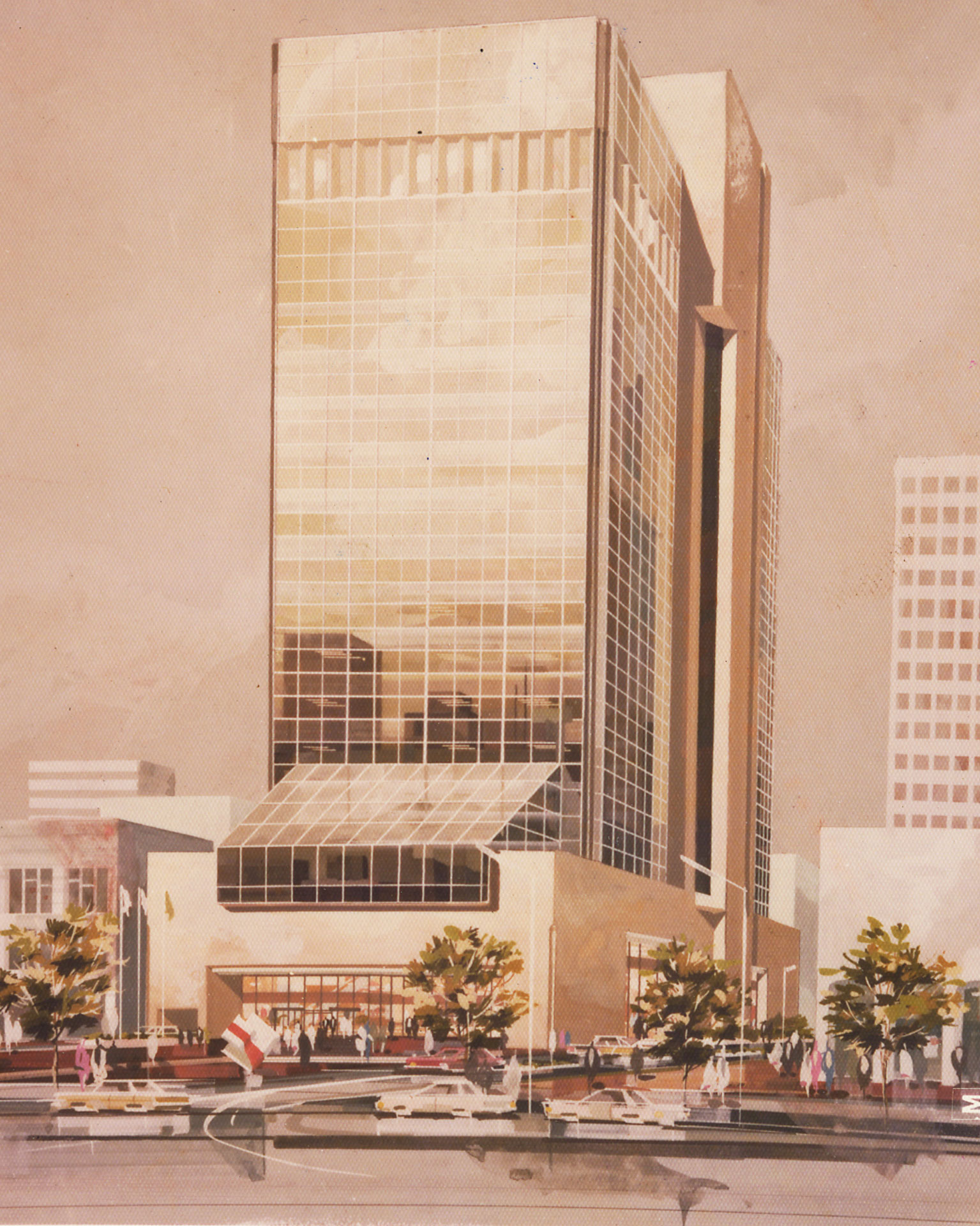
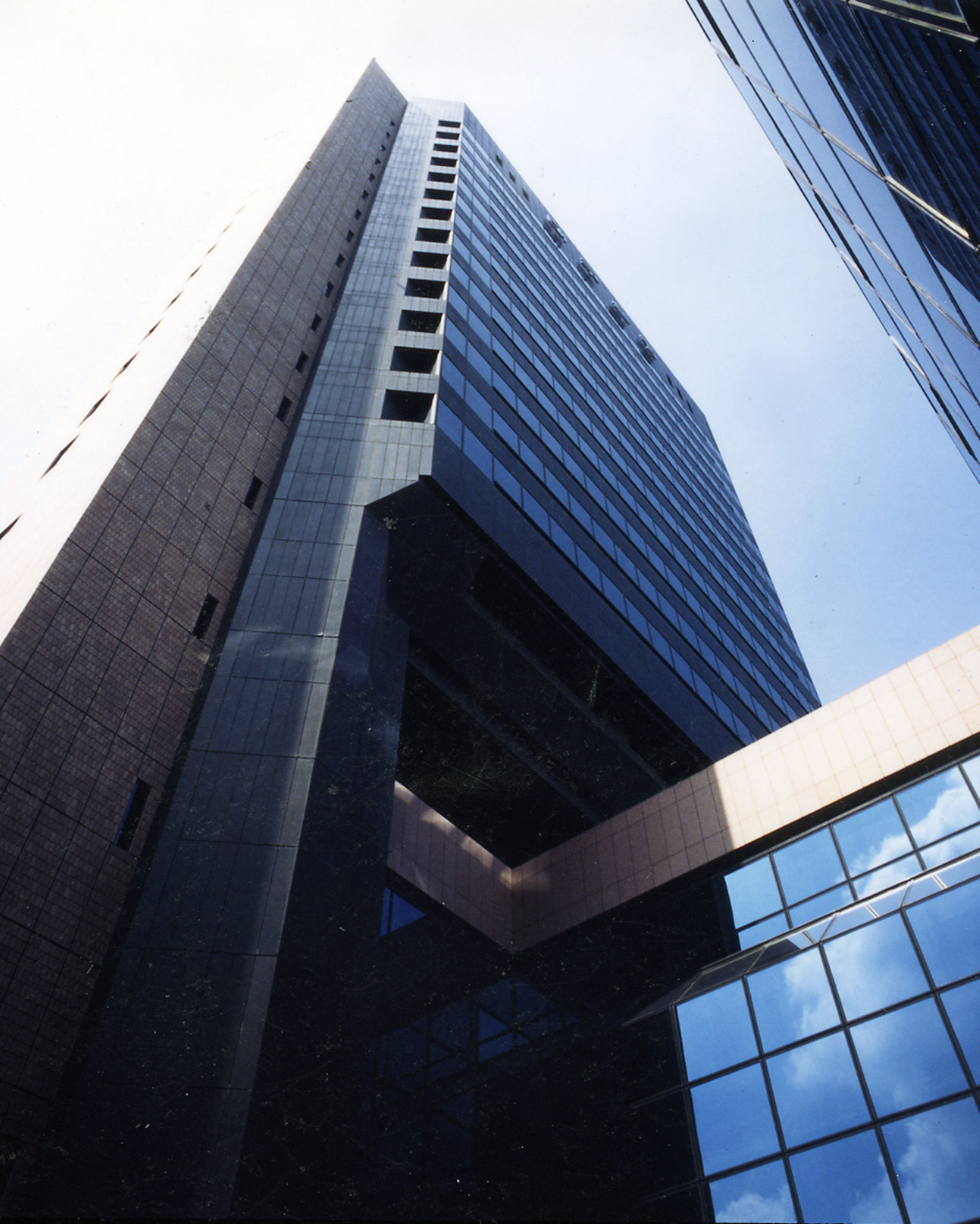
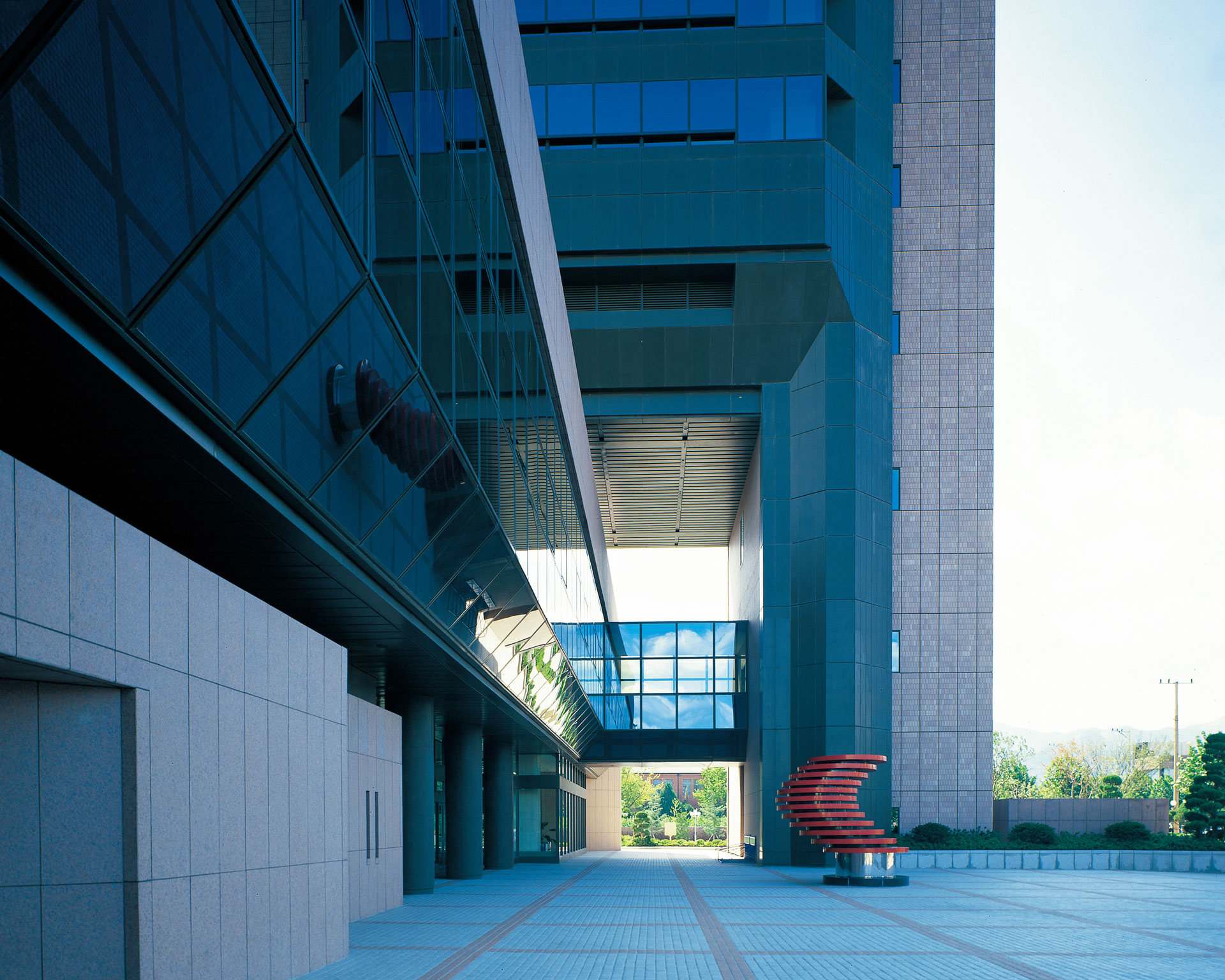
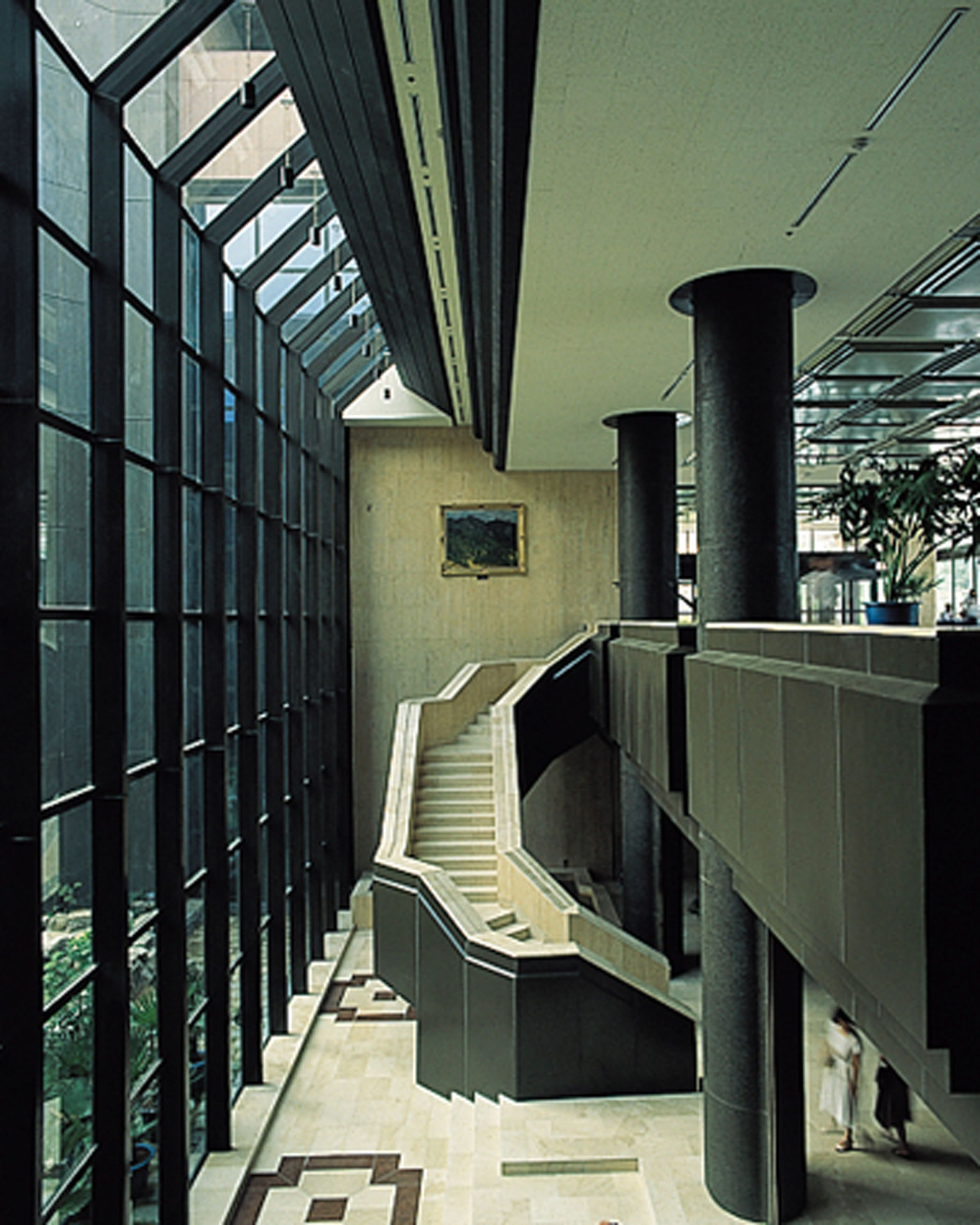
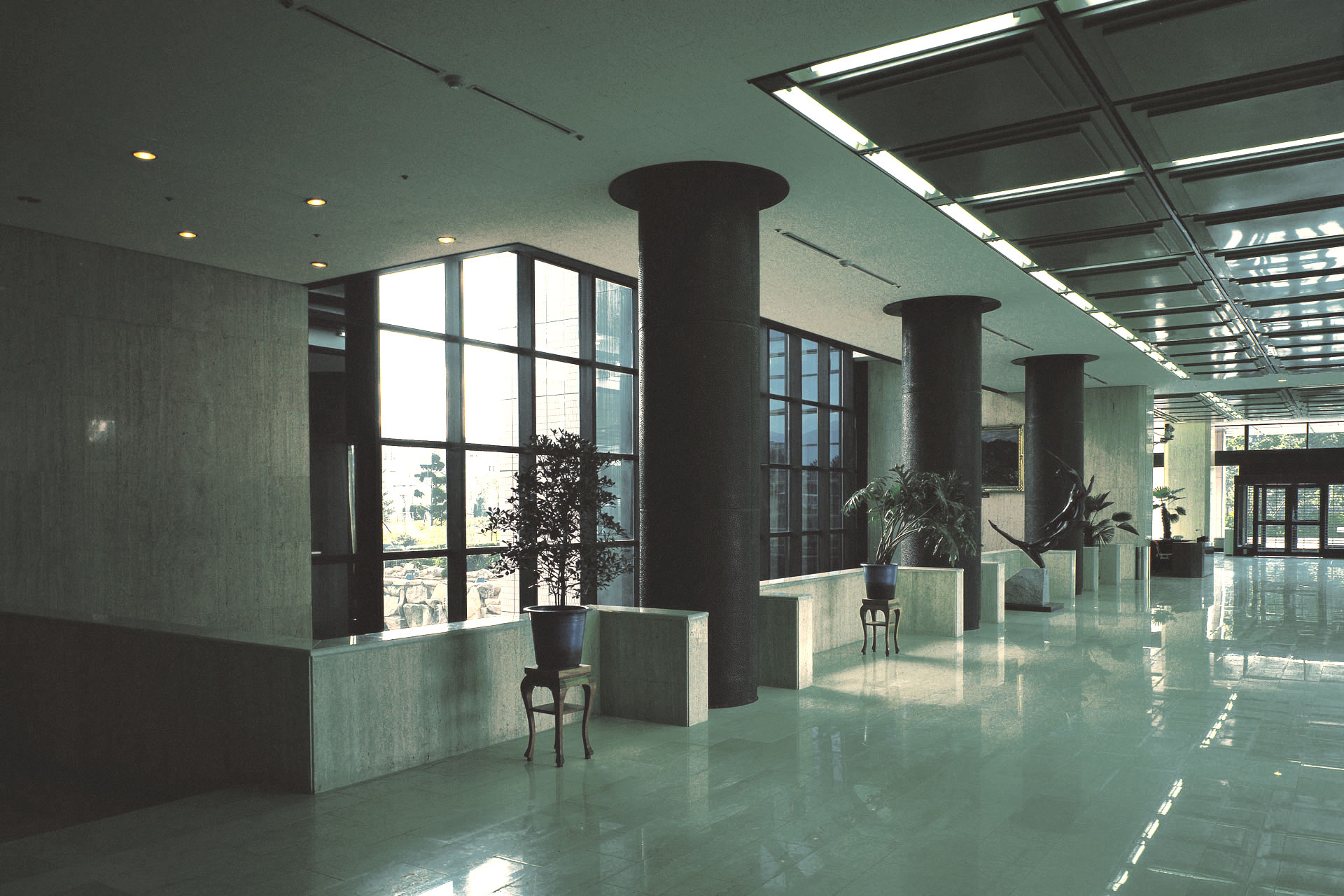
The Daegu Bank headquarters was planned in the early 1980s as a 19-story building—a rarity in non-metropolitan regions at the time. The site, located in Suseong-dong, Suseong-gu, Daegu, is situated in a commercial zone adjacent to a 50-meter-wide road leading to the new downtown area near Dongdaegu Station, providing a large land area relative to the bank’s scale. By actively securing public spaces within the site and incorporating a sunken garden—the space separating the low-rise podium from the high-rise tower—the design harmonizes with the site and enhances its integration with the surroundings. At the same time, by creating spaces designed with a human scale in mind, the project established an image of a local bank that is approachable to both customers and community residents.
The contrast between transparency and solidity, between the podium and the tower, and the form directly linked to the structural system pursue multifaceted expression through a complex composition. Furthermore, this design serves as an early example of eco-friendly architecture, incorporating elements such as a core layout optimized for solar gain, internal and external air circulation, and appropriate shading ratios based on solar radiation levels. At the Daegu Bank Headquarters, the new typology of bank architecture and user-centered design—first attempted at the Korea Exchange Bank Headquarters—were realized in a more refined form.
Archive

-
Status
Demolished
-
Awards
- 1986 Korea Architecture Exhibition - Honorable Mention
-
Order
Daegu Bank
-
Purpose
Office
-
Design Year
1979
-
Completion Year
1982
-
Location
Seongseo-gu, Daegu
-
Site area
18,234.00m2
-
Gross Floor Area
29,226.00m2
-
Building Area
12,152.59m2
-
Scale
B2, 18F
The Daegu Bank headquarters was planned in the early 1980s as a 19-story building—a rarity in non-metropolitan regions at the time. The site, located in Suseong-dong, Suseong-gu, Daegu, is situated in a commercial zone adjacent to a 50-meter-wide road leading to the new downtown area near Dongdaegu Station, providing a large land area relative to the bank’s scale. By actively securing public spaces within the site and incorporating a sunken garden—the space separating the low-rise podium from the high-rise tower—the design harmonizes with the site and enhances its integration with the surroundings. At the same time, by creating spaces designed with a human scale in mind, the project established an image of a local bank that is approachable to both customers and community residents.
The contrast between transparency and solidity, between the podium and the tower, and the form directly linked to the structural system pursue multifaceted expression through a complex composition. Furthermore, this design serves as an early example of eco-friendly architecture, incorporating elements such as a core layout optimized for solar gain, internal and external air circulation, and appropriate shading ratios based on solar radiation levels. At the Daegu Bank Headquarters, the new typology of bank architecture and user-centered design—first attempted at the Korea Exchange Bank Headquarters—were realized in a more refined form.
Archive