
Close
![Popup Image]()
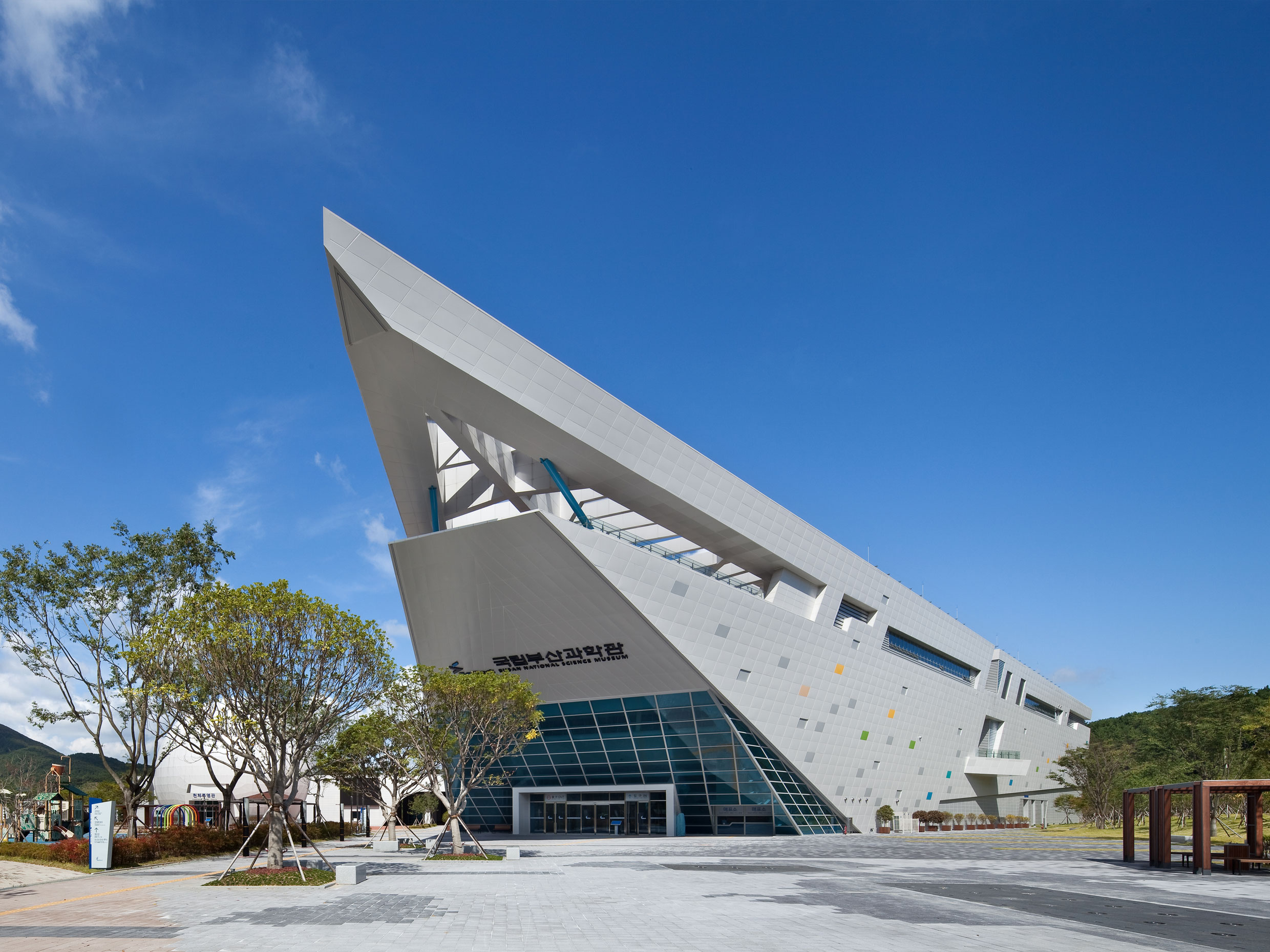
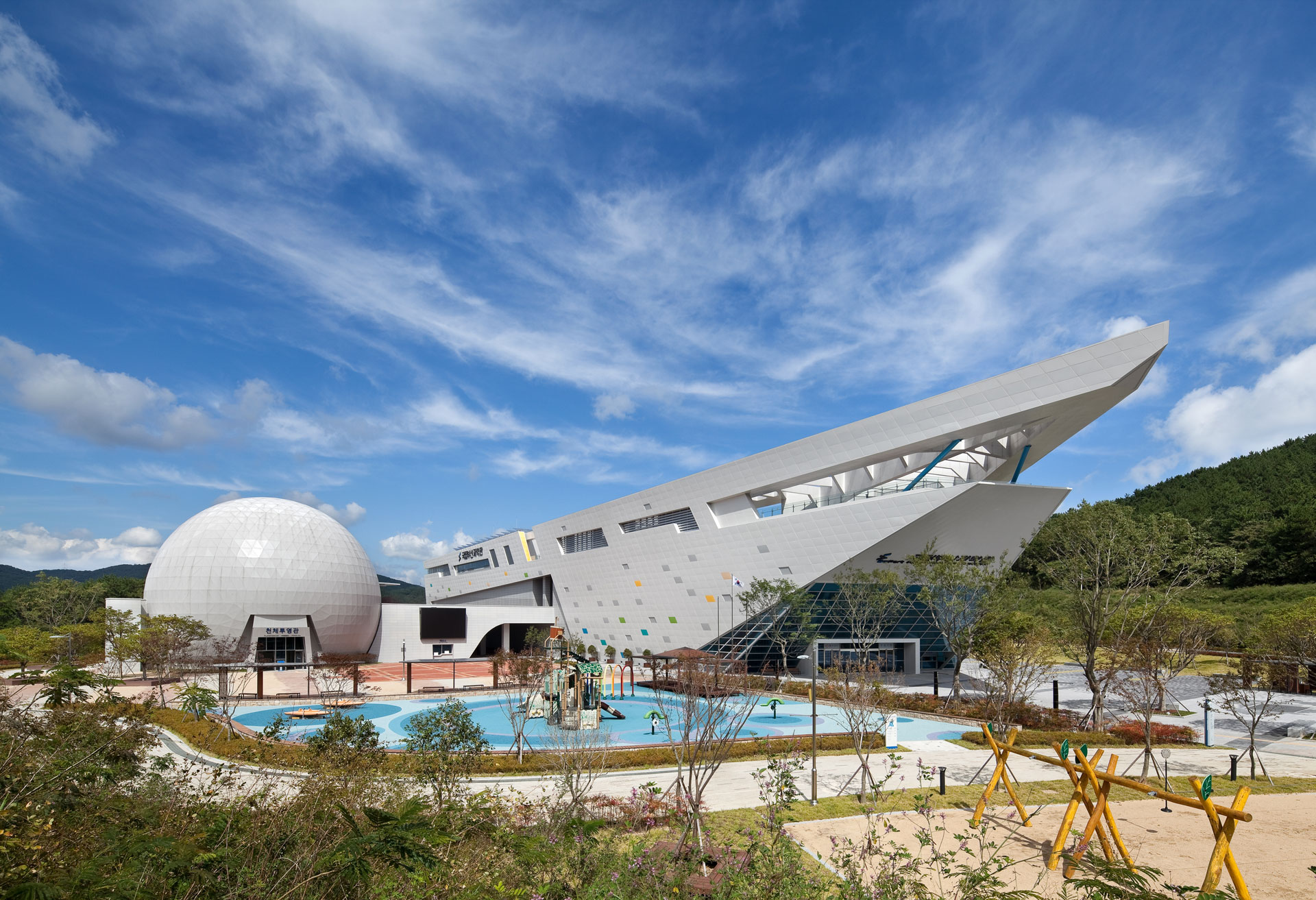
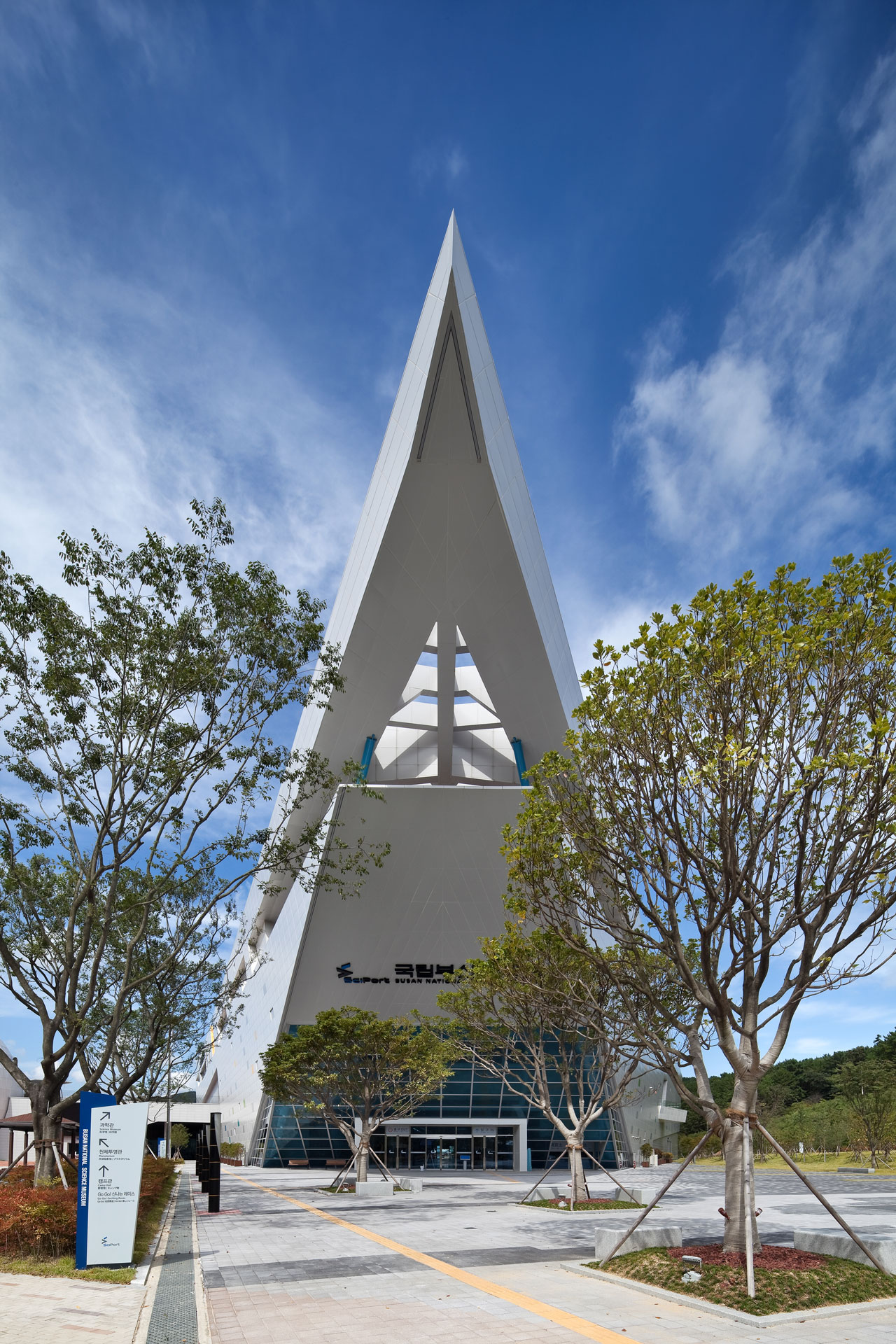
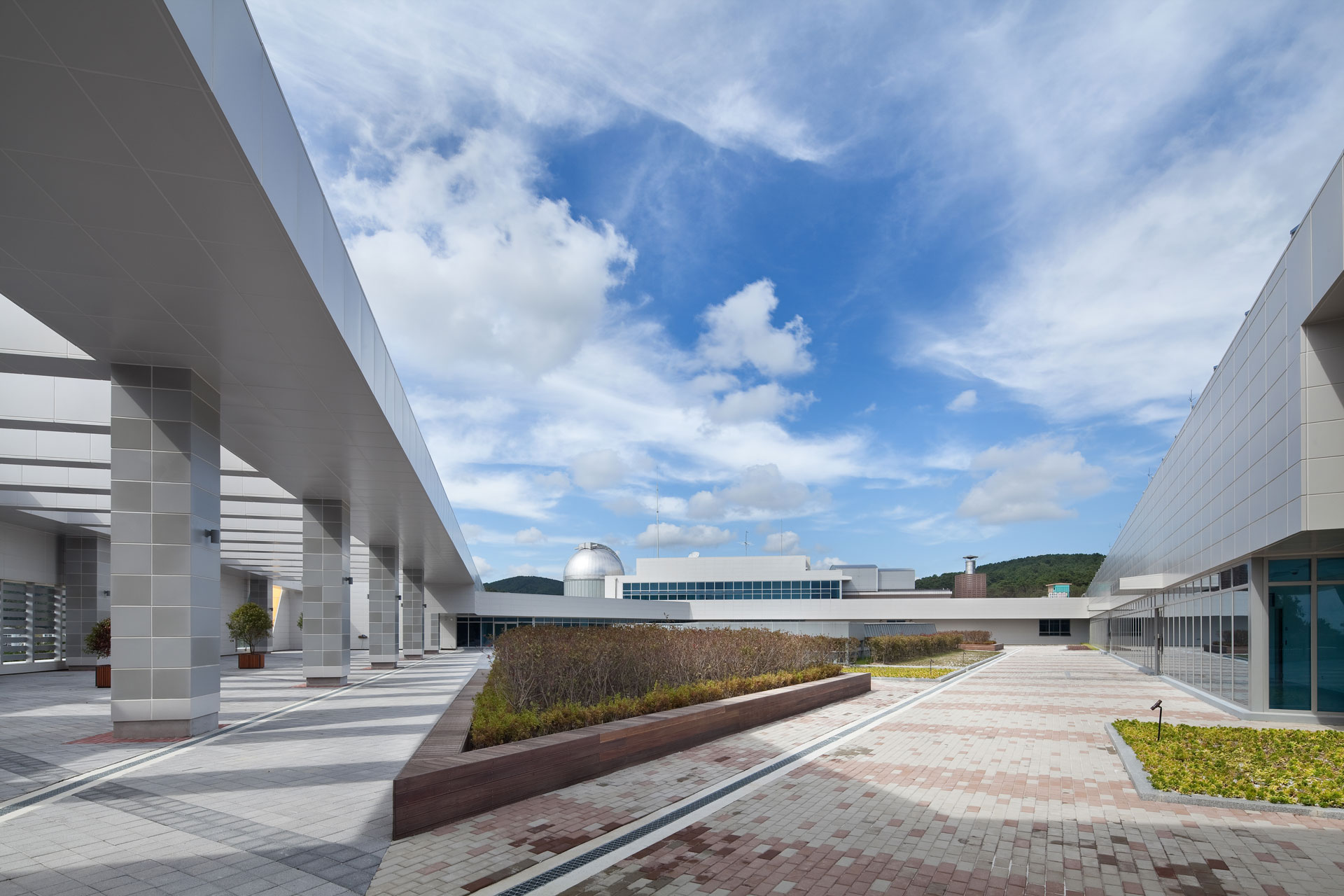
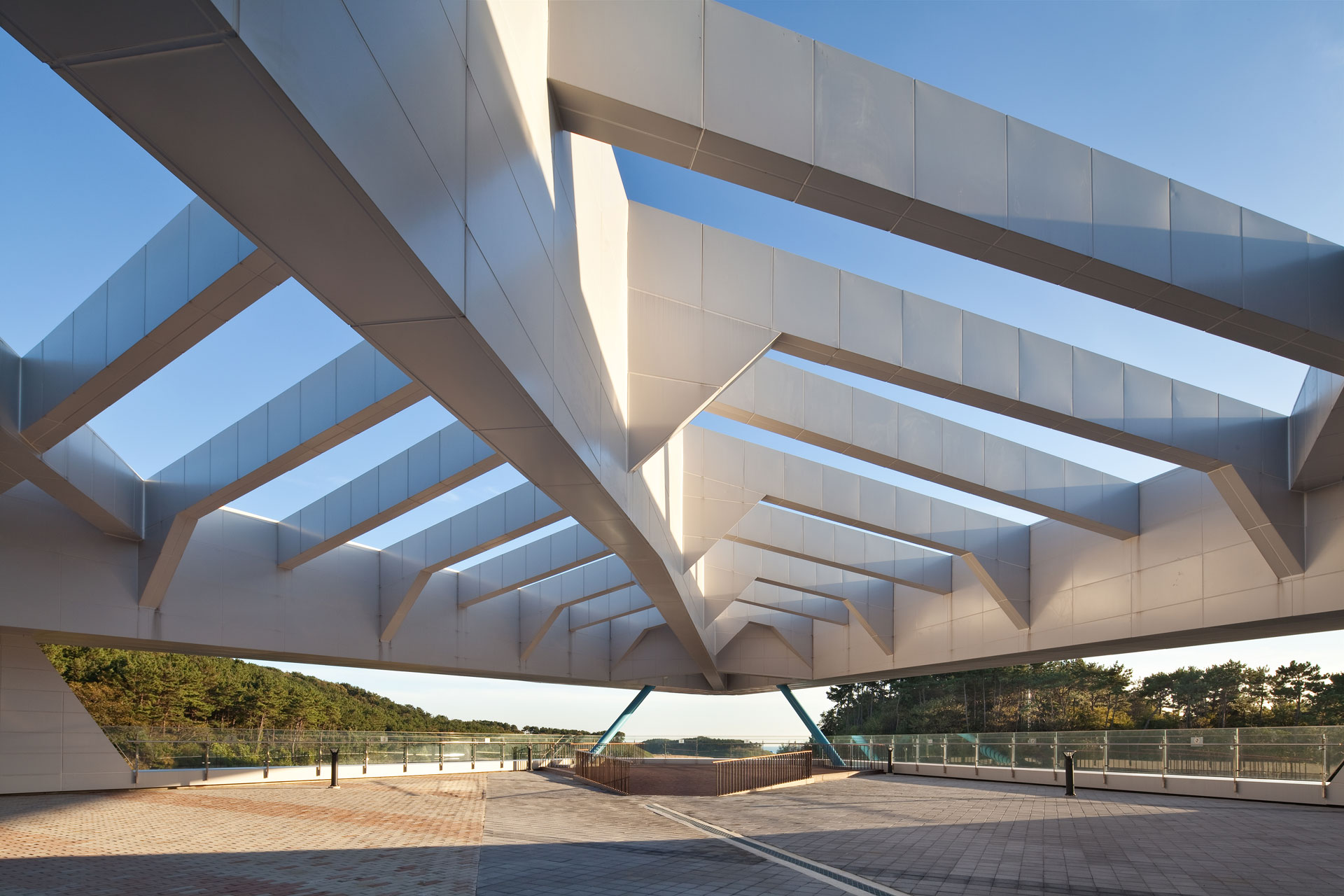
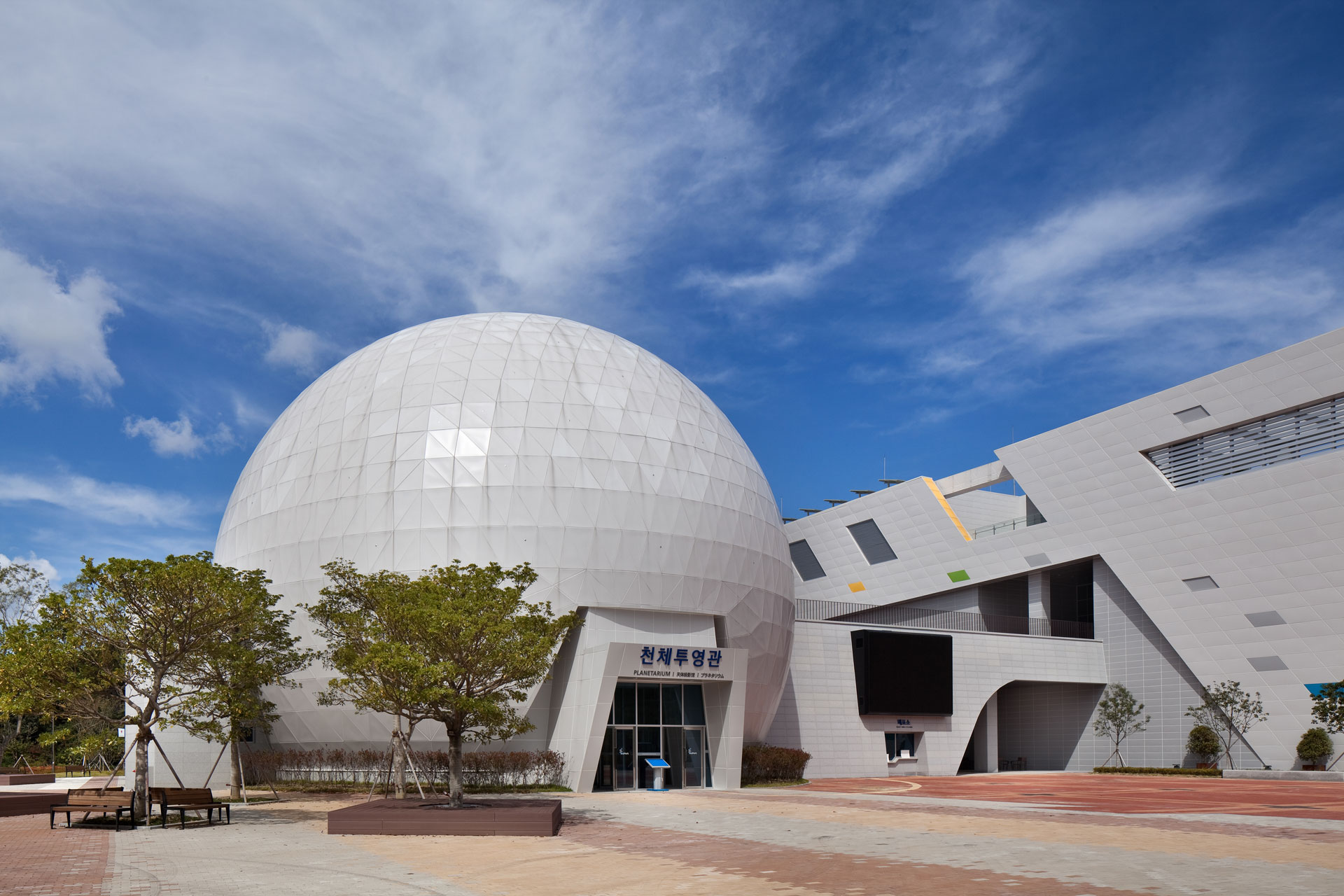
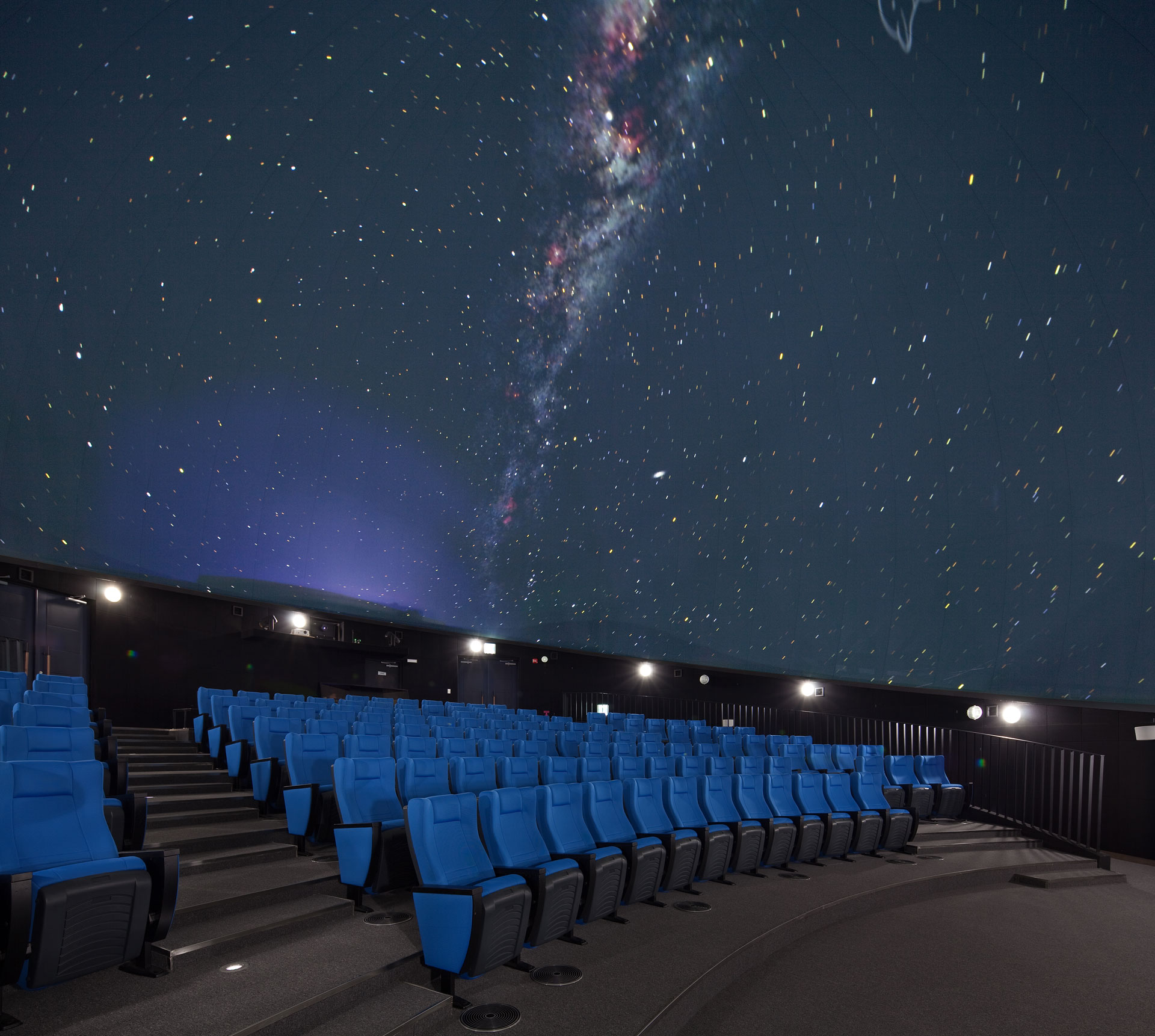
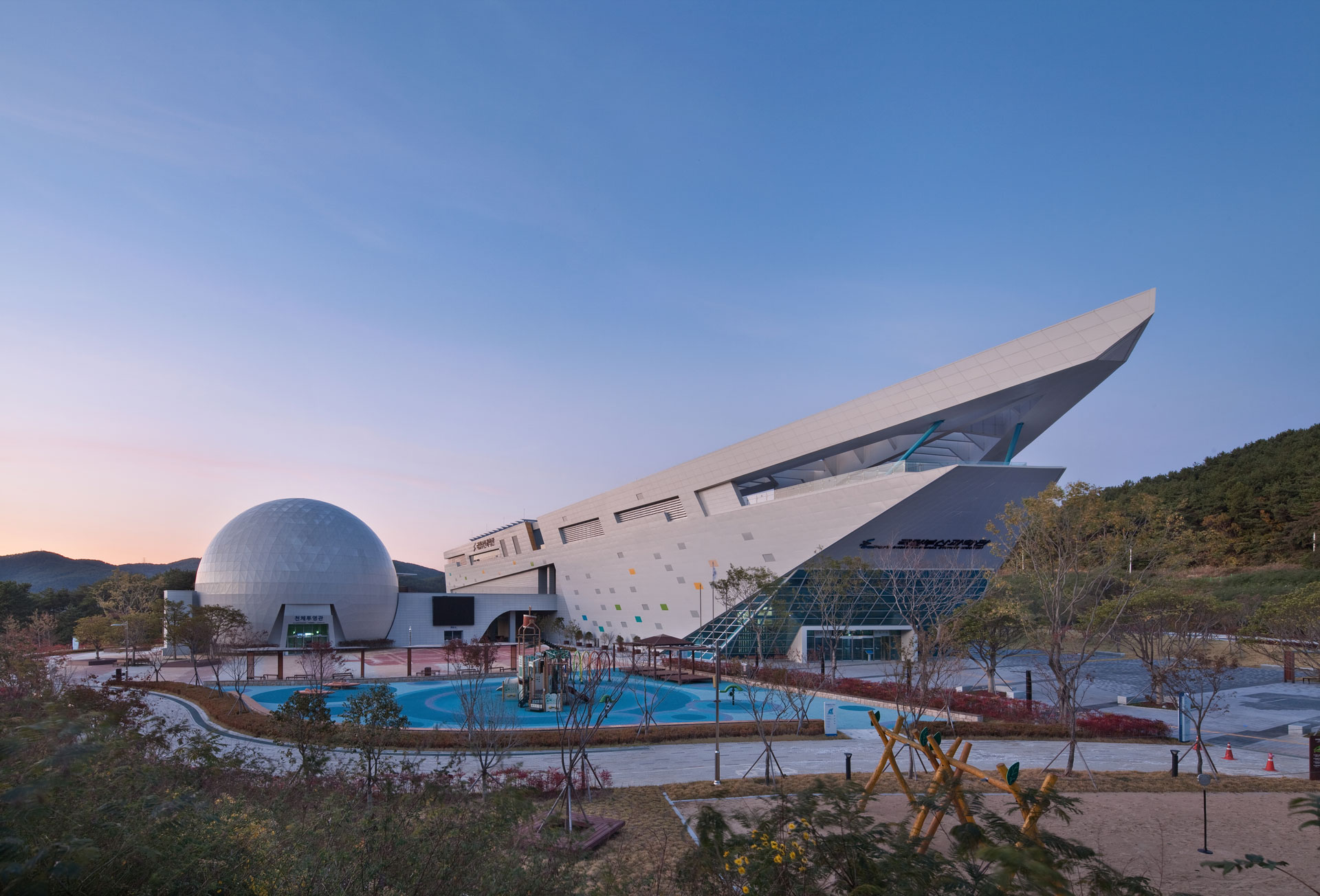
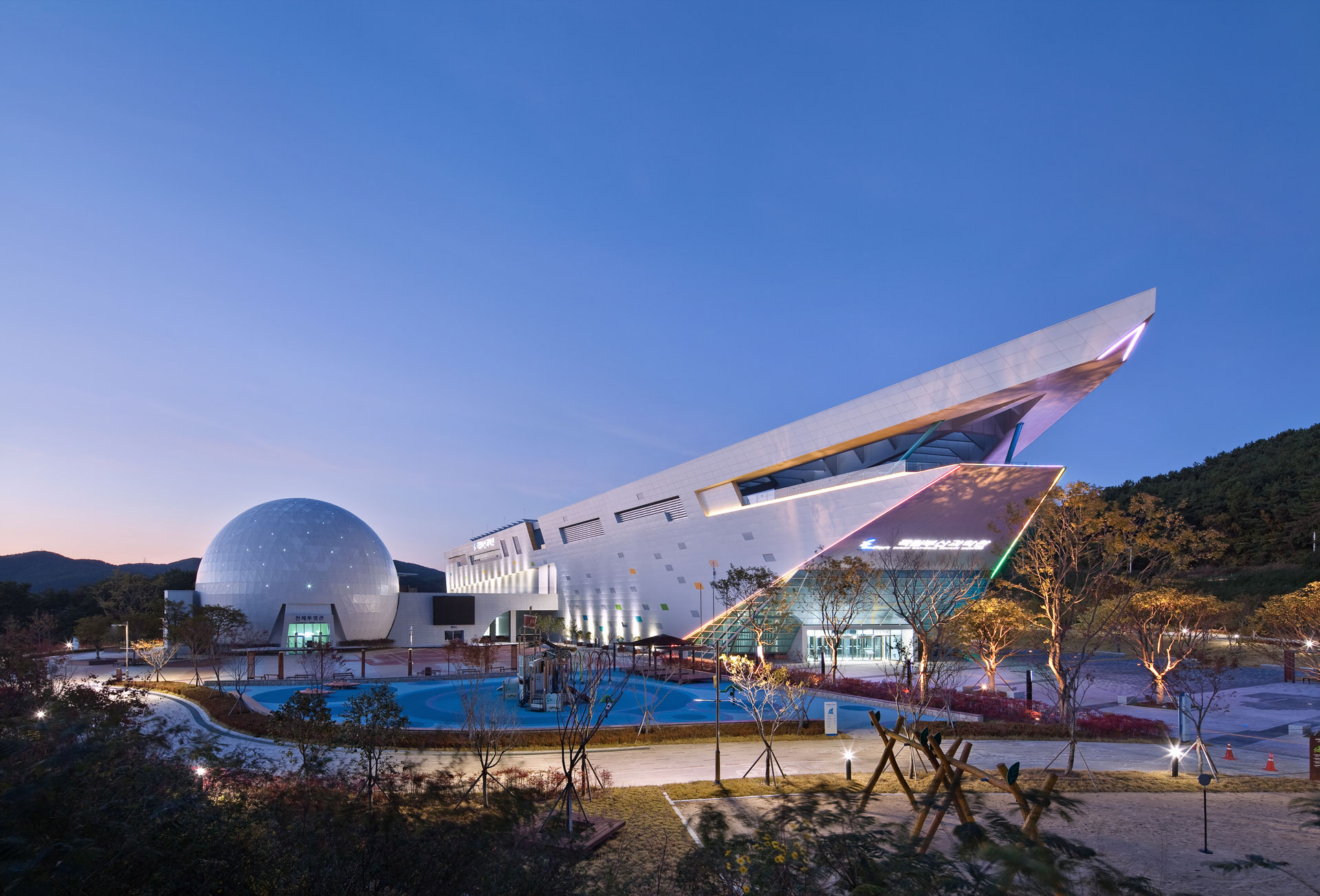
As the only national science museum in the southeastern region, the Busan Science Museum will meet the demand for science museums not only in Busan, Ulsan, and South Gyeongsang Province, but also in the metropolitan areas of North Gyeongsang Province. It is a science museum that showcases the technological capabilities and future vision of the nation’s key industries and offers a variety of hands-on programs. Through programs such as exhibition halls, a planetarium, an astronomical observation room, and a camp hall, the museum aims to present a vision for a future-oriented science museum rooted in the local character of Busan.
The site is surrounded by mountainous terrain running east to west, with a partially open view to the west. To the south, it is connected to the theme park zone of the East Busan Tourism Complex via the only road on the site. On this irregularly shaped site, planning was possible on the remaining 55% of the area, excluding the 20% designated for civil engineering slope stabilization and the 25% designated as a circular conservation area. The relatively flat planning area was defined by a basic layout centered on a narrow central section, reflecting the site’s topographical characteristics.
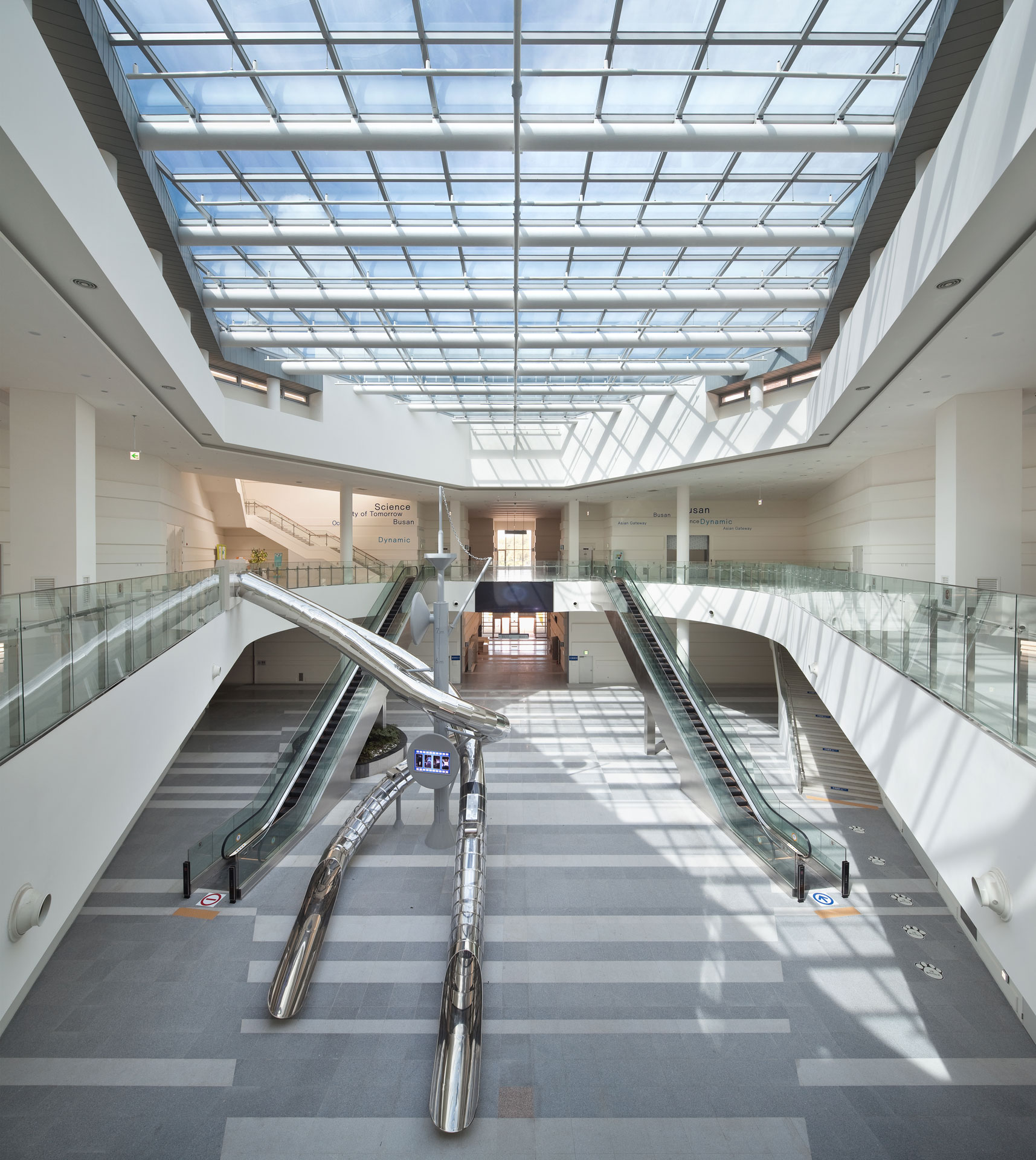
Centered around the large central hall—the first space visitors encounter upon entering the science museum—clear visitor and support circulation routes were established, with exhibition facilities arranged at the front to prioritize visitor convenience. To accommodate exhibition changes and cater to young children, the special exhibition hall and children’s discovery center were placed on the lower floors, while the permanent exhibition hall was integrated into the design to create an efficient viewing environment. Taking into account the nature of the operations, the administrative, research, and experimental/practical areas were integrated to strengthen interconnectivity between these zones. Additionally, the visitor circulation routes and educational areas were vertically linked to facilitate active educational programs. To allow for independent operation, the planetarium was housed in a separate building, and the astronomical observatory was placed on the top floor to ensure an unobstructed field of view, thereby creating an optimal observation environment.

-
Status
Completed
-
Awards
- 2015 Busan Architecture Award_Bronze Award
-
Client
Taeyoung Construction Co., Ltd.
-
Program
Public, Cultural
-
Design Year
2012
-
Completion Year
2015
-
Location
Gijang-gun, Busan
-
Site area
113107.00m2
-
Gross Floor Area
24906.15m2
-
Building Area
12726.93m2
-
Number of Levels
B1, 4F
As the only national science museum in the southeastern region, the Busan Science Museum will meet the demand for science museums not only in Busan, Ulsan, and South Gyeongsang Province, but also in the metropolitan areas of North Gyeongsang Province. It is a science museum that showcases the technological capabilities and future vision of the nation’s key industries and offers a variety of hands-on programs. Through programs such as exhibition halls, a planetarium, an astronomical observation room, and a camp hall, the museum aims to present a vision for a future-oriented science museum rooted in the local character of Busan.
The site is surrounded by mountainous terrain running east to west, with a partially open view to the west. To the south, it is connected to the theme park zone of the East Busan Tourism Complex via the only road on the site. On this irregularly shaped site, planning was possible on the remaining 55% of the area, excluding the 20% designated for civil engineering slope stabilization and the 25% designated as a circular conservation area. The relatively flat planning area was defined by a basic layout centered on a narrow central section, reflecting the site’s topographical characteristics.
Centered around the large central hall—the first space visitors encounter upon entering the science museum—clear visitor and support circulation routes were established, with exhibition facilities arranged at the front to prioritize visitor convenience. To accommodate exhibition changes and cater to young children, the special exhibition hall and children’s discovery center were placed on the lower floors, while the permanent exhibition hall was integrated into the design to create an efficient viewing environment. Taking into account the nature of the operations, the administrative, research, and experimental/practical areas were integrated to strengthen interconnectivity between these zones. Additionally, the visitor circulation routes and educational areas were vertically linked to facilitate active educational programs. To allow for independent operation, the planetarium was housed in a separate building, and the astronomical observatory was placed on the top floor to ensure an unobstructed field of view, thereby creating an optimal observation environment.