
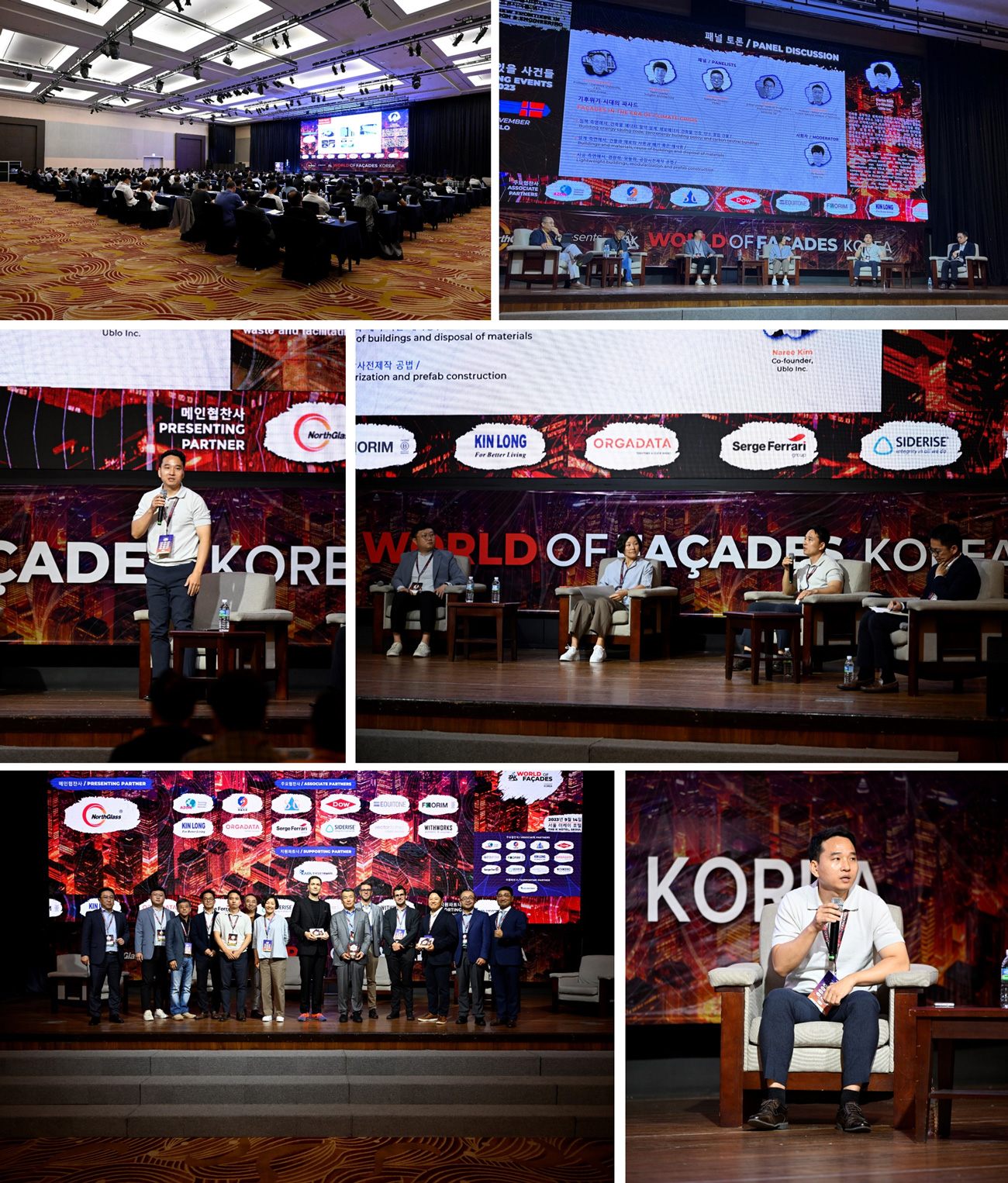
On September 14, the “ZAK World of Facades” conference was held at The K Hotel Seoul in Yangjae-dong.
The “ZAK World of Facades Conference” is an international conference on facade design and engineering. It brings together architects, facade consultants, structural consultants, and building energy engineers to share diverse expert perspectives and participate in various events.
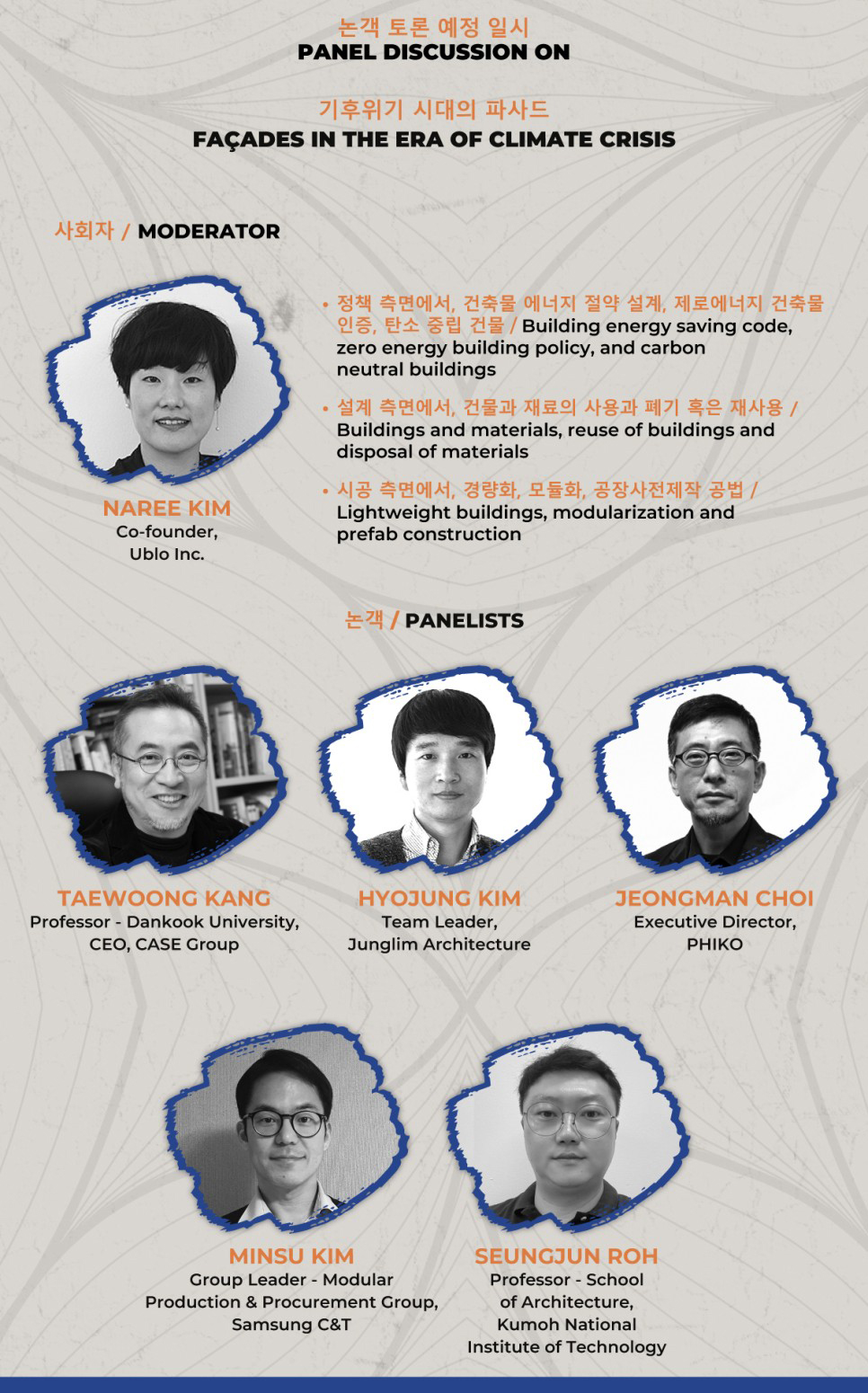
During one of the event’s sessions—a panel discussion titled “Facades in the Era of the Climate Crisis”—Hyojung Kim from the Eco-Friendly Team participated as a panelist and discussed energy-efficient building envelope design and the role of architects in achieving carbon neutrality. In particular, regarding a building’s full life-cycle carbon emissions, he distinguished between embodied carbon (35% of total emissions), which arises during planning, material production, construction, and disposal, and operational carbon (65% of total emissions), which occurs during a building’s use. He emphasized the need to focus on architectural planning and policy directions aimed at reducing embodied carbon to effectively achieve carbon neutrality in the construction sector.
Looking ahead, the architectural market is expected to see widespread adoption of building-integrated photovoltaics (BIPV) on building facades to meet the self-sufficiency requirements for Zero Energy Buildings (ZEB). Additionally, regarding solar modules, it was predicted that management of their embodied carbon would be strengthened following the Ministry of Trade, Industry and Energy’s implementation of the “Solar Module Carbon Certification System” in July 2020. Furthermore, it was predicted that BIPV finishing materials would garner attention not only for their carbon reduction capabilities but also as materials capable of offsetting carbon emissions through energy production.
Finally, regarding improvements to architectural policies for achieving carbon neutrality, the report explained that proactive policies are needed to bring small-scale buildings under 500 square meters—which account for 85% of all buildings nationwide—into the building energy regulation framework. It also emphasized the need to develop policies that allow residents of small-scale buildings to consume less energy and live in more comfortable spaces.
<Link to related video>
Zak World of Façades Seoul, 14th September 2023
