
Close
![Popup Image]()
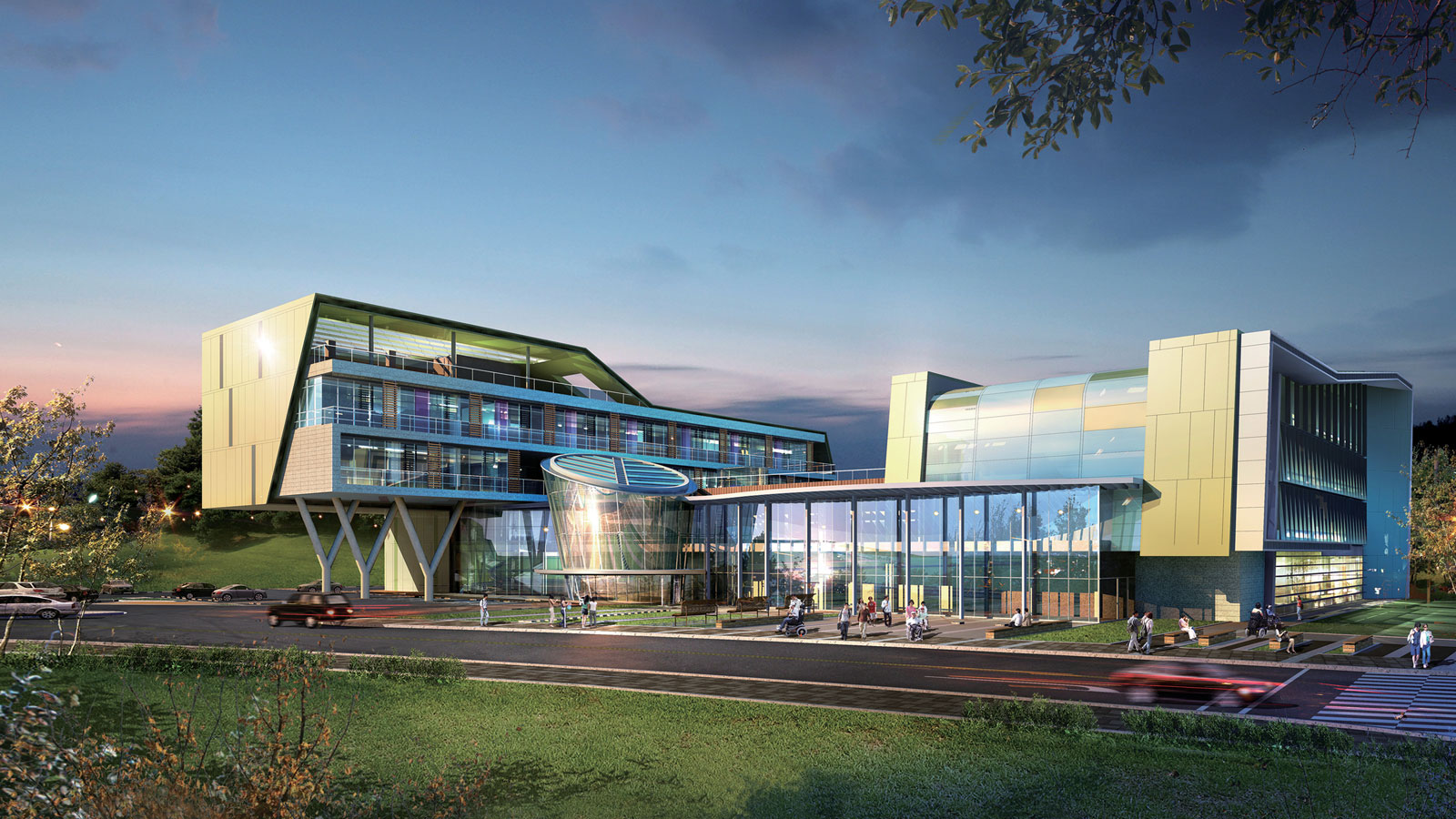
This is a community center for people with disabilities being built in the Unjeong District. Rather than a traditional, protective rehabilitation center, we propose an open, multi-purpose center that facilitates communication with the local community. Existing rehabilitation centers have often been perceived as facilities that local residents avoid, existing as highly closed-off and isolated spaces. As a result, the sense of disconnect between people with and without disabilities has grown, and it has become even more difficult for people with disabilities to adapt to society after leaving these facilities. However, the site’s location—nestled between residential complexes and a park in the Goyang New Town land use plan—signals that a rehabilitation center for people with disabilities need no longer be a facility isolated from the local community. Communication between people with and without disabilities is the central issue of this project. To address this issue, we designed programs within the rehabilitation facility that can be shared with local residents, connected these programs to the Public Axis, and sought to foster communication through active integration with the outdoor spaces and surrounding parks. This communication signifies a new “Connection Community” between people with and without disabilities.


-
Status
Completed
-
Order
Paju City
-
Purpose
Health-Care
-
Design Year
2009
-
Location
Paju-si, Gyeonggi-do
-
Site area
7,821.00m2
-
Gross Floor Area
8,259.80m2
-
Building Area
3,429.07m2
-
Scale
B1, 4F
This is a community center for people with disabilities being built in the Unjeong District. Rather than a traditional, protective rehabilitation center, we propose an open, multi-purpose center that facilitates communication with the local community. Existing rehabilitation centers have often been perceived as facilities that local residents avoid, existing as highly closed-off and isolated spaces. As a result, the sense of disconnect between people with and without disabilities has grown, and it has become even more difficult for people with disabilities to adapt to society after leaving these facilities. However, the site’s location—nestled between residential complexes and a park in the Goyang New Town land use plan—signals that a rehabilitation center for people with disabilities need no longer be a facility isolated from the local community. Communication between people with and without disabilities is the central issue of this project. To address this issue, we designed programs within the rehabilitation facility that can be shared with local residents, connected these programs to the Public Axis, and sought to foster communication through active integration with the outdoor spaces and surrounding parks. This communication signifies a new “Connection Community” between people with and without disabilities.