

Close
![Popup Image]()
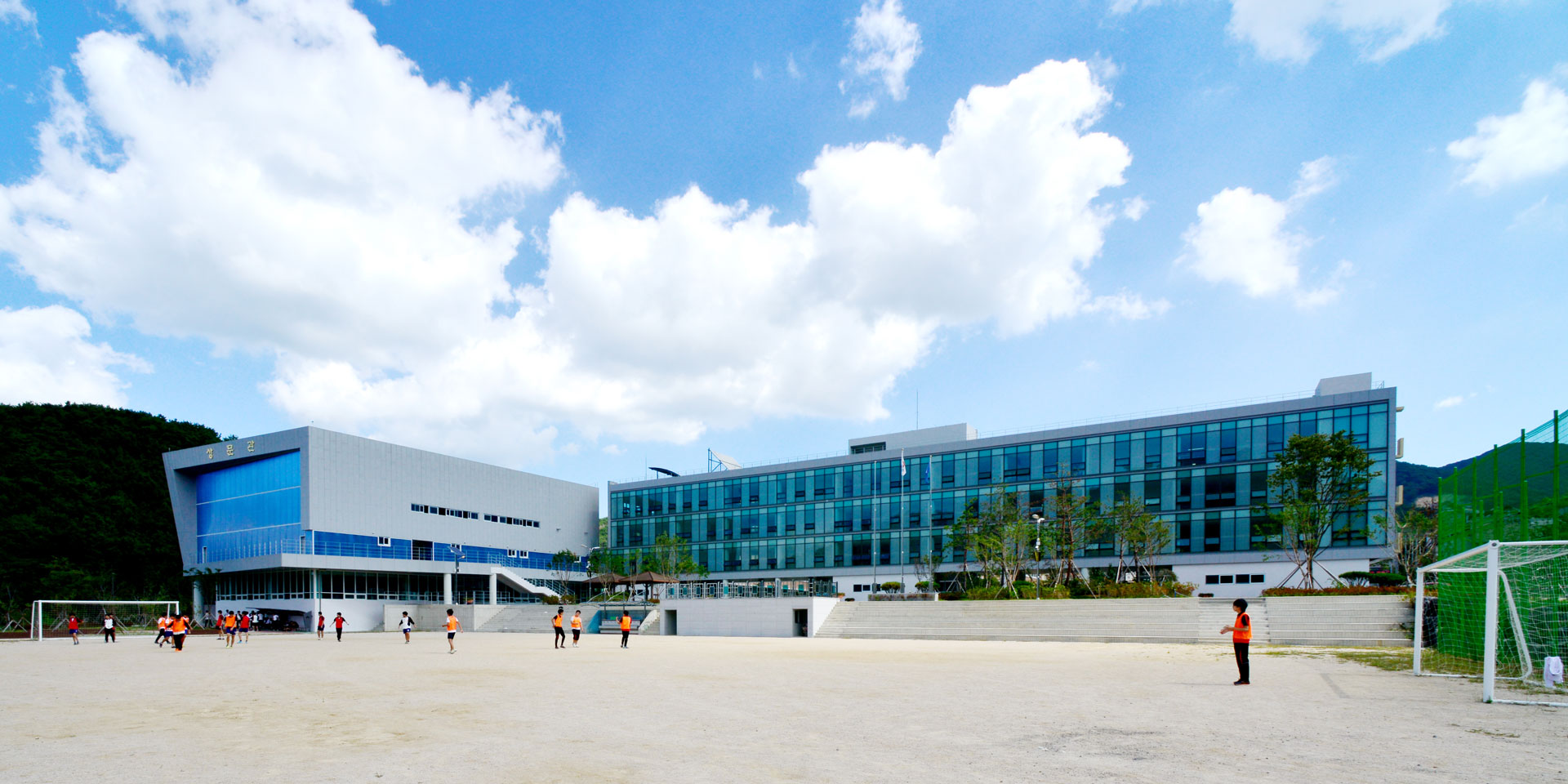
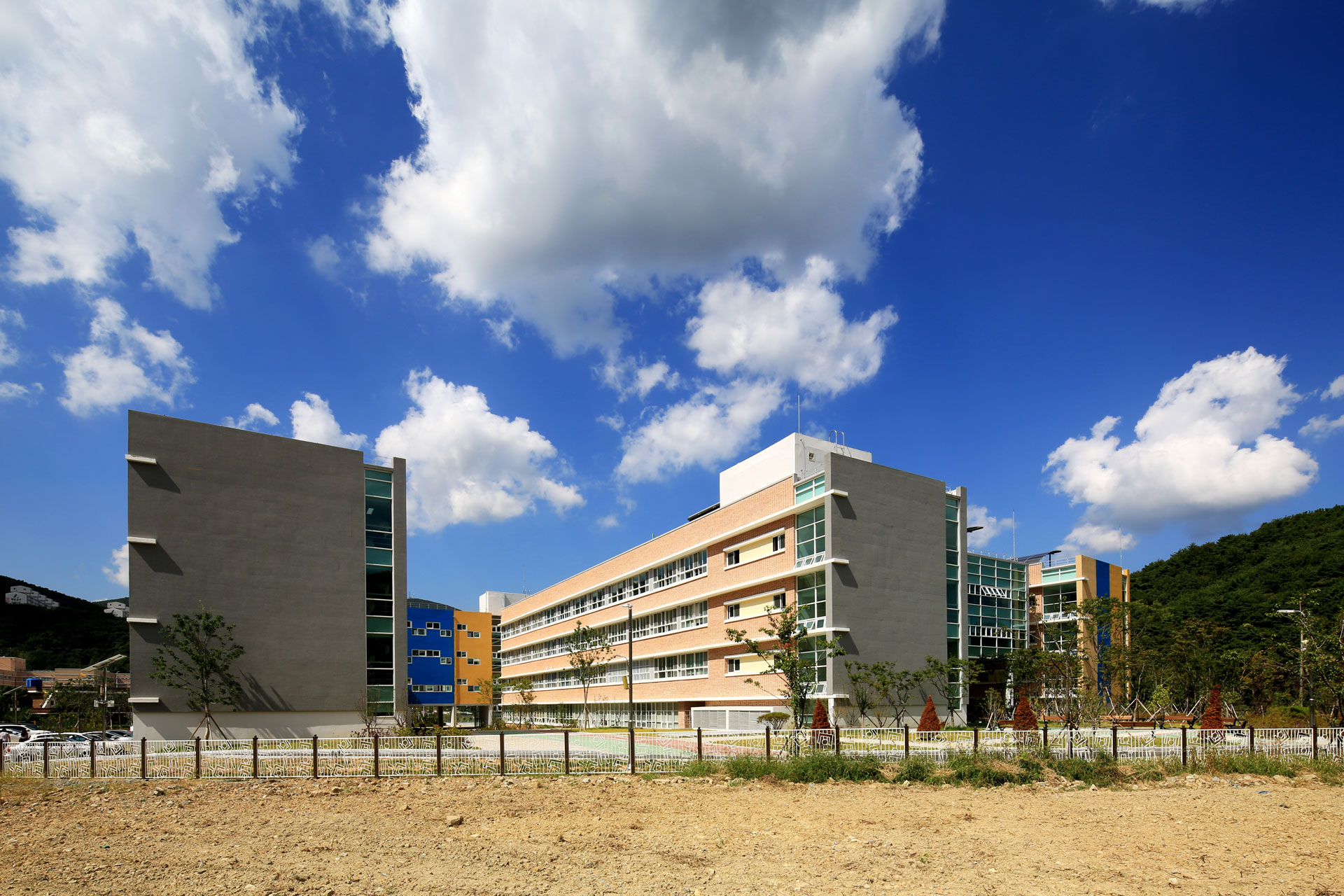
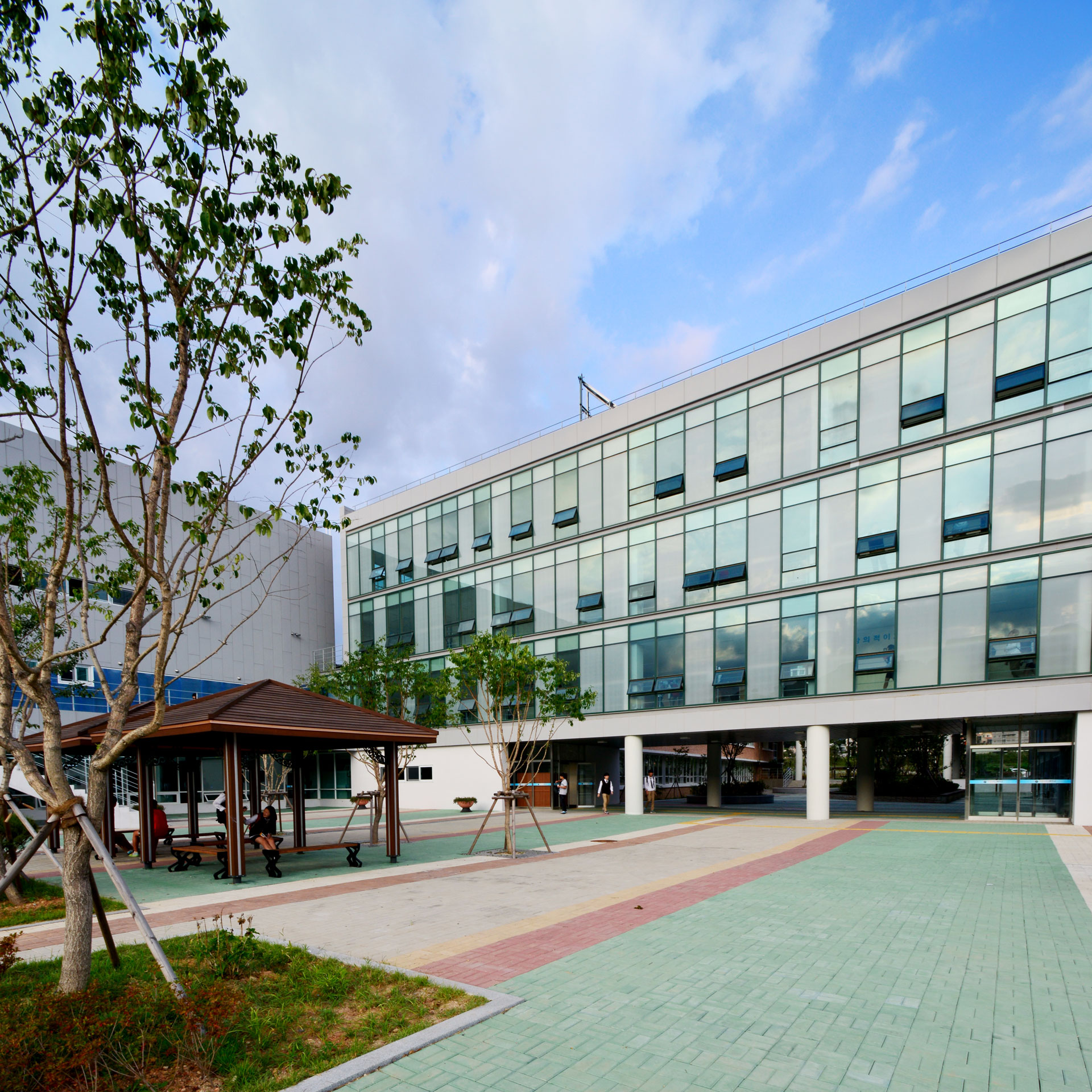
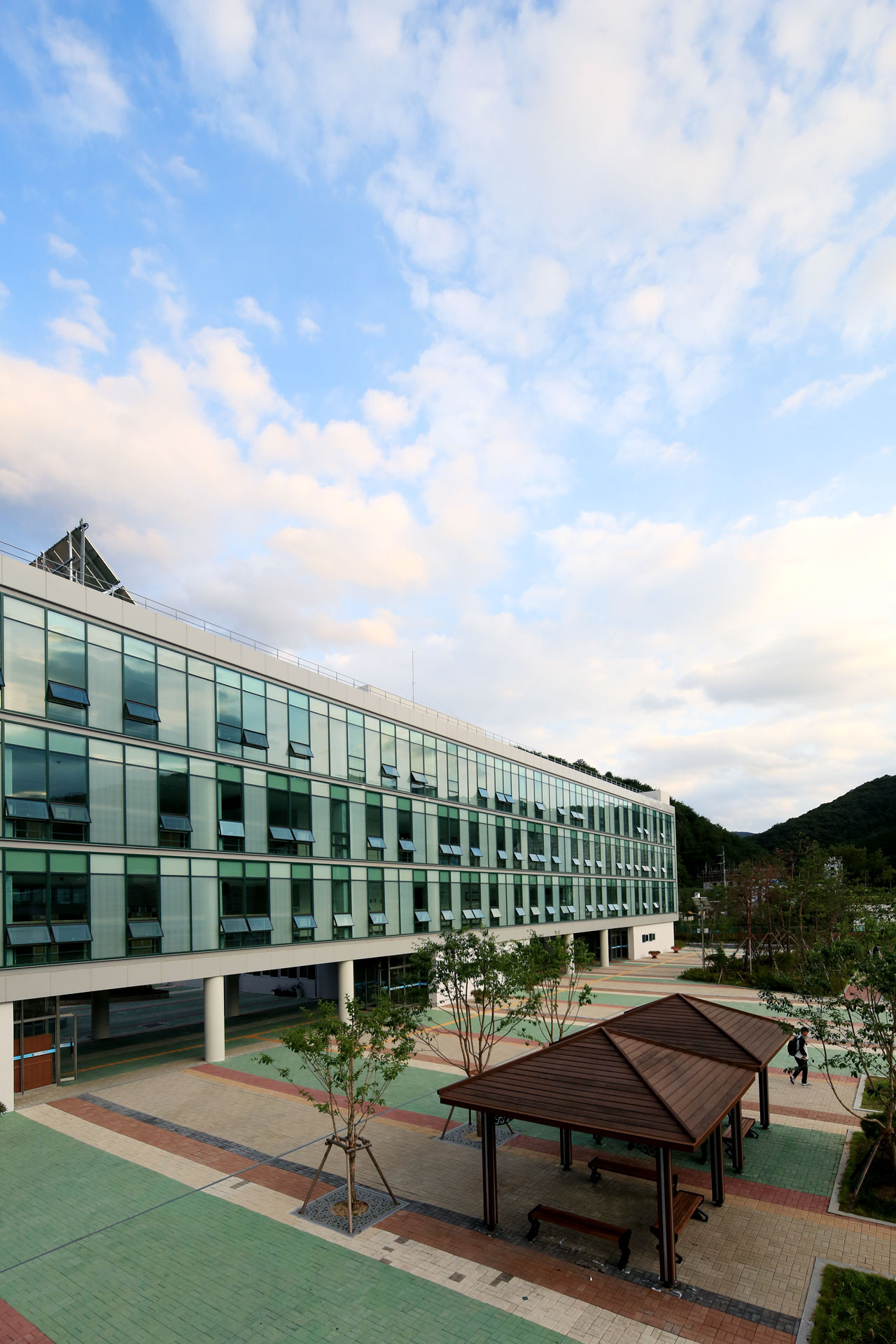
Located in the heart of Geoje Island, which is surrounded by the sea, this project was initiated in response to the growing population and emerging educational needs resulting from Geoje City’s quantitative and qualitative growth. JUNGLIM Architecture design concept focused above all on creating a space where users could create diverse memories by establishing a harmonious and enriching environment within the context of Geoje’s natural surroundings.
The design was conceived to foster an educational environment where harmonious and creative interactions occur through the relationships between nature and people, teachers and students, and students and students. Furthermore, a key focus of the design was the expansion of an active educational system—similar to that of a university—where students seek out and attend the classes they need, in response to the growing demand for a flexible classroom system. Consequently, a locker room called the “Home Base” was designed as a central spine connecting the entire teachers’ wing, and an atrium was planned in the space between the general and special education wings.


-
Status
Completed
-
Order
Gyeongsangnam-do Office of Education
-
Purpose
Education
-
Design Year
2011
-
Completion Year
2013
-
Location
Geoje-si, Gyeongsangnam-do
-
Site area
23864.00m2
-
Gross Floor Area
12139.69m2
-
Building Area
4115.22m2
-
Scale
B1, 4F
Located in the heart of Geoje Island, which is surrounded by the sea, this project was initiated in response to the growing population and emerging educational needs resulting from Geoje City’s quantitative and qualitative growth. JUNGLIM Architecture design concept focused above all on creating a space where users could create diverse memories by establishing a harmonious and enriching environment within the context of Geoje’s natural surroundings.
The design was conceived to foster an educational environment where harmonious and creative interactions occur through the relationships between nature and people, teachers and students, and students and students. Furthermore, a key focus of the design was the expansion of an active educational system—similar to that of a university—where students seek out and attend the classes they need, in response to the growing demand for a flexible classroom system. Consequently, a locker room called the “Home Base” was designed as a central spine connecting the entire teachers’ wing, and an atrium was planned in the space between the general and special education wings.