
Close
![Popup Image]()
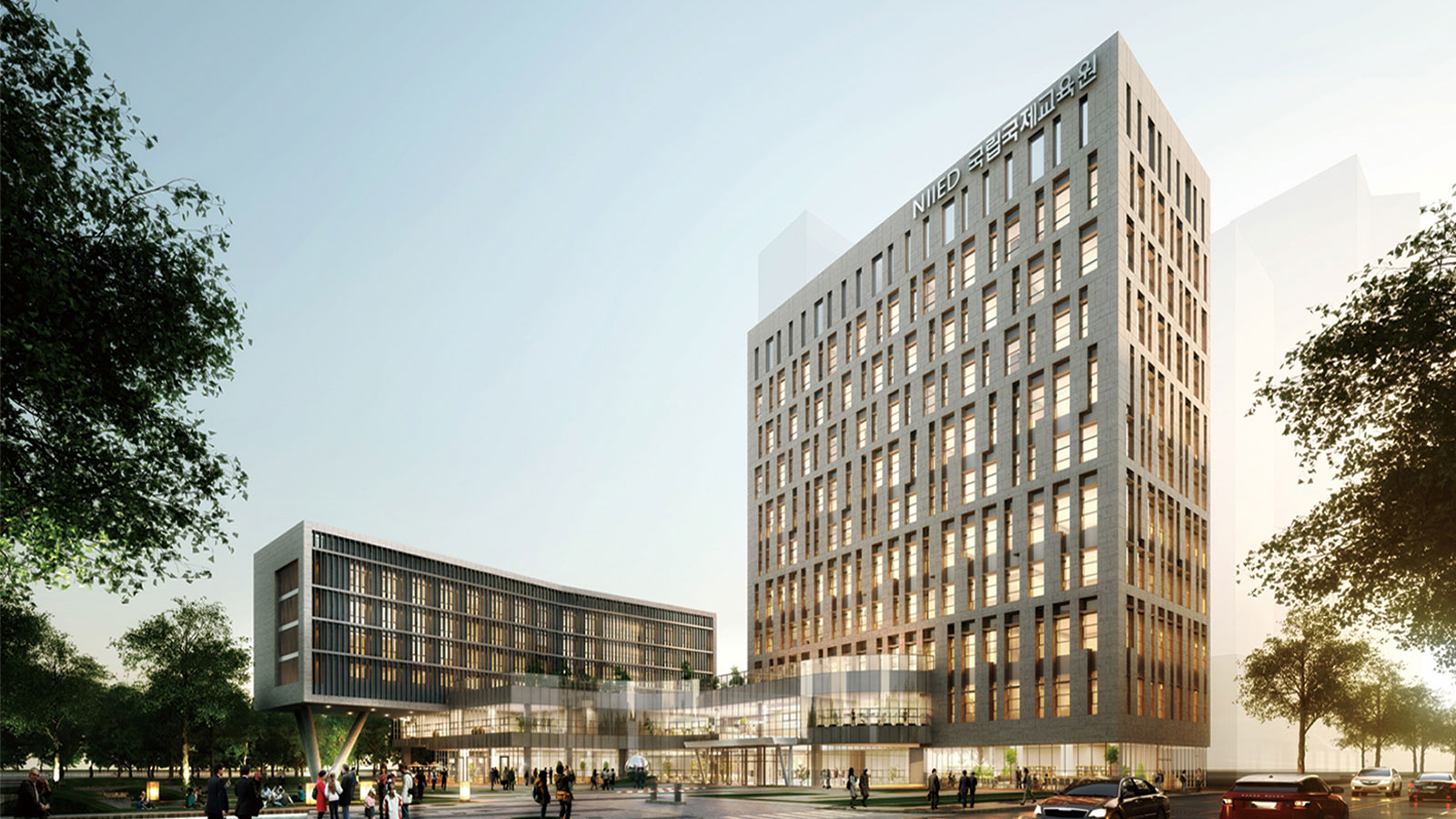
The National Institute of International Education is a leading institution in the “Korean Wave” of education, fostering global talent through various programs such as educational support for overseas Koreans and the recruitment and management of international students, while spearheading diverse international exchanges. This detailed design proposal for the relocation of the current institute, located behind the Korea National Open University in Hyehwa-dong, aims to improve upon the existing curtain wall design’s energy inefficiency, glare pollution, and overly literal symbolism—such as the world map and Taeguk patterns—and to embody a true identity as a hub for both local and international exchange through a new symbolism and a transformation into an eco-friendly public building. The site is adjacent to the Seoul Tollgate on the expressway and is situated at the intersection of the expressway and the Bundang-Suseo Road to the west, and an internal road extending from Jeongja Station and the Jeongja-dong café district to the east. Consequently, visibility from all directions had to be carefully considered. Furthermore, as the only public institution (excluding the police station) in the central area of Jeongja-dong, harmonizing with the urban environment was a key priority.


-
Status
Completed
-
Order
Cheil Industries Inc.
-
Purpose
Office
-
Design Year
2013
-
Location
Seongnam-si, Gyeonggi-do
-
Site area
9,936.10m2
-
Gross Floor Area
24,155.47m2
-
Building Area
3,744.16m2
-
Scale
B2, 10F
The National Institute of International Education is a leading institution in the “Korean Wave” of education, fostering global talent through various programs such as educational support for overseas Koreans and the recruitment and management of international students, while spearheading diverse international exchanges. This detailed design proposal for the relocation of the current institute, located behind the Korea National Open University in Hyehwa-dong, aims to improve upon the existing curtain wall design’s energy inefficiency, glare pollution, and overly literal symbolism—such as the world map and Taeguk patterns—and to embody a true identity as a hub for both local and international exchange through a new symbolism and a transformation into an eco-friendly public building. The site is adjacent to the Seoul Tollgate on the expressway and is situated at the intersection of the expressway and the Bundang-Suseo Road to the west, and an internal road extending from Jeongja Station and the Jeongja-dong café district to the east. Consequently, visibility from all directions had to be carefully considered. Furthermore, as the only public institution (excluding the police station) in the central area of Jeongja-dong, harmonizing with the urban environment was a key priority.