

Close
![Popup Image]()
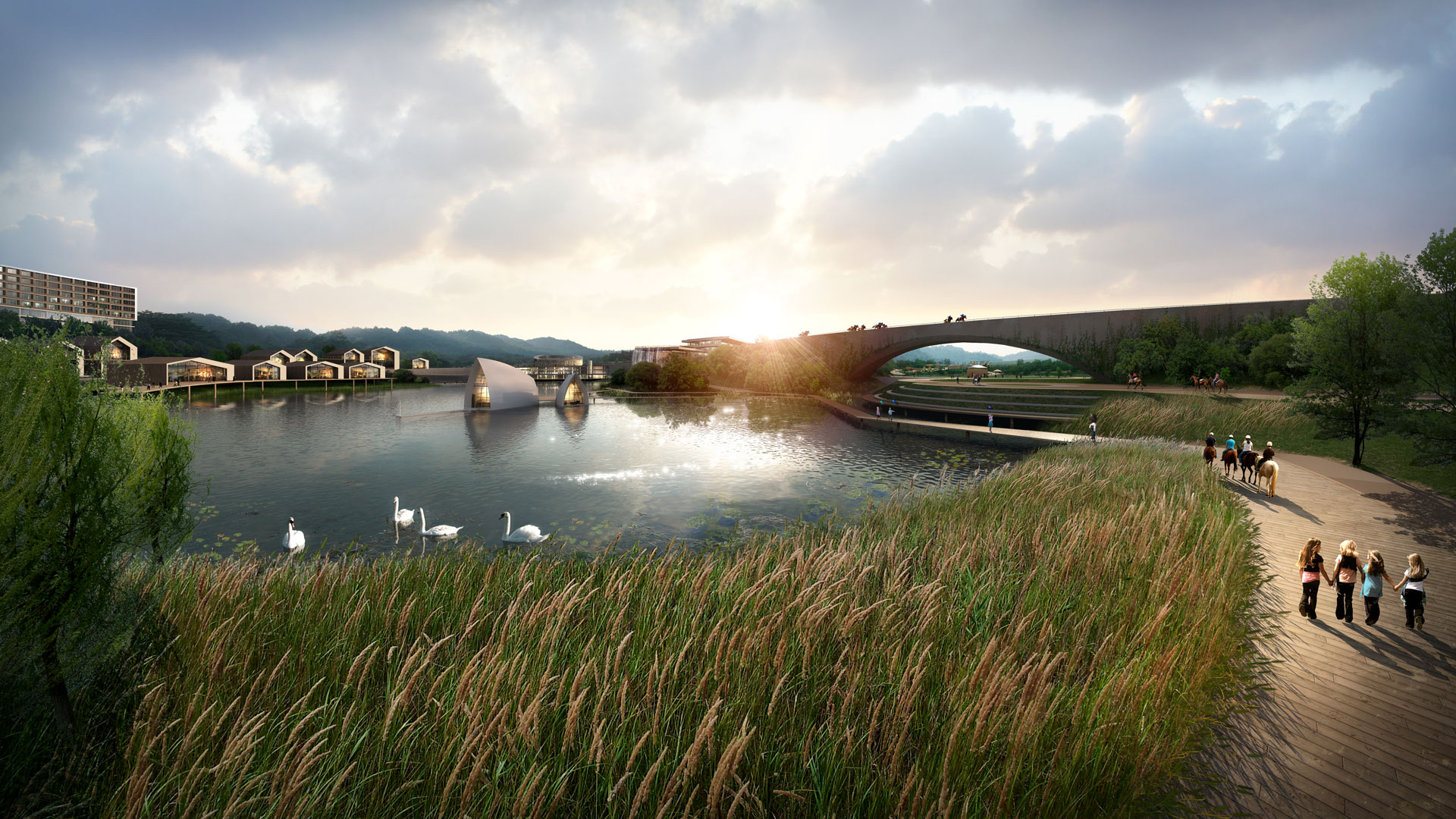
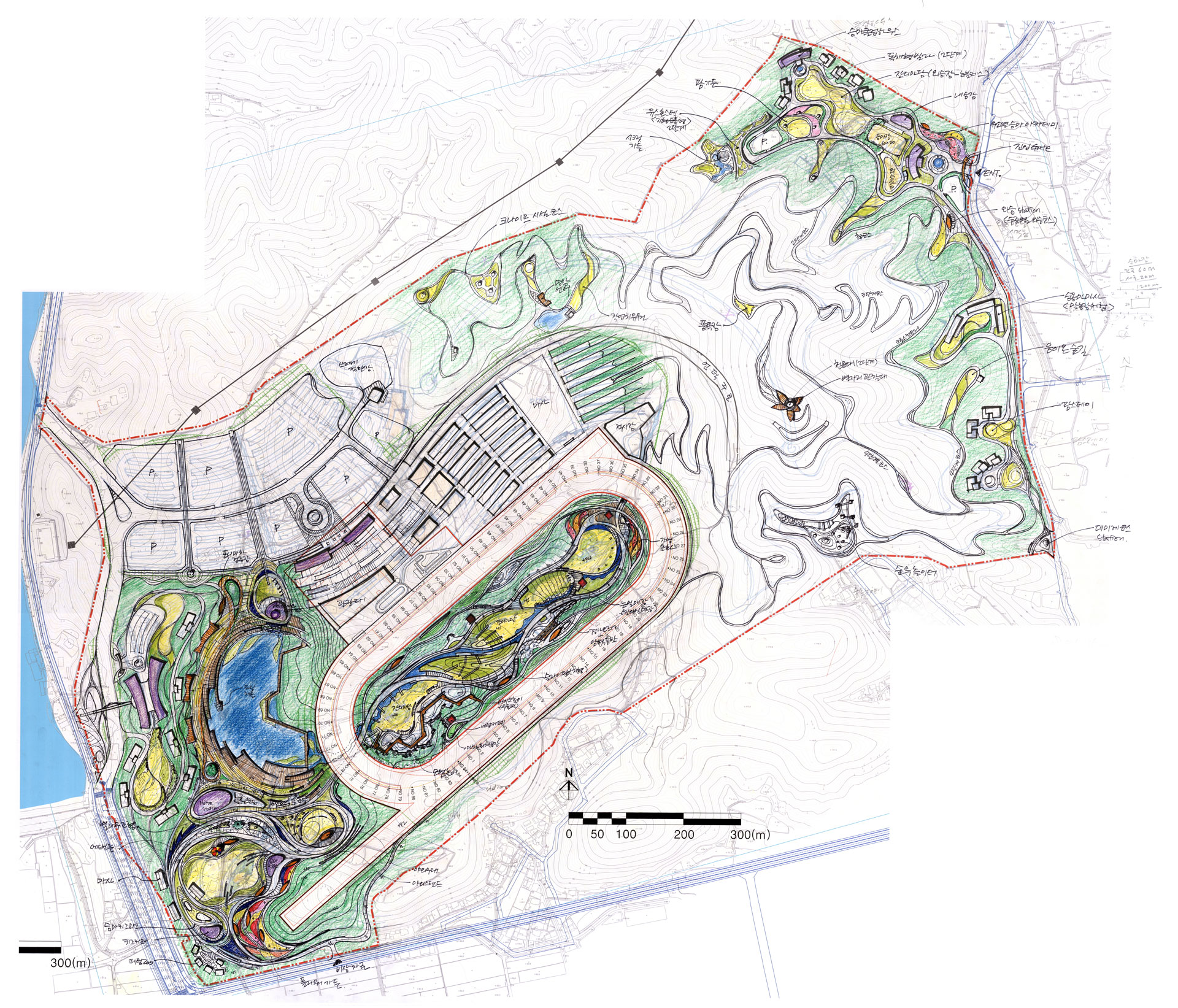
The Let’s Run Yeongcheon Theme Park is a project designed to embody the Korea Racing Authority’s future vision and create a turning point, rather than simply being another park centered around a racetrack. To achieve this, instead of partially adopting or imitating the content of other theme parks—such as those focused on exhibitions or large-scale amusement rides—we focused on the essence of horses to capture the Korea Racing Authority’s inherent values. Horses are friendly animals that allow people to connect with nature, and horseback riding is a form of non-motorized recreation that has long been enjoyed by people around the world. We proposed a nature-based, non-motorized theme park where visitors can interact directly with horses in a near-pristine natural setting as the overarching concept, and we envisioned a multi-purpose theme park where all horse-related cultural experiences—including horse racing and equestrian activities—are possible. The most innovative aspect of the master plan is that it boldly elevated a 1,800-meter-long horse racing track over the rolling hills, centering it around the valley. This three-dimensional design allowed for the preservation of the original topography, the forested area along the valley, and the reservoir, while also drastically reducing the civil engineering costs, which constitute the largest portion of the park’s construction budget. The existing theme park, which had been isolated like an island in the middle of the racetrack, was integrated with the surrounding natural environment and expanded into the entire complex. This signified that the park—which had previously been merely an auxiliary facility of the racetrack—could evolve into a fully-fledged theme park capable of coexisting with horse racing while offering independent content without interference. By utilizing the naturally preserved waterfront spaces and vegetation of the original site and focusing on the theme of horses, we planned a variety of detailed attractions. In the final phase, we proposed a comprehensive equestrian culture theme park where visitors could stay for extended periods by expanding the range of lodging facilities. This plan was selected as the top winner in the competition.



-
Status
Completed
-
Purpose
Hospitality
-
Design Year
2015
-
Location
Yeongcheon-si, gyeongsangbuk-do
-
Site area
1,474,883.00m2
-
Gross Floor Area
115,181.00m2
-
Building Area
71,819.00m2
-
Scale
B1, 4F
The Let’s Run Yeongcheon Theme Park is a project designed to embody the Korea Racing Authority’s future vision and create a turning point, rather than simply being another park centered around a racetrack. To achieve this, instead of partially adopting or imitating the content of other theme parks—such as those focused on exhibitions or large-scale amusement rides—we focused on the essence of horses to capture the Korea Racing Authority’s inherent values. Horses are friendly animals that allow people to connect with nature, and horseback riding is a form of non-motorized recreation that has long been enjoyed by people around the world. We proposed a nature-based, non-motorized theme park where visitors can interact directly with horses in a near-pristine natural setting as the overarching concept, and we envisioned a multi-purpose theme park where all horse-related cultural experiences—including horse racing and equestrian activities—are possible. The most innovative aspect of the master plan is that it boldly elevated a 1,800-meter-long horse racing track over the rolling hills, centering it around the valley. This three-dimensional design allowed for the preservation of the original topography, the forested area along the valley, and the reservoir, while also drastically reducing the civil engineering costs, which constitute the largest portion of the park’s construction budget. The existing theme park, which had been isolated like an island in the middle of the racetrack, was integrated with the surrounding natural environment and expanded into the entire complex. This signified that the park—which had previously been merely an auxiliary facility of the racetrack—could evolve into a fully-fledged theme park capable of coexisting with horse racing while offering independent content without interference. By utilizing the naturally preserved waterfront spaces and vegetation of the original site and focusing on the theme of horses, we planned a variety of detailed attractions. In the final phase, we proposed a comprehensive equestrian culture theme park where visitors could stay for extended periods by expanding the range of lodging facilities. This plan was selected as the top winner in the competition.