Close
![Popup Image]()
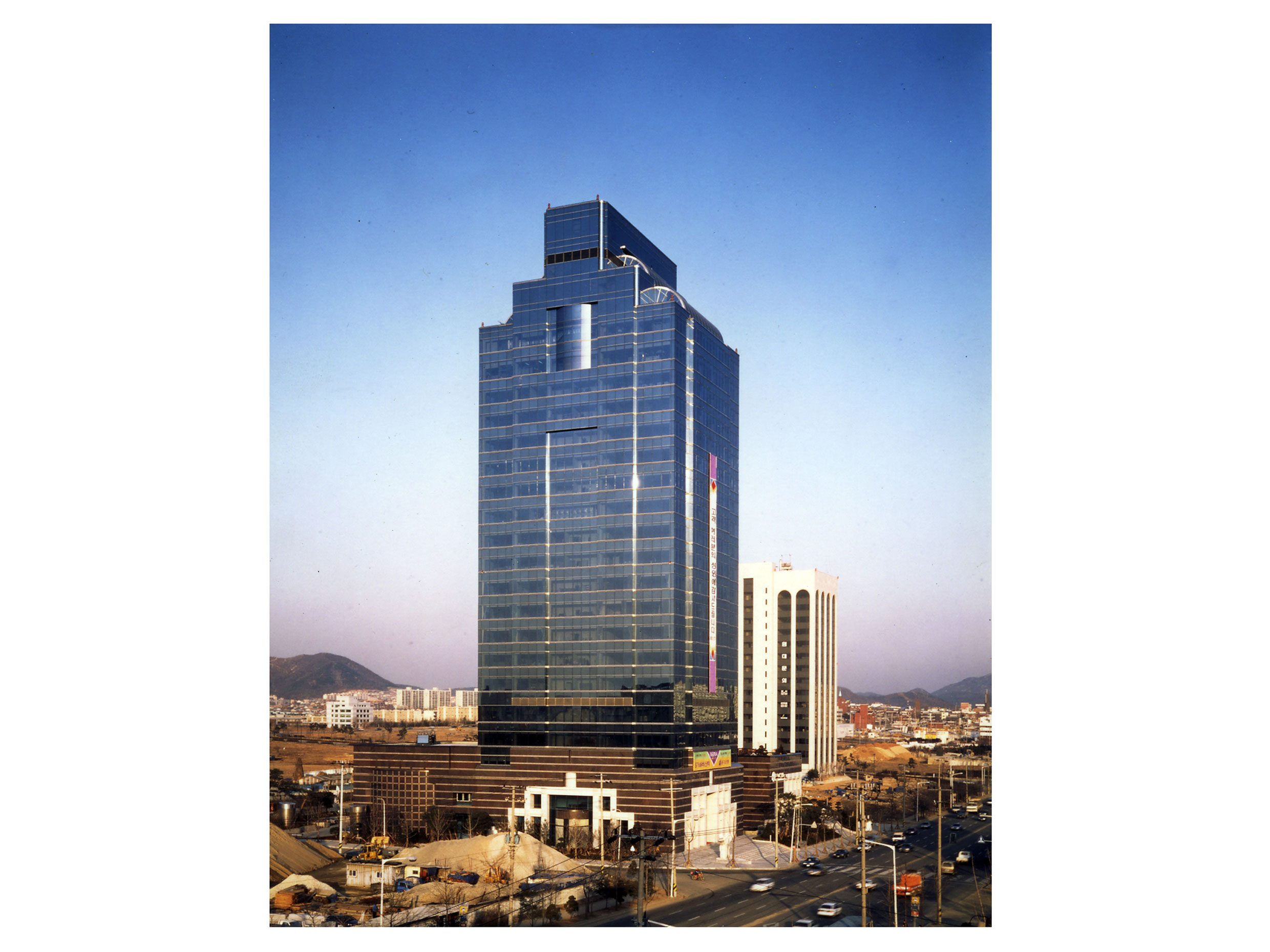
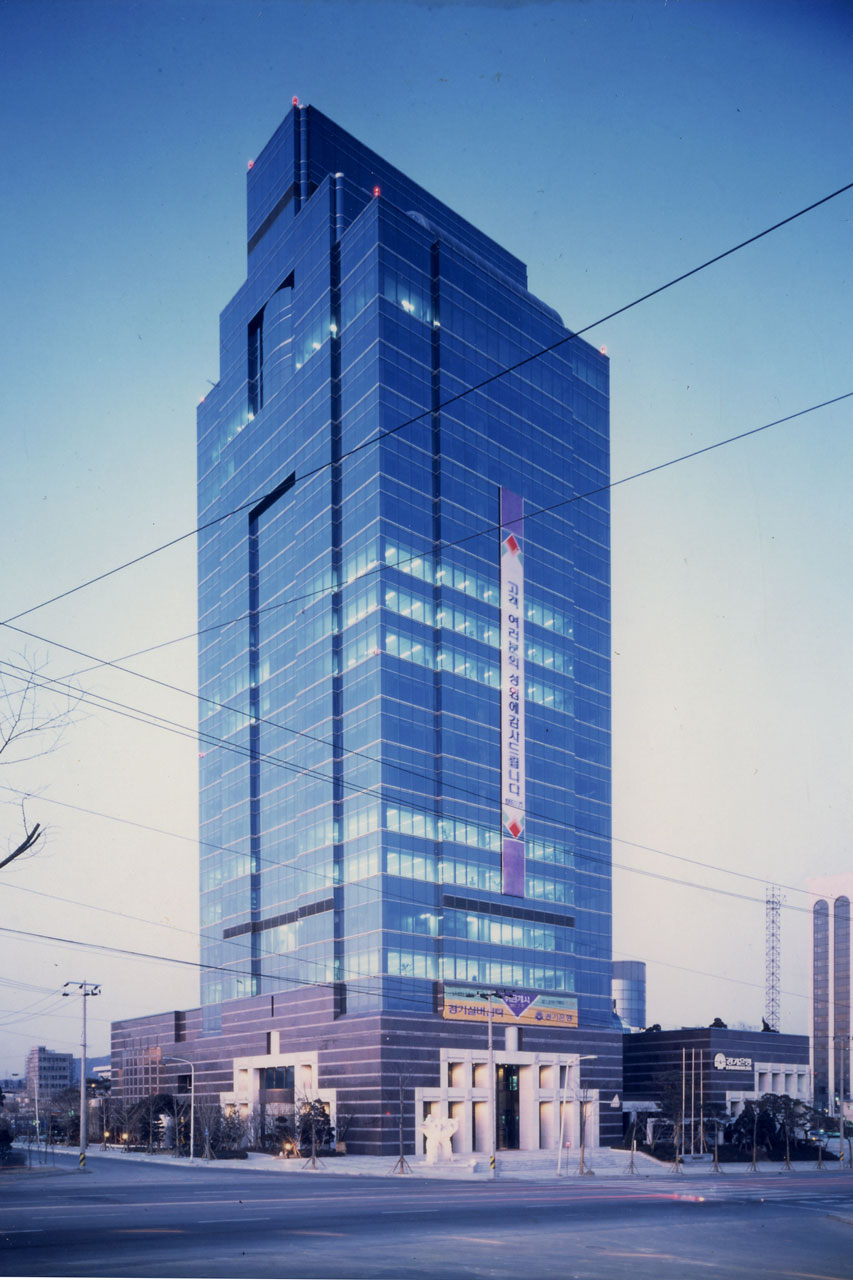
Located at the center of the Guwol District — a planned area developed by the City of Incheon as part of a land readjustment project to expand land use — the Kyonggi Bank Headquarters was constructed as a state-of-the-art building. Groundbreaking took place in June 1988, and after three and a half years of construction, the building was completed at the end of January 1992. With its sleek and refined façade and distinctive high-rise form, the building conveys the image of a forward-looking financial institution, unique among regional banks in the Gyeonggi area. Beyond serving as a local landmark, it has played a leading role in shaping the urban environment and has established itself as a symbolic architectural presence representing Incheon Port.
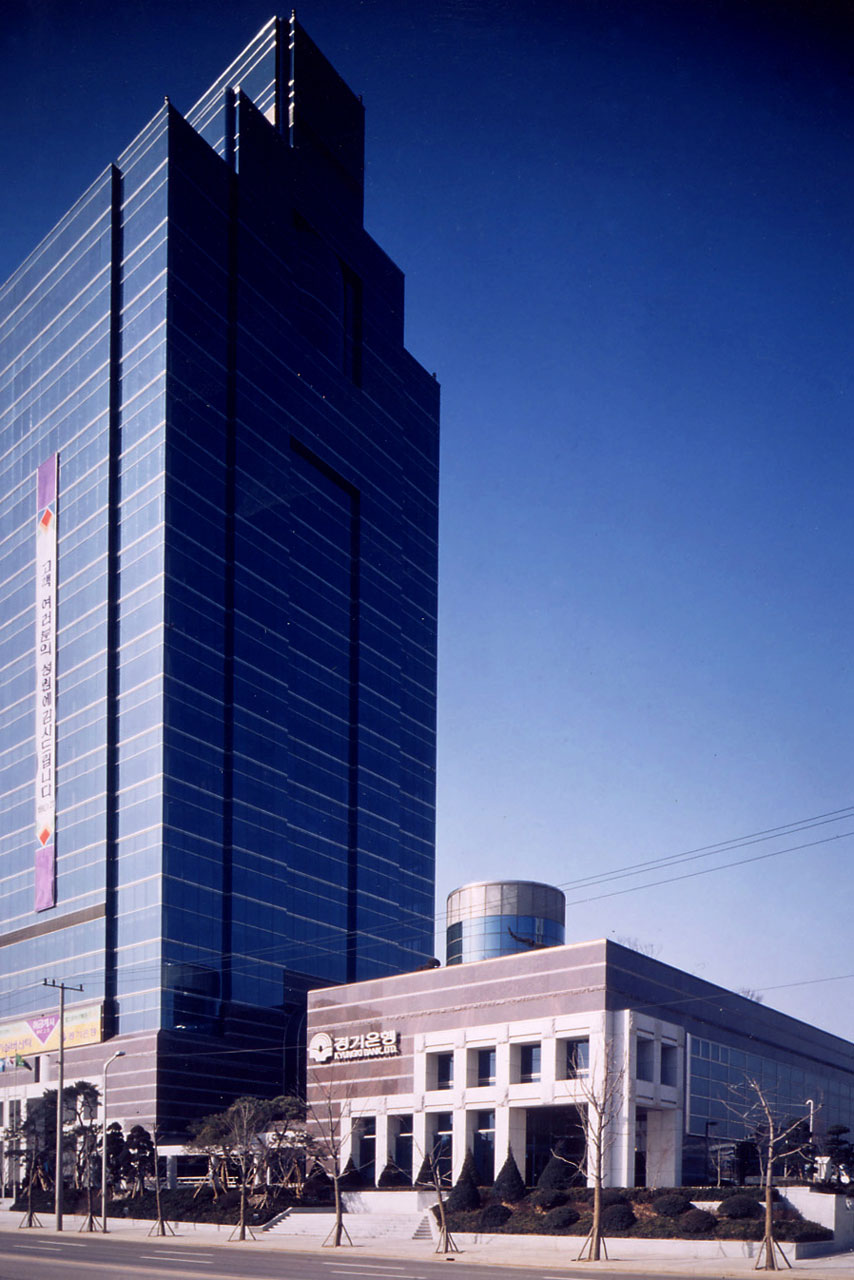
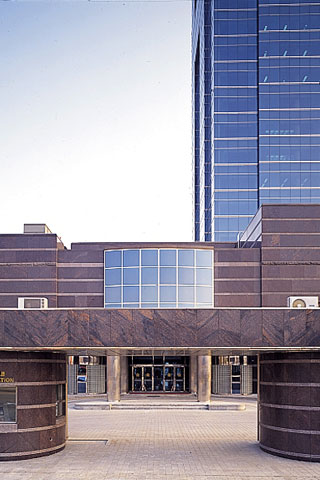
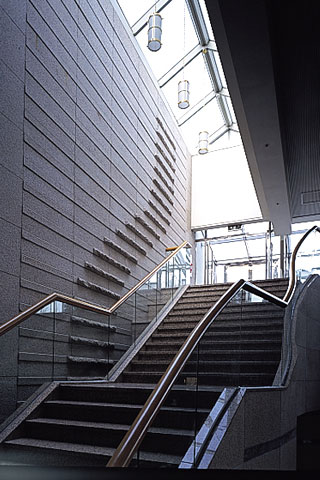
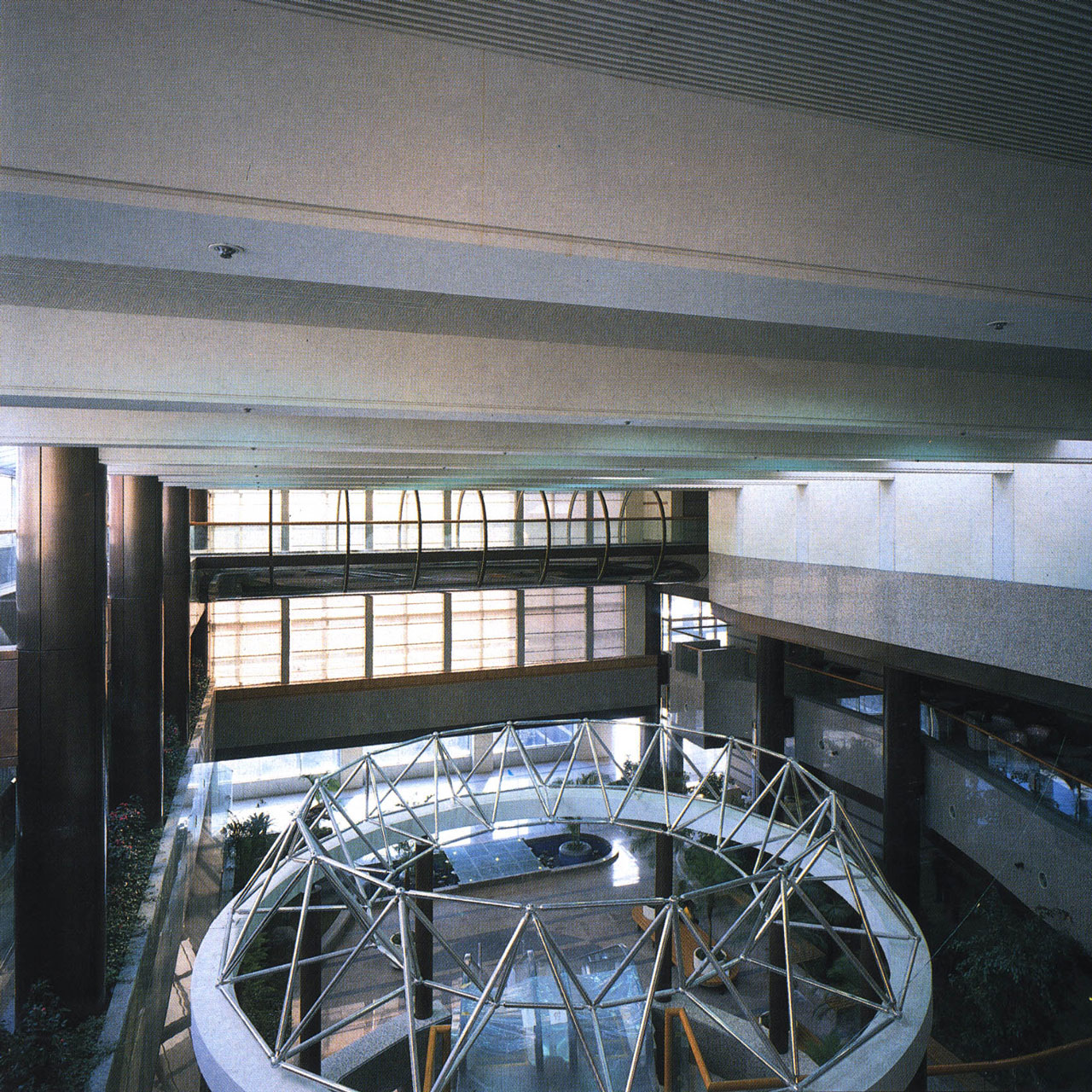
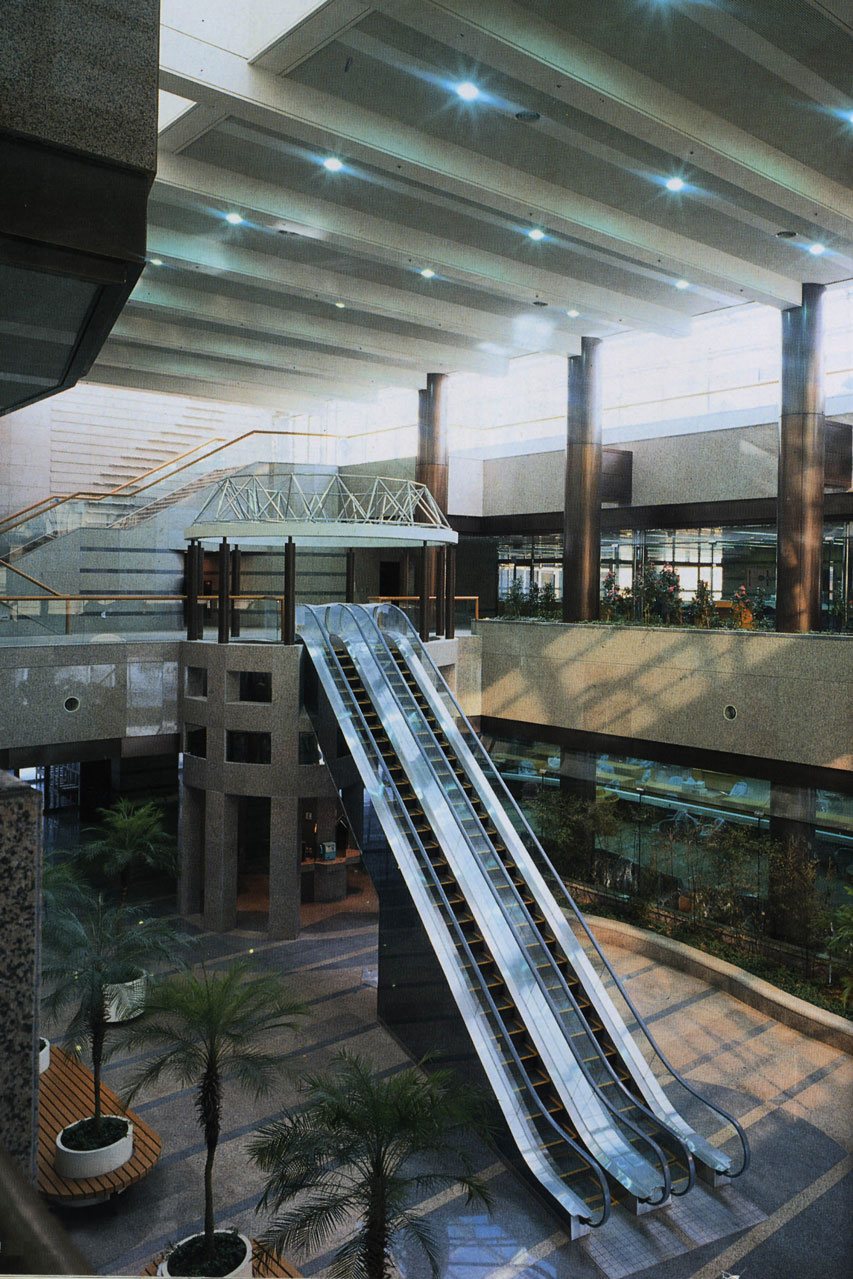
Rising from a horizontally grounded podium, the tower presents a contrasting composition between its front and side elevations. The crown-shaped design of the uppermost section symbolizes Kyonggi Bank’s dynamic growth upon a solid foundation. The podium is clad in granite to express the dignity and trust befitting a financial institution and evoke the solidity of the base, while subtle tonal variations unify the entrance with the overall base massing. The triple-height ground-floor atrium admits daylight and combines ornamental trees with sculptures to create a refined and dignified atmosphere.
The exterior, finished in granite and 24mm colored double-glazed reflective glass, conveys both the high-tech aesthetic of the materials and the simplicity of the overall design. The tower’s curtain wall, which naturally emphasizes verticality, employs the Structural Sealant Glazing System (SSGS) to eliminate bulky joints between glass panels, while horizontal stainless-steel bands introduce a rhythmic counterbalance to the tower’s strong vertical emphasis. Today, the building houses the Incheon Branch of Citibank Korea and the Incheon Office of the Financial Supervisory Service.

-
Status
Completed
-
Order
Kyungki Bank
-
Purpose
Office
-
Design Year
1987
-
Completion Year
1992
-
Location
Namdong-gu, Incheon
-
Site area
10,942.90m2
-
Gross Floor Area
47,434.36m2
-
Building Area
4,086.56m2
-
Scale
B3, 20F
Located at the center of the Guwol District — a planned area developed by the City of Incheon as part of a land readjustment project to expand land use — the Kyonggi Bank Headquarters was constructed as a state-of-the-art building. Groundbreaking took place in June 1988, and after three and a half years of construction, the building was completed at the end of January 1992. With its sleek and refined façade and distinctive high-rise form, the building conveys the image of a forward-looking financial institution, unique among regional banks in the Gyeonggi area. Beyond serving as a local landmark, it has played a leading role in shaping the urban environment and has established itself as a symbolic architectural presence representing Incheon Port.
Rising from a horizontally grounded podium, the tower presents a contrasting composition between its front and side elevations. The crown-shaped design of the uppermost section symbolizes Kyonggi Bank’s dynamic growth upon a solid foundation. The podium is clad in granite to express the dignity and trust befitting a financial institution and evoke the solidity of the base, while subtle tonal variations unify the entrance with the overall base massing. The triple-height ground-floor atrium admits daylight and combines ornamental trees with sculptures to create a refined and dignified atmosphere.
The exterior, finished in granite and 24mm colored double-glazed reflective glass, conveys both the high-tech aesthetic of the materials and the simplicity of the overall design. The tower’s curtain wall, which naturally emphasizes verticality, employs the Structural Sealant Glazing System (SSGS) to eliminate bulky joints between glass panels, while horizontal stainless-steel bands introduce a rhythmic counterbalance to the tower’s strong vertical emphasis. Today, the building houses the Incheon Branch of Citibank Korea and the Incheon Office of the Financial Supervisory Service.