
Close
![Popup Image]()
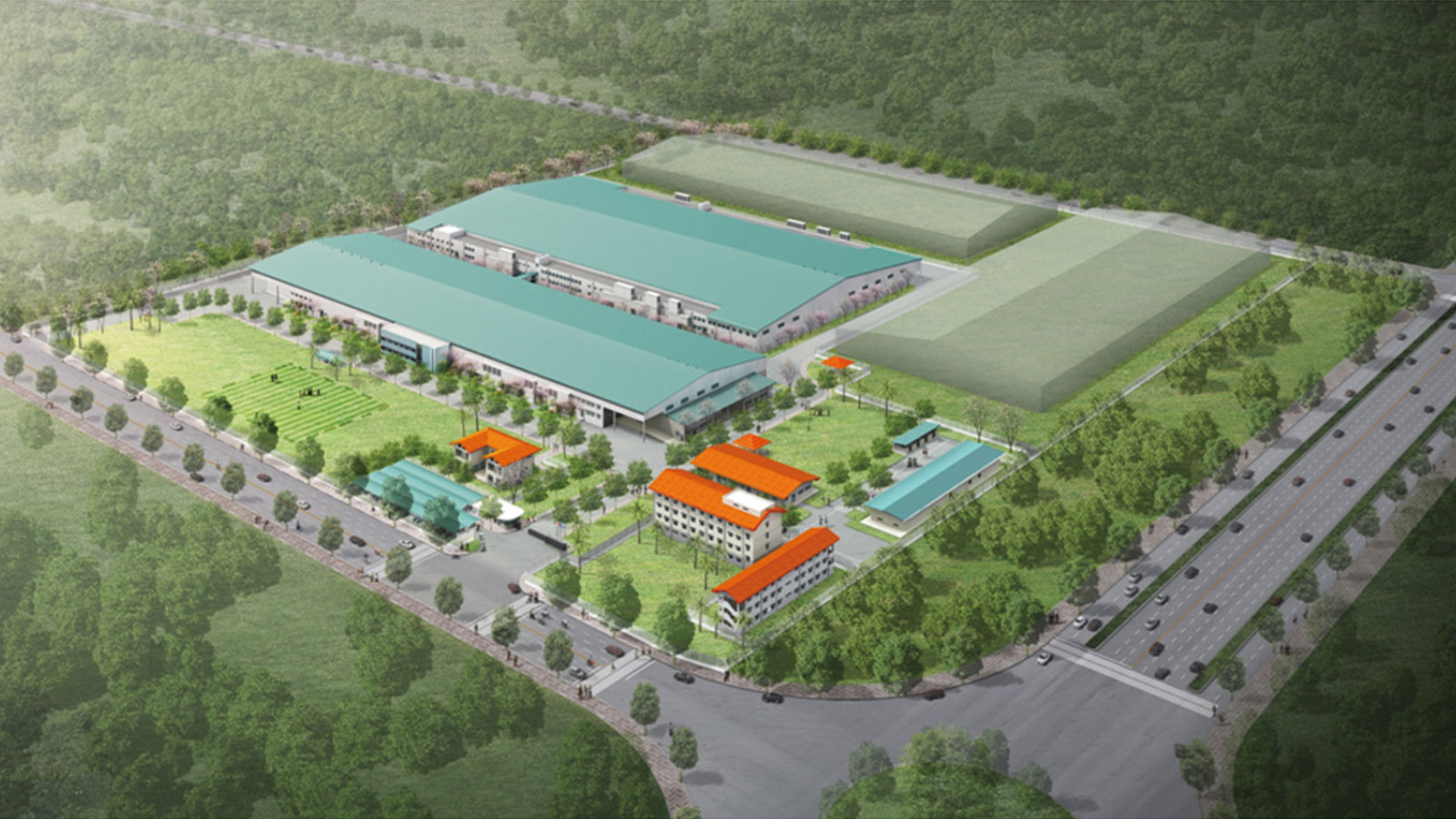
Since declaring its opening to the outside world and the adoption of a market economy in 1986, the Vietnamese government has entered a golden age of new investment, driven by an increase in foreign direct investment (FDI), the large-scale attraction of high-tech industries, and changes in the economic landscape such as the Trans-Pacific Partnership (TPP).
South Korea is currently leading the recent surge in FDI, having invested $3.6 billion in Vietnam this year. Investments are increasing not only from large conglomerates but also from companies in the textile and garment sectors, as well as small-scale manufacturing firms. This is a point of particular interest for us. The conclusion of the TPP, changes in labor conditions in the Chinese market, and the underdeveloped infrastructure in Southeast Asia will likely make Vietnam the sole viable alternative as an industrial base for the foreseeable future. The Vietnamese government also expects an influx of FDI into the textile and dyeing industries as the competitiveness of its main export, textile products, improves, so investment is expected to increase for the time being.
To respond to these market changes and the local environment, Junglim’s Vietnam subsidiary has focused on building an organization capable of providing services optimized for the local market from the very beginning of its entry. Recent cases involving spinning mills reflect the results of these efforts. To this end, the company has not only strengthened its competitiveness to handle the entire process—from basic design to conversion design and permitting—but also increased the probability of securing contracts by developing Korean companies entering the market through marketing cooperation between the headquarters and the local subsidiary, and by providing on-site support. As a result, in the industrial facilities sector alone, the company achieved significant results in 2014 by securing contracts for the design of five factories and two logistics centers, as well as CM and supervision contracts for all commissioned projects in Vietnam.

-
Status
Completed
-
Purpose
Industrial, Logistics
-
Design Year
2013
-
Location
Thai Nguyen Province, Vietnam
-
Site area
163,543.00m2
-
Gross Floor Area
52,366.46m2
-
Building Area
48,975.22m2
-
Scale
B1, 3F
Since declaring its opening to the outside world and the adoption of a market economy in 1986, the Vietnamese government has entered a golden age of new investment, driven by an increase in foreign direct investment (FDI), the large-scale attraction of high-tech industries, and changes in the economic landscape such as the Trans-Pacific Partnership (TPP).
South Korea is currently leading the recent surge in FDI, having invested $3.6 billion in Vietnam this year. Investments are increasing not only from large conglomerates but also from companies in the textile and garment sectors, as well as small-scale manufacturing firms. This is a point of particular interest for us. The conclusion of the TPP, changes in labor conditions in the Chinese market, and the underdeveloped infrastructure in Southeast Asia will likely make Vietnam the sole viable alternative as an industrial base for the foreseeable future. The Vietnamese government also expects an influx of FDI into the textile and dyeing industries as the competitiveness of its main export, textile products, improves, so investment is expected to increase for the time being.
To respond to these market changes and the local environment, Junglim’s Vietnam subsidiary has focused on building an organization capable of providing services optimized for the local market from the very beginning of its entry. Recent cases involving spinning mills reflect the results of these efforts. To this end, the company has not only strengthened its competitiveness to handle the entire process—from basic design to conversion design and permitting—but also increased the probability of securing contracts by developing Korean companies entering the market through marketing cooperation between the headquarters and the local subsidiary, and by providing on-site support. As a result, in the industrial facilities sector alone, the company achieved significant results in 2014 by securing contracts for the design of five factories and two logistics centers, as well as CM and supervision contracts for all commissioned projects in Vietnam.