
Close
![Popup Image]()
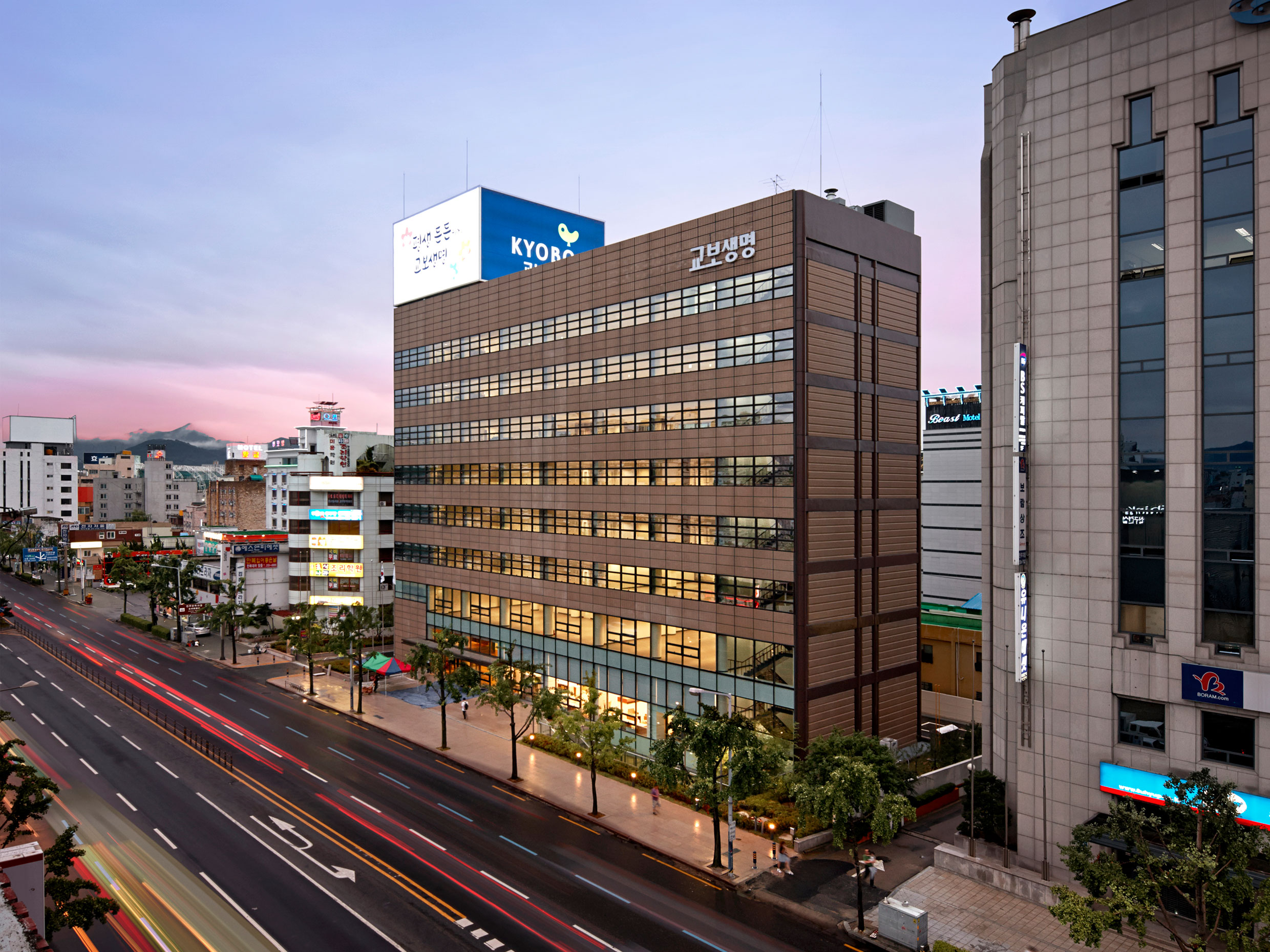
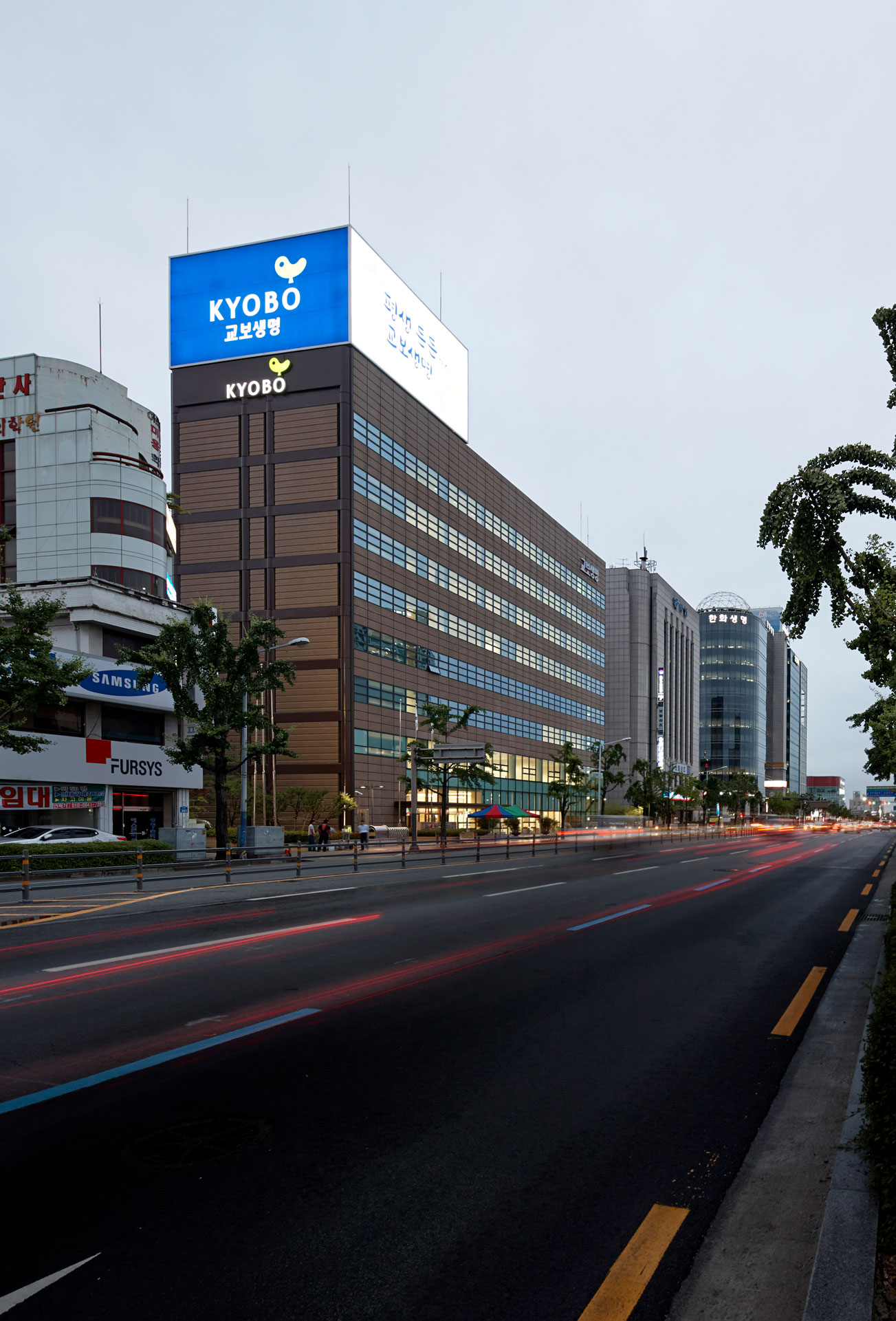
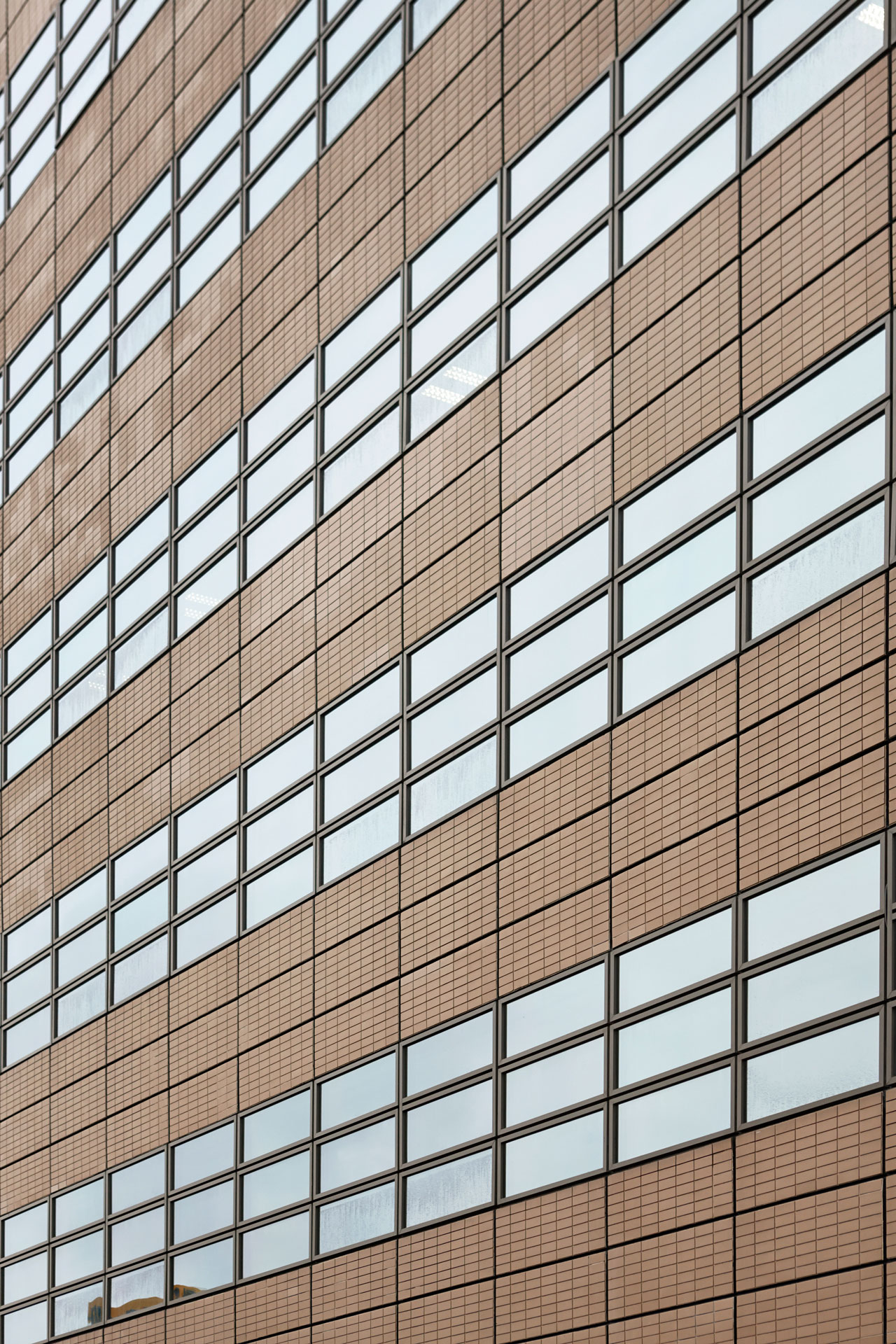
Kyobo Life Insurance has a rich architectural heritage, having produced outstanding buildings ranging from its headquarters to the Sanggye-dong office building and the Gangnam Kyobo complex. In Phase 1, three design alternatives were evaluated: an economical option, a reinterpretation of Kyobo’s architectural style, and a new facade design. Ultimately, the project proceeded with the alternatives that reinterpreted Kyobo’s architectural style. Two projects that reinterpreted the vocabulary of Kyobo architecture—including a horizontally stable image, a straightforward facade with clear front-to-back and left-to-right alignment, functional windows and sectional composition, and, above all, the use of warm ceramic materials and spaces that embrace nature—were initiated in Phase 1. Phases 2 and 3 are now linked by another connecting thread. The scope of the remodeling project, which could permeate the entire complex, was a key consideration deeply explored in Phase 1.
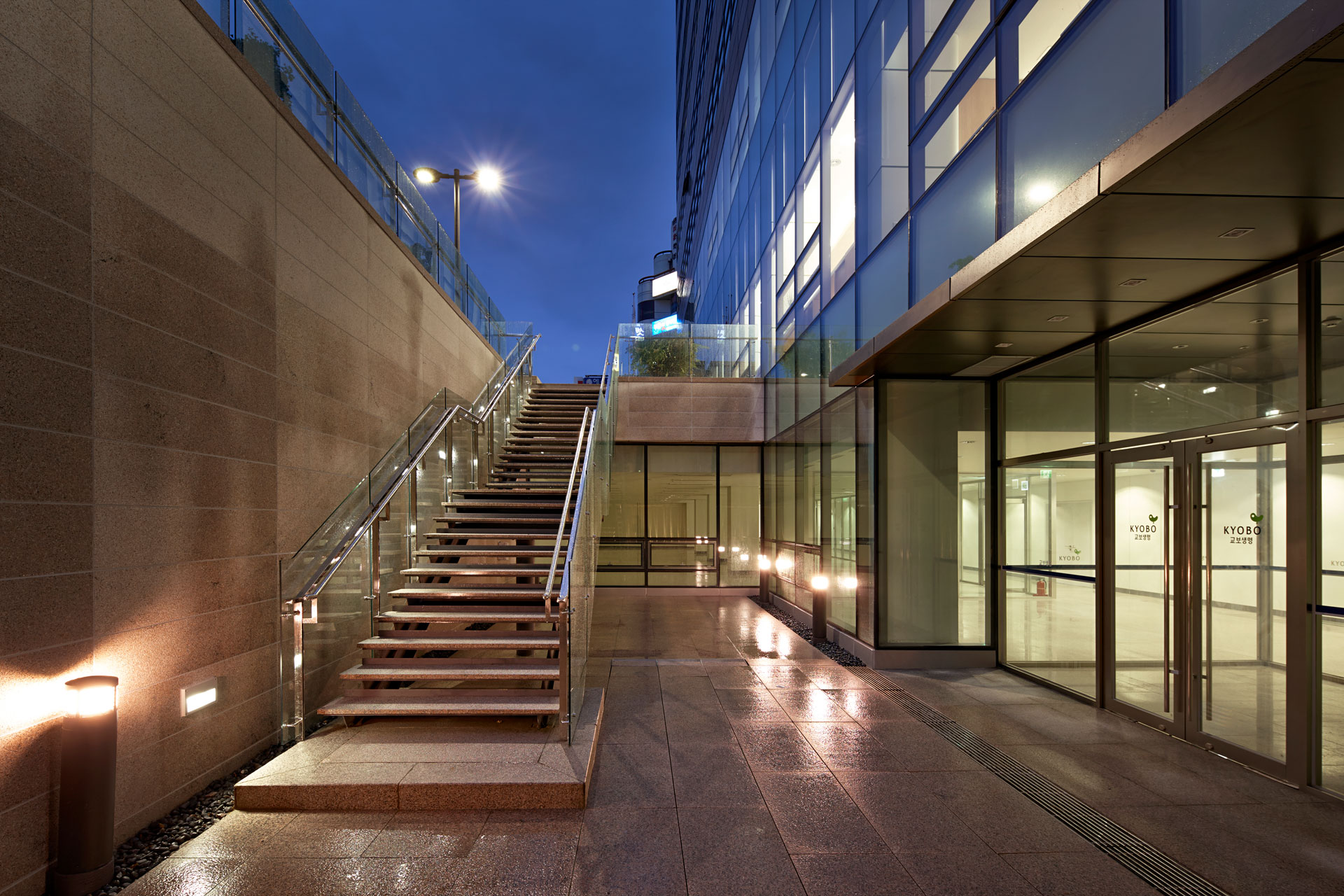
In terms of the remodeling’s substance, the first priority was to analyze the environmental characteristics of each office building’s site and enhance their value. We sought to strengthen public accessibility and the brand image by reorganizing landscaping and parking areas, boldly introducing sunken spaces in the basement where possible, and maximizing the creation of usable outdoor spaces. Vertical zoning, which had been used irregularly, and the lower floors were prioritized for customer-centric functions. By expanding the lobby and connecting it to the underground sunken areas, accessibility and public engagement were enhanced, embodying Kyobo’s customer-first philosophy. The standard floor serves as an office space; by reducing unnecessary common areas in the dual-core system and concentrating key services in one core, utilization was maximized. Given the nature of the business, the training center—a critical facility—was placed on the top floor. The entrance hall was expanded to naturally guide users toward the rooftop, and active rooftop landscaping was implemented to improve the working environment for occupants.


-
Status
Completed
-
Awards
- 2014 Korean Remodeling Architecture Award_Special Prize
-
Client
Kyobo Life Insurance Co., Ltd.
-
Program
Renovation, Office
-
Design Year
2012
-
Completion Year
2014
-
Location
Jeonju-si, Jeollabuk-do
-
Site area
2568.20m2
-
Gross Floor Area
9765.30m2
-
Building Area
755.94m2
-
Number of Levels
B3, 9F
Kyobo Life Insurance has a rich architectural heritage, having produced outstanding buildings ranging from its headquarters to the Sanggye-dong office building and the Gangnam Kyobo complex. In Phase 1, three design alternatives were evaluated: an economical option, a reinterpretation of Kyobo’s architectural style, and a new facade design. Ultimately, the project proceeded with the alternatives that reinterpreted Kyobo’s architectural style. Two projects that reinterpreted the vocabulary of Kyobo architecture—including a horizontally stable image, a straightforward facade with clear front-to-back and left-to-right alignment, functional windows and sectional composition, and, above all, the use of warm ceramic materials and spaces that embrace nature—were initiated in Phase 1. Phases 2 and 3 are now linked by another connecting thread. The scope of the remodeling project, which could permeate the entire complex, was a key consideration deeply explored in Phase 1.
In terms of the remodeling’s substance, the first priority was to analyze the environmental characteristics of each office building’s site and enhance their value. We sought to strengthen public accessibility and the brand image by reorganizing landscaping and parking areas, boldly introducing sunken spaces in the basement where possible, and maximizing the creation of usable outdoor spaces. Vertical zoning, which had been used irregularly, and the lower floors were prioritized for customer-centric functions. By expanding the lobby and connecting it to the underground sunken areas, accessibility and public engagement were enhanced, embodying Kyobo’s customer-first philosophy. The standard floor serves as an office space; by reducing unnecessary common areas in the dual-core system and concentrating key services in one core, utilization was maximized. Given the nature of the business, the training center—a critical facility—was placed on the top floor. The entrance hall was expanded to naturally guide users toward the rooftop, and active rooftop landscaping was implemented to improve the working environment for occupants.