

Close
![Popup Image]()
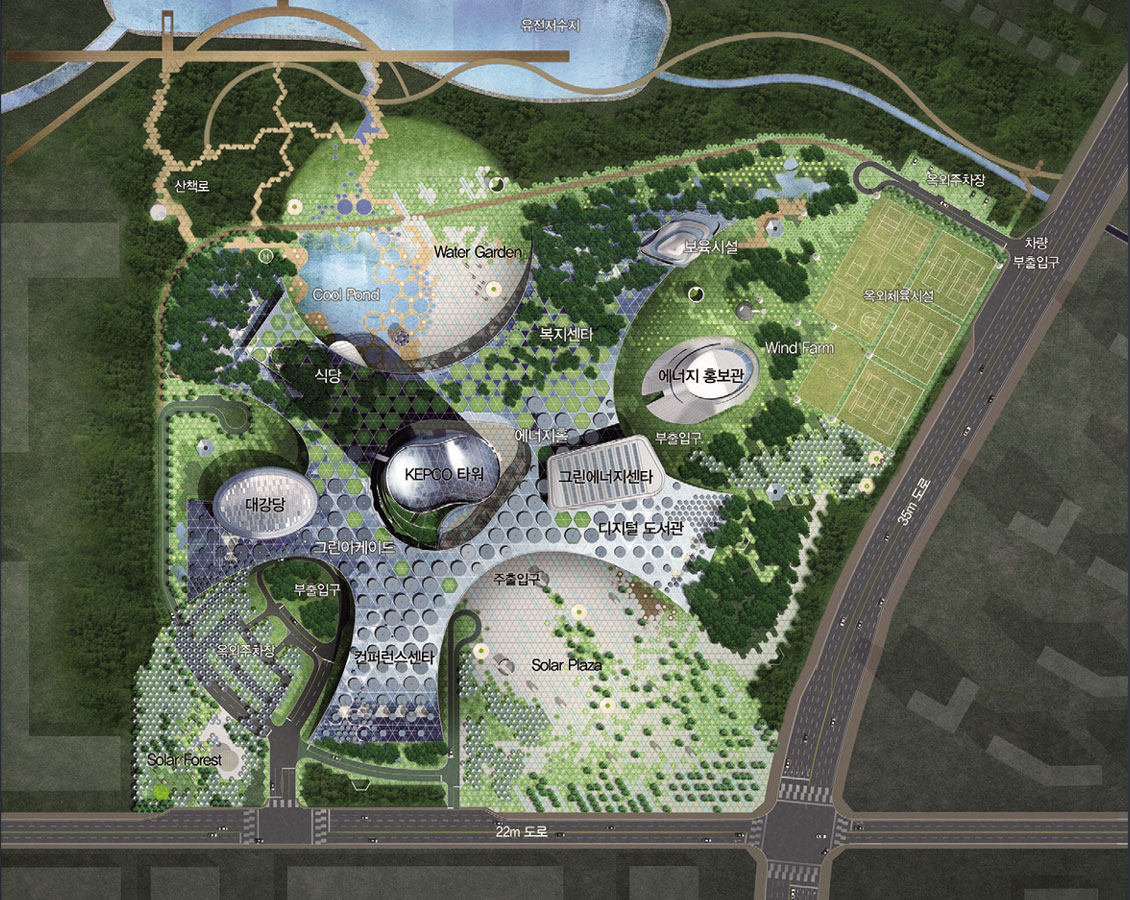
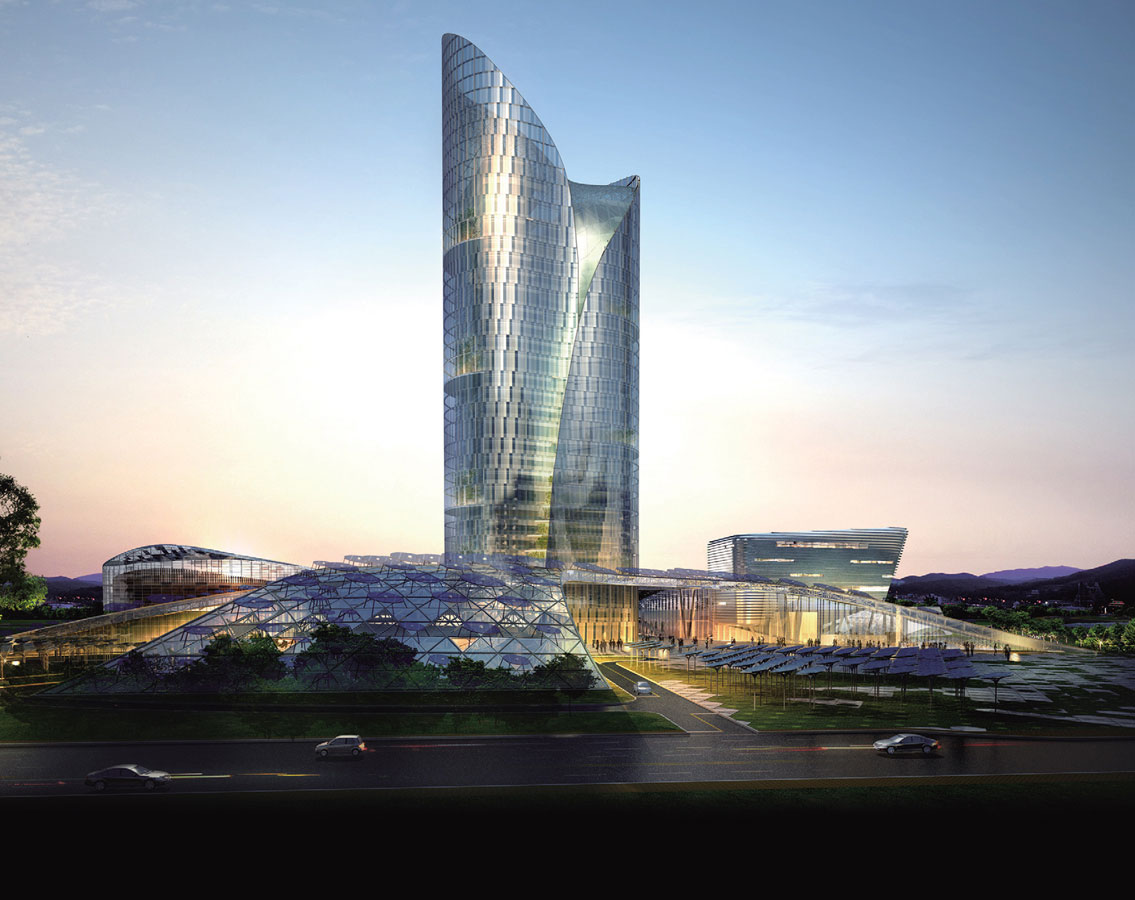
This project required a reduction in energy consumption of at least 50% compared to the existing Korea Electric Power Corporation headquarters, and its primary objective was to propose architecturally integrated energy-saving techniques. In the office tower, the composition of the building envelope was the most critical planning element. During the design phase, controversy arose over the extravagant government office buildings, bringing the poor thermal performance of curtain walls into sharp focus. To address the shortcomings of curtain walls, this design proposal introduced a double-skin envelope and incorporated “Eco-Tubes”—vertical ventilation towers—to ensure effective natural ventilation. For the welfare and public open spaces in the lower floors, a “2nd climate zone” was planned as a buffer space to shield occupants from the harsh winter and summer climates. The 2nd climate zone utilizes geothermal energy to provide a certain level of heating and cooling without relying on conventional mechanical HVAC systems.

-
Status
Completed
-
Order
KEPCO
-
Purpose
Office
-
Design Year
2009
-
Location
Naju-si, Jeollanam-do
-
Site area
149,372.00m2
-
Gross Floor Area
124,513.18m2
-
Building Area
45,164.55m2
-
Scale
B2, 27F
This project required a reduction in energy consumption of at least 50% compared to the existing Korea Electric Power Corporation headquarters, and its primary objective was to propose architecturally integrated energy-saving techniques. In the office tower, the composition of the building envelope was the most critical planning element. During the design phase, controversy arose over the extravagant government office buildings, bringing the poor thermal performance of curtain walls into sharp focus. To address the shortcomings of curtain walls, this design proposal introduced a double-skin envelope and incorporated “Eco-Tubes”—vertical ventilation towers—to ensure effective natural ventilation. For the welfare and public open spaces in the lower floors, a “2nd climate zone” was planned as a buffer space to shield occupants from the harsh winter and summer climates. The 2nd climate zone utilizes geothermal energy to provide a certain level of heating and cooling without relying on conventional mechanical HVAC systems.