

Close
![Popup Image]()
Before being a physical structure for sustainable living, architecture becomes part of the environment.
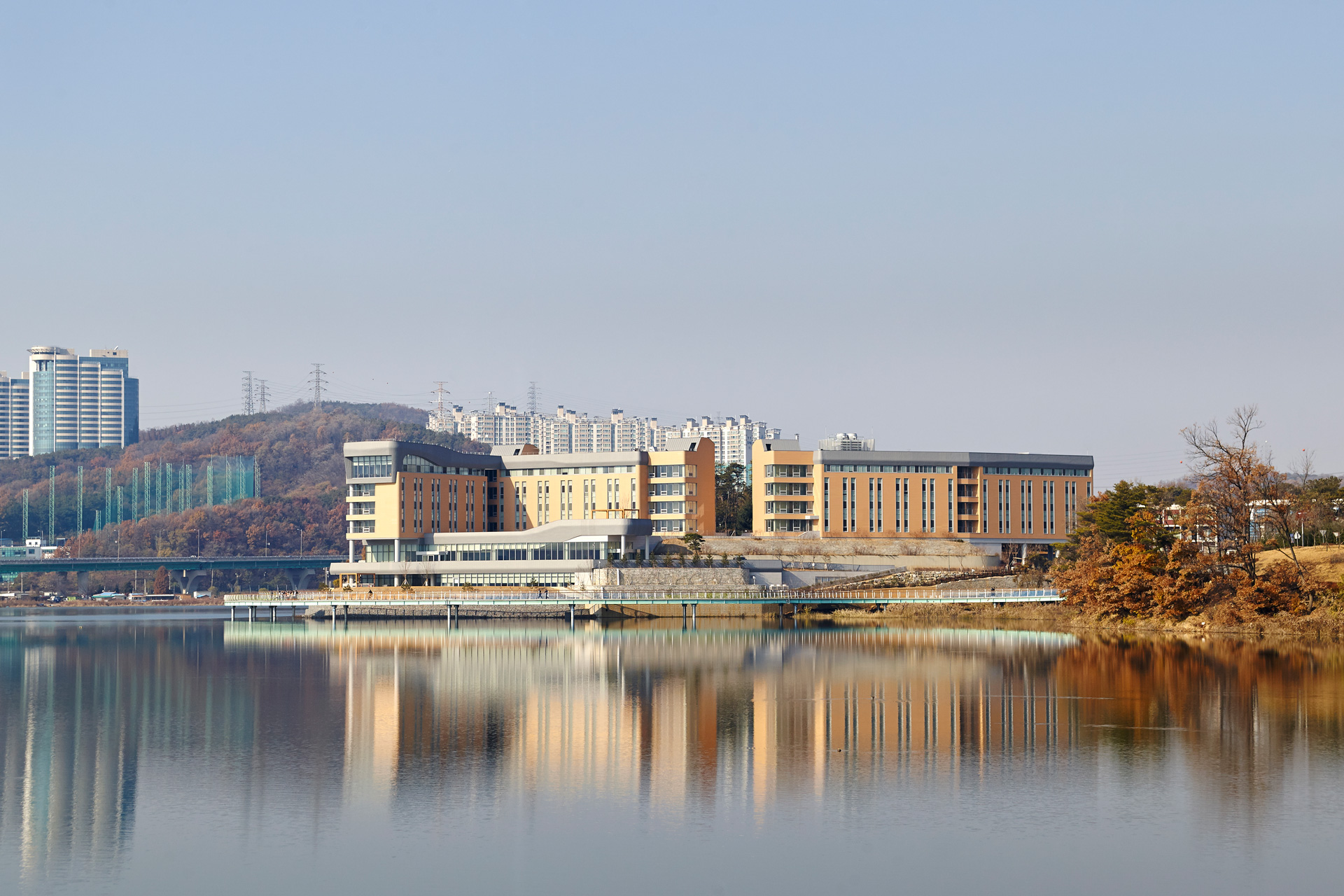
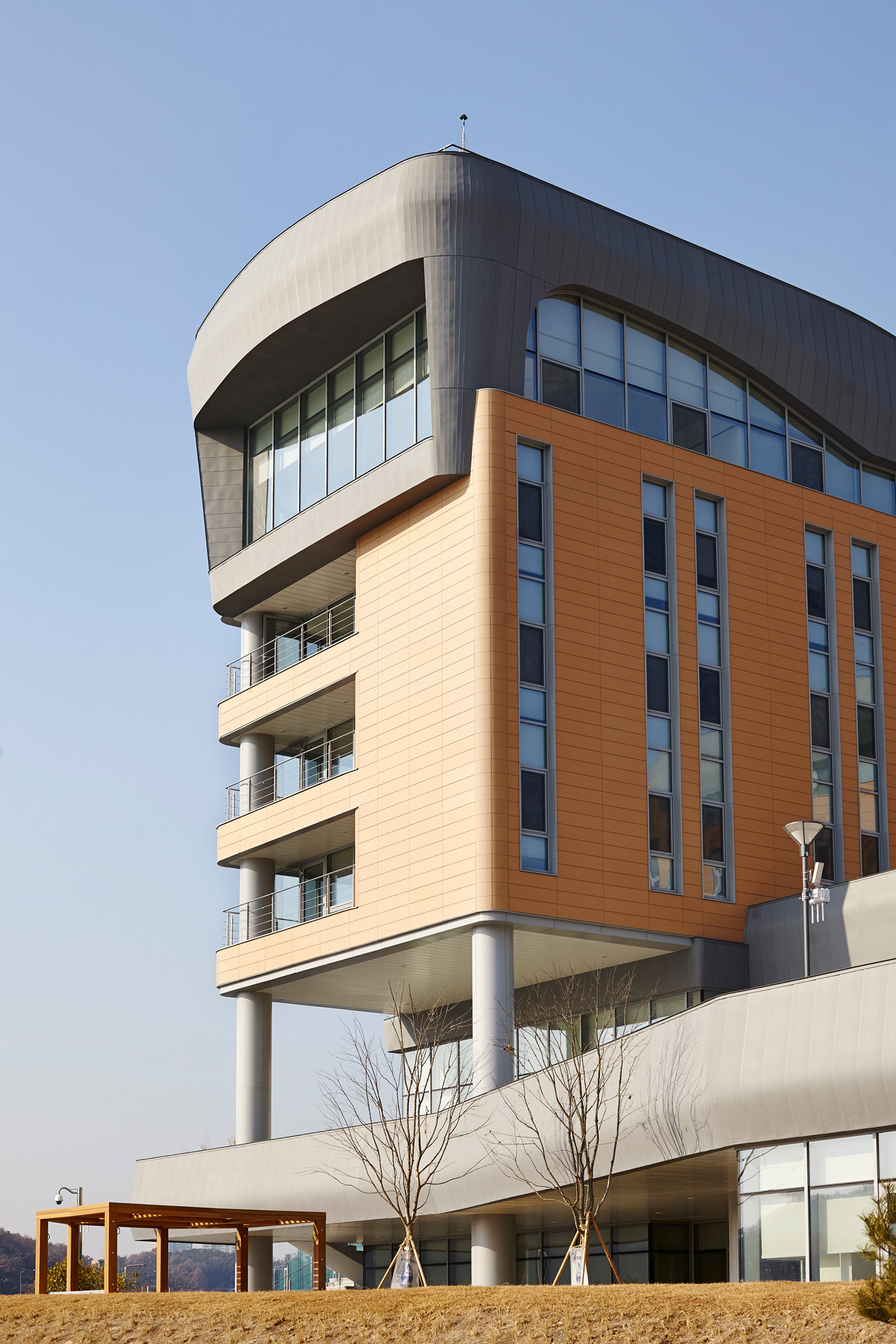
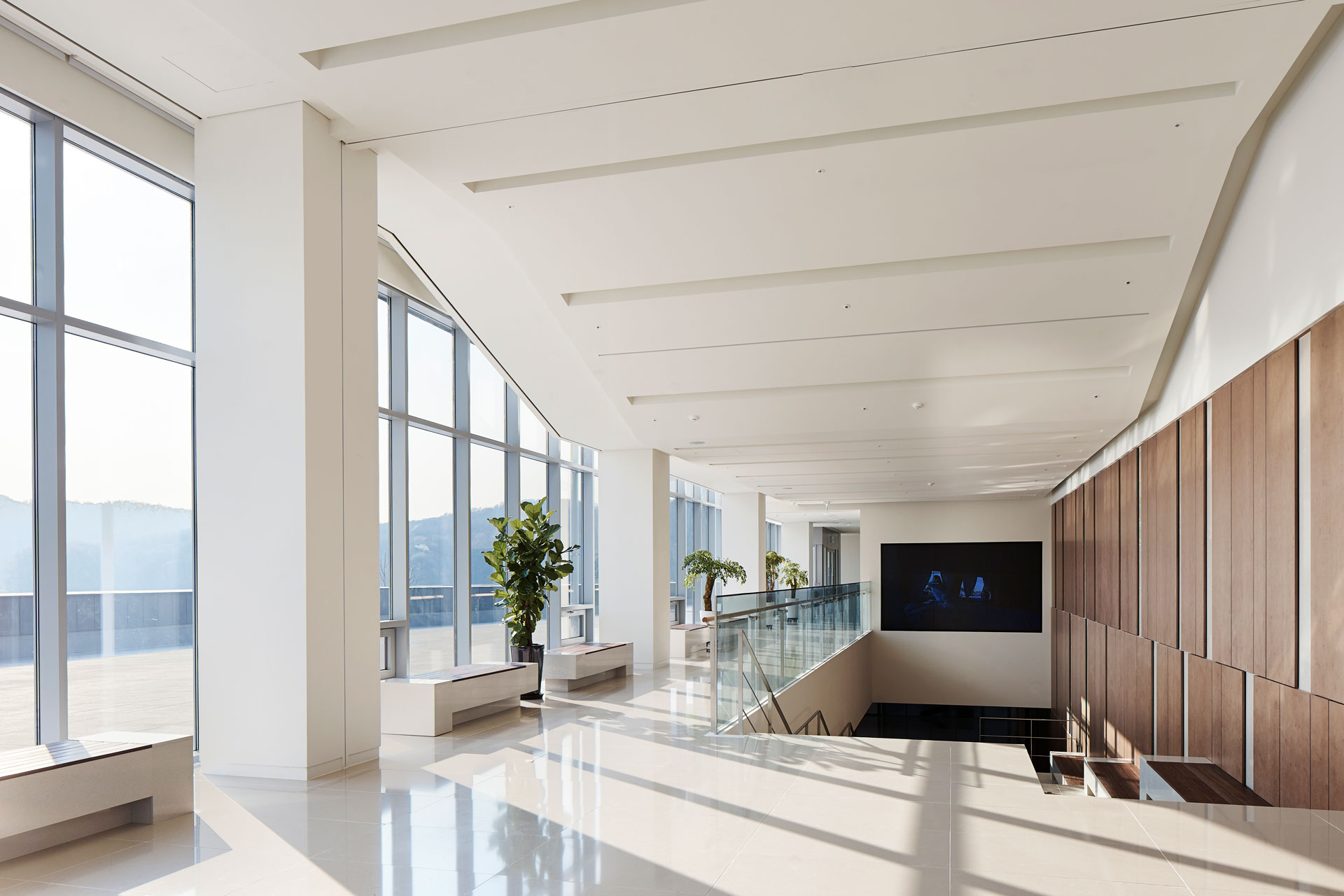
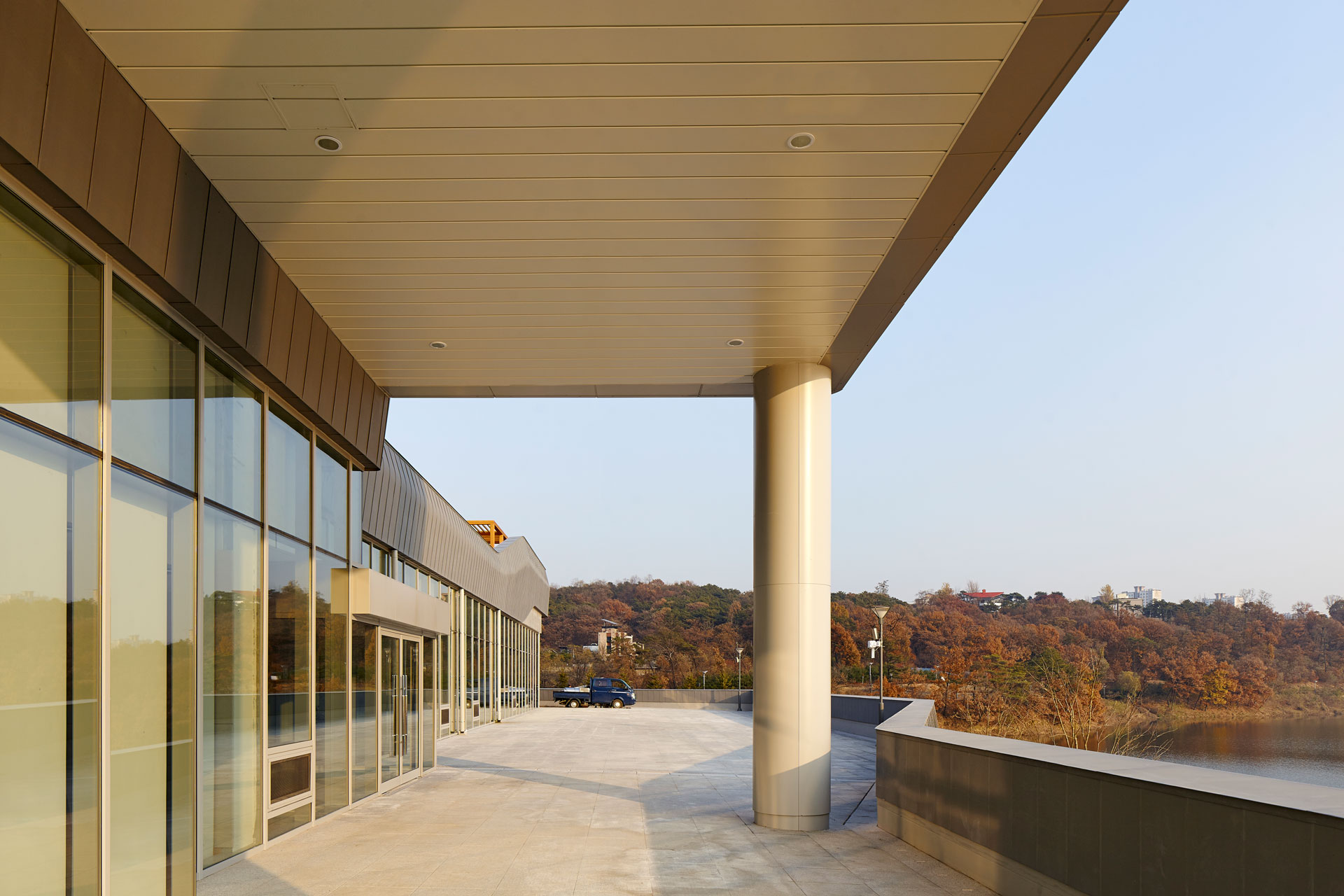
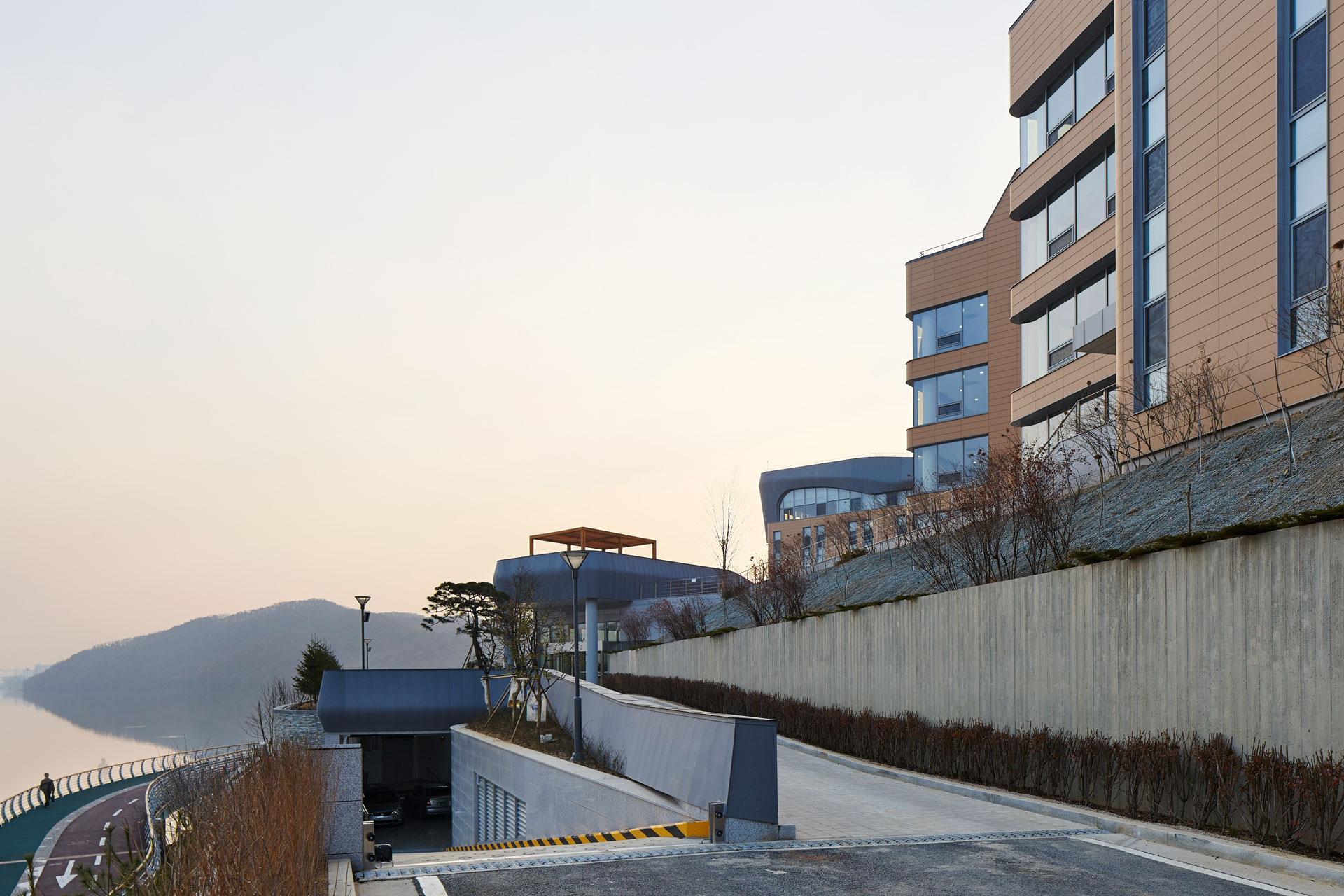
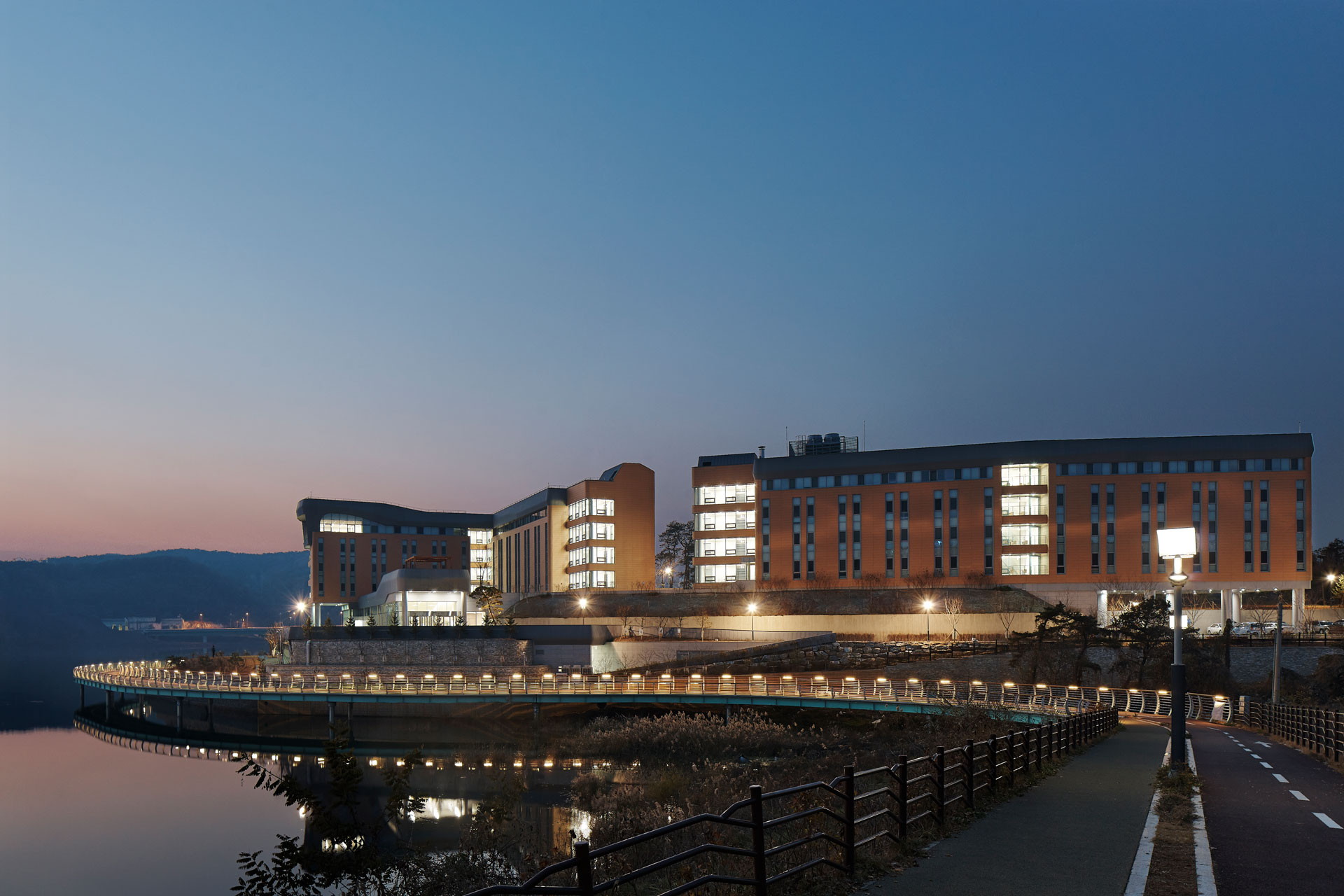
Through comfortable spaces and nature, one engages in self-reflection and fosters communication with colleagues. Rather than becoming a landmark through uniqueness, this training center serves as a backdrop for diverse activities in its various interior and exterior spaces. It also functions as a nature-friendly landmark where light bathes the walls, projecting a variety of expressions as time and seasons change. This effect is maximized by incorporating functional aspects—such as rational mechanical and facility design—that align with the center’s purpose.
Starting with a respect for the existing topography and levels, the layout was designed to draw in as much of the surrounding water and green spaces as possible. Based on the intention to leave the area with the best lake views as an open space rather than occupying it with buildings, an event space capable of hosting both static and dynamic activities was placed at the center of the training center.


-
Status
Completed
-
Awards
- 2012 BIM Awards Good practice
-
Order
Korean Air Lines Co., Ltd.
-
Purpose
Education
-
Design Year
2011
-
Completion Year
2014
-
Location
Yongin-si, Gyeonggi-do
-
Site area
10980.00m2
-
Gross Floor Area
12890.91m2
-
Building Area
2501.07m2
-
Scale
B2, 4F
Before being a physical structure for sustainable living, architecture becomes part of the environment.
Through comfortable spaces and nature, one engages in self-reflection and fosters communication with colleagues. Rather than becoming a landmark through uniqueness, this training center serves as a backdrop for diverse activities in its various interior and exterior spaces. It also functions as a nature-friendly landmark where light bathes the walls, projecting a variety of expressions as time and seasons change. This effect is maximized by incorporating functional aspects—such as rational mechanical and facility design—that align with the center’s purpose.
Starting with a respect for the existing topography and levels, the layout was designed to draw in as much of the surrounding water and green spaces as possible. Based on the intention to leave the area with the best lake views as an open space rather than occupying it with buildings, an event space capable of hosting both static and dynamic activities was placed at the center of the training center.