
Close
![Popup Image]()
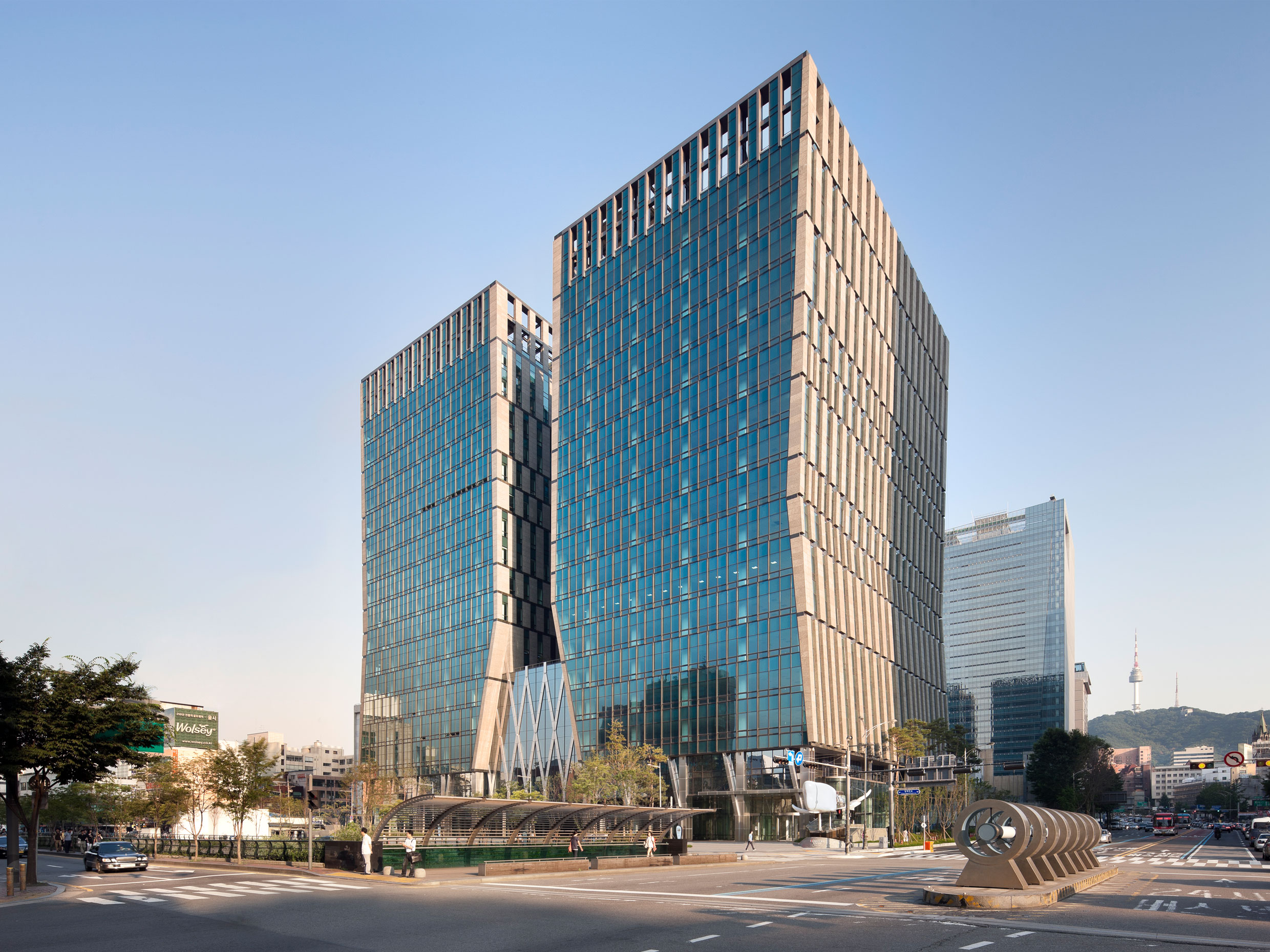
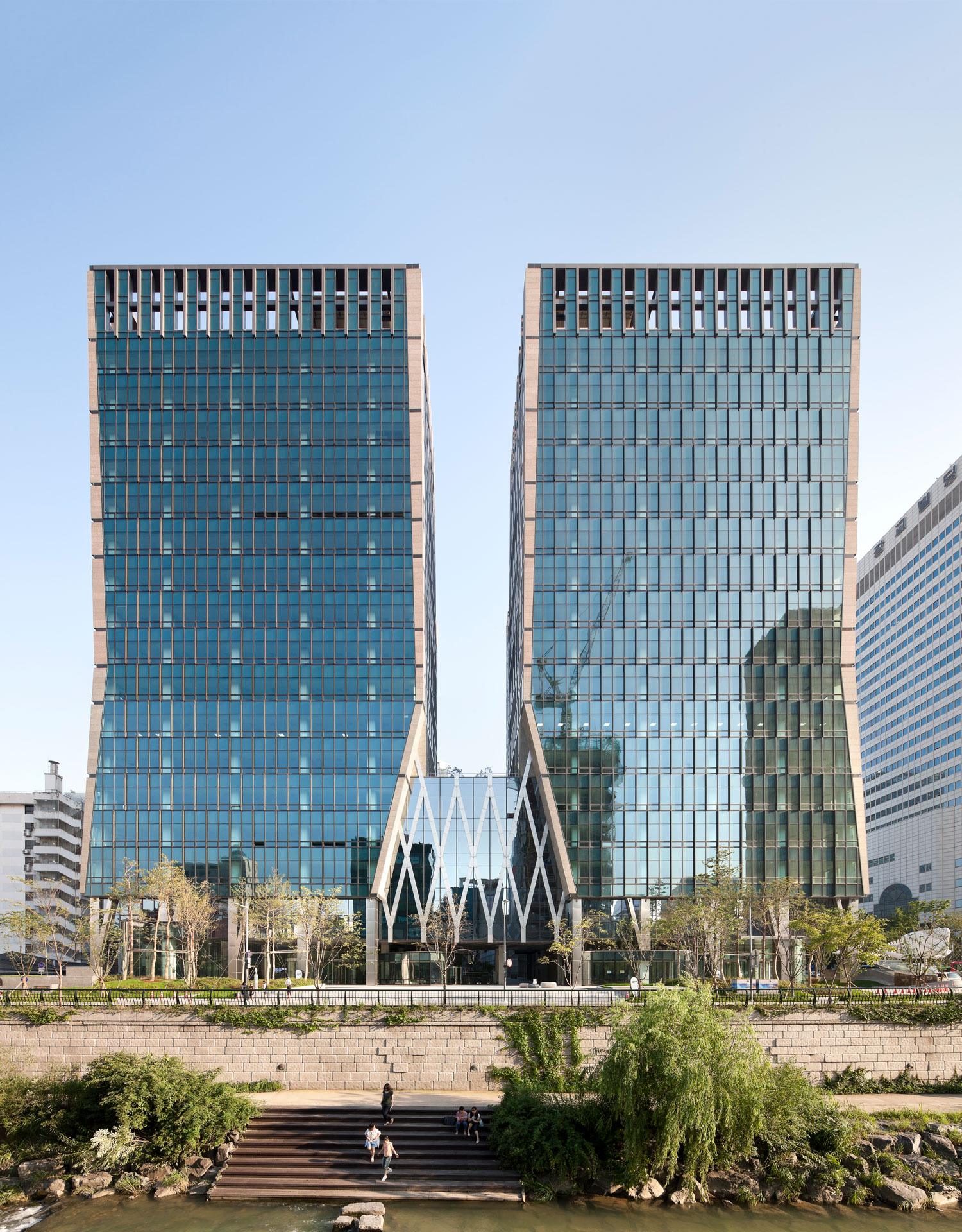
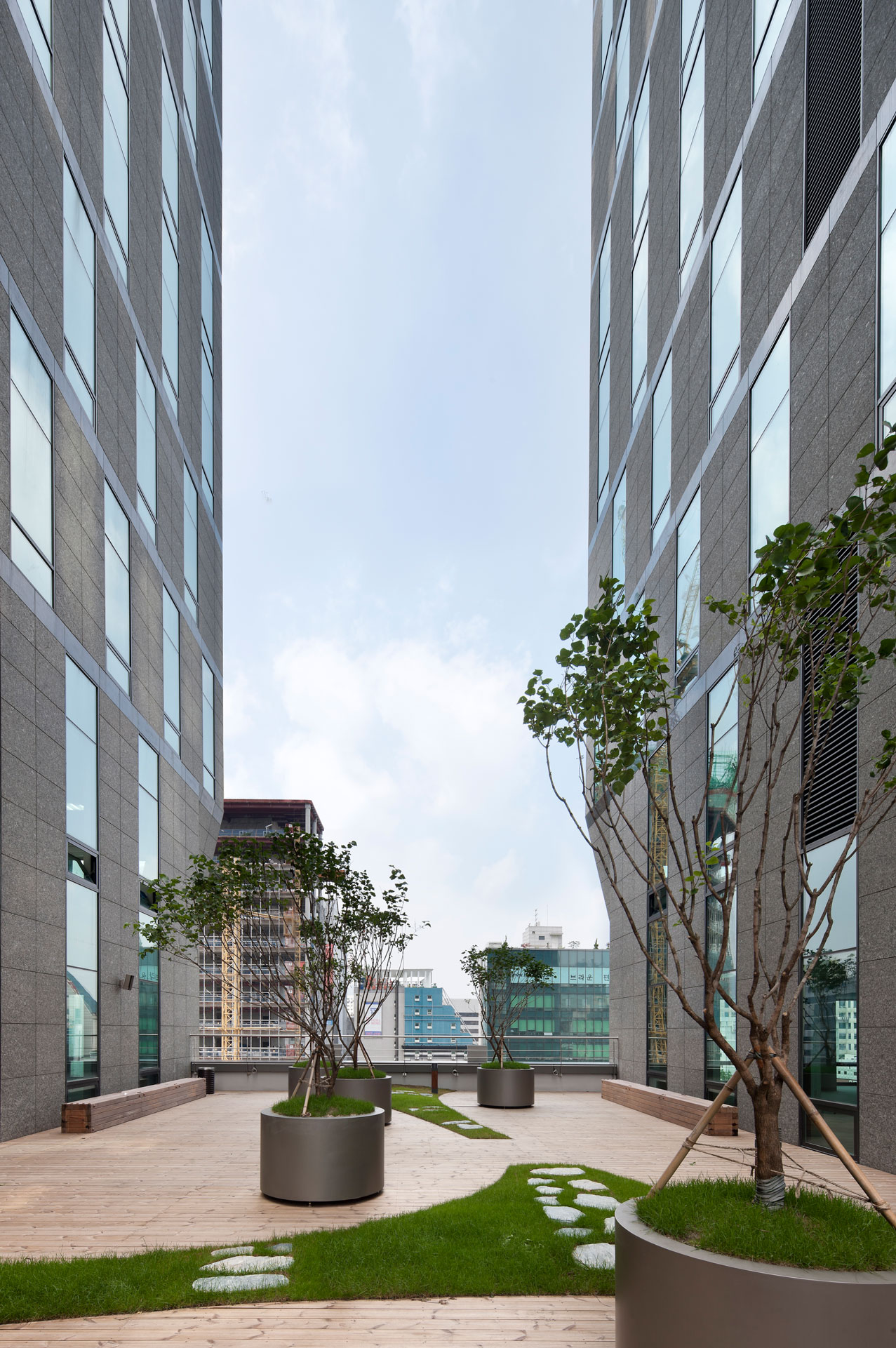
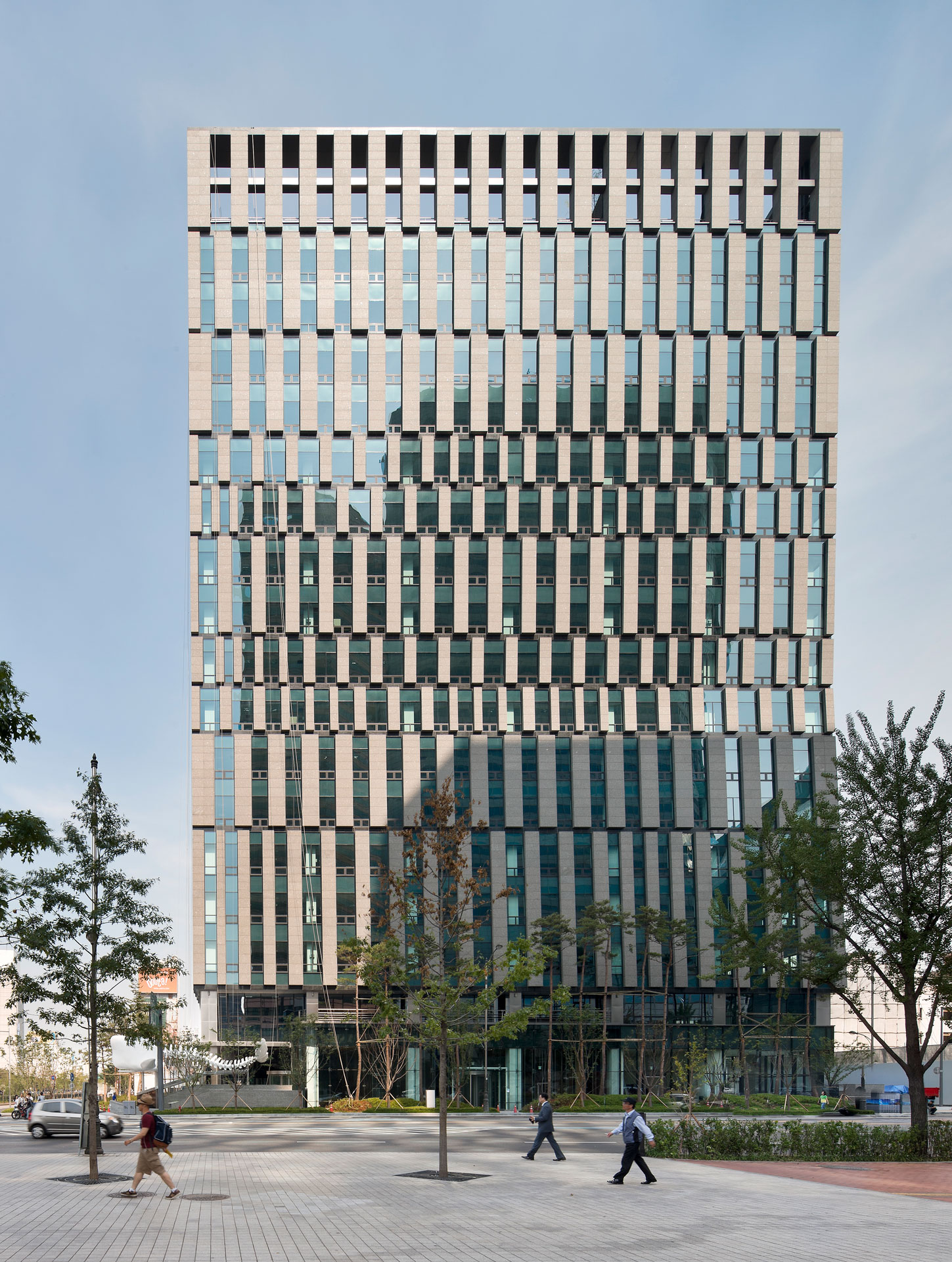
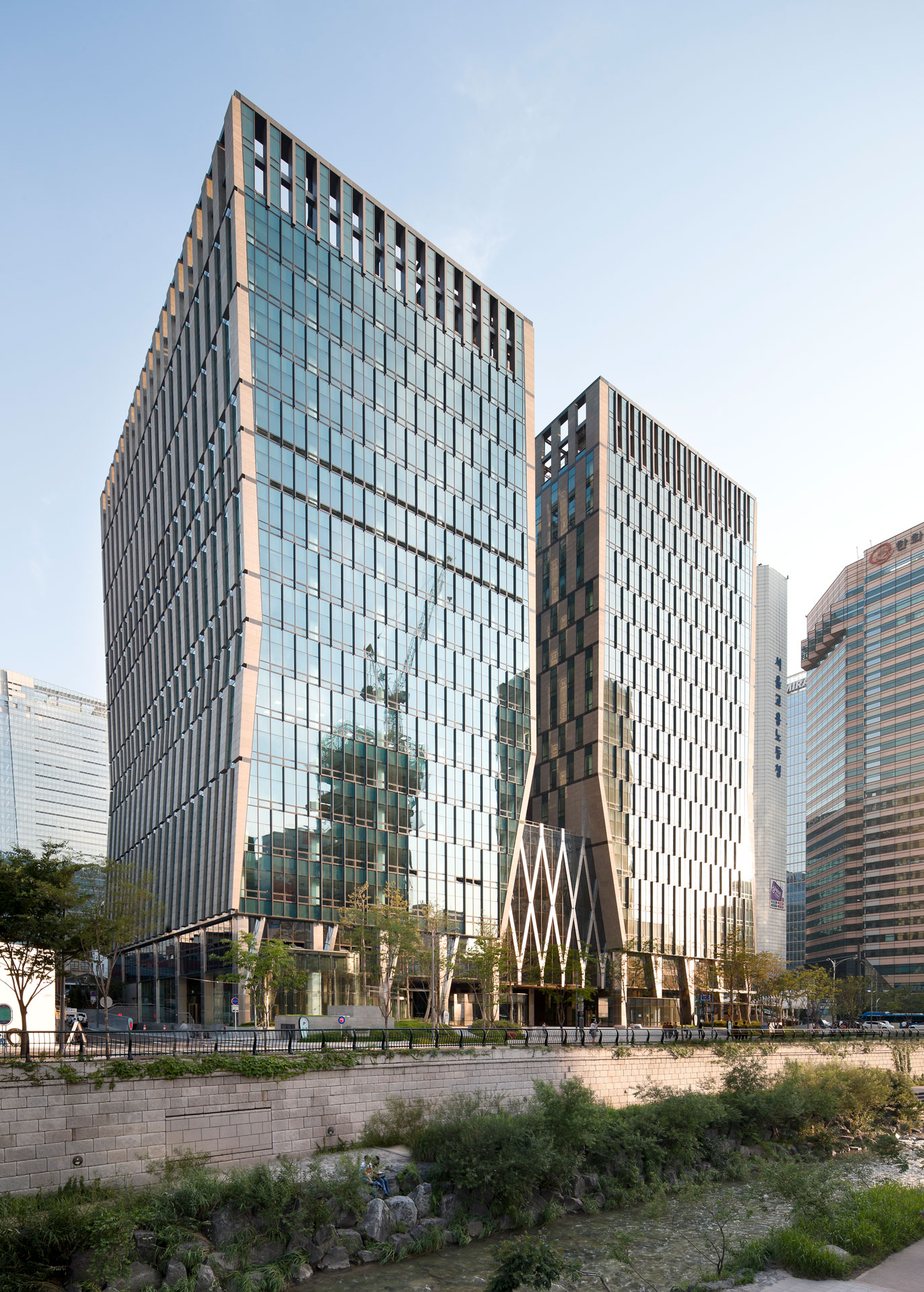
Taking into account the broader urban context connecting Namsan and Inwangsan, the design adopted the shape of an opening between two towers, and a plan to reduce heat loss by finishing the east and west facades with stone was considered.
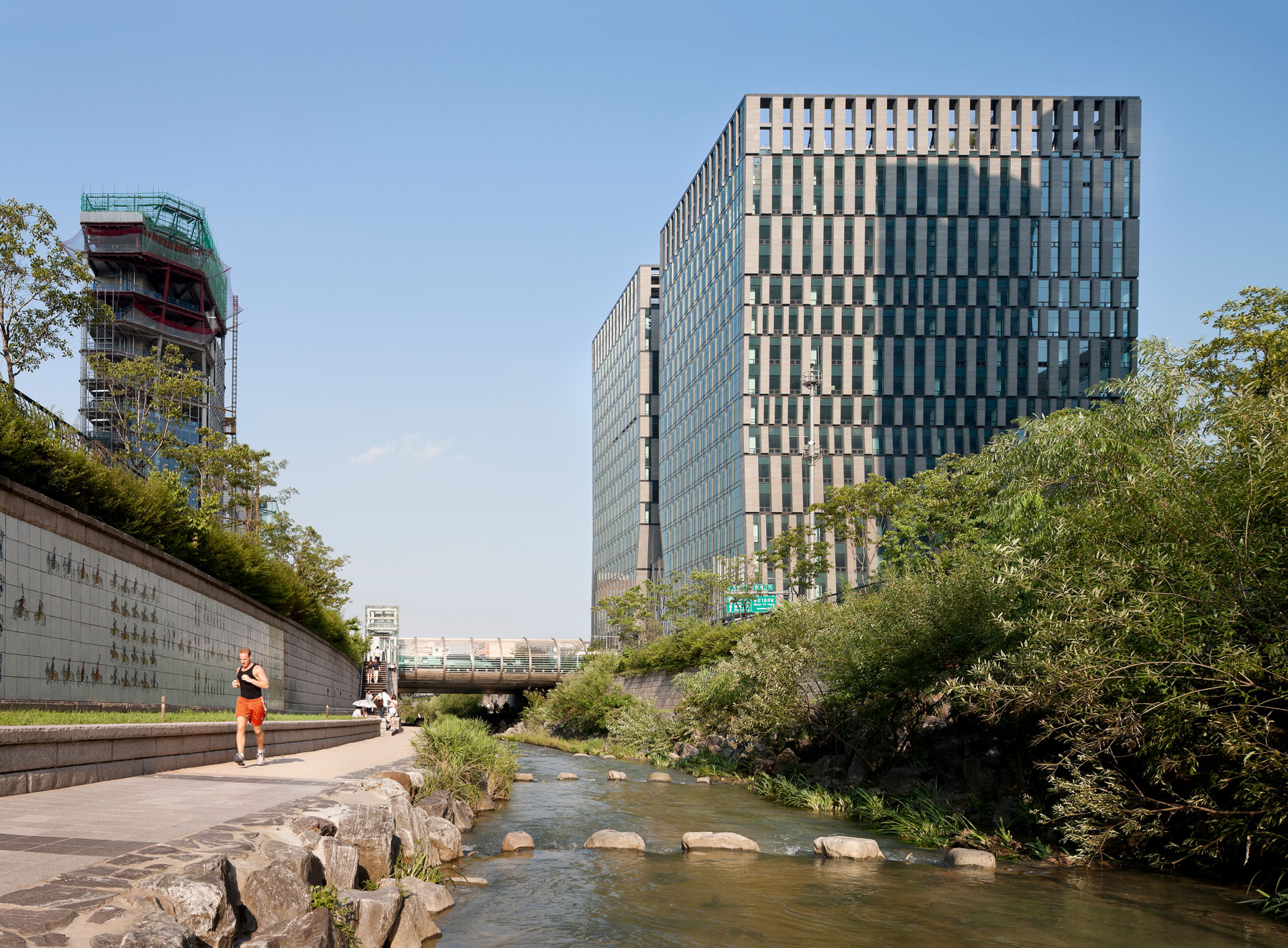
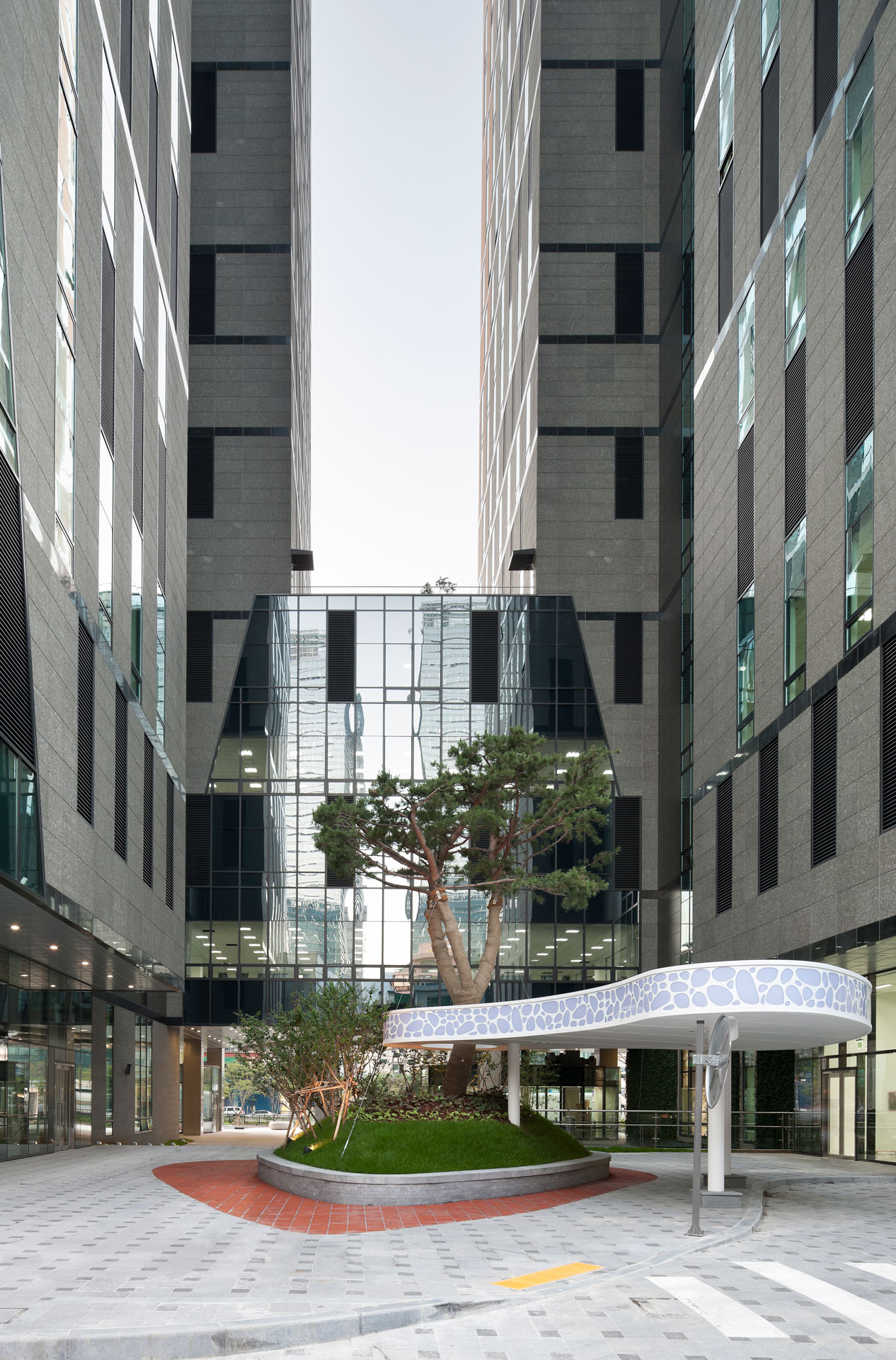
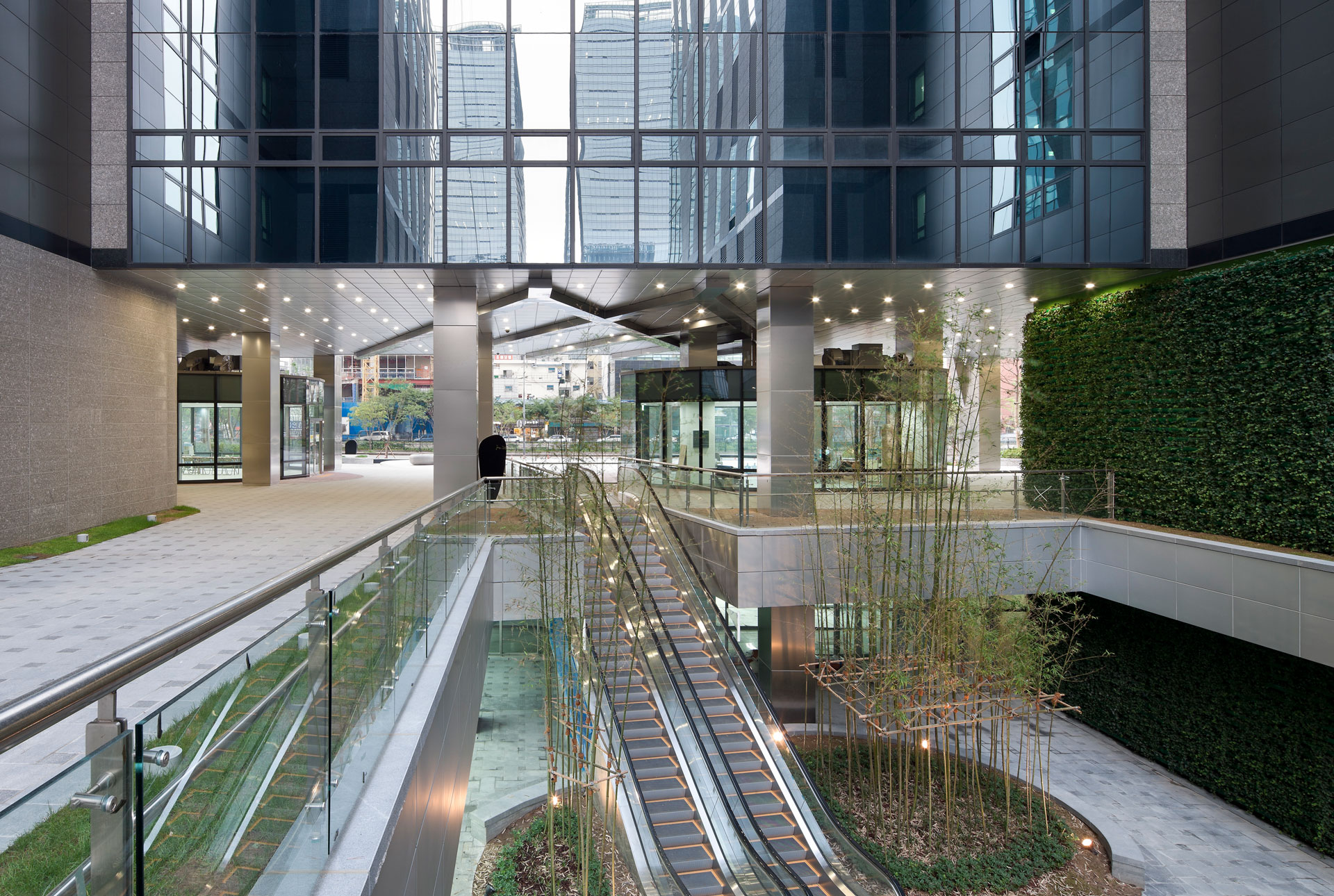
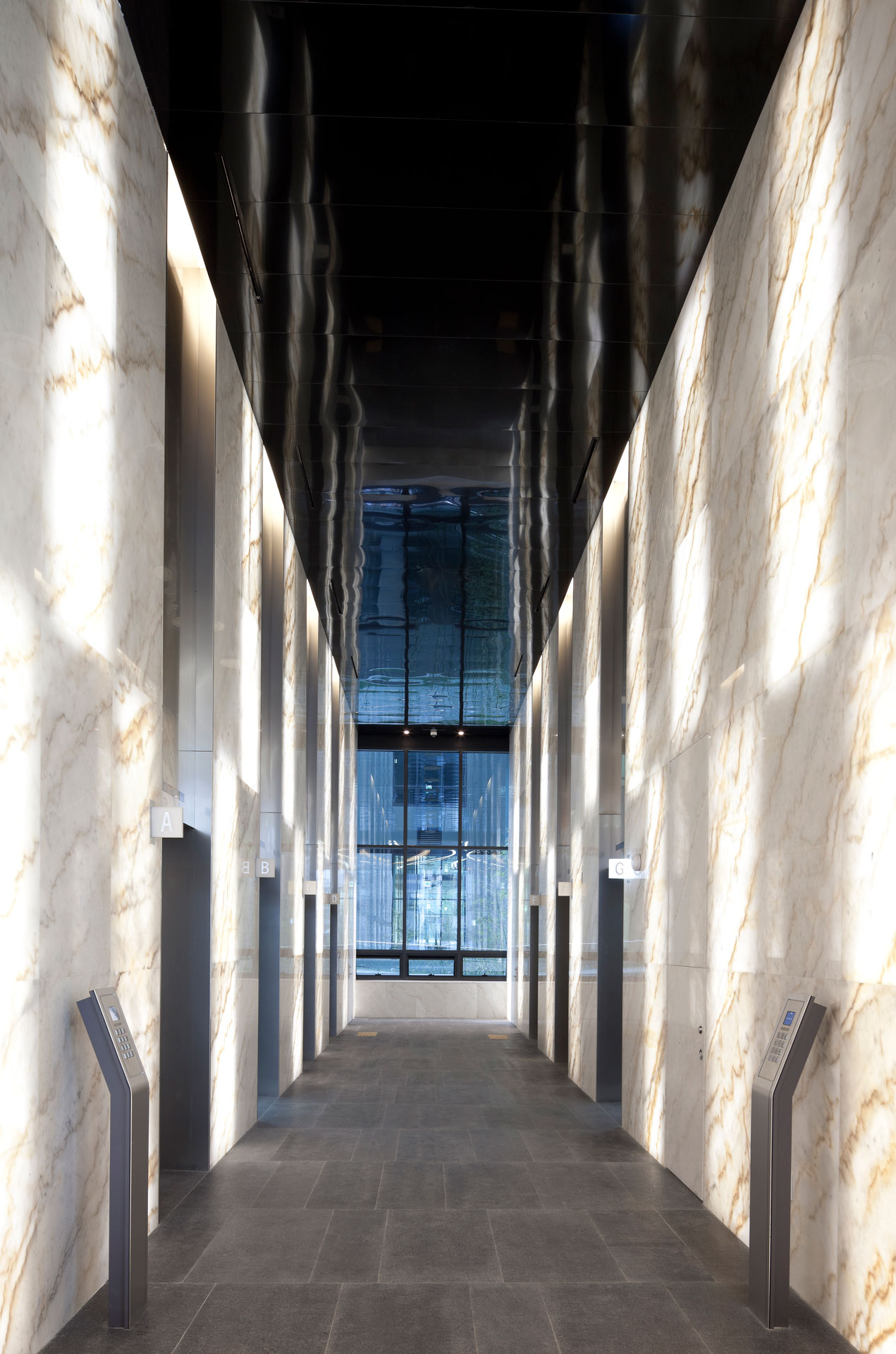
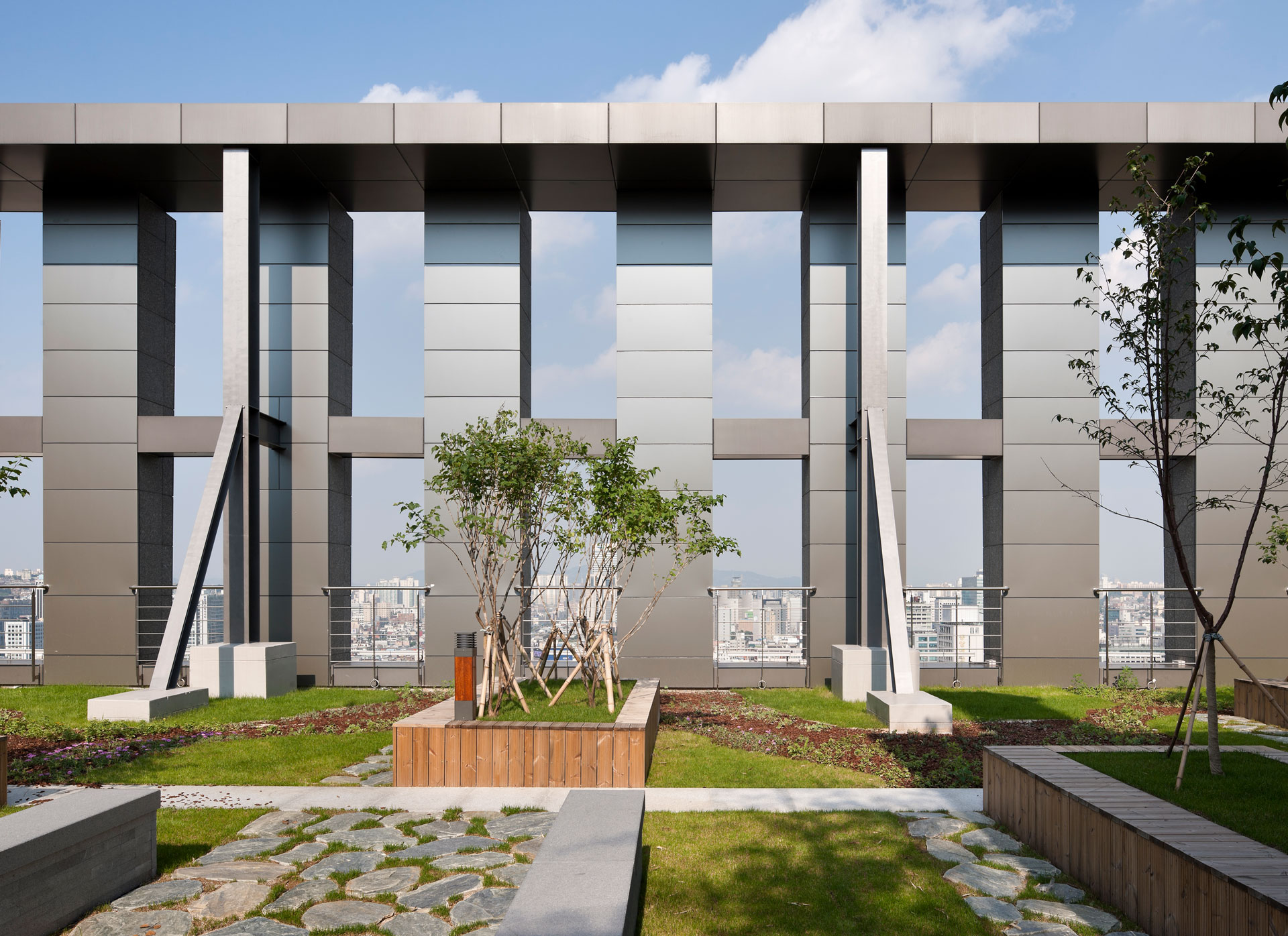
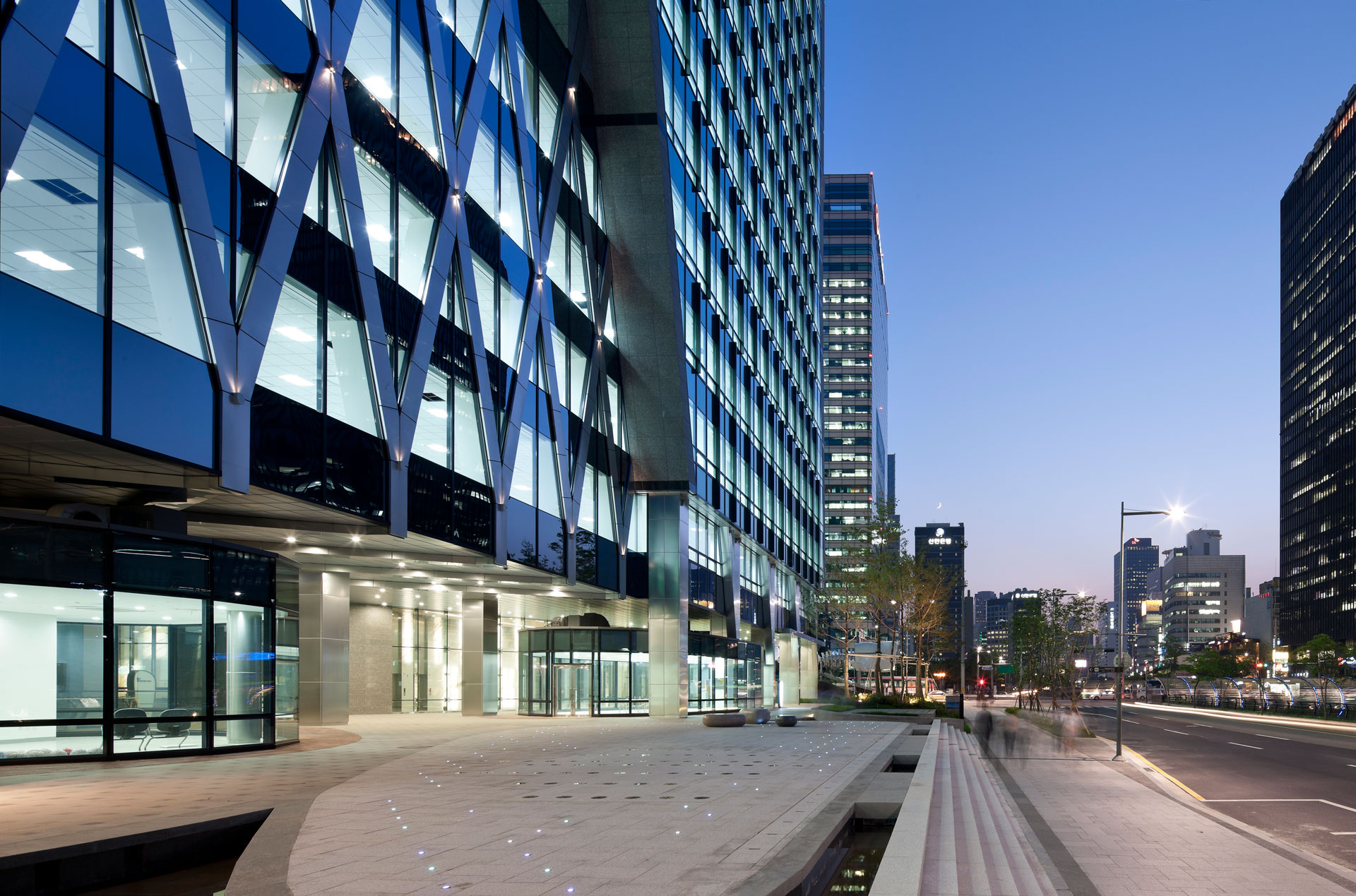
The first floor of the building was designed to maximize public pedestrian flow and access to commercial facilities, allowing people to stroll freely between independent stores. The space between the two masses is connected up to the sixth floor; abandoning the typical podium configuration, the design creates an image where the base of the gate supports the towers. Above all, the inevitable heaviness of the proportions—a consequence of the height limitation of only 17 stories—was a major challenge to overcome. The sloped surfaces on the outer edges served as a gesture to compensate for this lack of proportion and were reinterpreted as a way to reinforce the image of a gate. As a point where the path from the entrance of Insa-dong crosses Namsan Mountain to reach Gangnam, and as the building’s peak visible from the starting point of Cheonggyecheon Stream, this structure embodies more than enough value for an architect to strive to achieve.
Since every touch and every deliberation by the team members, imbued with this value, will be embedded in the building, I have no doubt that this office building will come alive and breathe at this location.

-
Status
Completed
-
Awards
- 2011 Seoul Architecture Award_Merit Award
-
Client
Doosan AMC Co., Ltd.
-
Program
Office
-
Design Year
2009
-
Completion Year
2011
-
Location
Jung-gu, Seoul
-
Site area
6933.90m2
-
Gross Floor Area
99992.33m2
-
Building Area
4159.10m2
-
Number of Levels
B6, 17F
Taking into account the broader urban context connecting Namsan and Inwangsan, the design adopted the shape of an opening between two towers, and a plan to reduce heat loss by finishing the east and west facades with stone was considered.
The first floor of the building was designed to maximize public pedestrian flow and access to commercial facilities, allowing people to stroll freely between independent stores. The space between the two masses is connected up to the sixth floor; abandoning the typical podium configuration, the design creates an image where the base of the gate supports the towers. Above all, the inevitable heaviness of the proportions—a consequence of the height limitation of only 17 stories—was a major challenge to overcome. The sloped surfaces on the outer edges served as a gesture to compensate for this lack of proportion and were reinterpreted as a way to reinforce the image of a gate. As a point where the path from the entrance of Insa-dong crosses Namsan Mountain to reach Gangnam, and as the building’s peak visible from the starting point of Cheonggyecheon Stream, this structure embodies more than enough value for an architect to strive to achieve.
Since every touch and every deliberation by the team members, imbued with this value, will be embedded in the building, I have no doubt that this office building will come alive and breathe at this location.