
Close
![Popup Image]()
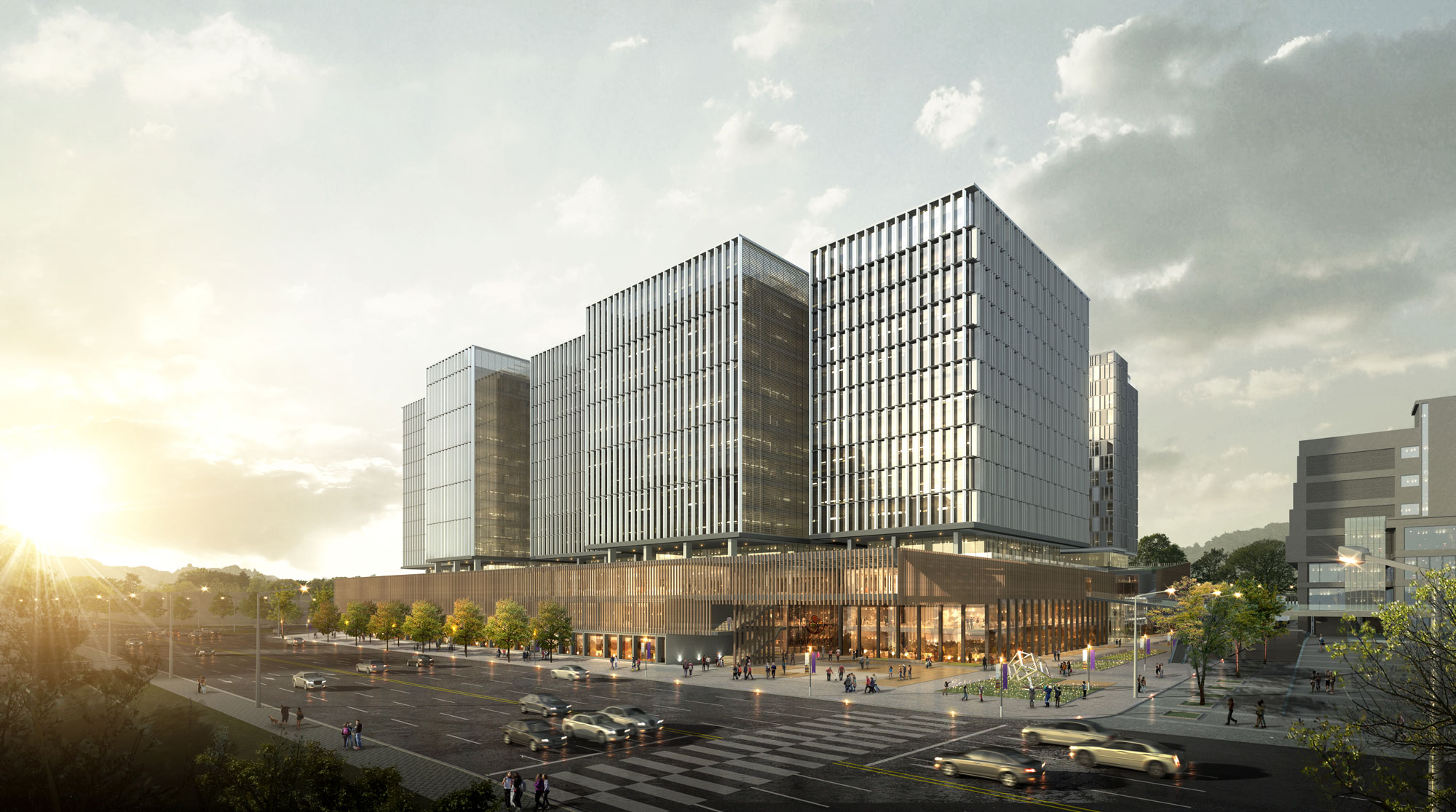
Seun District 4 is a dilapidated, secluded urban back alley that has become a slum alongside the decline of Seun Shopping Center. Yet, our history lies along these very streets. Here we find the Jongmyo Shrine with its 600-year history, the 100-year-old Gwangjang Market, Seun Shopping Center as a modern heritage site, and the Cheonggyecheon Stream, which has flowed for 5,000 years. We began by identifying the land’s potential. We envisioned this site as a convergence point where the Jongno-Cheonggye commercial axis—connecting Seoul’s east and west—intersects with the north-south Yukgyeong axis, which holds future value; a place of convergence and connection. Thus, we sought to create open public spaces—spaces of emptiness—that would evolve alongside the city. We aimed to preserve the original topography of the streets, reflect the memories they held, and open pathways that would connect with the city.


-
Status
Completed
-
Order
SH Corporation
-
Purpose
Office
-
Design Year
2016
-
Location
Jongno-gu, Seoul
-
Site area
29,854.70m2
-
Gross Floor Area
283,620.00m2
-
Building Area
22,681.87m2
-
Scale
B4, 14-18F
Seun District 4 is a dilapidated, secluded urban back alley that has become a slum alongside the decline of Seun Shopping Center. Yet, our history lies along these very streets. Here we find the Jongmyo Shrine with its 600-year history, the 100-year-old Gwangjang Market, Seun Shopping Center as a modern heritage site, and the Cheonggyecheon Stream, which has flowed for 5,000 years. We began by identifying the land’s potential. We envisioned this site as a convergence point where the Jongno-Cheonggye commercial axis—connecting Seoul’s east and west—intersects with the north-south Yukgyeong axis, which holds future value; a place of convergence and connection. Thus, we sought to create open public spaces—spaces of emptiness—that would evolve alongside the city. We aimed to preserve the original topography of the streets, reflect the memories they held, and open pathways that would connect with the city.