Close
![Popup Image]()
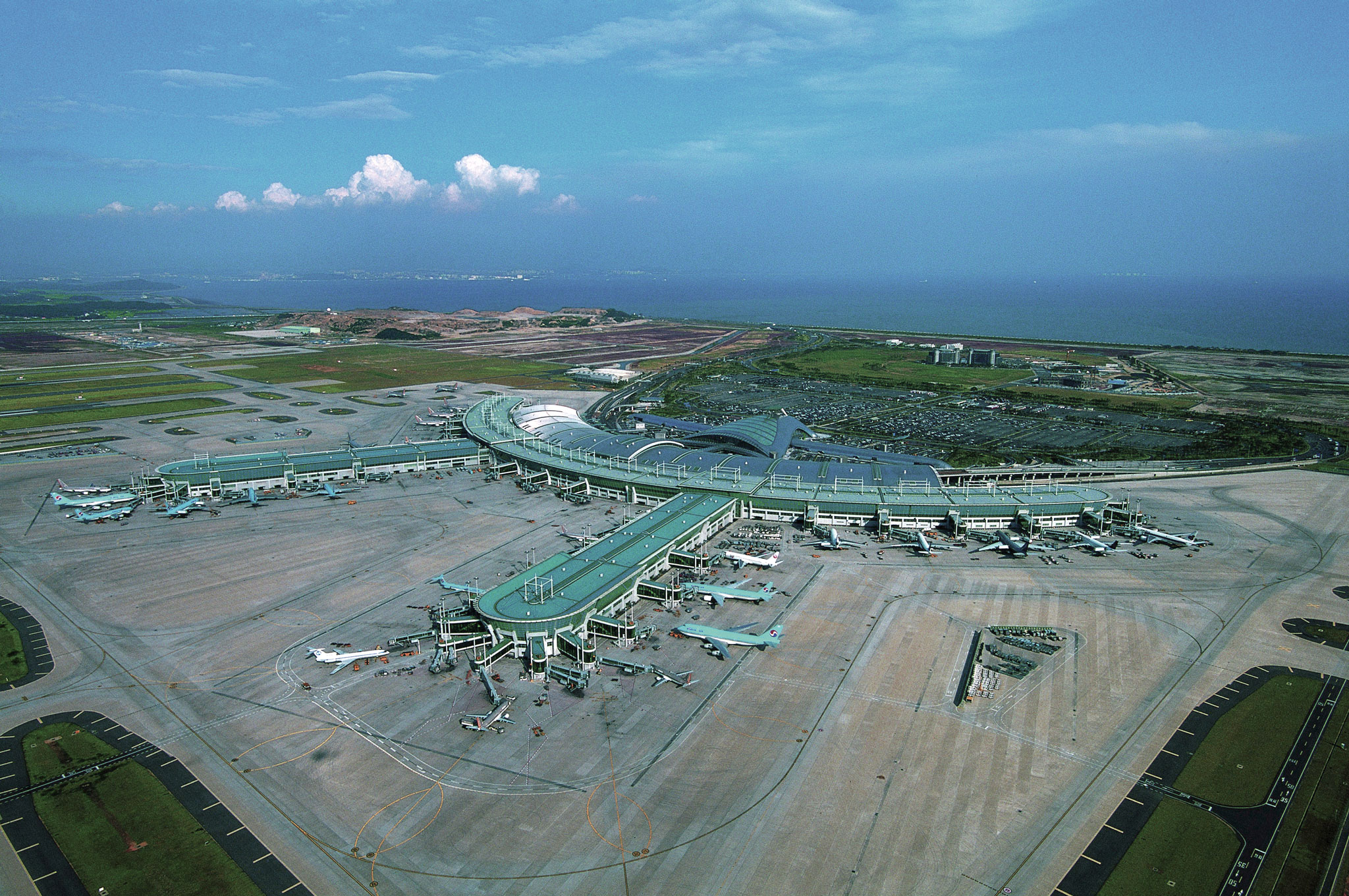
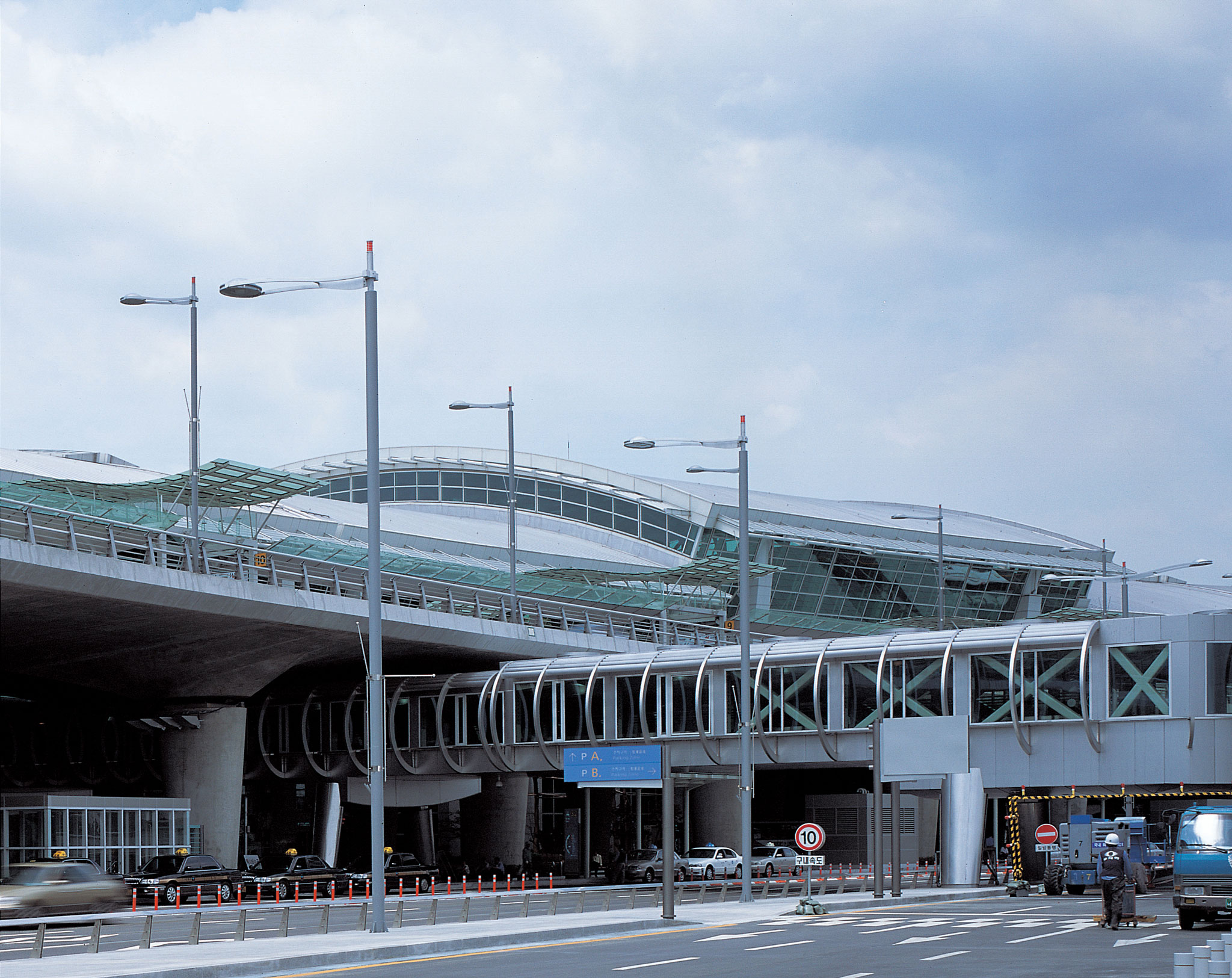
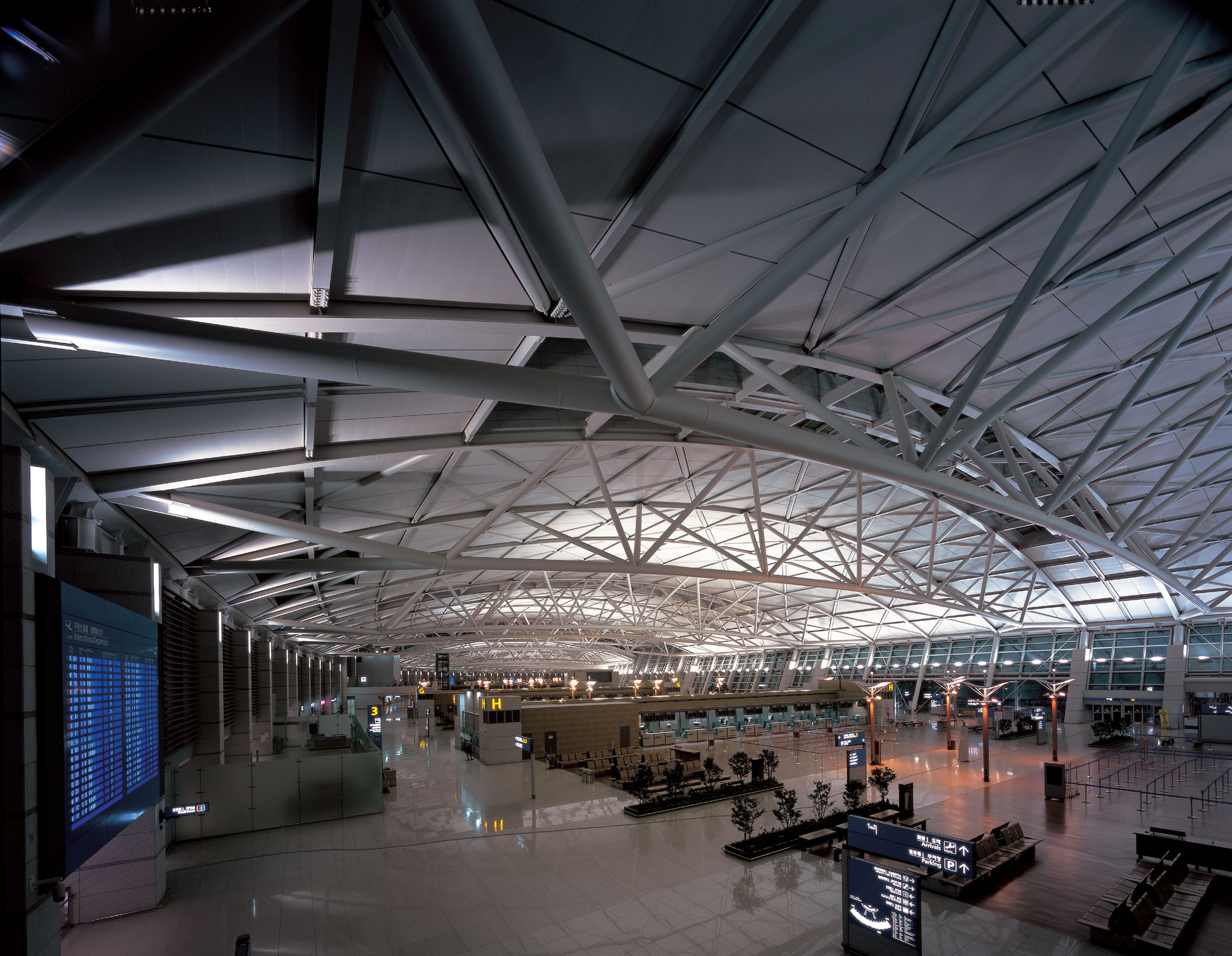
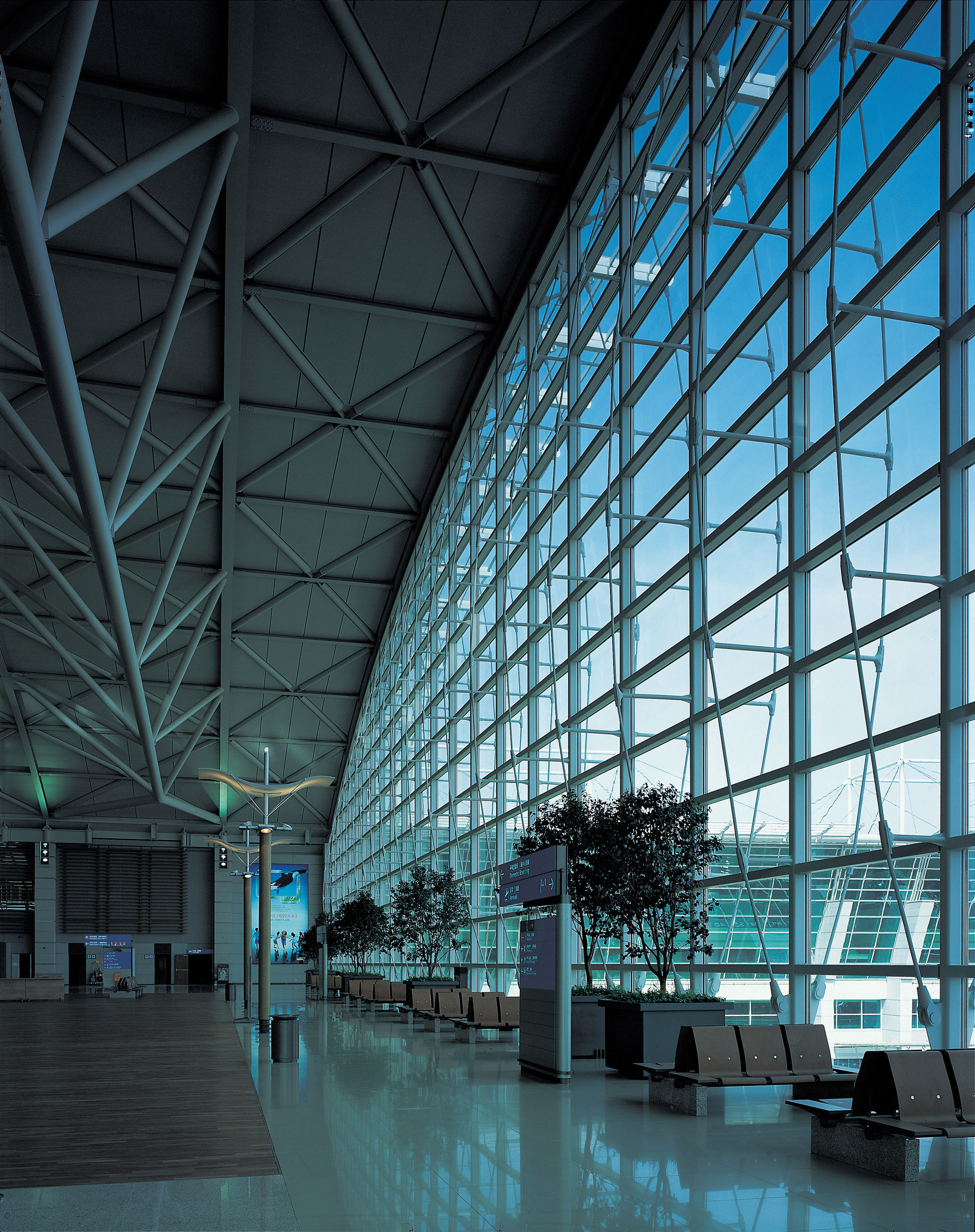
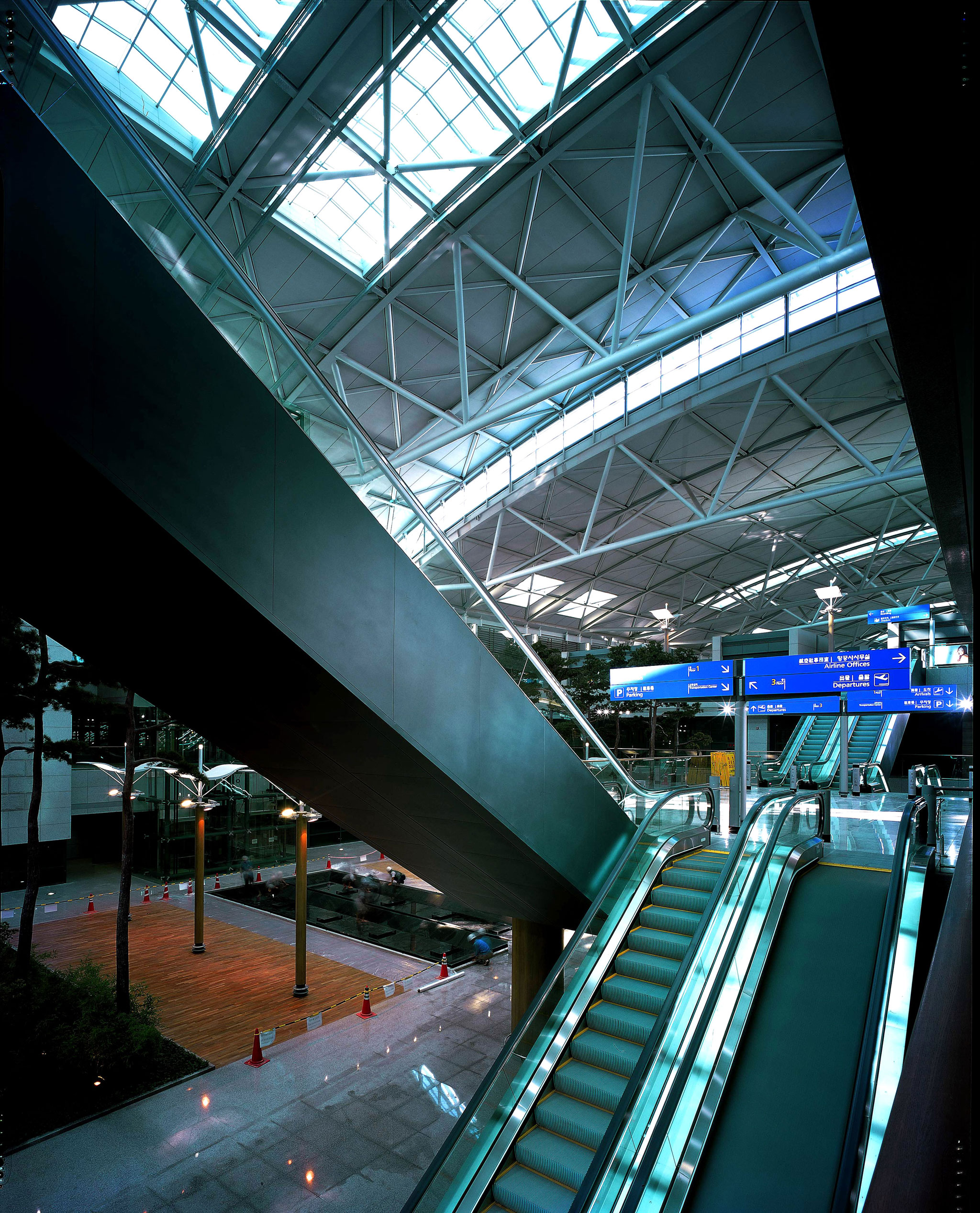
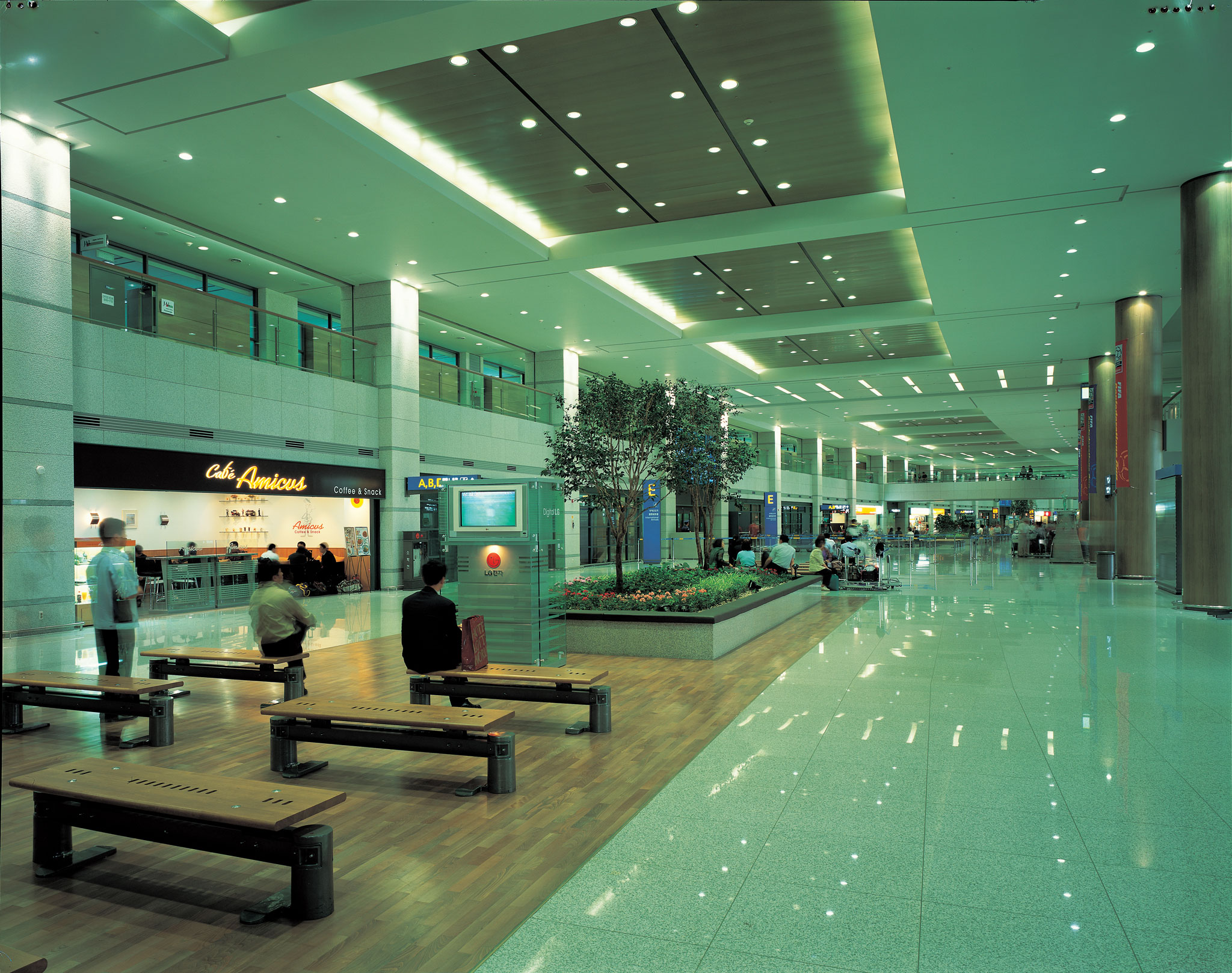
Due to explosive growth in domestic and international air travel demand in the 1980s, concerns arose that the transport capacity of South Korean airports such as Gimpo Airport would reach their limits. Consequently, from June 1989 to April 1990, the government conducted a feasibility study for a new international airport site covering the entire metropolitan area. After thorough investigation, Yeongjongdo Island and its surrounding area were chosen in June 1990. The airport was constructed on about 3.55 million pyeong (about 11.7 square kilometers), out of a total 14.35 million pyeong of land reclaimed by building a 17.3km long, 9m high seawall between Yeongjongdo and Yeongyudo islands. Phase 1 construction from 1992 to 2001 included the first passenger terminal, two runways, aprons, and various auxiliary facilities.
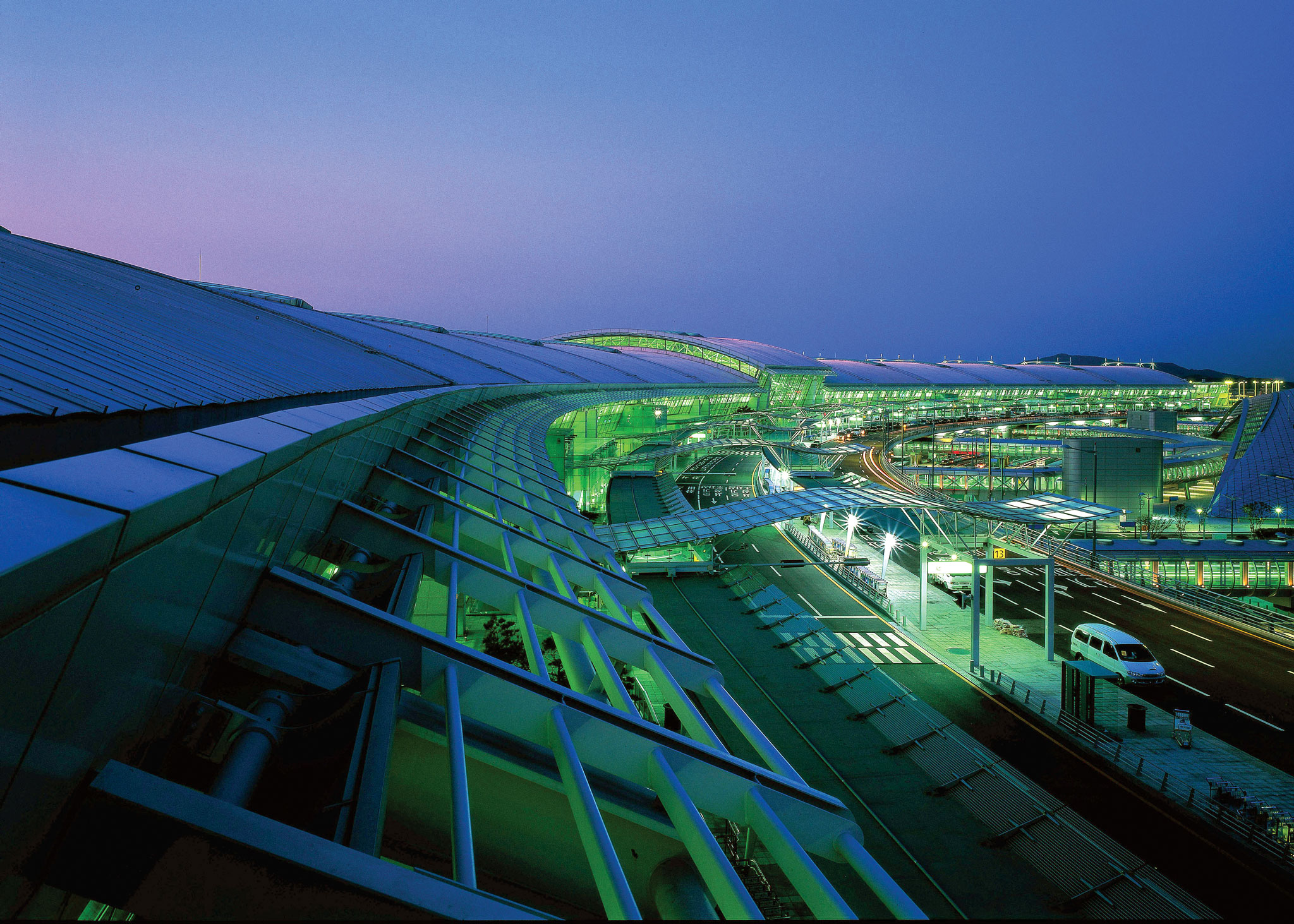
The terminal’s international design competition was won by the BJHW consortium (including Junglim Architecture, Heerim Architects & Planners, Baum Architects, and Wondoshi Architects Group), with C. W. Fentress J. H. Bradburn & Associates handling architectural planning and McClier Aviation Group responsible for engineering. Detailed design was led by the KBHJW consortium (comprising KACI, Baum, Heerim, Junglim, and Wondoshi) with international partners such as Fentress and Bradburn. The terminal roof is shaped symbolically like a bird about to take flight, resembling the natural curved lines of traditional Korean roofs. Columns soaring skywards evoke the image of ships docked at a harbor, emphasizing the airport’s maritime character.

-
Status
Completed
-
Awards
- 2002 Korean Institute of Architects Award - Main Award
-
Order
Incheon International Airport Corporation
-
Purpose
Transportation, public
-
Design Year
1992
-
Completion Year
2001
-
Location
Jung-gu, Incheon
-
Site area
11,724,000.00m2
-
Gross Floor Area
496,000.00m2
-
Building Area
179,684.00m2
-
Scale
B2, 4F
-
Consortium
Kkachi Architecture, baum Architects, Heerim Architects & Planners Co., Ltd., Won Dosi Architects, Fentress Bradburn, McClier Corporation
Due to explosive growth in domestic and international air travel demand in the 1980s, concerns arose that the transport capacity of South Korean airports such as Gimpo Airport would reach their limits. Consequently, from June 1989 to April 1990, the government conducted a feasibility study for a new international airport site covering the entire metropolitan area. After thorough investigation, Yeongjongdo Island and its surrounding area were chosen in June 1990. The airport was constructed on about 3.55 million pyeong (about 11.7 square kilometers), out of a total 14.35 million pyeong of land reclaimed by building a 17.3km long, 9m high seawall between Yeongjongdo and Yeongyudo islands. Phase 1 construction from 1992 to 2001 included the first passenger terminal, two runways, aprons, and various auxiliary facilities.
The terminal’s international design competition was won by the BJHW consortium (including Junglim Architecture, Heerim Architects & Planners, Baum Architects, and Wondoshi Architects Group), with C. W. Fentress J. H. Bradburn & Associates handling architectural planning and McClier Aviation Group responsible for engineering. Detailed design was led by the KBHJW consortium (comprising KACI, Baum, Heerim, Junglim, and Wondoshi) with international partners such as Fentress and Bradburn. The terminal roof is shaped symbolically like a bird about to take flight, resembling the natural curved lines of traditional Korean roofs. Columns soaring skywards evoke the image of ships docked at a harbor, emphasizing the airport’s maritime character.