
Close
![Popup Image]()
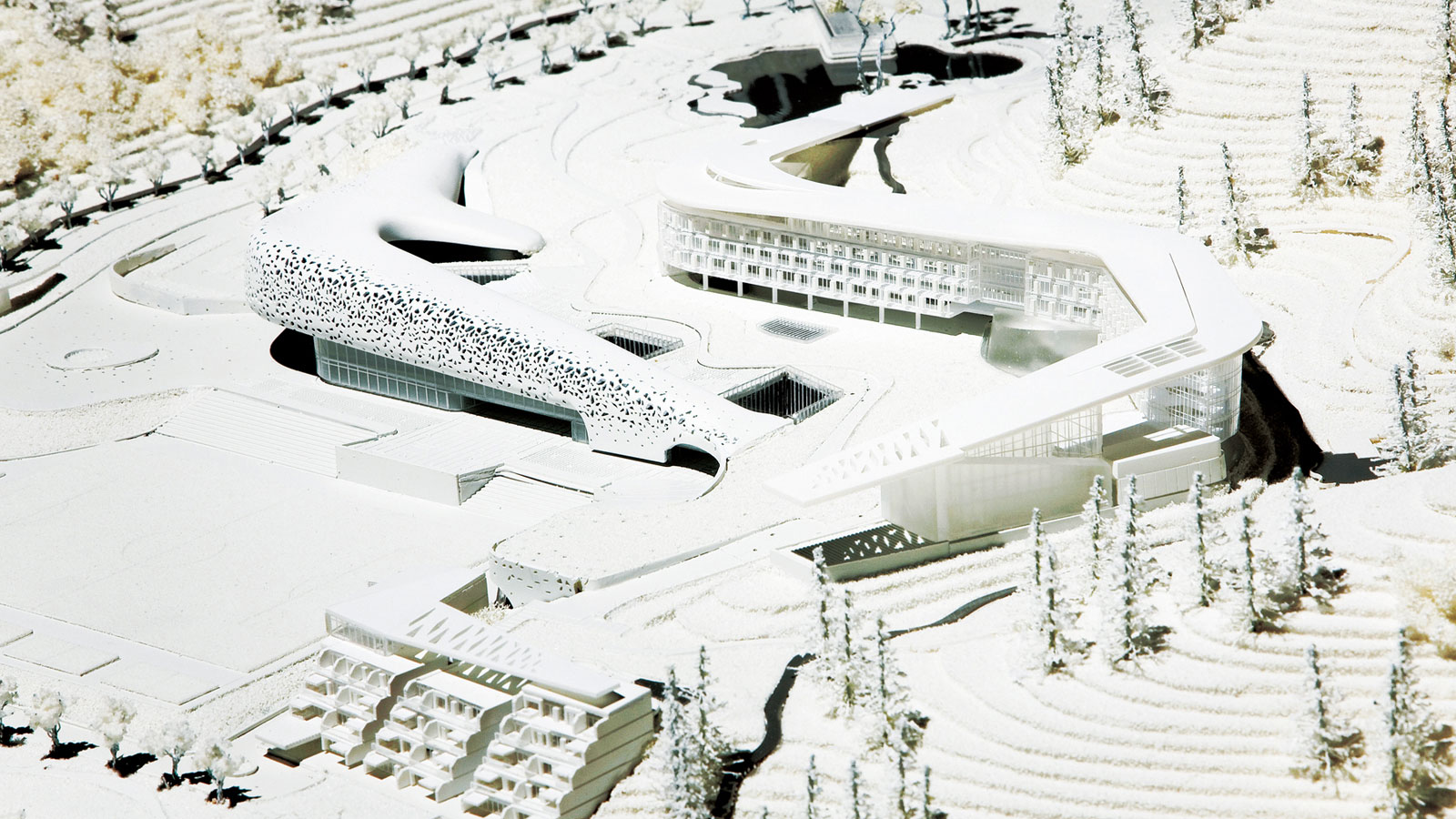
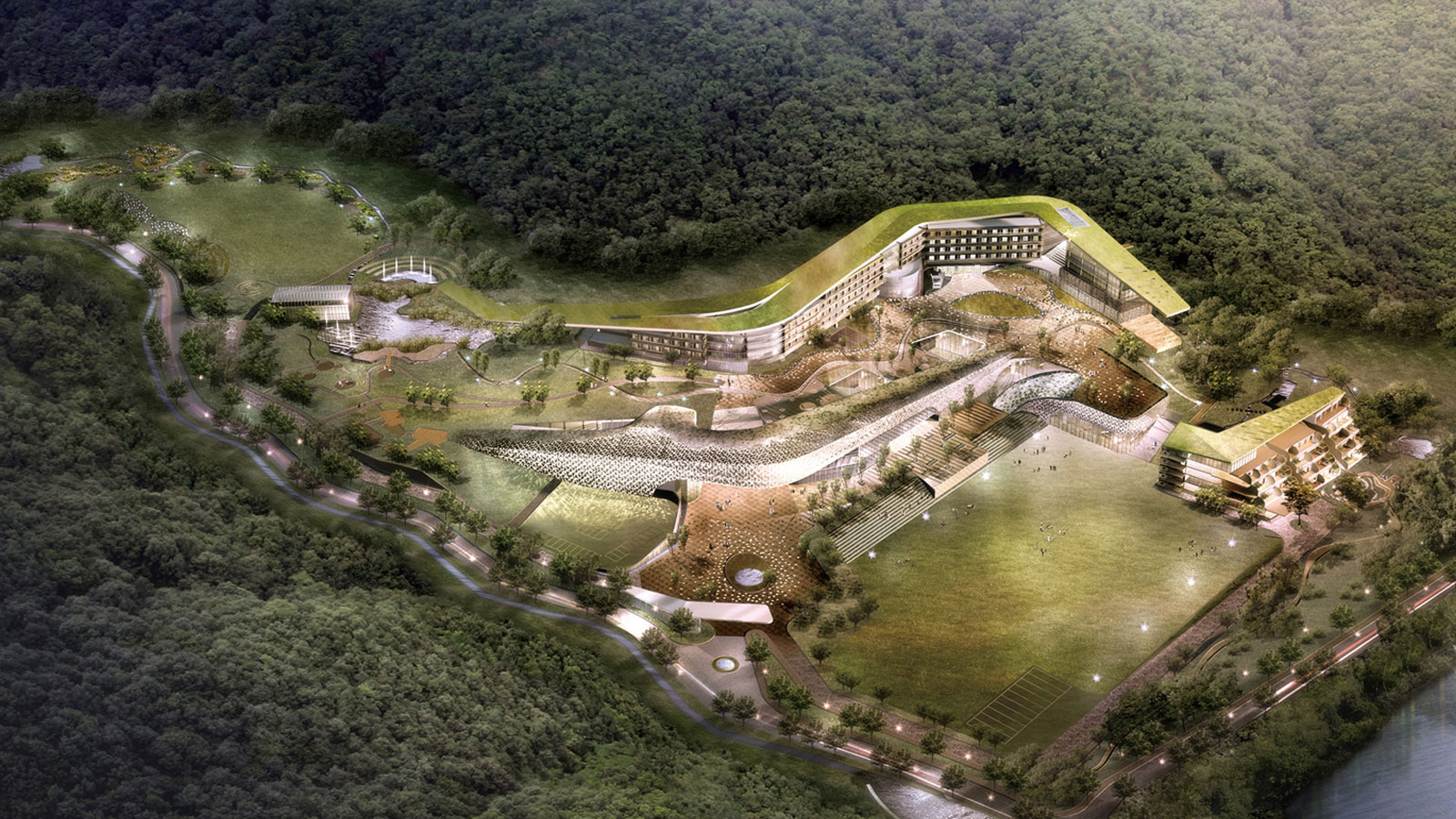
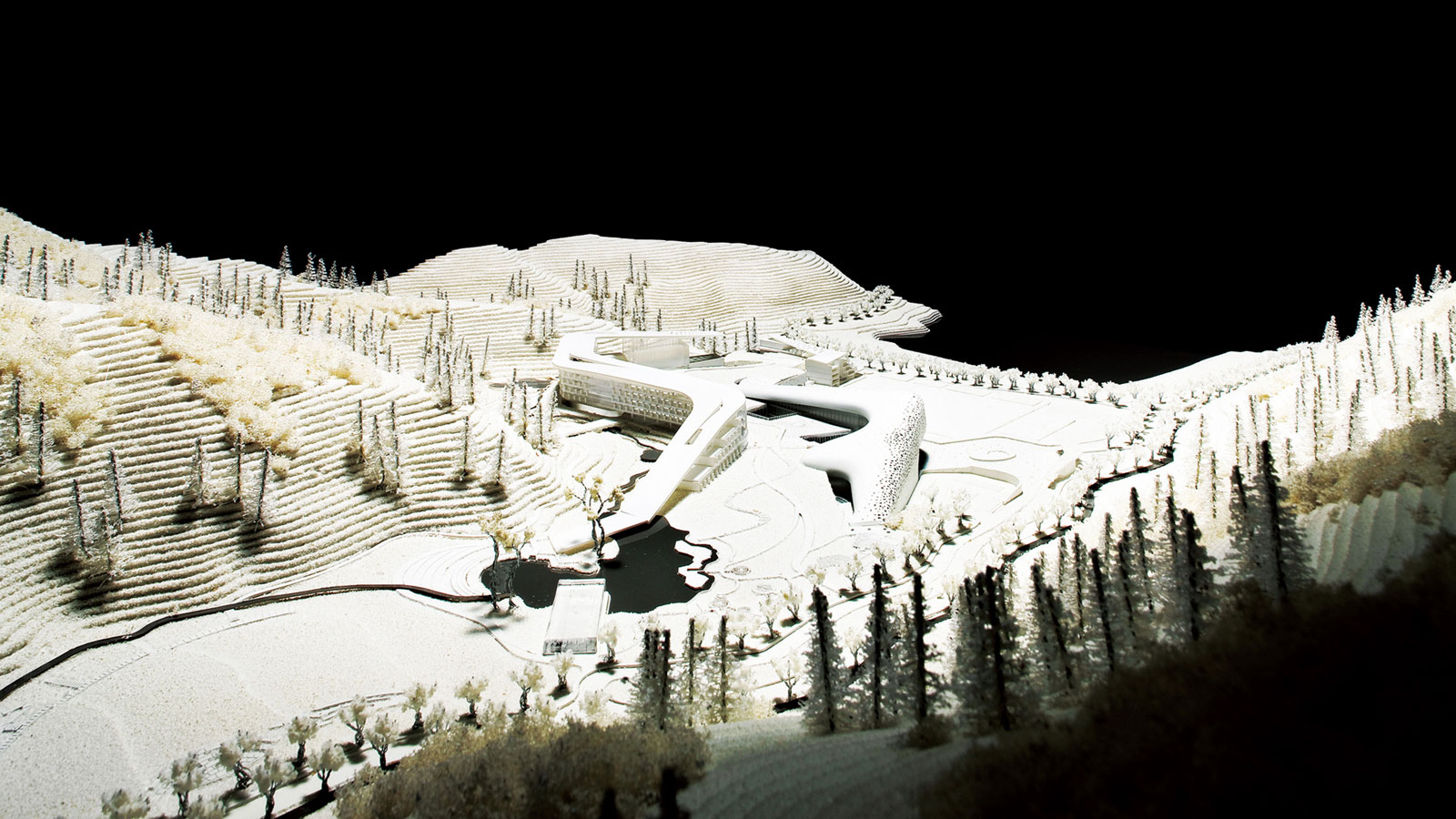
The site is a leveled area created by filling in a valley, offering a breathtaking natural landscape with towering mountains on either side and a lake view directly in front. I-Valley was designed to harmonize with the flow of this natural topography. The gently curving form of the accommodation building was inspired by the contours of Mt. Buedae at the rear of the site, while the panoramic layout along the length of Chungju Lake maximizes views of the lake’s stunning scenery. An I-Valley shaped like a valley was planned between the education and accommodation buildings, and the concept of a “Green Mall” was introduced to shorten circulation routes between facilities and create a pedestrian-only space that blends seamlessly with nature. By proposing eco-friendly decking for the roof to harmonize with the surrounding environment, and by creating spaces and circulation paths with a sense of continuous flow, the design distinguishes itself from existing training centers with a dramatic spatial presentation. Through organic connections between programs, the plan aims to create a training center that is both future-oriented and in harmony with its surroundings.

-
Status
Completed
-
Client
INDUSTRIAL BANK OF KOREA
-
Program
Education, R&D
-
Design Year
2008
-
Location
Chungcheongbuk-do, Chungju-si
-
Site area
99,760.00m2
-
Gross Floor Area
51,867.75m2
-
Building Area
19,381.42m2
-
Number of Levels
B1, 5F
The site is a leveled area created by filling in a valley, offering a breathtaking natural landscape with towering mountains on either side and a lake view directly in front. I-Valley was designed to harmonize with the flow of this natural topography. The gently curving form of the accommodation building was inspired by the contours of Mt. Buedae at the rear of the site, while the panoramic layout along the length of Chungju Lake maximizes views of the lake’s stunning scenery. An I-Valley shaped like a valley was planned between the education and accommodation buildings, and the concept of a “Green Mall” was introduced to shorten circulation routes between facilities and create a pedestrian-only space that blends seamlessly with nature. By proposing eco-friendly decking for the roof to harmonize with the surrounding environment, and by creating spaces and circulation paths with a sense of continuous flow, the design distinguishes itself from existing training centers with a dramatic spatial presentation. Through organic connections between programs, the plan aims to create a training center that is both future-oriented and in harmony with its surroundings.