
Close
![Popup Image]()
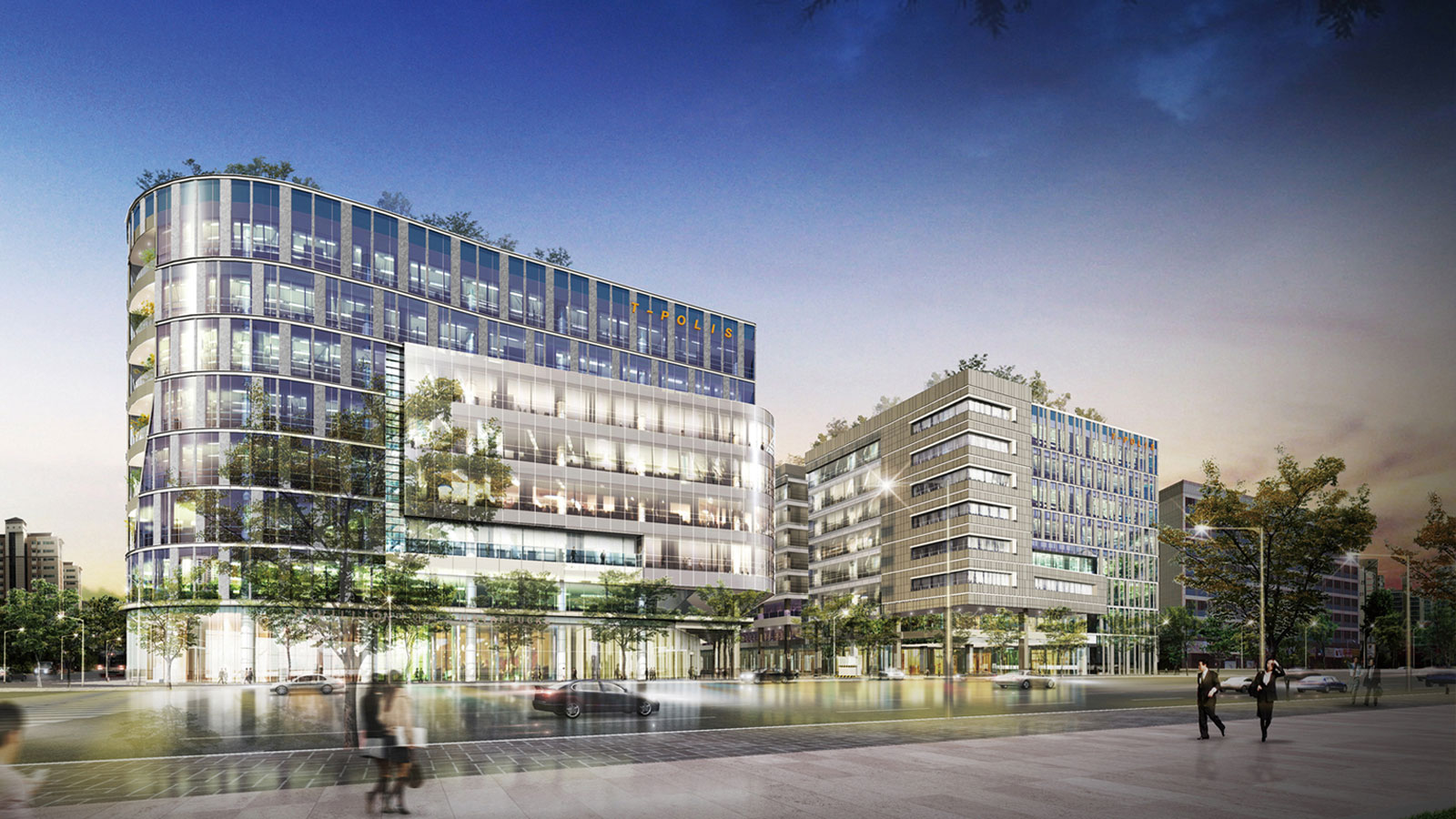
The site for this project is a key business hub connecting Seoul, the greater Seoul metropolitan area, and Pangyo, situated between Seongnam-daero and Tancheon Stream. The planning guidelines stipulated that two buildings be designed on a single plot, with the main entrance and exit located between them. The massing study was conducted with a height limit of eight stories and a gross floor area of approximately 30,000 pyeong, resulting in a low-rise, wide-span form. This design takes into account the surrounding context (primarily small-scale, low-rise neighborhood buildings), and public spaces were planned to connect with Tancheon Stream and the surrounding green spaces. The elevation design breaks away from the typical glass curtain wall style of conventional office buildings. Instead, it emphasizes the building’s identity through a combination of diverse materials and features a facade composition that ensures privacy from the surrounding residential areas.


-
Status
Completed
-
Client
Shinyoung Co., Ltd.
-
Program
Office
-
Design Year
2008
-
Location
Seongnam-si, Gyeonggi-do
-
Site area
12,667.50m2
-
Gross Floor Area
99,985.61m2
-
Building Area
9,194.16m2
-
Number of Levels
B3, 8F
The site for this project is a key business hub connecting Seoul, the greater Seoul metropolitan area, and Pangyo, situated between Seongnam-daero and Tancheon Stream. The planning guidelines stipulated that two buildings be designed on a single plot, with the main entrance and exit located between them. The massing study was conducted with a height limit of eight stories and a gross floor area of approximately 30,000 pyeong, resulting in a low-rise, wide-span form. This design takes into account the surrounding context (primarily small-scale, low-rise neighborhood buildings), and public spaces were planned to connect with Tancheon Stream and the surrounding green spaces. The elevation design breaks away from the typical glass curtain wall style of conventional office buildings. Instead, it emphasizes the building’s identity through a combination of diverse materials and features a facade composition that ensures privacy from the surrounding residential areas.