Close
![Popup Image]()
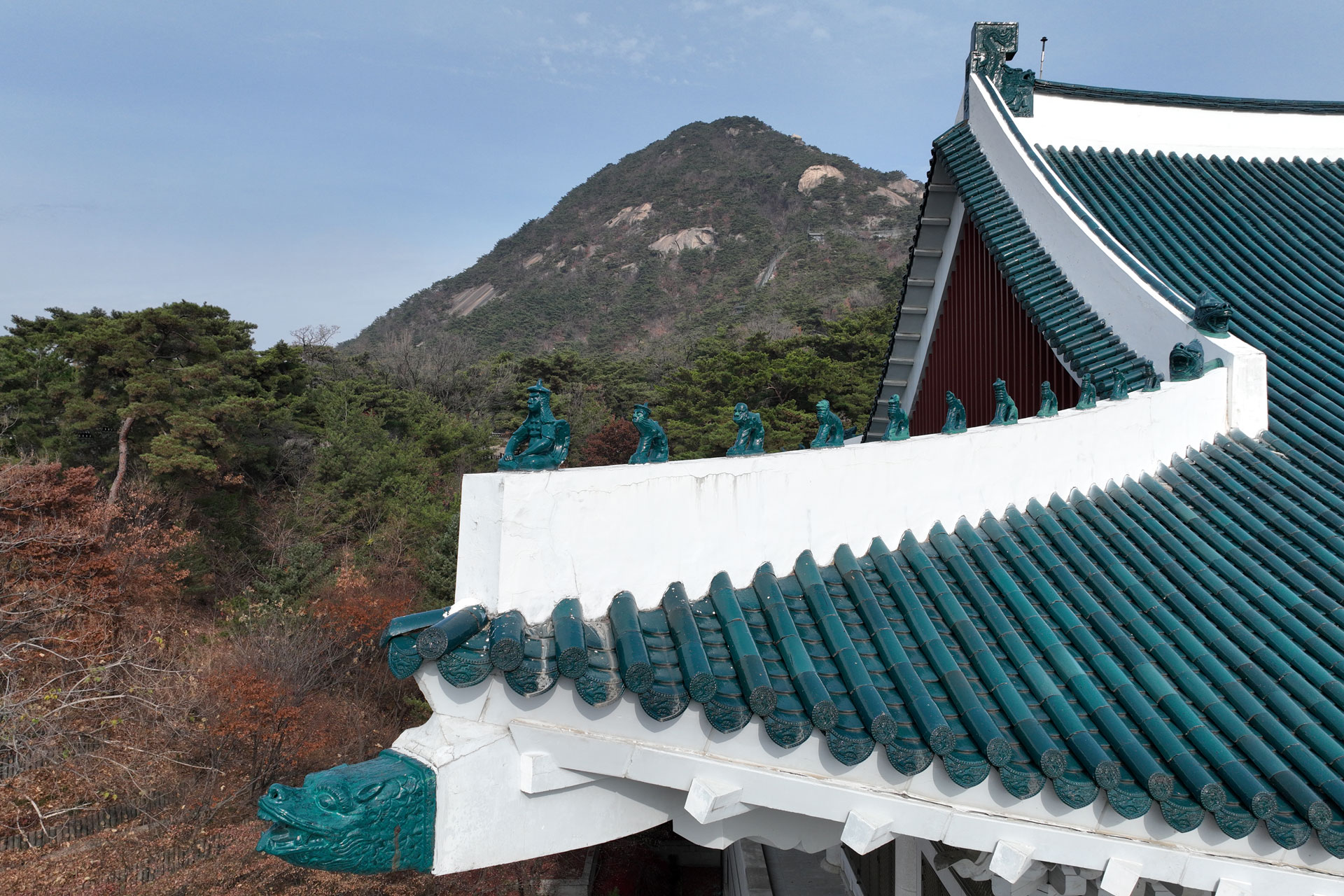
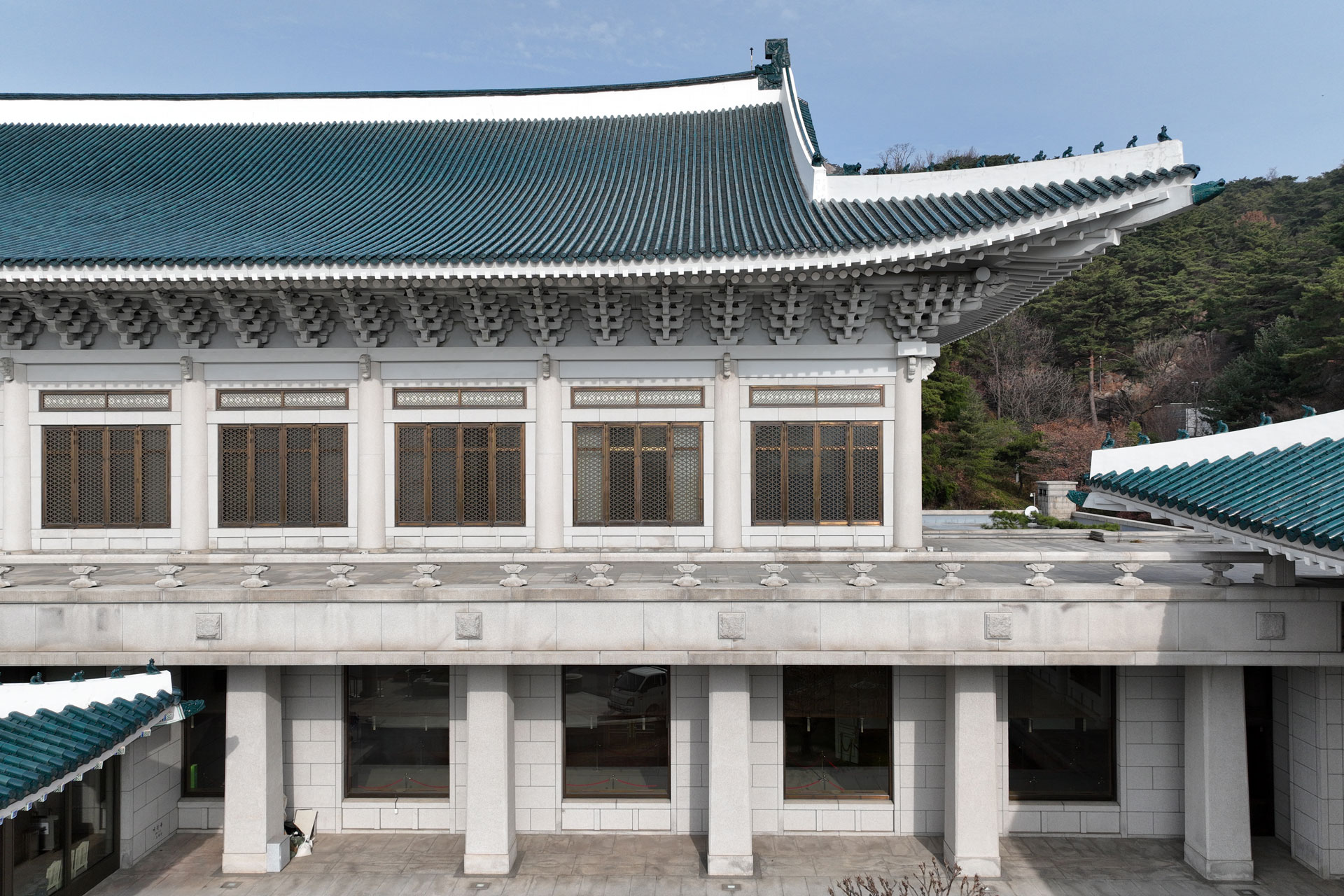
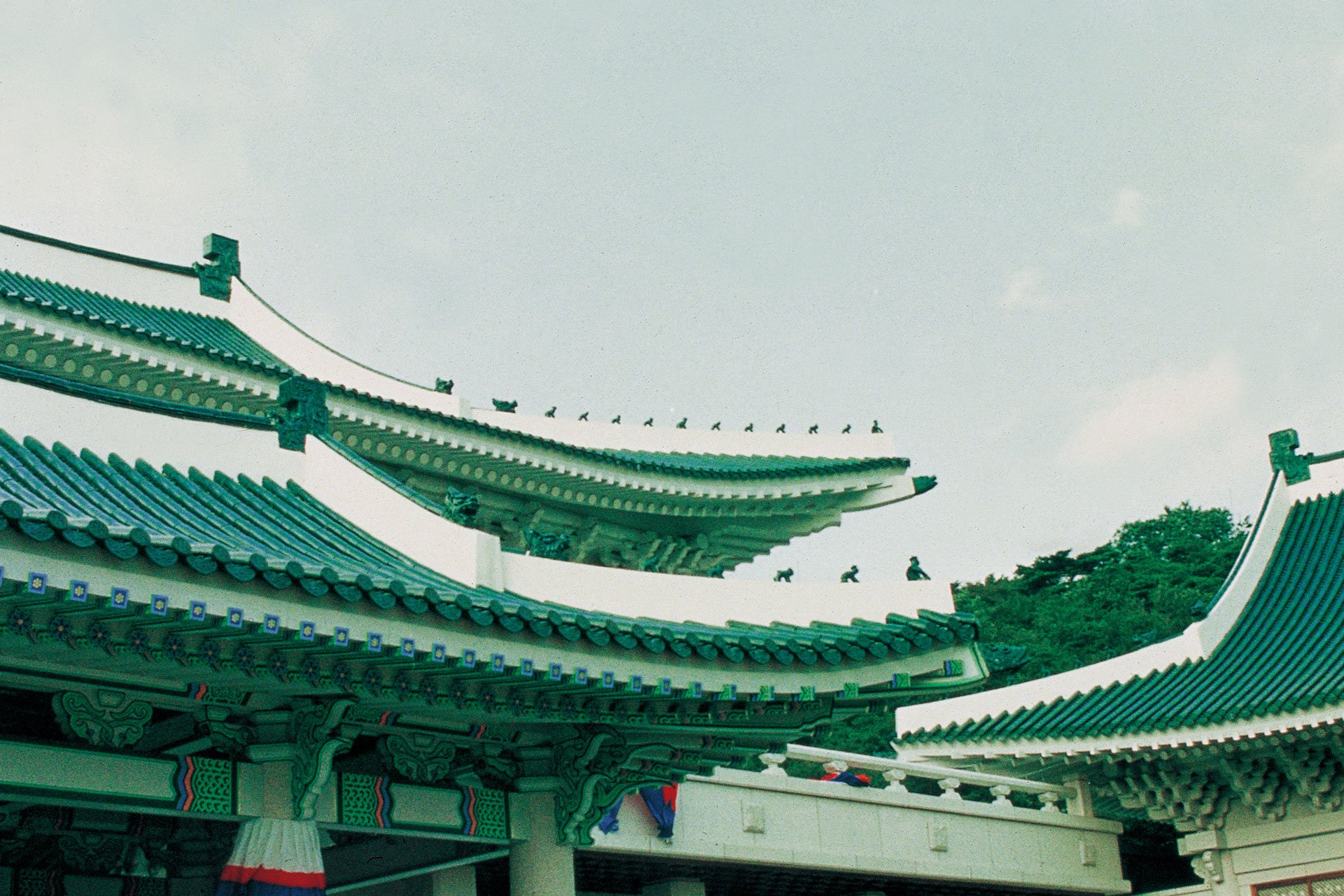
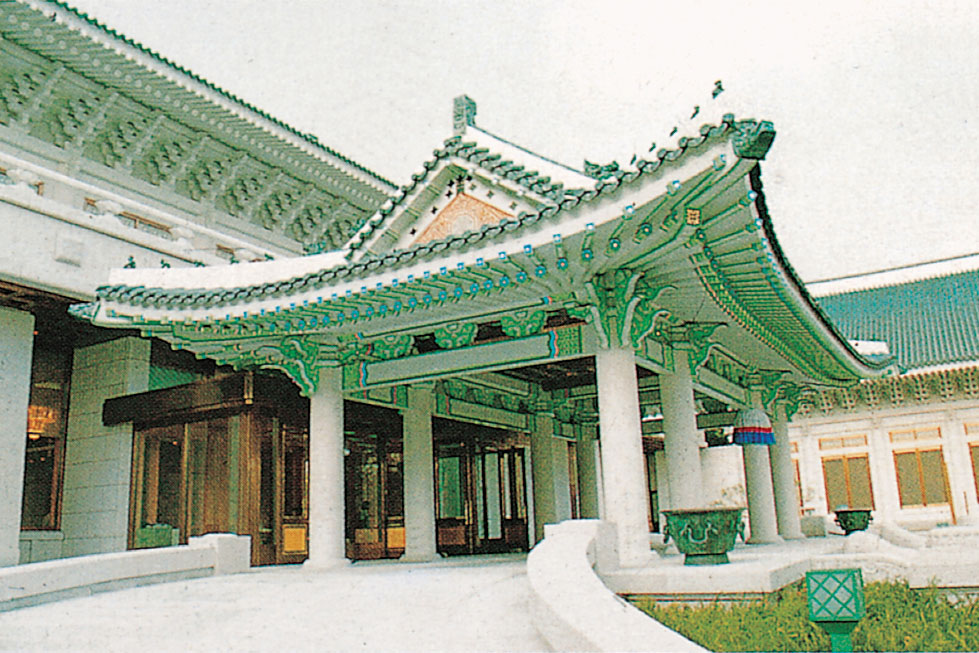
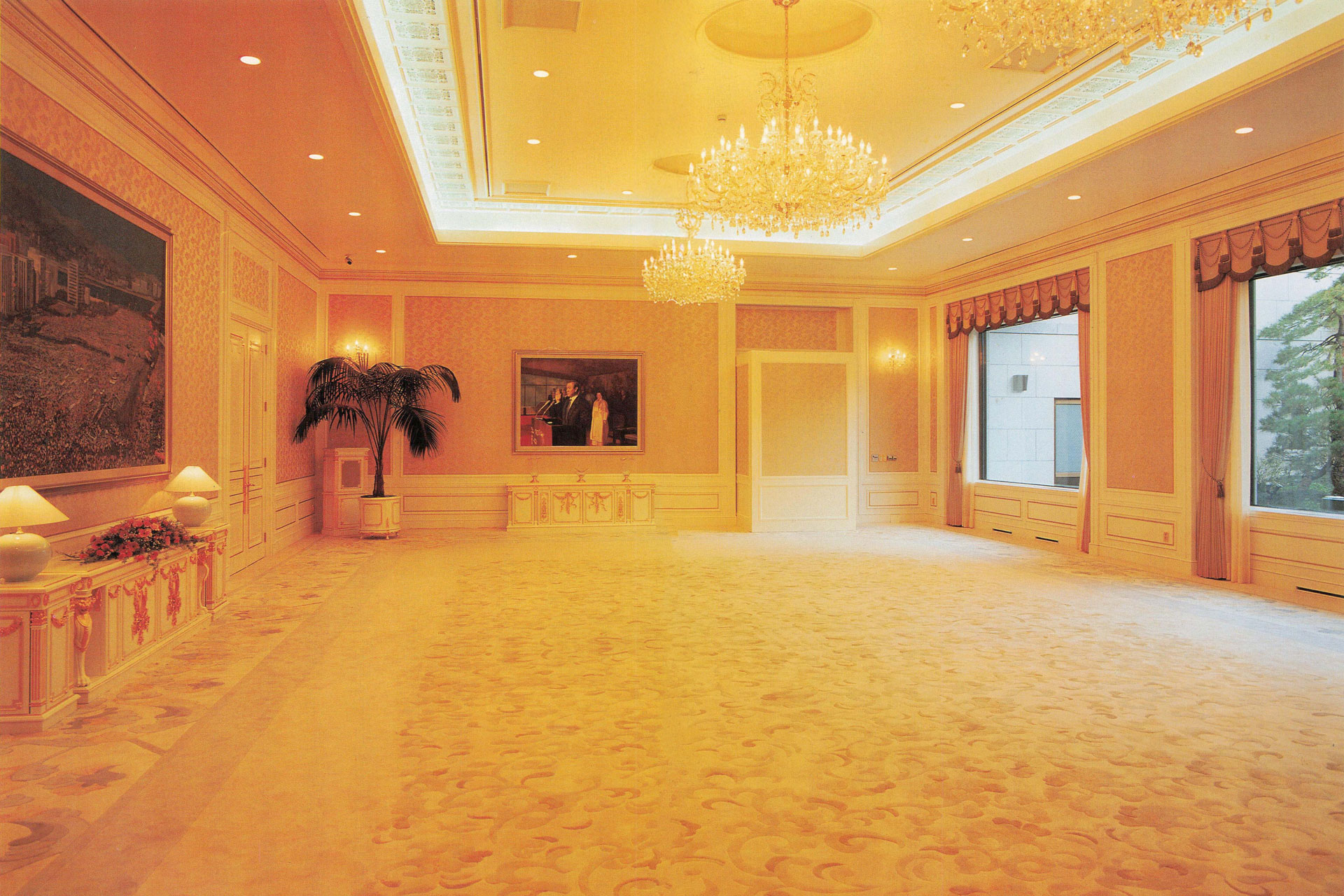
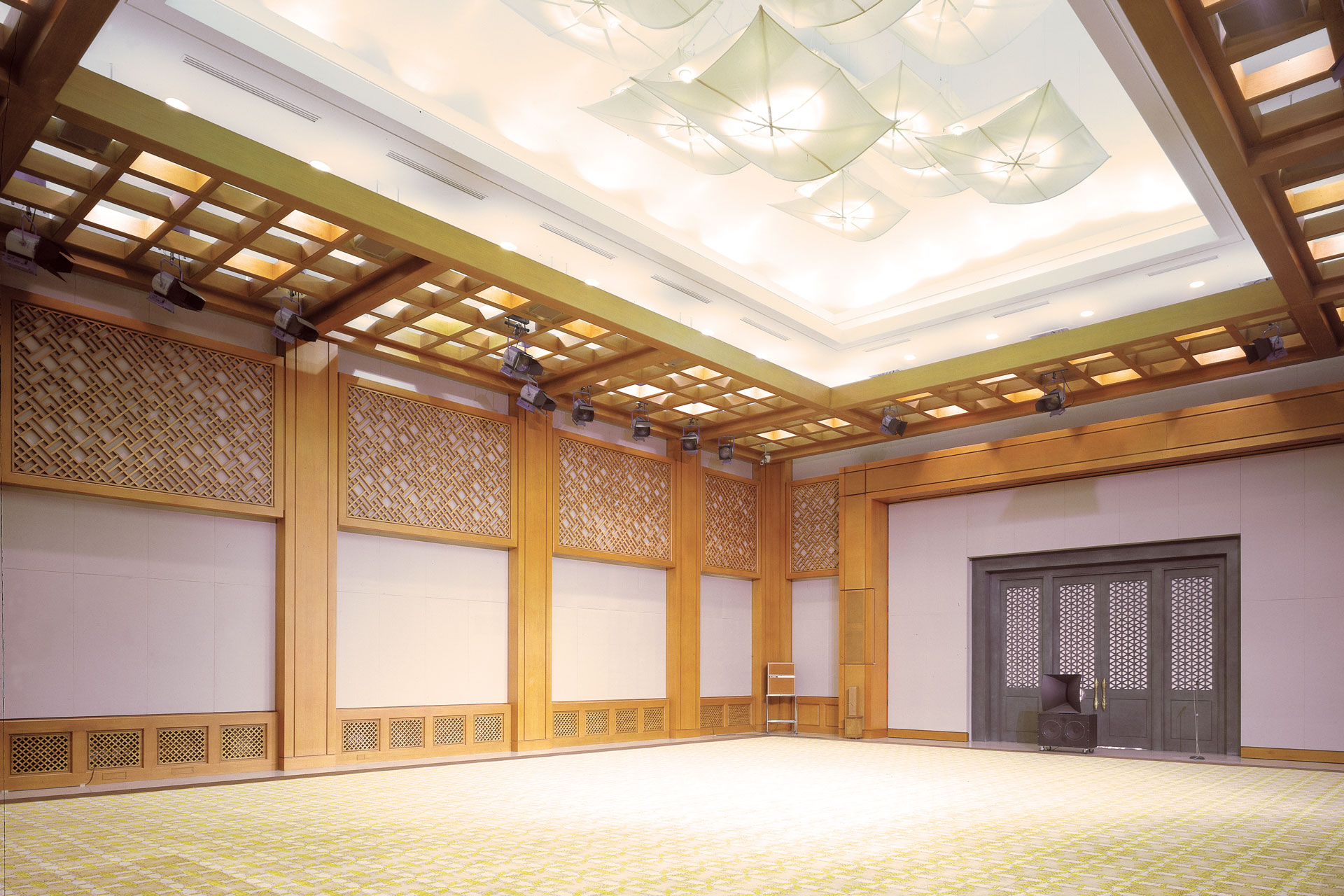
The Blue House (Chungwadae) Main Building and the Press Center (Chunchugwan) are early examples of Junglim Architecture’s pursuit of “architecture as background.” Their façades adopt the proportional systems of traditional architecture, exhibiting a Korean-style neoclassical form. The design emphasizes “modernization of traditional architecture” across spatial layouts, interior plans, material selections, and construction methods.
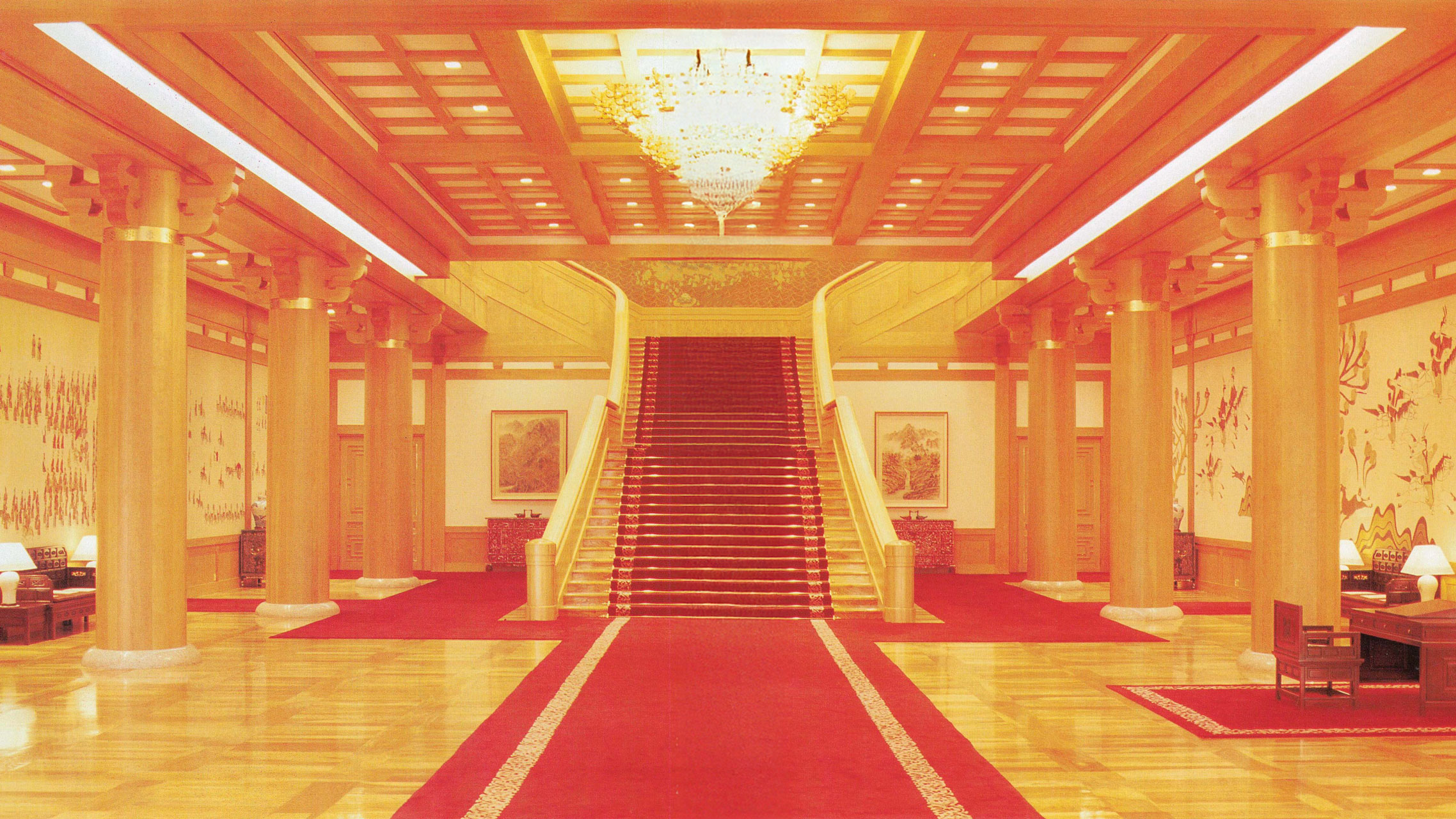
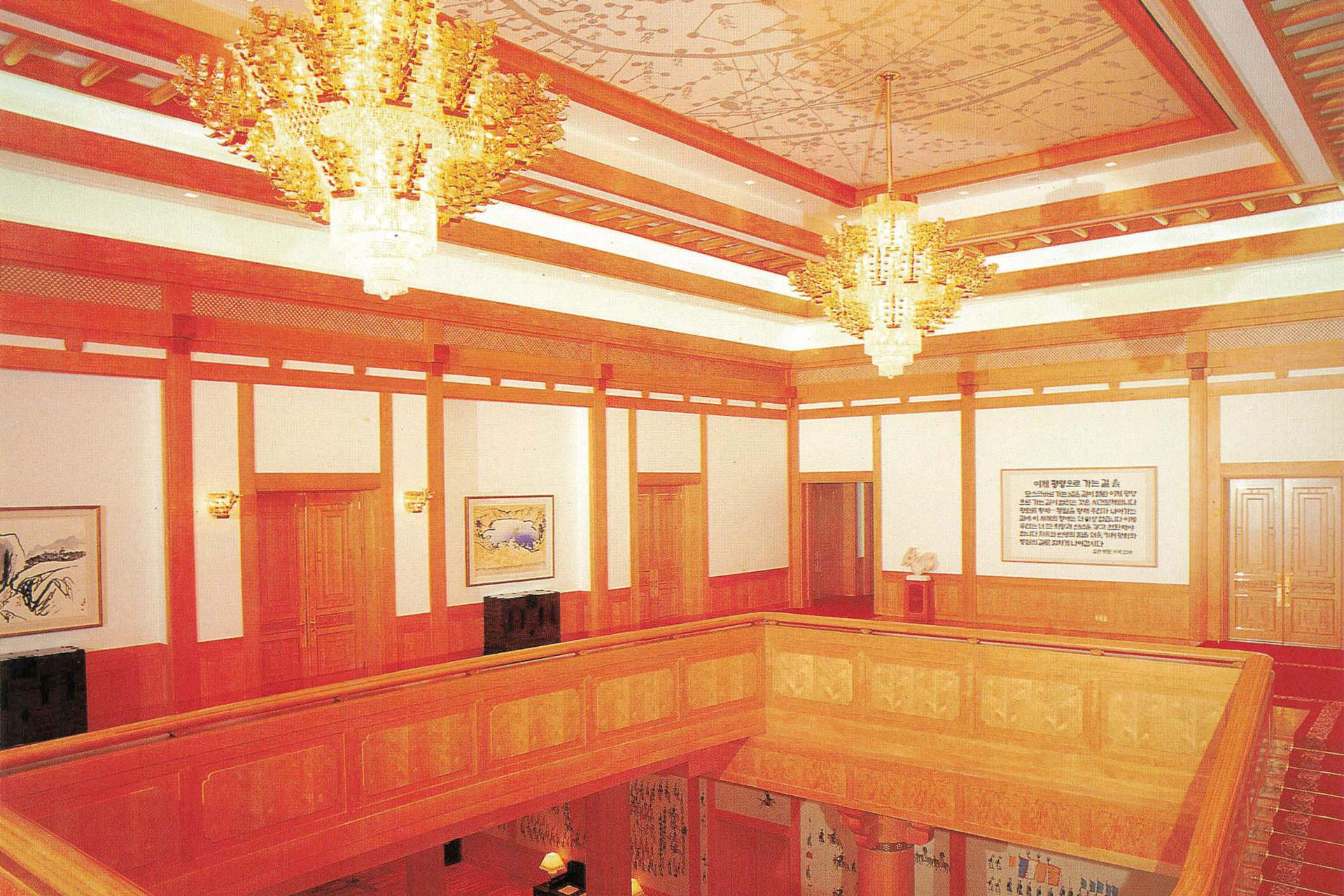
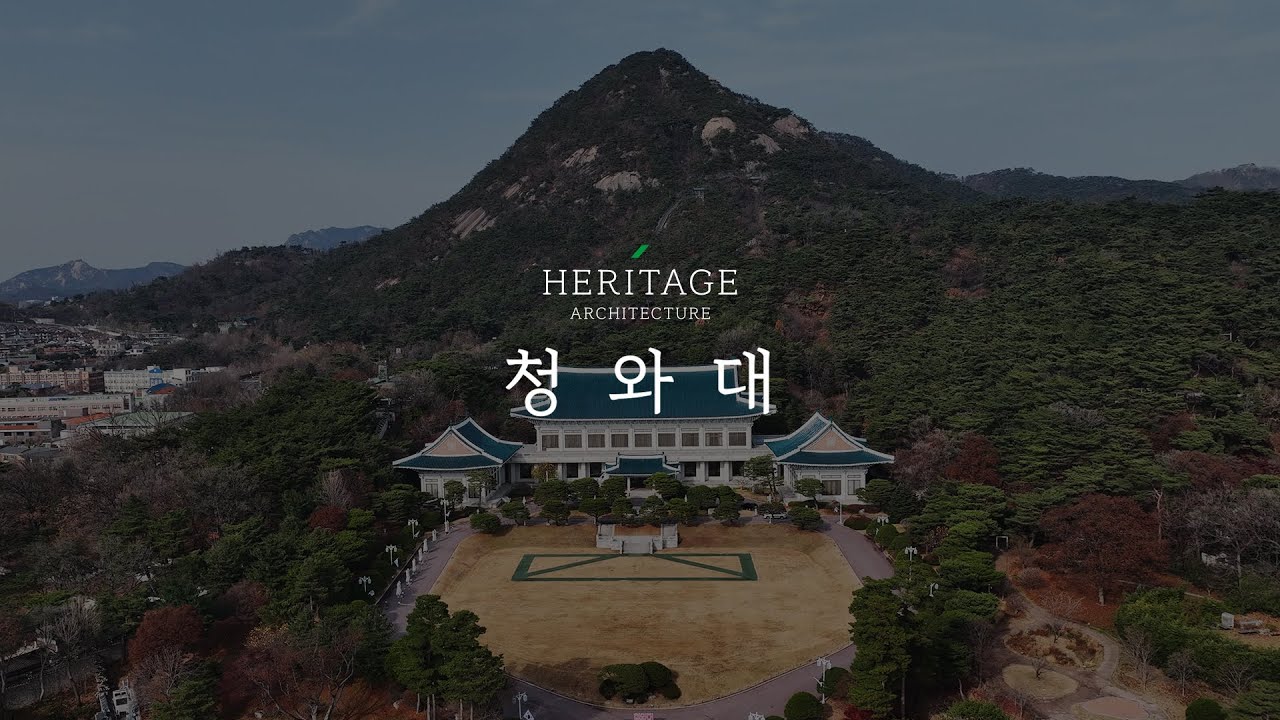
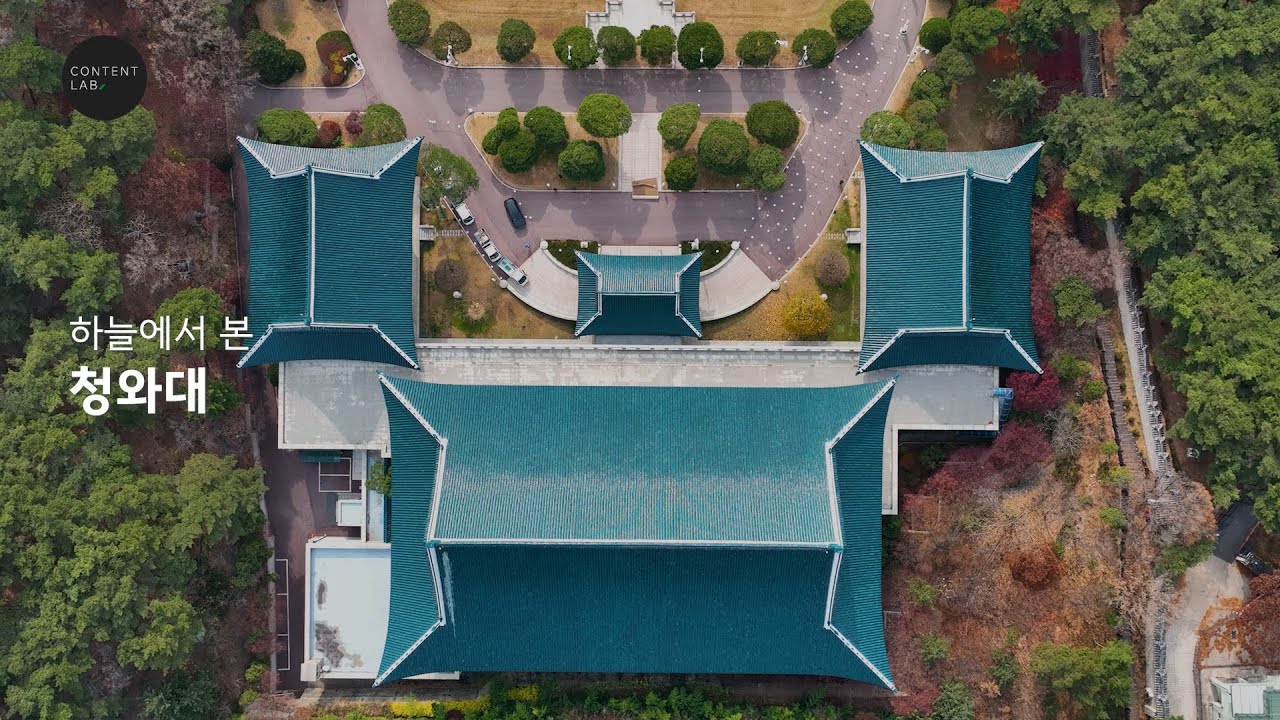
The main building is located on the southern side of the former Gyeongbokgung Palace’s rear garden, surrounded by Mt. Bugaksan, overlooking Gyeongbokgung and downtown Seoul. The hipped-and-gabled roof’s gently curved eaves and tiles finished with the color of blue harmonize with the nearby palace and natural scenery. The layout mimics the Joseon dynasty-style Confucian academies, with a central main hall flanked by side pavilions fulfilling governmental office and event functions. The auxiliary buildings sit on lower platforms than the main hall to create a gradual sense of elevation and depth inward. The entrance hall in the courtyard mitigates the imposing scale and sculptural function of the large main building. The interior not only comes close to traditional Korean style, but also focuses on creating refined contemporary spaces; notably, the tapered wooden columns lined along either side in the first-floor lobby evoke the expansive feel of space as on a traditional daecheongmaru, highlighting Korean aesthetic sensibilities.
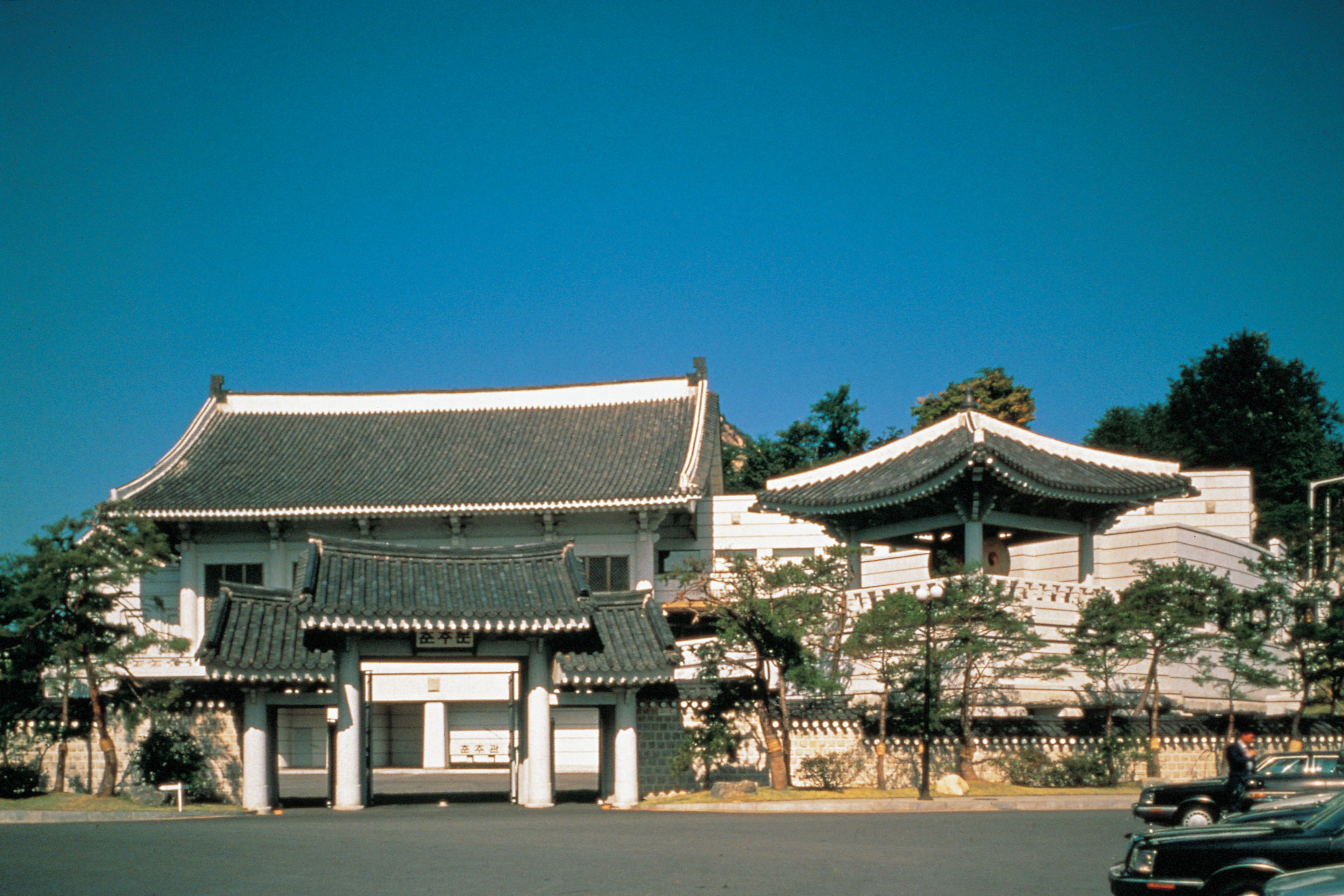
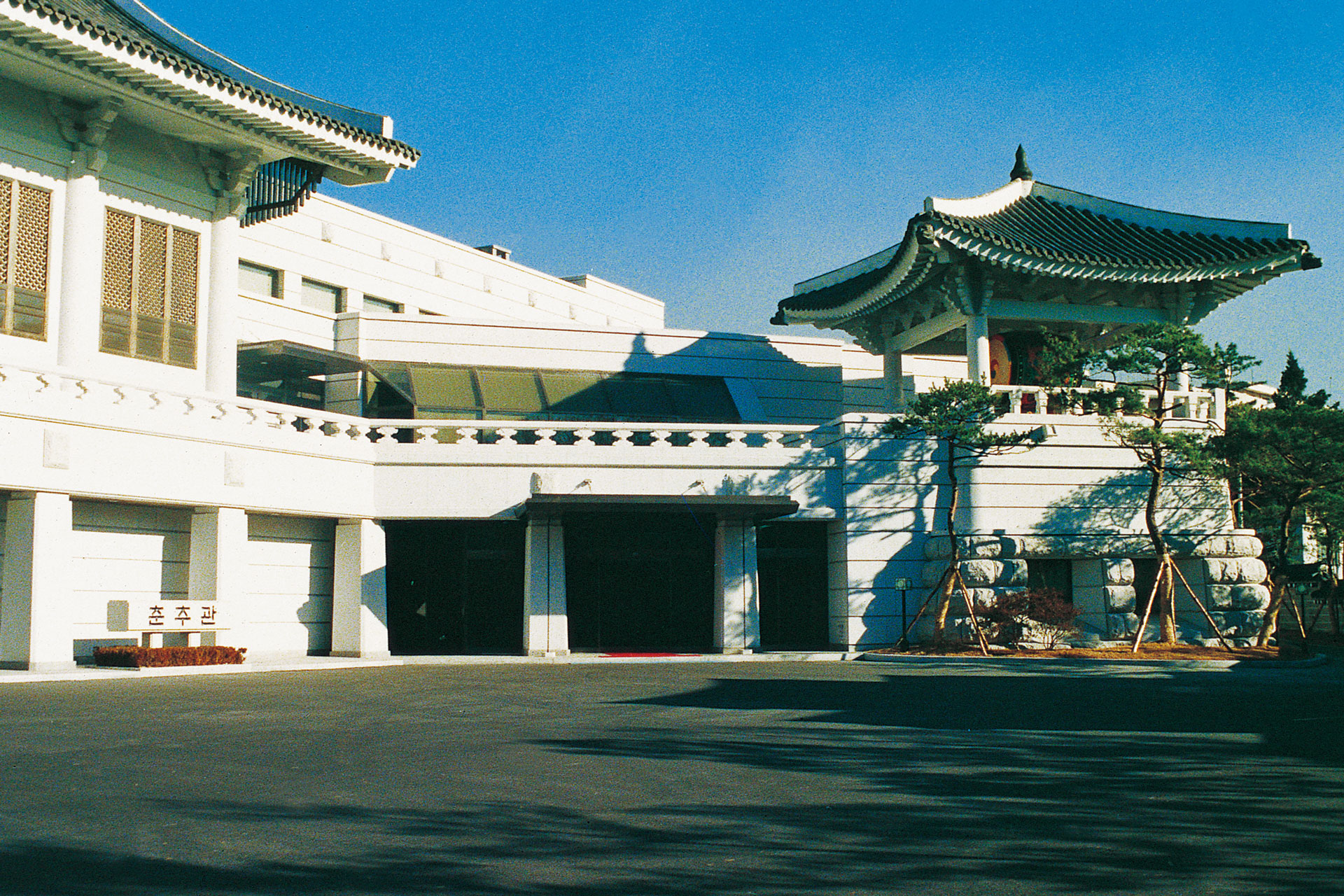
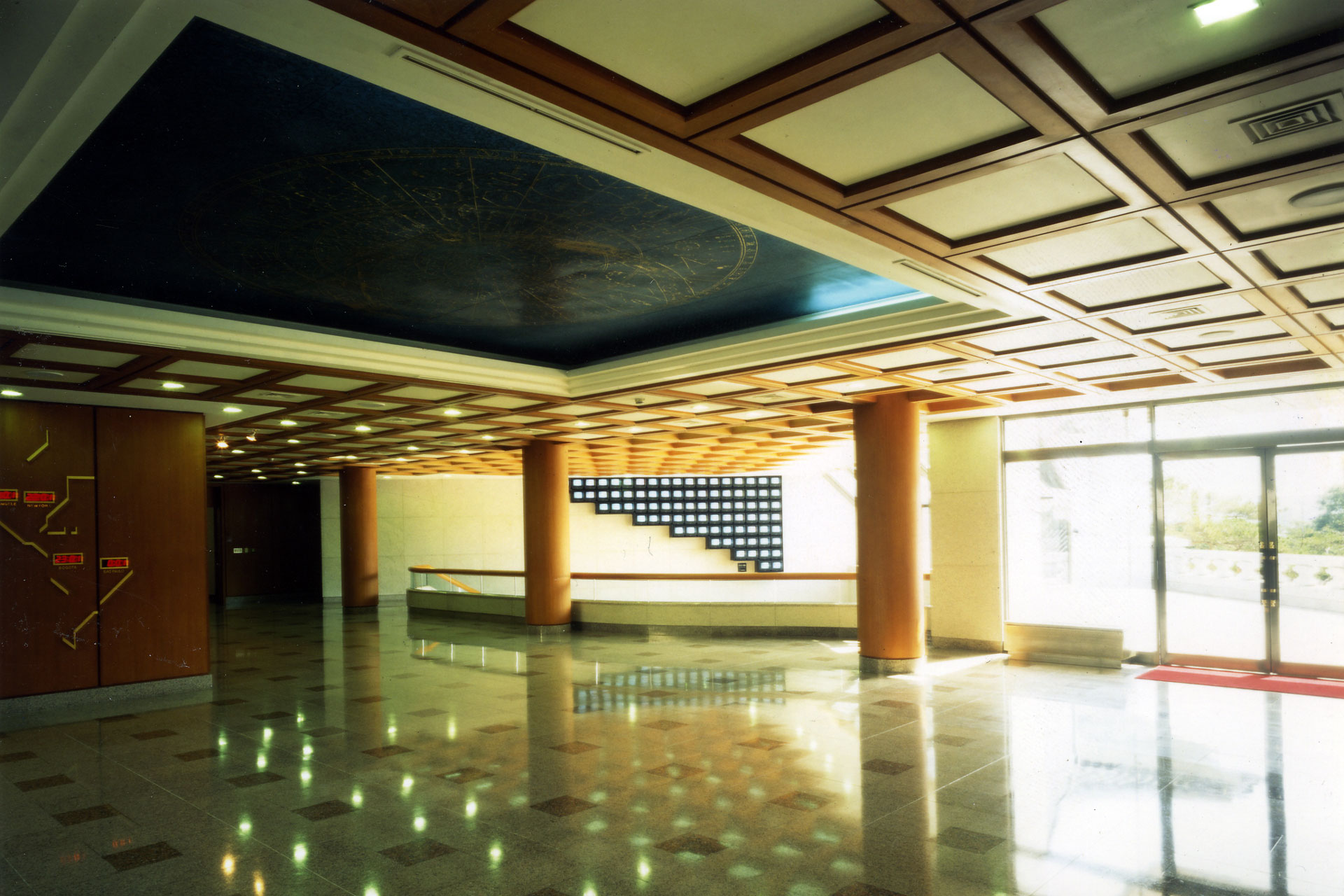
The Press Center features a traditional simplicity with gabled and hipped roofs and black tiles, inspired by the proportions of the gourd-shaped cupola (jeolbyeongtong) of Dongsipjagak Pavilion. The building’s Korean name “Chunchugwan” is named after the historical governmental office responsible for official records during the Goryeo and Joseon dynasties, symbolizing a press center that listens to the public’s voice. Utilizing a 5-meter sloped terrain difference, the first floor accommodates the press offices and auxiliary rooms, with the second floor housing the press conference hall — separating circulation paths of journalists and government officials including the president. The shield-kite-shaped ceiling structures serve acoustic functions including reflection and absorption.
In the Press
- [Seoul Economic Daily] [Architecture and Urban Planning – Cheong Wa Dae Main Building] Building Prestige, Embracing National Dignity
- [Seoul Economic Daily] [Architecture and Urbanism] Lee Hyung-jae, Advisor at Junglim Architects: “Architecture embodies the spirit of the times; it must remain open to change.”
Archive
Cheongwadae

-
Status
Completed
-
Order
Government of the Republic of Korea
-
Purpose
public
-
Design Year
1989
-
Completion Year
1990(Chunchugwan), 1991(Cheongwadae)
-
Location
Jongno-gu, Seoul
-
Gross Floor Area
(Cheongwadae) 8,476m² / (Chunchugwan) 3,398m2
-
Building Area
(Cheongwadae) 4,305m² / (Chunchugwan) 1,200m2
-
Scale
(Cheongwadae) B1, 2F / (Chunchugwan) B1, 3F
-
Consortium
YUWON CONSTRUCTION, Seonjin Engineering Co., Ltd.
The Blue House (Chungwadae) Main Building and the Press Center (Chunchugwan) are early examples of Junglim Architecture’s pursuit of “architecture as background.” Their façades adopt the proportional systems of traditional architecture, exhibiting a Korean-style neoclassical form. The design emphasizes “modernization of traditional architecture” across spatial layouts, interior plans, material selections, and construction methods.
The main building is located on the southern side of the former Gyeongbokgung Palace’s rear garden, surrounded by Mt. Bugaksan, overlooking Gyeongbokgung and downtown Seoul. The hipped-and-gabled roof’s gently curved eaves and tiles finished with the color of blue harmonize with the nearby palace and natural scenery. The layout mimics the Joseon dynasty-style Confucian academies, with a central main hall flanked by side pavilions fulfilling governmental office and event functions. The auxiliary buildings sit on lower platforms than the main hall to create a gradual sense of elevation and depth inward. The entrance hall in the courtyard mitigates the imposing scale and sculptural function of the large main building. The interior not only comes close to traditional Korean style, but also focuses on creating refined contemporary spaces; notably, the tapered wooden columns lined along either side in the first-floor lobby evoke the expansive feel of space as on a traditional daecheongmaru, highlighting Korean aesthetic sensibilities.
The Press Center features a traditional simplicity with gabled and hipped roofs and black tiles, inspired by the proportions of the gourd-shaped cupola (jeolbyeongtong) of Dongsipjagak Pavilion. The building’s Korean name “Chunchugwan” is named after the historical governmental office responsible for official records during the Goryeo and Joseon dynasties, symbolizing a press center that listens to the public’s voice. Utilizing a 5-meter sloped terrain difference, the first floor accommodates the press offices and auxiliary rooms, with the second floor housing the press conference hall — separating circulation paths of journalists and government officials including the president. The shield-kite-shaped ceiling structures serve acoustic functions including reflection and absorption.
In the Press
- [Seoul Economic Daily] [Architecture and Urban Planning – Cheong Wa Dae Main Building] Building Prestige, Embracing National Dignity
- [Seoul Economic Daily] [Architecture and Urbanism] Lee Hyung-jae, Advisor at Junglim Architects: “Architecture embodies the spirit of the times; it must remain open to change.”
Archive
Cheongwadae