
Close
![Popup Image]()
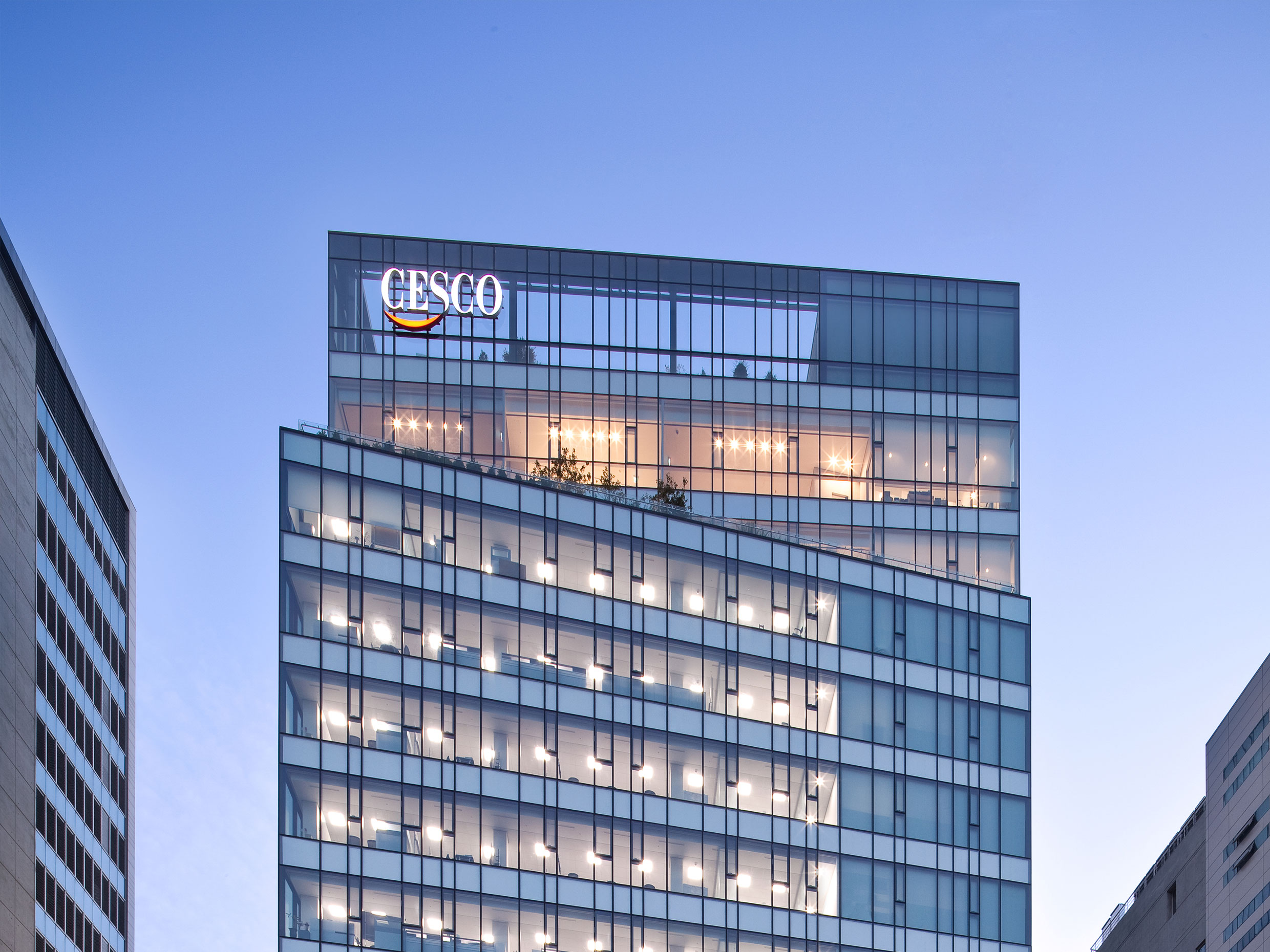
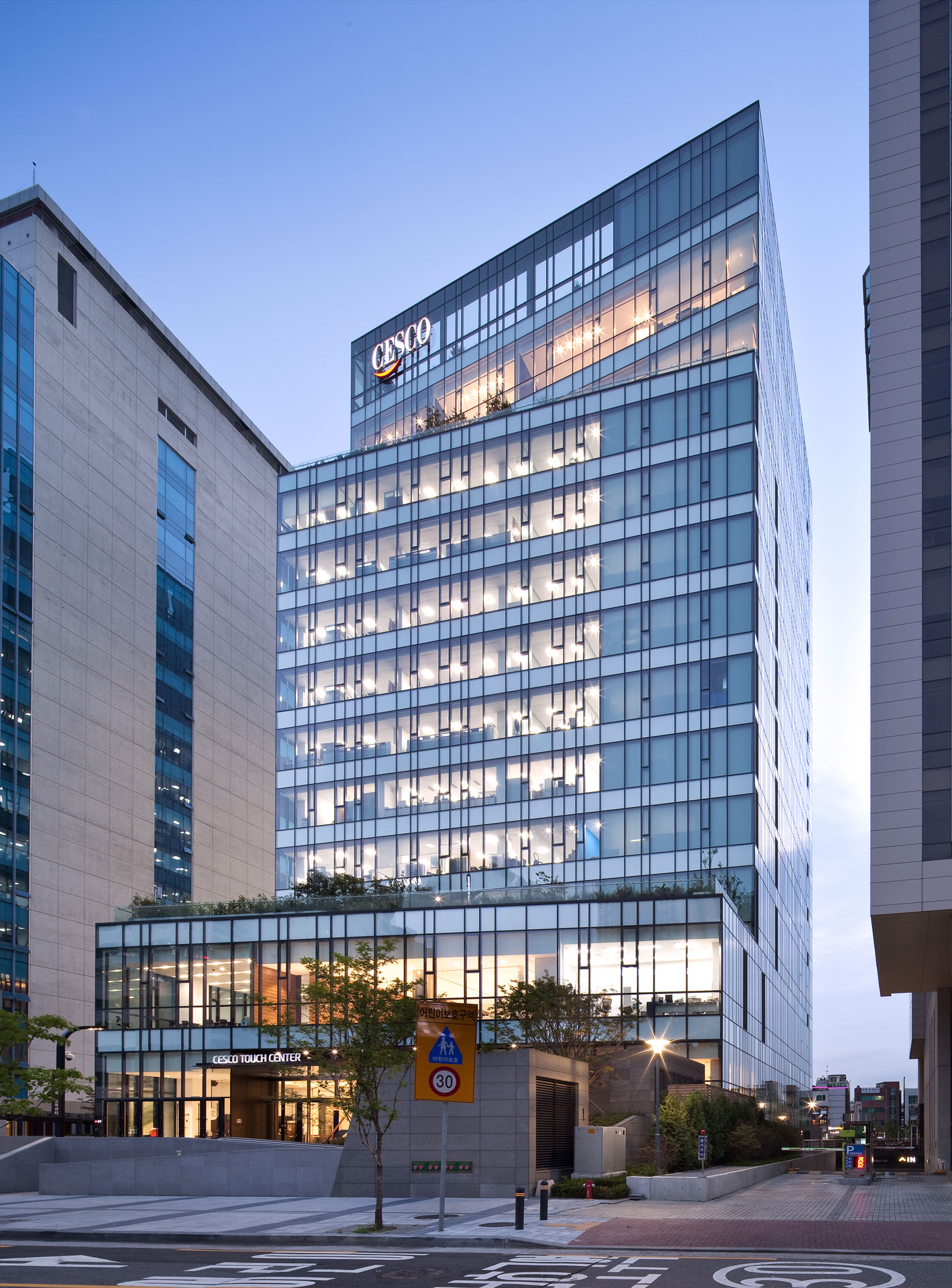
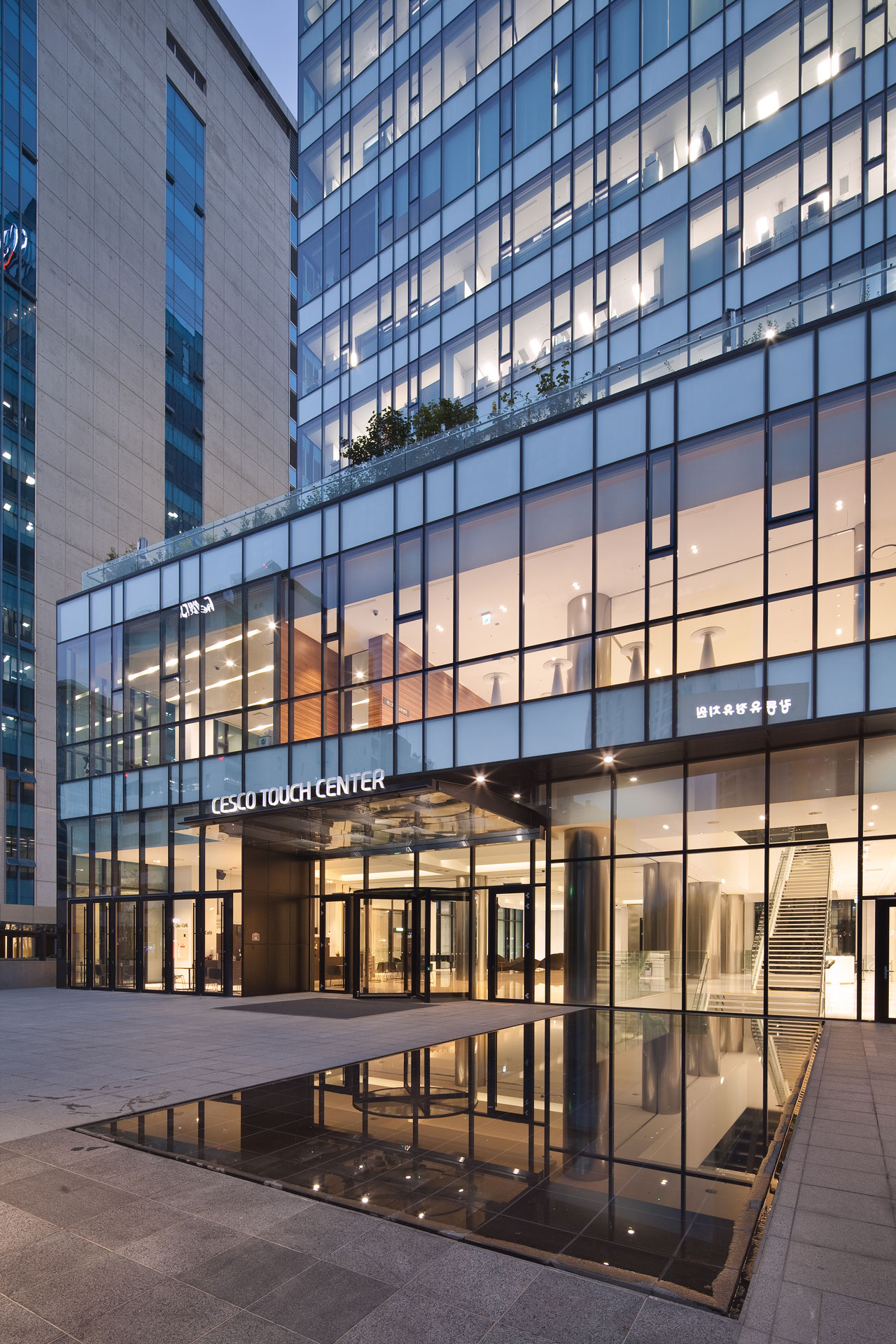
The CESCO TOUCH CENTER, the new headquarters of CESCO—a company widely known for its expertise in pest control—established several guiding principles through continuous workshops with the client from the very beginning.
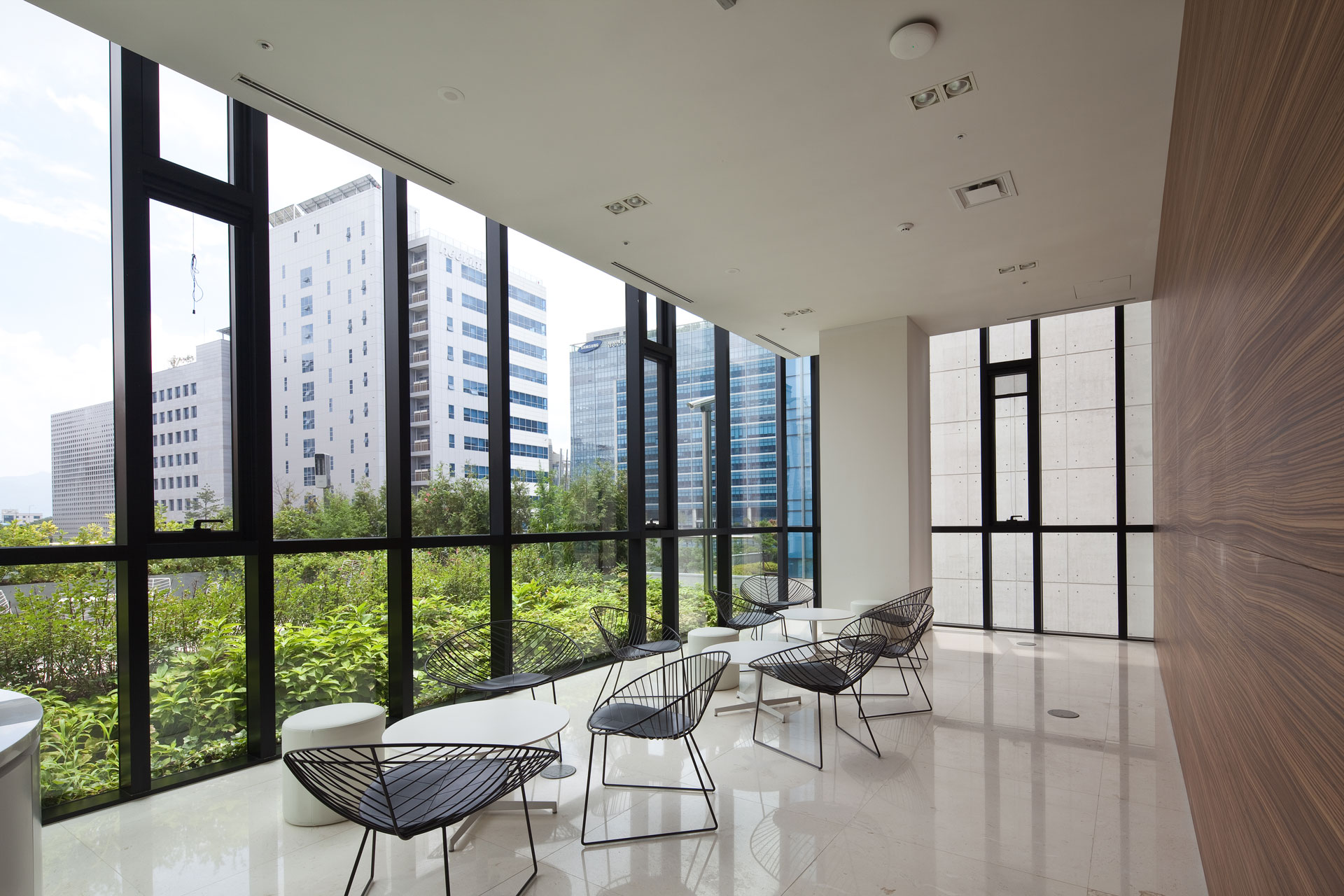
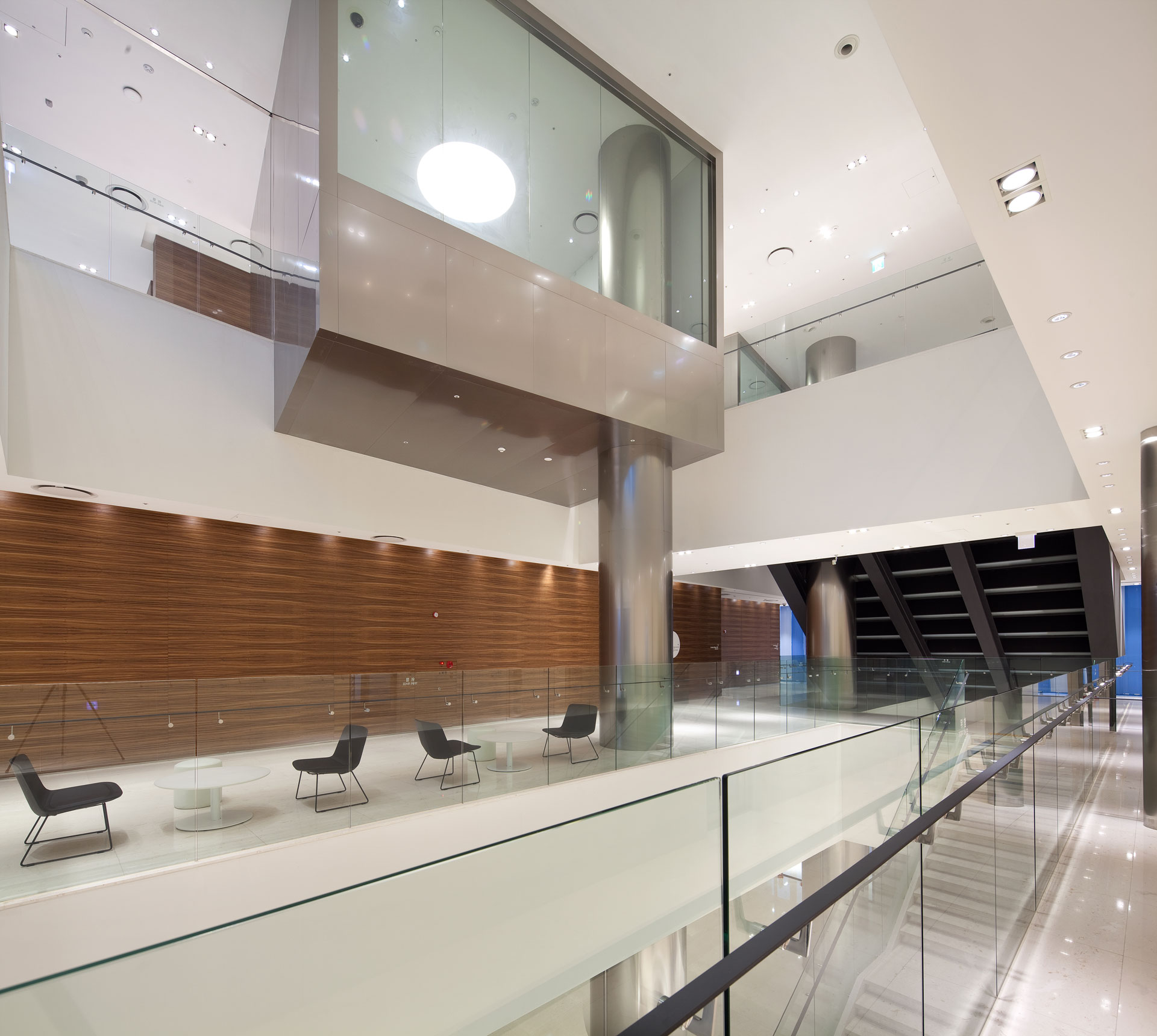
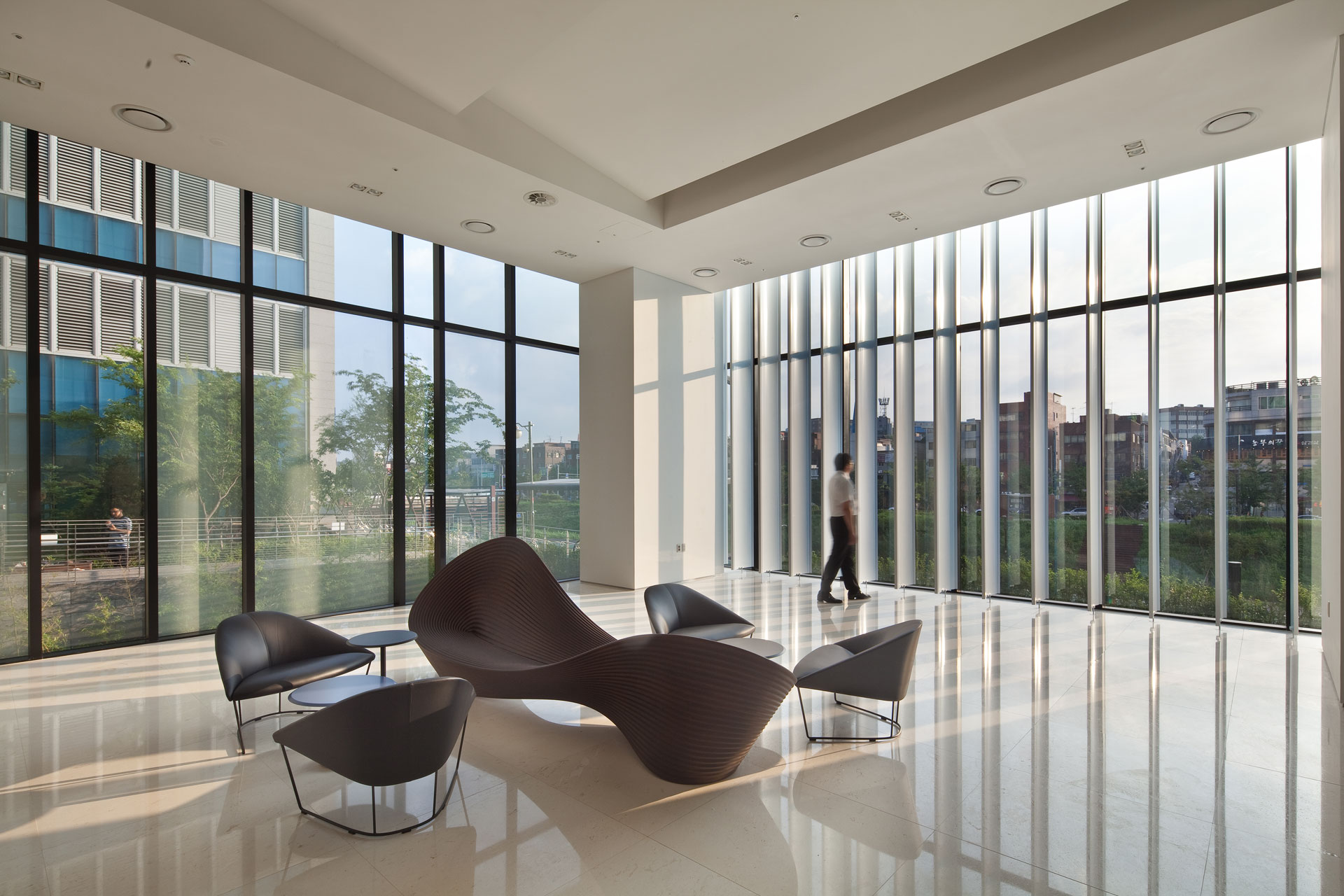
First, the project rejected showy architecture in favor of a strictly practical approach. This shift in philosophy led the design process to evolve from an internal spatial layout toward an external form. The team spatially analyzed the needs and working environments of CESCO’s diverse users—including office staff, researchers, service personnel, and trainees—and examined how the results of vision and lighting studies, conducted to optimize views and natural light, could be directly projected onto the building’s exterior.
Second, the building moves beyond the mere nature of corporate headquarters as hardware to become a substantive complex that embodies the company’s growth engine. To best facilitate the new businesses Sesco is pursuing, we designed differentiated spaces—such as training facilities, a promotional gallery, simulation labs, and R&D labs—to interact with one another, while integrating simulation spaces for pest control operations and hygiene training.
Finally, to ensure the building is sustainable as a company contributing to the future environment, we proposed solutions such as louver and panel systems adapted to each orientation, a solar reflectance index, an air barrier system, and a stepped garden to rationally address various environmental conditions.


-
Status
Completed
-
Awards
- 2015 Korea Ecological Architecture and Environment Award_Grand Prize
-
Client
CESCO CO., LTD.
-
Program
Office
-
Design Year
2011
-
Completion Year
2014
-
Location
Gangdong-gu, Seoul
-
Site area
2842.00m2
-
Gross Floor Area
24240.54m2
-
Building Area
6445.66m2
-
Number of Levels
B6, 12F
The CESCO TOUCH CENTER, the new headquarters of CESCO—a company widely known for its expertise in pest control—established several guiding principles through continuous workshops with the client from the very beginning.
First, the project rejected showy architecture in favor of a strictly practical approach. This shift in philosophy led the design process to evolve from an internal spatial layout toward an external form. The team spatially analyzed the needs and working environments of CESCO’s diverse users—including office staff, researchers, service personnel, and trainees—and examined how the results of vision and lighting studies, conducted to optimize views and natural light, could be directly projected onto the building’s exterior.
Second, the building moves beyond the mere nature of corporate headquarters as hardware to become a substantive complex that embodies the company’s growth engine. To best facilitate the new businesses Sesco is pursuing, we designed differentiated spaces—such as training facilities, a promotional gallery, simulation labs, and R&D labs—to interact with one another, while integrating simulation spaces for pest control operations and hygiene training.
Finally, to ensure the building is sustainable as a company contributing to the future environment, we proposed solutions such as louver and panel systems adapted to each orientation, a solar reflectance index, an air barrier system, and a stepped garden to rationally address various environmental conditions.